
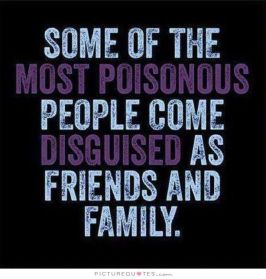
 Relationships come and go. No one knows this better than people ensconced in social media, or, more specifically, the writing community online. One day you’re good friends with someone, and the next they’re not talking to you anymore. Blocked. You don’t know what you did, what you said, but suddenly you are no longer in communication with someone you used to speak with every day.
And it hurts.
For my mental health, I’ve pulled back with speaking to some people I used to talk with quite frequently on Twitter and Facebook. For one thing, there’s not enough time in the day to talk to everyone, and for another, it’s easy to get wrapped in a relationship that’s one-sided. While I love to support my friends, sometimes, dammit, I need a little support too.
That being said, I’ve made good friends online. Such good friends, I’ve mentioned some of those people in the acknowledgments of my books.
Until recently, my dedications have been to my kids, “family” in general, my mother. And while I’ve been married for 16 years, never once have I dedicated a book to my husband. I always felt like a dedication belonged to someone who cared about me and my writing, and while I know my husband loves me, he’s never been interested in my writing. This isn’t anything I’ve kept to myself, sometimes tweeting my frustration. On the other hand, part of that is entirely my fault. I never wanted him to be a part of my writing. I wanted something that was just for me, and that’s what writing is for me. My escape. My passion. So maybe, in all this, I was punishing him for something that was my own doing. I don’t know.
But this post is about what happens when you acknowledge someone, or dedicate your book to someone, who no longer holds that significance in your life.
I realized that looking at my proof for Wherever He Goes I have a choice to make.
Some of my closer friends know I met someone on Twitter. A friendship that began because of our love of writing turned into something more. At least, as more as something could turn into with him living down south and me stuck in the frozen tundra of Minnesota. And through it all, I drifted further from my husband than I already was, and just these past couple months we decided to separate.

That’s when I finally dedicated my book to a significant other, someone who loved me, supported me, supported my writing, believed my books could take me all the way.
Only, the joke’s on me because that relationship crumbled around me, and now I’m left with nothing but words on a printed page.
So I have a dilemma. Do I change my dedication page?
Authors every day have that choice. With self-publishing, making changes to your book is simple and the changes take effect almost immediately. You can wipe out a whole relationship in 24-72 hours. Actually, KDP only takes you about 4-6. Whole friendships, whole relationships, poof.
Should authors do that, though? How right is it? People move in and out of our lives. They teach us something, give us something, and then sometimes they move on. We do the same for other people, maybe without even knowing it. A simple tweet, a DM. Those friendships can grow deeper–you help a person publish a book. You bitch talk about the publishing industry; you are a person’s cheerleader while they query. You help them through a bout of depression, a case of writer’s block. Someone does the same for you, and you thank them for it. Then, one day, you’re not talking anymore. They’ve moved on.

But the acknowledgments and dedication pages are still there, remain untouched, a testament that those people affected us, helped us grow, changed us for the better.
My southern gentleman did all that for me, until he couldn’t anymore. It doesn’t make our relationship less meaningful. It doesn’t make what he did any less important to me.
But every time I open that book, I’ll hurt. I’ll have to swallow back tears because the support I treasured, the support I needed, is now gone.
It’s up to you on a personal level if you want to change your acknowledgments and dedications. I understand completely if someone did something to you that you cannot, ever, forgive.
Your readers won’t know the history behind your acknowledgments and your dedication pages. I’m willing to bet some readers don’t even read them.
My mantra is always move forward, always move on. There will always be another book. There will be pages and pages of acknowledgments and dedications ahead of me, if I’m lucky.
And, you know, if I ever run out of people, I haven’t dedicated any of my books to my cats, yet.

You never know.




 For sake of simplicity, we can pick on a relatively small account. Say you’re following 300 people. You have more people following you; let’s say this number is 1,000. We’ll keep an even number because my math is terrible. Let’s subtract the 300 you’ve followed back, leaving you with 700 people following you that you have not returned the favor to. Let’s subtract 200 of these because we’ll just assume they aren’t real people. Sexbots and whatnot. That’s 500 people, writers, potential friends, and connections, mind you, you’re not following. What if all of a sudden half those people started engaging with you. You tweeted something funny, an article that hit home. They try to chat with you. Suddenly you have 250 people engaging with you.
 You better believe you respond to these people because this is what you wanted, right? All right, I know I’m being facetious, but let’s be real for a minute. Even if you had 25 people on a daily basis wanting to tweet with you, that’s a huge time suck. There are days, like #FollowFriday, or #WriterWednesday, where I do get quite a few notifications, and I do have to take the time to sit and thank everyone. I’m getting to the point where I may not be able to always answer all my notifications, but for now, I’m trying my best. I respect my followers, as should you. Someone thought you were interesting enough to follow, or you’re part of Writer Twitter, whatever, and you thank them by . . . ignoring them. Nice.
 Twitter is like being at a gigantic party! Grab a drink and say hello to everyone. You may not exchange business cards with every person you meet, but you never know when you’re going to make a connection. Or know someone who knows someone who can help you. It only takes a moment to follow back a living, breathing writer.


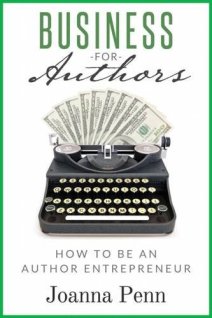 business. Joanna Penn, on a podcast I listened to a while back, said her


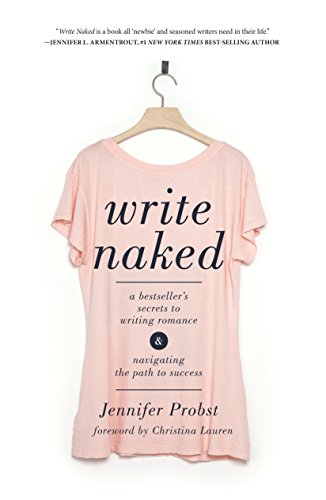
 Jennifer won her gold medal, and she tries for another every time she sits down to write.










 Nadia Diament writes sexy, funny things. You can ask her esoteric questions on Twitter
 Vania Margene Rheault