Thursday Thoughts: KU and Wide Audiences are different

917 words
5 minutes read time

I think about this every time I see, “KU isn’t working for me, I’m pulling my books and going wide,” or vice versa, “Wide isn’t giving me the sales I want/need. I’m going to pull my books and enrolled them into KU.”

I have to tell myself not to answer these posts because the lesson they’re going to learn has be experienced firsthand: There is no magic bullet, and going back and forth won’t help. You need to nurture an audience on one or the other and that can take years. Because here’s the thing that no one seems to understand. KU readers read KU books and will rarely buy because they don’t have to, and if they do purchase, it will be on Amazon because KU subscribers have Kindles or the Kindle app. Wide readers buy books from their favorite retailer or they have a Kobo or the Kobo app and buy from there.

You might say there are outliers, readers who will read everywhere and will buy whatever they want while also having KU and Kobo Plus subscriptions, and it’s probably true but readers like that are the exceptions that prove the rule and won’t help you sell books in the numbers you need to create a career.

I’m seeing so much of this now with the “boycott KU/Kindle/Amazon” because everyone hates Jeff Bezos, but if you’ve built a readership in KU pulling your books out will only hurt your reader because they aren’t going to follow you anywhere else. There are over four million books in KU–they don’t have to follow you anywhere. What about reader loyalty, you ask. Sure readers are loyal to the authors they love, but you have to show them a little loyalty too, and taking your books out of the subscription service they use to read books isn’t it.

The one thing authors need to understand is that if you don’t know how to tell readers where your books are, it doesn’t matter where you publish. KU doesn’t offer the organic reach a lot of authors think it does (just look at my sales dashboard lately), and just because your books are everywhere and there are more chances readers can find you, that doesn’t mean they will. You’re still competing with millions of books. Here’s the breakdown:

Kobo: has over three million books and Kobo Plus offers 1.5 million books to choose from plus audiobooks.
Apple Books: the numbers are undisclosed but Al says they hold about 8% of the e-book market share (compared to Amazon’s 70-75%.)
Google Play: Over five million titles
Nook Books: the numbers are undisclosed but Al says they hold about 8% of the ebook market share (similar to Apple Books). (All stats I grabbed off a Google search.)

So I guess one of the main reasons I’m writing this post is that if you’re thinking of pulling your books from KU, understand that you’re going to leave the readers who read you there behind. If you’ve been enrolling your books for a while, it’s possible you’ve got a few readers who look for your books and when Amazon stops sending them new releases or recommendation emails about your books, they’ll forget about you. It sounds harsh, but when we talk about market saturation, that means there are plenty of books to choose from, and KU makes it easy to try new-to-them authors.

So, if you do want to give Jeff Bezos the middle finger and cancel all things Amazon, here’s a couple of tips for you:

To go wide, use Draft2Digital or PublishDrive, but go direct where possible, like Kobo and Apple books. Not only do you save more cutting out the middleman, but you gain access to the Kobo promo tab that you won’t get if you let a distributor distribute there.

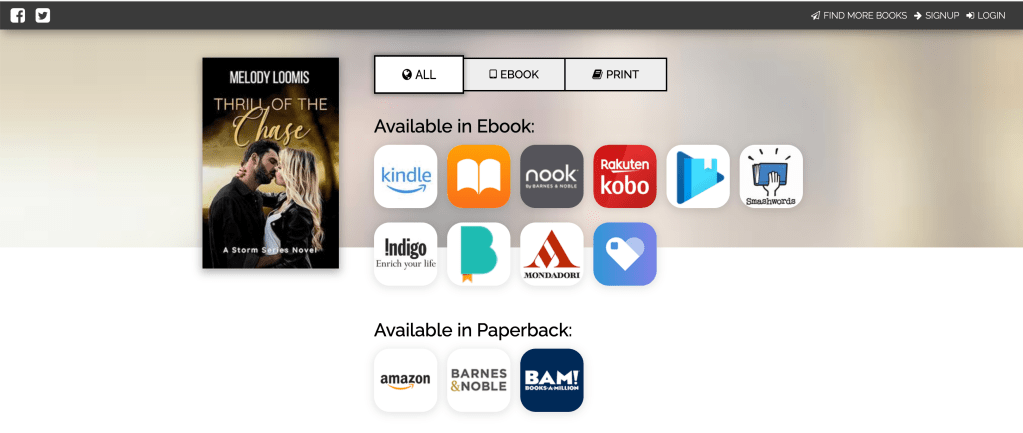
Remember to mention your books are everywhere. KU authors have no trouble shouting from the rooftops that their books are available in KU. Do the same wide. Draft2Digital offers the Books2Read universal link creator. It will scrape everywhere your books are sold and will offer a cute landing page my like my friend, Melody’s, books have. You can find her books here: https://www.melodyloomis.com/books

Try Facebook ads. This is a great way to find new readers because you can target certain audiences, like, say, readers who own Kobo devices.

And the same advice is true for authors pulling their books from wide platforms and going to KU. Authors are proud they’re in KU. Use their logo on every social media post you create. Being in KU doesn’t come without it’s challenges, so make use of Amazon ads and Facebook ads, and tell your newsletter that you’re in KU. One of my biggest selling points I think my books have is that I tell my readers my books are in KU and are going to stay there. Consistency, no matter what you’re doing or where you’re publishing, is key. You know the saying, you teach people how to treat you? You teach your readers where to find you.

That’s a good lesson for every author: be consistent in where your books are available, in your genre, in your spice level. These are what can make or break your marketing because once you reel in a reader, if you teach them what you write and they love that, they will keep coming back for more.

That’s about all I have for this Thursday. I’ll see you Monday! Have a great weekend, everyone!

Why My Books Will Stay in KU…For Now

Words: 2649
Time to read: 14 minutes

There’s been a fair amount of talk whether an author should go into KU (Kindle Unlimited on the reader side or Kindle Select on the author side) or publish their books wide, meaning on all platforms like Kobo, Apple Books, Nook, etc. You can do that easily by uploading to a place like Draft2Digital or PublishDrive. You should always go direct where you can, Kobo being the easiest, so you can earn more, but that’s a different topic for a different day.

It’s personal choice to go wide or stay in KU, and a lot of authors try to have it both ways, releasing into KU then going wide after their 90 days is up, or doing the opposite, going wide and then yanking everything down after a set amount of time, a month or so, and putting their book into KU. I’ve heard some authors even put a first in series into KU hoping to force KU readers to buy the rest to finish the series or forcing wide readers to buy on Amazon rather than their preferred platform.

I used to get disgusted, you know, authors trying to find the short cut to success, but after eight years in the business, I don’t care what other authors do anymore. For one, they have to do what they think is best for their books and for another, well, if they want to look bad to potential readers and to platforms like Kobo and Apple Books who actually do pay attention to what indies are doing, that’s their business. I’m not saying every way is a bad way. I know big indie authors like Lindsay Buroker and Mark Dawson offer their books using all kinds of various methods, but I’ve also seen indies try to sell their books in whatever way possible, regardless if they hurt readers . . . or their reputations.

I tried going wide once, and I lasted six months or so. That was back when I was writing in 3rd person, my books weren’t that great, and I had no idea about marketing. See, the thing is, it doesn’t matter where you publish if you can’t push readers there (and your books aren’t good). The only thing going wide will do is give you more zeroes to look at on more platforms. And that’s another thing authors really don’t understand–KU readers are different from wide readers. When you ask a KU reader if they buy books that are wide, most will say no because KU offers enough of a selection that they don’t have to. They have their favorite authors and Amazon is adding more books to KU all the time. Authors are delusional when they think they can force readers to buy their books by being scammy. KU readers don’t have to fall for it. Al says there are over 4 million books in KU right now (versus the 1.5 million books in Kobo Plus) so it’s just better to understand who your reader is going to be and where they are going to read your books. Anyway, I switched back to KU because it was better for my mental health. I didn’t like looking at the low sales everywhere, and being available in libraries didn’t make up for it. For me, being in KU was a better choice and still is. Here are the reasons why my books will stay in KU (for the foreseeable future):

I don’t hate Amazon, and I don’t hate that KU requires exclusivity.
The other day on Threads someone said they deserve to be in KU without the exclusivity, and I wondered which planet she came from. Life isn’t fair. Amazon doesn’t owe you anything. If you think you deserve to be in a subscription program without being exclusive, join Kobo Plus. There’s less competition over there anyway. Amazon is never going to change a platform they created for a device they invented. Through KDP and CreateSpace, back in the day when their paperback branch was called that, they gave us the tools to self-publish. Without them, it’s hard to tell how long it would have taken for indie publishing to develop into what it is now. I’m not going to look a gift horse in the mouth. I’m grateful to Amazon for the opportunities they’ve given us, and I’ll die on this hill.

I like that it’s income-friendly.
Times are tough. I read books enrolled KU and I offer my books there. I know Kobo Plus is cheaper (KU is $11.99 and Kobo Plus is $7.99 US), but Kindle Unlimited offers more books and a lot of the romance authors I like include their books there. So not only is it a personal choice because of my limited funds, but it’s a business choice because I know thousands of people are in similar situations. Sometimes I get asked if I mind I earn less on a book read in KU than if someone buys it, but I don’t. I make the same amount if two people read in KU versus one person outright buying it, but I just think I’m getting two for the price of one. I’d rather have one reader for a lower royalty than none.

I don’t believe my books are susceptible to piracy any more than other books.
People love to blame KU and Amazon for their books ending up on pirate sites, but I think this energy could be directed elsewhere. The minute you upload anything to anywhere online, your information can get stolen. A well-known author used one of my graphics I made in Canva during her 20booksto50k presentation. (I used it in a blog post on this website and I imagine it popped up in a Google search when she was looking for a graphic to use.) I was surprised to see my design on her PowerPoint (especially since it would have been very easy to create her own), but I never said anything. I was kind of tickled she liked it enough to use it, but that’s just one example of how anyone can help themselves to your work. There’s no one stopping anyone from copying and pasting my words here to create their own blog posts. My books are on pirate sites, and while we like to accuse Amazon of suspending accounts for this, they are reasonable and understand you can’t stop piracy. The issue is authors who like to try to game the system, and I don’t blame Amazon for cracking down. If anything, we can blame other indies for their “shoot now and ask questions later” approach to dealing with us. For every ten honest indies, there’s one who has to ruin it for everyone.

I think being in KU is easier.
Without KU, I wouldn’t be making any money. Going wide is hard. It takes consistency and perseverance. It takes marketing know-how and cash to push readers to all the platforms. I’m not saying that overall KU is any easier or I’d be making bank and wouldn’t still have to log into my day job, but I think it’s easier to push specific readers at one platform. “My books are in KU.” That’s all I have to say and that weeds out anyone who doesn’t have a subscription. Those people aren’t my readers. (Unless they want to be, because I do sell ebooks here and there). I don’t sell many paperbacks and don’t push paperbacks at anyone. All my ads on Facebook say my books are in KU. Sometimes, if I remember, I’ll put the KU logo on the graphic. Being part of a huge ecosystem of books on a platform that is known for selling books makes sense to me, and it frees up a lot of headspace to think about other things.

I’m not scared of Amazon.
This is probably a big thing for a lot of people. They’re scared they’re going to do something and their account is going to get suspended. I mean, I know it can happen. At the base, Amazon is run by bots, and then if you need something, a lot of times their first level of support is someone overseas. I applaud anyone who can speak more than one language because I sure as hell can’t, but sometimes language barriers prevent you from being understood. I’ve had run-ins with Amazon–they blocked a large print book accusing me of trying to publish duplicate content (ah, yeah, it was!) even though I checked the Large Print box when I tried to publish. Despite having been able to publish large print in the past, they wouldn’t let me, and after a couple of go-arounds with KDP support, I gave up.

The other time was last year when they asked me for licensing proof for the stock photos for Twisted Lies. I had what they needed, and eventually they accepted the licensing screenshots I gave them of my DepositPhotos account. I say “eventually” because I sent it in the first time and it was accepted and he told me to publish again. When I tried again, the book was flagged a second time. I submitted everything again, and that time they put it through. Pretty basic stuff from what I hear, but it doesn’t make me not worry. Running your own business is stressful and even if you’re not exclusive, you can still have your account terminated. Being wide doesn’t necessarily get you around that, especially if you really do want Amazon to sell your books because they have the lion’s share of the market in the United States. What you can do is join an organization like ALLi (Alliance of Independent Authors) who have connections at Amazon and can speak up on your behalf. I’ve been a member for a couple of years now, and they have other benefits. It’s $119.00 a year, USD, but because you’re running a business and deal with other businesses every day, I consider it an investment and write it off when my accountant does my taxes.

I’m not scared of having all my eggs in one basket.
I know this is a concern for a lot of people, and the big indies who are making six or seven figures have multiple streams of income. They have ebooks, audio, print, and translations. They offer special editions of their books. They get offers to join in book boxes. They write nonfiction and speak at conferences. They travel to book signings and reader events. They have Patreons and/or sell merchandise. I completely understand that is the way to go, but I’m small, really still consider myself a baby author despite how many books I have out. Audio isn’t possible for me right now, and I do all my own covers, formatting, and editing. The work I do on the side I do for free or accept whatever they can pay because I know life is tough and I do it to be helpful, not to make money. Maybe one day I can afford to produce audio books or pay a translator since the German market is pretty solid from what I hear, but keeping my books only in KU right now is a good fit for me. Yeah, I do publish my paperbacks everywhere because I don’t think IngramSpark is as hard to work with as people say it is. At least, I’ve never had a problem with the platform and either being part of the 20booksto50k group or being a member of ALLi has given me the resources to forgo the fees. And because I do my own covers, I can do them with what IngramSpark needs without the extra cost.

After eight years of publishing, my readers know my books will be in Kindle Unlimited.
Being in KU is part of my marketing strategy and part of my brand. I’ve been writing and publishing for eight years, or only two, I guess, if you just want to count the last couple of years when I created a pen name, started publishing first person Billionaire, and really tried to get serious about my career and where it’s headed, but I think by now, any reader who has found me and read any of my books, especially my series, knows my books are in KU. Probably one of the things authors have a tough time wrapping their heads around is consistency because when we talk about consistency, we’re talking about years of work. It’s really tough to think about what you’re doing tomorrow, and when we talk publishing schedules or a five- or ten-year business plan, you’re expected to look ahead, and by a lot. Part of marketing is training readers to know where to find you. You can’t do that skipping around from wide to KU and then back again. Part of marketing is training readers to know what you write, and you can’t do that skipping around from genre to genre. No one likes that when I say it, but it’s true. When your department store moves things around and you can’t find anything, you get mad, right? You have a favorite restaurant and it closes, or someone is parked in “your spot” at work. Consistency is comfortable, not a box like some authors think it is, and if you can realize readers love consistency and trust you to provide it in what you write, how often you publish, and where you publish your books, the easier marketing will feel. “Build it, and they will come” might not be so easy, but I think “Build it, remain consistent, and they will stay” can be pretty truthful. Anyway, I have a whole blog post on consistency, and you can read it here: https://vaniamargene.com/2021/12/20/buzzword-consistency/


Every business needs flexibility, and I’ve proven to myself that when I’m flexible, like pivoting from third person to first, that it can make a real difference. So while I’m happy being in KU, and I’m okay with the limitations that go along with it, I may be open to doing something different if circumstances change or an opportunity presents itself. Amazon may be a cornerstone in our communities, but there’s no guarantee it will last forever. (Which is why I don’t depend on free ISBNs from anyone.) Sometimes I do get bummed because I can’t do whatever I want with my books, but for now, being in KU still feels like the right decision. I don’t have a PA to deal with uploading to multiple platforms or to create graphics and social posts. I don’t have time to submit to promos on Kobo or Apple Books. I just don’t feel like I have time to push my books in a hundred different places so readers can find me. I can run an Amazon ad or I can run a Facebook ad to just Amazon and call it a day. Since I haven’t felt good for a while, that’s all the energy I really have and if you have more time and energy to devote to the marketing part of your business rather than the writing part, you do what you can do and be grateful for it.

I look at choosing between KU and being wide like this: You know how you’re in a grocery store and the lines are long. You have somewhere you need to be so you try with all your might to figure out the fastest lane. You spot one with only two people in it, and what’s this? They both have baskets, not carts. Score! But, but! You have no idea the cashier is in training and it will take him longer to check out those two people than the experienced cashier checking out the longer lines.

Hopping around from wide to KU and back again is like that. You’re looking for the fastest way to success when really, only consistency and hard work will get you there.

Choose a lane, grab a cookie out of your cart, and wait.

One day you’ll reach the parking lot.

Until next time!

Kindle Unlimited Page Read Payouts Are Down. What I’m thinking, feeling, and my ultimate choice.

if you spend any time in author groups on Facebook, the number one topic of conversation this week is that the KENP page read payout has gone down again. It’s at an all time low of $0.003989. That means KDP will pay you $0.0039 whenever someone reads a KENP page of your book if it’s in Kindle Unlimited. For as long as I’ve been publishing and having my books in KU, it has never dropped below $0.04X and it is a little bit disheartening to see, mostly because it’s been decreasing over the summer, and it’s always easier to fall than to climb up, no matter what you’re doing.

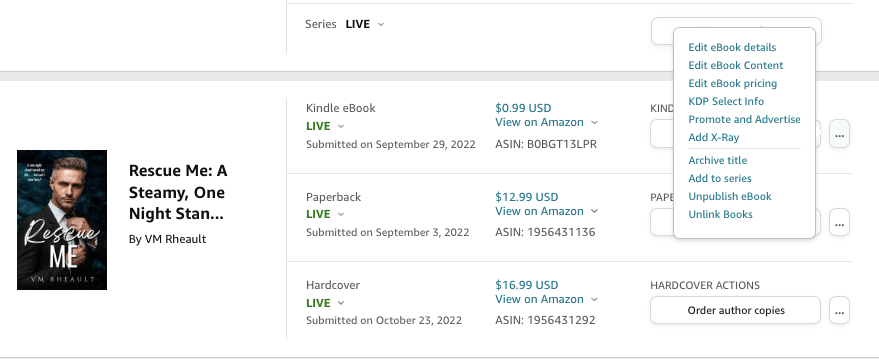
Just as a quick reference, we can do the dreaded math. Take, for example, Rescue Me. It has an KENP of 391. You can find that information on your Bookshelf. Hover over the three dots to the right of your title, click on Promote and Advertise, and the information is at the bottom of the page.

To do the math, you multiply the KENP of your book with whatever the payout is. For Rescue Me, if I multiply 391 by 0.003989 I get $1.55. So in KU, every time someone reads Rescue Me from cover to cover I get $1.55. Which is less than 70% of $4.99 if someone were to buy my book. For June, it was $ 0.004042 and that math equals out to $1.58. Three cents it’s that big of deal especially to smaller indies who don’t sell many books. (But considering it was $ 0.004293 at this time last year, it’s worth keeping in the back of your mind.)

Of course, this has brought on a tidal wave of authors declaring they’re going to pull their books out of KU and go wide, but it’s not a good idea to make decisions in anger and hate for Amazon. This is your business, businesses go through ups and downs and it’s better if you run your business with informed choices.

Here are my thoughts:

You have to build a brand/readership no matter where you are. This is true no matter if you’re in KU or you’re wide. You need to find readers, you need to show them you are in it for the long haul. You need a solid brand so a new reader can look at your author page/book covers and know exactly what they are going to get if they read one of your books and stick with you. Building a brand/readership is even more important wide because unless you regularly run sales on your books, you’re asking a reader who has never heard of you before to spend $3.99+ to try you, and you better be giving them their money’s worth. Not only so they don’t waste money on your unedited book, but that is their one and only taste of your writing and you need them to crave your books enough to spend money on each and every book you ever publish.

You have to be consistent no matter where you are. When I went to the Sell More Books Summit in Chicago before the pandemic hit, they had a panel of indie vendor reps, among them, Ricardo Fayet from Reedsy, Brad and Brad from Vellum, and a rep from Kobo who is no longer in that position. The one thing that stuck out for me during that talk was when she said, don’t put your books in and out of wide. We remember you, readers remember you. Google Play, Apple Books, Nook, and Kobo and others have representatives that work with authors and book promos. They won’t okay you for a promo if they know your fickle. Why would they help you build a brand and an audience when they think all you’re going to do is pull your books out and put them in KU the next month? Going wide is hard, but so is being in KU. It doesn’t matter where you are, you still have to build that readership. Authors think being on more than one platform is a sure way to find readers, but that’s not true. Your book will sink anywhere if readers don’t know your book exists. Stick with one place, publish consistently, advertise, work with the platform reps with promotions and sales. Being wide takes work, but it’s only a different kind of work than being in KU. They say work smarter, not harder, and if smarter for you is being wide, then you should do that.

Go direct where you can. It’s tempting to put your book on Draft2Digital and let them take care of it, but no one considers that if you do that, you’re paying D2D to distribute, you’re paying Nook, Kobo, Apple, etc, to sell your book, and you’re left with what’s leftover. After everyone takes a cut, you might as well have stayed in KU and absorbed the cost of the lower payout. If you want to go wide, do the work and publish directly to the platforms you can. Upload at Nook, Kobo, Google Play (if they’re accepting new authors–for a long time they weren’t and I have no idea if they are now). Upload direct wherever you are able to save yourself the cost of the distribution fee D2D charges you. Their fee and other FAQs are here: https://www.draft2digital.com/faq/

Your KU readers won’t follow you. Some authors think that their readers will follow them if all of a sudden their books are not in KU on Amazon anymore, and with all the years I’ve been part of author groups, the one thing anyone can agree on is, no, they won’t. KU has over four million books in it now, and depending on the genre you write, your books are a dime a dozen. I’m not so self-important to understand that if readers who have read all 7 of my billionaire books in KU (and even LOVED THEM) suddenly had to pay wide prices for any other books I publish, they won’t buy them. They would write me off and move on to the next romance author. Wide readers and KU readers are very different audiences. I have a KU subscription myself. I don’t buy books on top of that and I won’t try wide authors who put their first in series for free because I know I would have to buy the rest of the series if I liked the first. (That’s a normal marketing strategy even for books in KU because read-through is what earns you royalties.) Readers are smart–they know if you’re in KU or not just by browsing the newsletter promo lists like Freebooksy and Fussy Librarian.

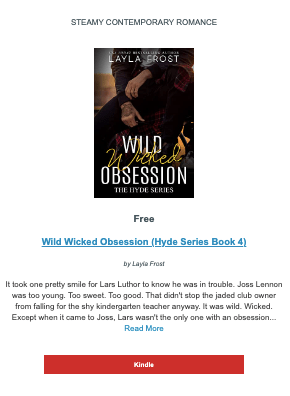
Here are the first two books in the Freebooksy contemporary romance promo newsletter I sign up for sent to me on Wednesday, August 16th. Any reader who has been reading books for any number of years knows that the Kindle-only book will be in Kindle Unlimited. It might not be reader knowledge that Amazon forces us into exclusivity, but they don’t need to know that. They see Kindle only, KU. When I go through these looking for books, I don’t even read the blurbs for books available everywhere. I don’t want to like a book that’s wide. I can’t afford to buy the others. Wide readers have a book budget, and KU readers have a book budget that’s wrapped up in their KU subscription fee. It’s too bad, but with rent prices out of this world, medical costs, parents doing the back-to-school thing, groceries, gas prices, and whatever else, the entertainment budget is the first to go. I’m not saying that so you stay in KU if you’re there, but you know, you have to build a readership with really great books and that takes time.

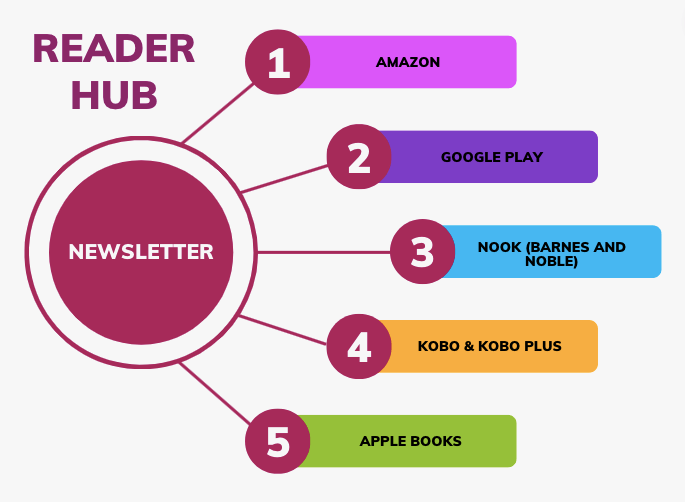
Change your mindset. Instead of moaning about the drop, do something about it. The piece of advice I see the most when this kind of thing happens is, “Write another book.” More books will earn you more money, no matter where you are, so get your butt into your chair and write. You can also write longer books to fill in that page-read payout shortage. If you write 70k books, write 75k books. Add a sex scene, or a couple of dialogue scenes between characters. Add an epilogue. You don’t have to add filler or fluff to lengthen a book. Also, if you haven’t already, start a newsletter. If you’re everywhere, a newsletter will be your reader hub. If you’re Amazon exclusive, readers can follow your Amazon author page and Amazon will email your readers when you publish a new book. If you’re wide, you want a place you can share with your readers about sales and promos and new releases. When you move your books over from KU, edit your interior and put your newsletter sign up link in the back matter of all your books.

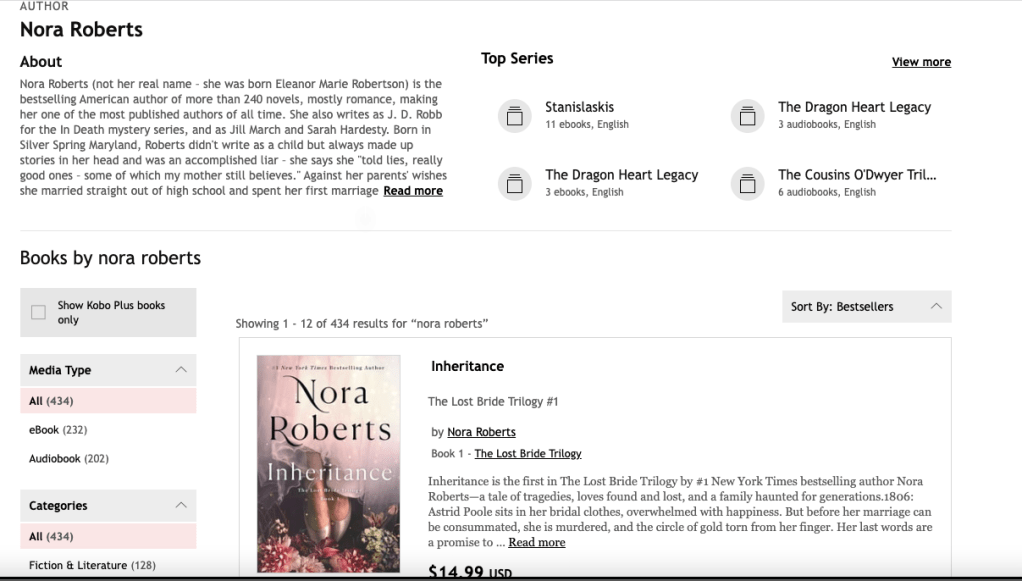
If you don’t have one, you might think that’s just more work, but I don’t know if other platforms offer author pages like Amazon does. Kobo doesn’t. You can click on an author’s name and get their list of books, but it doesn’t look like you can follow an author, and I have no idea if Kobo will email you new releases once you’ve bought an author’s book. This is what I get when I searched Nora Roberts:

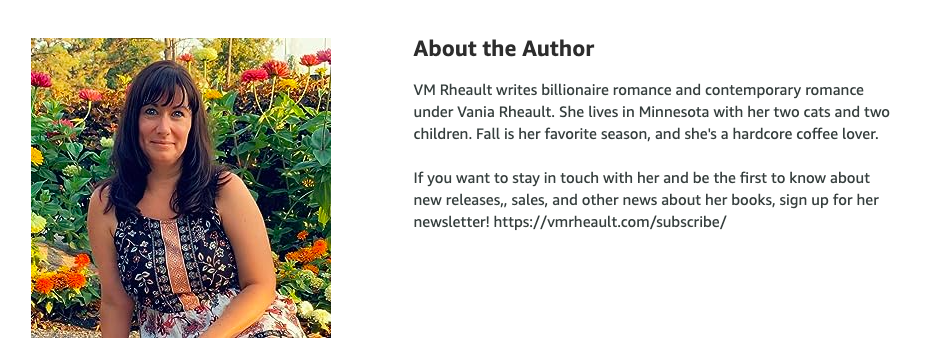
It’s just better to control that for yourself, and you can even put your newsletter sign up link in the author bio. Here’s mine on my Amazon author page.

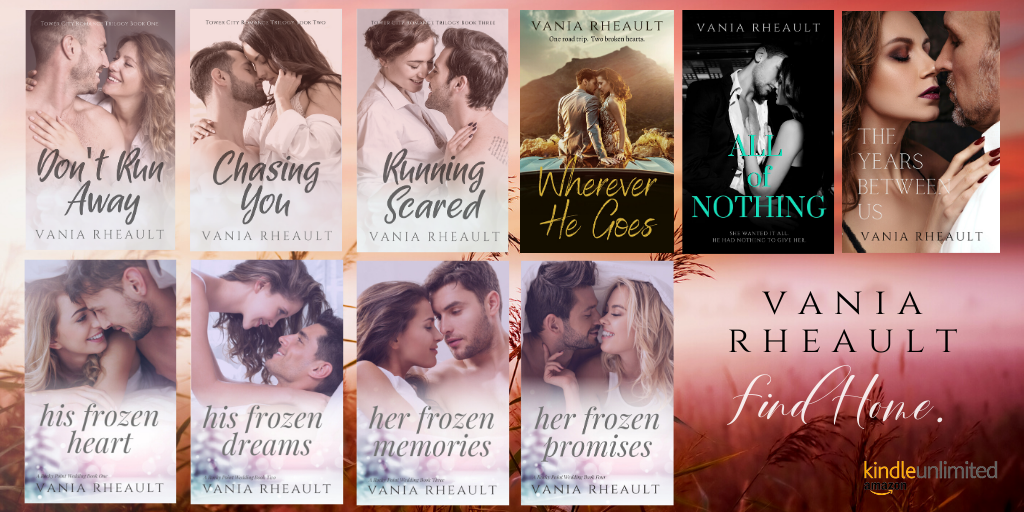
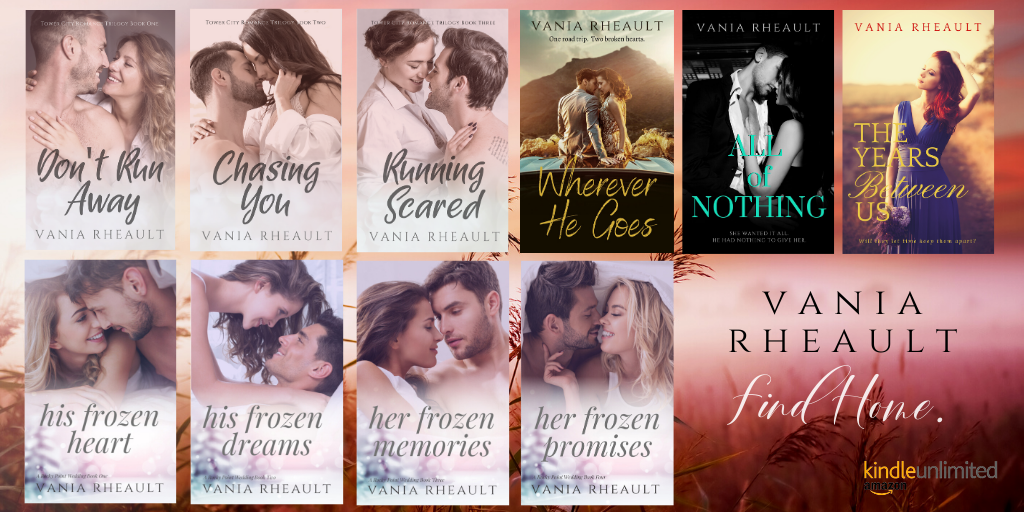
What am I going to do? I’m going to hang in there a while yet. I have four more books coming out this year, and six next year, so we’ll see what happens. I could move my 3rd person books over, but then I would be courting two different audiences, and one for a name I’m not writing in anymore. I don’t think moving my older backlist titles is the answer. They aren’t selling, and I don’t use any of the tools given to me so they do. I can’t remember the last time I put All of Nothing or The Years Between Us for free, and since those are are standalones. I only get page reads for royalties if a reader happens to borrow instead of download when I do that, no read-through to other books.

It’s important to have some kind of plan in place when you make a decision like this, a goal, so you can measure if what you did worked.

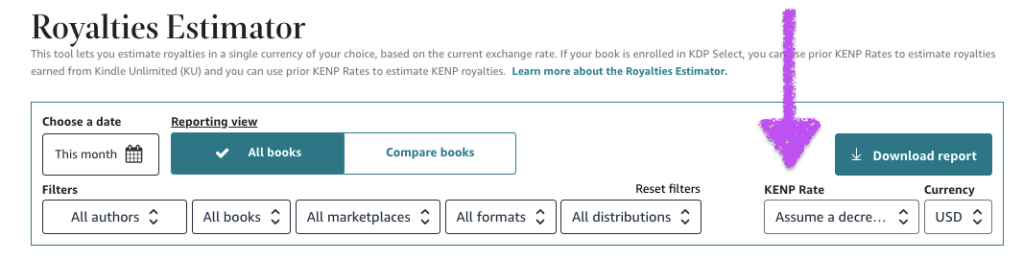
Anyway, this will come up again and again, but I hope this is the last time it drops. You can assume a decrease when looking at your KENP royalties, and that’s what I do:

The biggest concern right now, for me, is if this downward trend keeps going. More than 50% of my royalties of any given month are from Kindle Unlimited, and like other authors say on various forums, if you’ve published for a bit and have built a brand around being in KU, you can feel trapped. You don’t want to stay because you’re scared to leave or don’t want to put in the work to move wide. It’s how I feel in my day job right now. I’ve worked there for 22 years, and finding something else is scary. I signed a contract saying I can’t say derogatory things about them online, so let’s jus say they aren’t the same company I worked for 20 years ago, and it’s discouraging not to be valued. Things change, and that includes Amazon. How much you want to put up with will be your own personal decision. If you don’t feel Amazon values you and your business, if you think you’ll be treated better elsewhere, then you should go. We all need to know our worth and act accordingly.

I blogged about wide resources and you and find some at the end of this blog post: https://vaniamargene.com/2021/09/06/ku-vs-wide-can-you-have-your-cake-and-eat-it-too/

I also tweeted all of the resources I knew about in a tweet thread here:

Whatever you choose, good luck!

KU vs. Wide (Can you have your cake and eat it too?)

The answer is no.

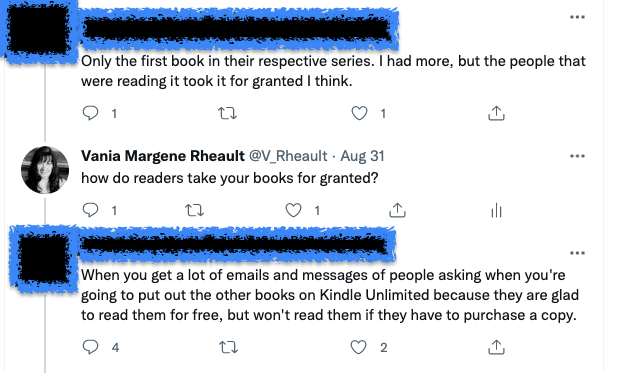
I’ve ran into a couple of people on Twitter and in some Facebook author groups who are trying to use both KU and wide tactics, at the same time, to bring in readers. I love reading threads like this, not only because I’m curious what people are thinking and how they’re running their businesses, but sometimes I’ll chime in and try to help someone who seems to be genuinely floundering. I had a back and forth with this guy, and it made me think–can we play the Amazon KU vs. Wide game successfully, and if we can’t, who loses? The question the original tweeter asked is, Do you have your books enrolled in Kindle Unlimited.

Splitting up your books is never going to work well because you’re going to alienate one set of readers somehow. Enrolling book one of a series in KU and publishing the rest of the books in that same series wide is a terrible idea, but they think:

a) the KU readers will buy the rest of the books in the series and
b) the wide readers will buy all the books anyway

Not only is this just plain old being a jerk and trying to game the system, but:

1) KU readers don’t buy. They already pay for a KU subscription–which is the whole point of paying the subscription fee, and
2) Not everyone reads on a Kindle or uses the Kindle app, which is the whole point of going wide, right? To reach the readers who read on a Nook or uses the Apple Books app. Or likes Kobo.

I wondered why these authors didn’t want to mark their first book at .99 or even free and ask Amazon to price match, but then I realized it’s because they would make more money on page reads (a 250 paged book brings in about $1.10 if a reader reads the whole thing) and more than what Amazon pays out for a .99 cent book. (KDP pays only a 35% royalty on a book priced that low.)

So they really are trying to game the system. The only thing is, it’s the readers they are trying to bring into their fanbase that are hurt. If you want to appeal to readers, you have to think like them. I have a KU subscription, and just the other day, I saw a Facebook ad from a wide author I was curious about who was giving away a first-in-series. I downloaded it and read it, and had I wanted to continue the series, I could have bought the others, but I didn’t. The book didn’t grab me enough that I wanted to continue. That’s another thing these authors don’t think about trying to game the system–your writing has to be TOP NOTCH to make a reader shell out money to keep reading. I mean, that’s a no-brainer anyway, but had her series been in KU, I would have read the next one even though the first book didn’t engage me all that much. But to buy them, there are three more in the series, each priced at $4.99, that would have been a costly stretch for me. Fifteen dollars to finish a series where the first book didn’t grab me… ah call me cheap like the guy in the tweet, but that’s just way too much. (And if I were to pay that for a book–I would go to Barnes and Noble and buy a beautiful hardcover by an author I know I’ll enjoy.)

You might be wondering where I’m going with this, and it’s this: I’m obviously not her reader. With her books having 1,500 reviews a piece, she knows who her readers are, and they are willing to pay for each book. True, giving away a free book can definitely bring in new readers, but you are taking the chance and if you don’t hit the mark, you’ll lose those new readers just as quickly as you brought them in.

When it comes to building a fanbase, you are much better off focusing your energy on doing things the right way than spending all your time scheming the best way to “pull one over on Amazon.” This could stem from a hatred of Amazon–no one likes having to be exclusive to gain the rewards of participating in KU. But while you think you’re being smart, what you’re doing is hurting readers who want to read your books. KU readers aren’t cheap–they just aren’t your readers.

What can you do if you’re wide? How can you reach the maximum number of readers? Well, if you’re going on the assumption that readers are, indeed, cheap, and don’t want to pay for books, yet you want those vile creatures as your readers (I’m kidding, kind of), Kobo does have a subscription service similar to KU, but your books do not have to be exclusive. The only problem with enrolling your books into that program is that to have access to it, you have to publish directly with Kobo, not let a distributor like Draft2Digital or Smashwords publish on your behalf. Kobo Plus is similar to KU in that readers pay $9.99 for access to a library of books and Kobo pays the author based time and pages read. (You can look at the full article about royalties here.) So while you may not like the idea of losing out on KU readers, nurture Kobo readers, enroll your book into Kobo Plus and use your marketing tactics to tell people that your book is enrolled there. Readers don’t need a Kobo device to read Kobo books, either. The Kobo app is free to download and will turn any tablet or phone into a reading device. (Although, if you like to read in the tub like I do, some Kobo Readers are waterproof, and you can find the list here.)

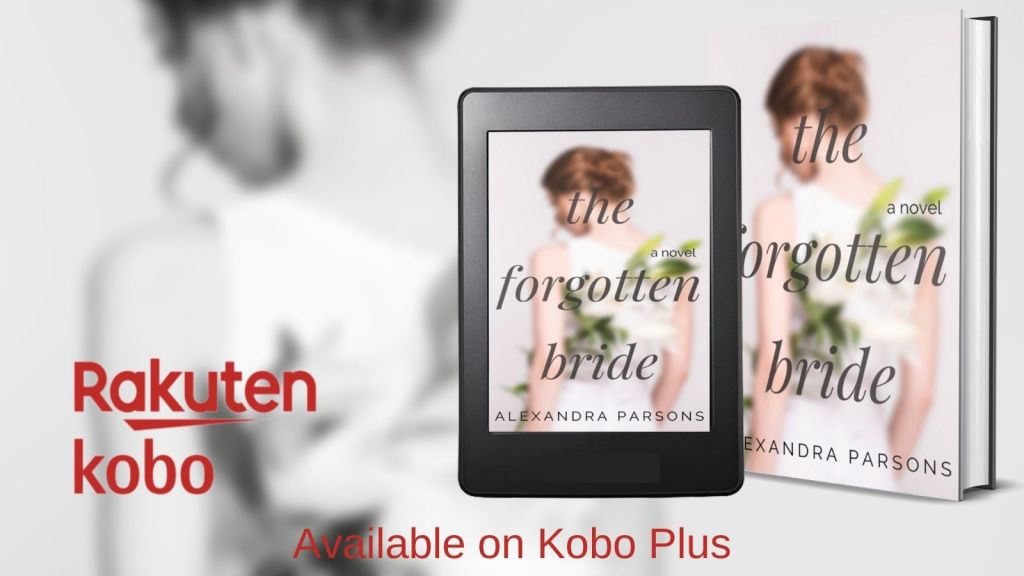
Instead of complaining because you think the grass is greener on the other side, pick a side and water that patch. It’s easy to let your Kobo readers know your books are available in the Kobo Plus library. For all the time I spend on Twitter, never ever have I seen a tweeted ad like this:

It took me longer to decide on the Kobo logo to use than it did to put that together. (I already had the fake cover mockup made–I’m assuming if you promote your books you’ll already have a few graphics made, too.)

I mean, I guess there’s no help for the people who think it’s funny to try to pull the wool over Amazon’s eyes enrolling their books in Kindle Select while their books are published on other platforms:

Truly lovely human being, there. (And I would love it if Amazon reached out to that author and asked to be reimbursed for all the KU royalties he earned while breaking their exclusivity policy.)

This Twitter thread showed the true colors of some indie authors, and I didn’t like what I saw. Most blamed Amazon for having to stoop to their underhanded ways or crappy attitudes, but, no one, not one person, ever said you have to sell on Amazon, exclusive or not. And then we wonder why indies have such a bad reputation as authors, business owners, and publishers. You know, I feel sorry for people who have to deal with us. I really do.

There are a ton of wide resources out there, and I’ve blogged about them before. Don’t like KU, don’t be in it. Want the page reads, enroll in it, and suck it up you can’t be anywhere else. Plenty of authors make a good living off of KU, and plenty of authors make a good living wide. I can list a number of things that enable them to do it, and if you can’t, it would help your business to figure it out. (I’m not making money yet because I’ve spent the past four years learning what’s on that list. I can only hope making changes to the way I run my own business will help.)

Stop trying to have your cake and eat it too. All it will do is give you a stomachache.

Good luck!

Resources:

Wide

Killing It on Kobo by Mark Leslie Lefebvre

Wide for the Win by Mark Leslie Lefebvre

Wide for the Win Facebook Group

Amazon

Amazon Ads Unleashed: Advanced Publishing and Marketing Strategies for Indie Authors by Robert J Ryan

Amazon Ads for Authors: Tips and Strategies to Sell Your Books by Deb Potter

Amazon Ads FREE course by Dave Chesson

And if you just want to get back to basics and start over, David Gaughran put together a free course on starting from day one:

David Gaughran, Starting from Zero

Sales vs. Borrows: What they mean for your business and other rambling thoughts.

Happy Monday from cold, chilly, and snowy Minnesota!! It’s not so happy for me since I had a hell of a week last week, and not in a good way. Unfortunately, I had a huge personal setback, and in the coming months I’ll be working a lot more hours at my day job. I don’t know what that’s going to mean for my writing. I type for the deaf and hearing impaired, and going from part-time to full-time may slow down my writing some. Not because I won’t have as much time, though that will be a factor, but I just can’t type that much without my arms and hands paying the price. Luckily, I’m in the editing phase of my books, but when it comes to future projects, they won’t be done as quickly.

girl looking over cliff  text: trying to figure out your path feels like a dead end at times.

That’s okay because I’m still trying to find my way in this business, and I’m wondering if I’m really going to make it or if I have the energy to even keep trying. Everyone knows that a book a year is too slow for indie publishing (unless you’re the exception that proves the rule like Jami Albright), and I’ve seen time and again those authors who are able to only release one book a year struggle to find success. On the other hand, for the past three years I’ve been burning the candle at both ends, and all that has gotten me is a big case of burnout. Don’t get me wrong, I’ve enjoyed writing this series, and I can’t wait to publish them. But I’ve never made it a secret that I hate all the stupid crap authors have to do to find readers–newsletters, giveaways, author promotions, things like that, that take time to learn and author promotions are only as good as the authors and their books. It doesn’t help your career at all to join with an author who isn’t writing quality books. And because I haven’t declared a niche, it’s difficult to partner with authors who write what I do. I’m a loner in life, and I guess I’m a loner in this business, too.

Maybe, in a small way, it will be a relief to give myself permission to slow down. I could start reading again without guilt. I could watch Netflix without feeling like I should be writing. I’ve always scoffed at people who have hobbies other than spending all their time writing, like baking. I always thought if you weren’t putting in 20 hours a week writing that you weren’t taking it seriously, and I admit, I had a lot of scorn for people who let their personal problems get in the way of their writing schedules. I mean, I wrote books through a divorce, through carpal tunnel surgery, through my precious cat’s bladder surgery, through my son’s surgery on his back in February of this year. (And he’s still healing.) None of that stopped me. I love to write, didn’t let anything get in the way of the career I was trying to build. I won’t say it’s for nothing, because I have a decent backlist and it didn’t take me long to write and publish them. But if you factor in ad spend, I only earn pennies a day, and I’m at the point where I’m wondering if it’s really worth it. Publishing is like the lottery, you can’t win if you don’t play, but cutting down my word count to a few thousand a week sounds pretty good right about now. Yeah, I’m writing this crying my eyes out. You don’t have to tell me I need to find balance, but in a world where there are 8,000 titles published every month, it’s a bit difficult to find anything meaningful in what I’ve chosen to do with my free time. Maybe the next book I write will go on wattpad. More people will likely read it if it’s free.


Anyway, I should start a weekly “Crazy Crap I read in a FB Writing Group” segment to the blog. To make matters worse, I just joined another group, this one is called Publishing with IngramSpark, and I already hate all the stupid questions they ask that they could find the answers to if they took a minute to Google instead of asking someone to waste their time. That’s not what I wanted to bitch about however.

[Insert grin here.]

Last week there was a woman who posted that she took her book out of KU ten days after enrolling in KDP Select. Everyone told her that wasn’t enough time to make a decision like that, and I told her that a wide audience and a KU audience were different and you need time to cultivate both of them. Hopping back and forth isn’t the answer. She said her reason for going back to wide is she preferred having sales over KU borrows. Now, she wasn’t getting any borrows–if you’re not doing ads KU subscribers aren’t going to know your book even exists. So her sales dried up and weren’t replaced with KU reads. That’s common switching from wide to KU.

But it made me wonder: would you prefer a sale or a borrow? A sale gives you the royalty and the sales rank boost, a borrow will only boost your sales rank–you don’t get paid unless the customer starts reading, and even then you may only get partial royalties if they don’t finish. That’s information Amazon doesn’t share with us. It would be nice to know if out of 330 pages read, if that was one person who enjoyed the book, or several people who borrowed and couldn’t get past the first chapter then returned it unfinished.

An author who may not be confident in their book may not like being in KU. Is it safe to say only the “really good” books thrive in KU? The ones that are well-written and have a fantastic story that make the reader read until the very end? You can only reap the benefits of KU if your book is good enough for a reader to make it to the end. And forget it if you’ve written a series without a strong first book. No one will read the others, and the books will sit in KU without reads or sales. I looked up her books, and she had one book, and one on preorder. She’s searching for the brass ring, but she’s not going to find it with so few books and jumping around from platform to platform. I wish her all the best.


Being that this will be my last blog post of the month, and that November is one of the craziest months of the year for me (my daughter has a birthday, Thanksgiving, and my birthday not to mention any Christmas shopping I want to do happens in November because I refuse to go into a store in December) my blog posts for the rest of the year may be a little spotty. I’ll share my stats now, and then maybe do a year-end recap toward the end of December. And no, I’m not doing NaNo this year. I never do it. I’m never in a good place in my publishing schedule to do it, and I won’t set anything aside to work on something new. This is probably the only time my tunnel vision has helped me. I don’t like working on multiple projects–I won’t get anything done that way.

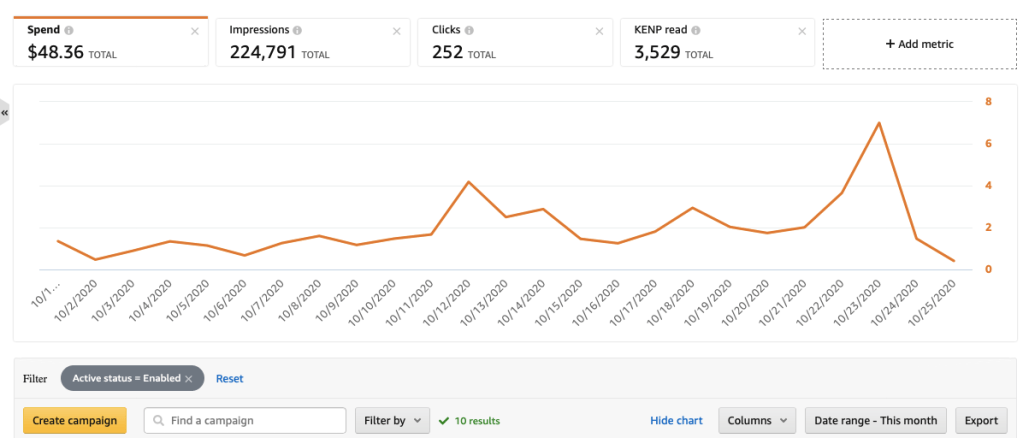
Anyway, so my ad spend, while not as fabulous as it was in August (still waiting for those royalties to dump into my account) I spent $48.36 as of this writing, the 25th of October. I’ll probably spend $50.00 maybe a little more, by the end of the month. This is over ten ads. I had to stop the ads for Wherever He Goes. I lost eight dollars before I paused them. I don’t know what’s wrong with that book, but I’m never going to make it move. Maybe it’s still the cover, maybe I can’t make the blurb work, but I’m tired of trying. I love the story, but it’s not going anywhere.

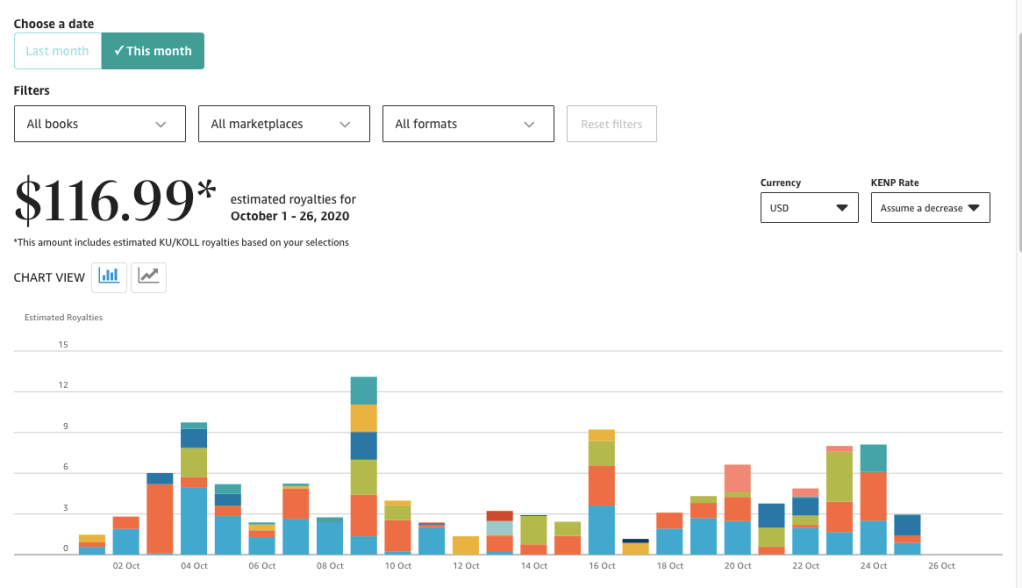
For sales, I’ve made $116.99. I’ll probably make it up to $120, maybe $125 by the end of the month.

After ad spend I’ll make about $75.00 in royalties. It’s not terrible, and my next books won’t be in third person past, so it is what it is. That goes back to the burnout thing and wondering where my writing career is going. Success is a great motivator, and if you don’t have any, it’s tough to keep going.


If you’re wondering how I’m doing without Twitter, I’m doing pretty great, actually. I don’t miss it as much as I thought I would. I’ve only popped on once to follow back and someone messaged me to ask for support during a virtual author interview over on FB. If I tweet anything new, I can do it from the platform I’m on, like the WordPress reader or the Bookbub blog, and that helps too. Maybe I’ll go back, maybe I won’t. For right now I don’t see the value in it. Hopefully, that will change.

Have a wonderful finish to October, and don’t forget to vote! Do it for my birthday (November 28th)–that would be the best birthday present a girl could ask for.

Until next time!
Amazon Ads Adventures: how did my May go?

Because I have nothing else to talk about, let’s see how my ads did for the month of May. Right now I’m running ads for four books: All of Nothing, Wherever He Goes, The Years Between Us, and His Frozen Heart. I actually came in ahead last month, making about $60.00 after ad spend. That’s not terrible–breaking even for me so more than acceptable at this point–and I’m aware that it’s more than what some people are making on their books right now.

Before I get into the numbers, I’ll tell you that my daily ad budget is always $5.00, and that my bid per click is always between .25-.35. I never EVER go with Amazon’s suggested bid. I know click bid can depend heavily on genre, and everyone always says how competitive romance is. But I’m not willing to up my bid on the off chance that it will make me more money. Right now all I’m concerned with is tweaking my covers, blurbs, and look inside so that my books are profitable, and my lower bid per click is working. I get impressions and I get clicks and that’s more than enough for now. There is plenty to worry about without hoping Amazon’s suggested bid won’t blow your grocery budget for the month.

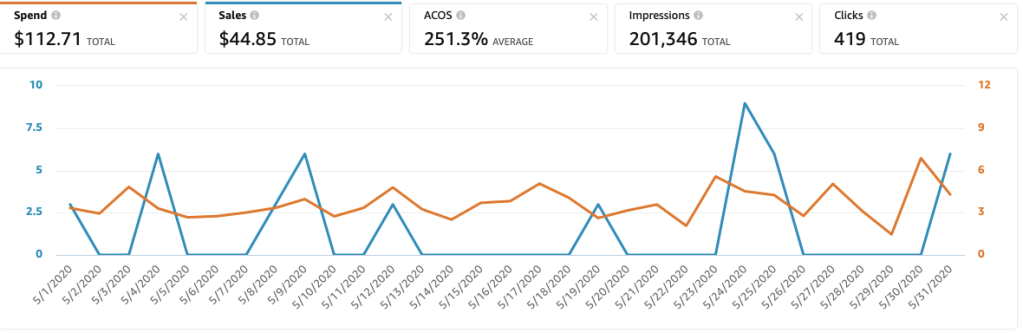
My ad spend for the month of May:

Don’t let the spend versus sales fool you. If your books are in KU, the sales don’t include KU page reads. Sales are readers who buy the ebook/paperback. And in this case, I didn’t sell any paperbacks.

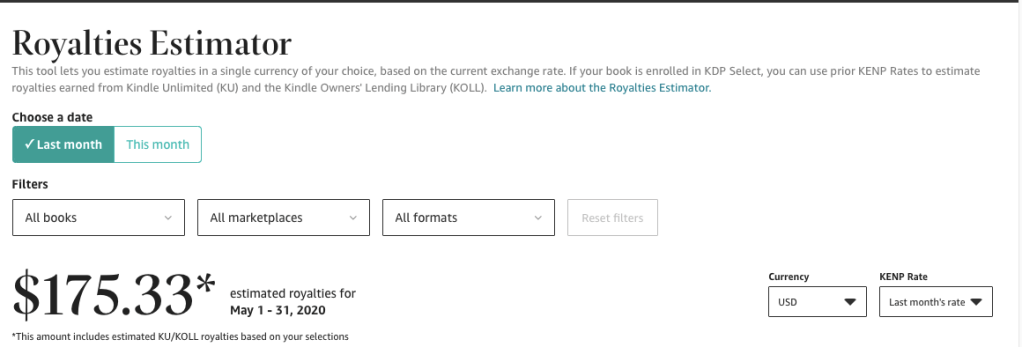
Here are the royalties:

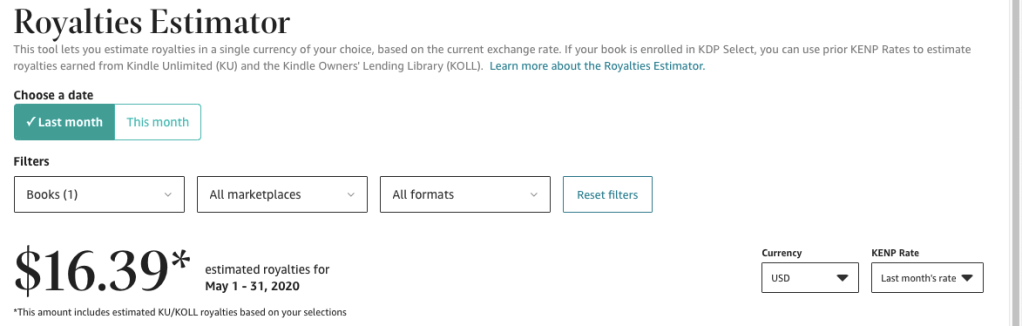
Using the royalties estimator from the KDP reports dashboard is the easiest way to look at your royalties. Some people use BookReport, a Google Chrome extension, but I haven’t put Chrome on my Mac.

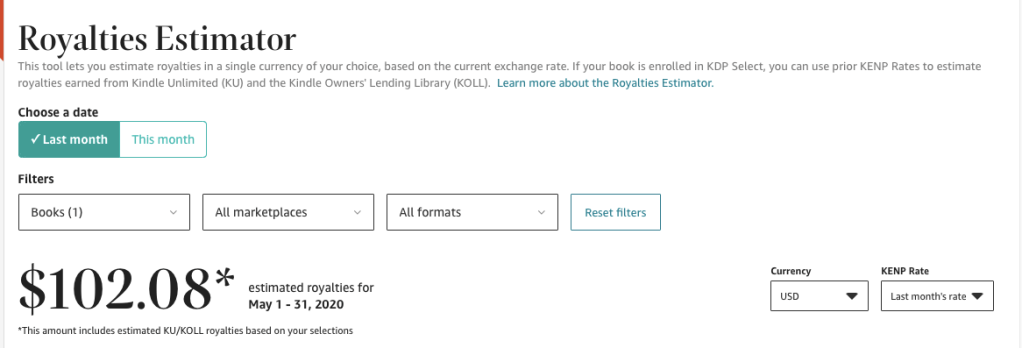
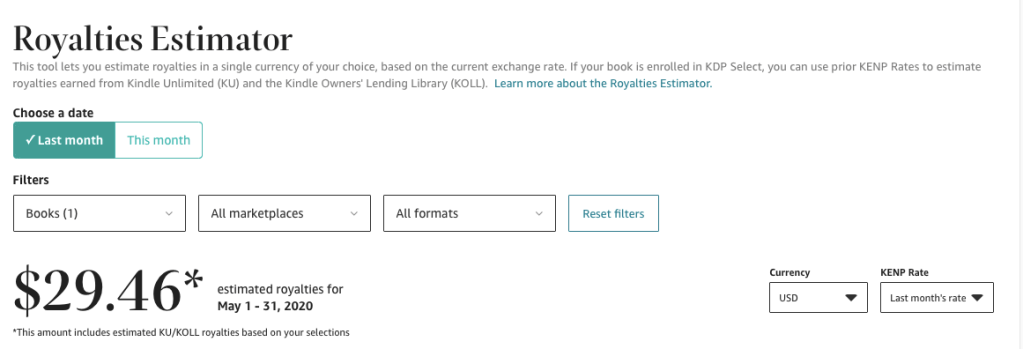
I took screenshots of the royalties vs. ads for each book individually. I don’t normally look at that–so long as I’m not wasting money, I don’t mind which book is making more than the others. You can see All of Nothing made the most–and also spent the most. Wherever He Goes is the unpopular one of the group, and maybe a new blurb could help. But I’ve already rewritten it, and at this point I’m done going back.


My numbers might not add up 100% just because I do make a couple cents here and there on other books, but these are the main four I run ads for. You can see that All of Nothing is the leader in sales. Sales for that book allows me to lose money on ads for the others. Is that smart? Probably not–all your ads should run in the black, but I’m just playing around and experimenting.

I’m happy to see that The Years Between Us is doing better with the new cover and blurb. People are actually reading it and in the past few days I have been selling the ebook; people aren’t only reading it in KU. I wish they’d buy the paperback because the new cover looks gorgeous in print.

Anyway, so that’s how I’ve done for the month of May. So far for June I’m in the black, but just by a few dollars. I may not be making a ton of money, but I’m picking up new readers, and that feels good. The last book in my series launched at the end of May, so I don’t have any reports yet on how my read-through is for the four books. I think next month I may plan a Christmas-in-July promotion and buy a BargainBooksy promo and see if I put His Frozen Heart on sale for .99 if I can get some read-through for that series. I’ll be playing around with ads for the next little while because I won’t have anything coming out for a few months.


What I know I learned from Bryan Cohen’s free ad challenge that he does every once in a while. He gives out such useful information, and he’s even usually around to answer questions. I can’t say enough good things about the guy, and I really encourage you to sign up for his challenge in July. It makes a big difference if you know how to use an ad platform before plunking down the money on experimentation. Trust me, there’s a lot to experiment with (like ad copy) without worrying about wasting money on ad spend because you don’t know what you’re doing. If you want to sign up for the challenge next month, you can find Bryan’s sign up link here. I don’t get anything if you sign up. I learned a lot from his classes and homework, and I know you will too!

Thanks for reading, and I hope you’re all having a wonderful June so far!

Scammers Gonna Scam

2020 indie publishing predictionsI’ve fallen a bit behind with the 2020 predictions published by Written Word Media at the beginning of this year. I try to always finish what I start and I wanted to at least end this series even if half the year has already gone by and maybe no one really cares what’s going on because we’re dealing with bigger things right now.

I’ve forgotten where we are when it comes to the numbering of this series, but we’ll keep going.

Another prediction that Written Word Media predicts is that scammers are going to become even more prevalent as the the industry grows.

There will always be scammers. From the big guys who ask $10,000 to publish your book to the jerk who charges $25 to use a free photo and slap some text on it to make a book cover, someone is always looking to take advantage of someone else.

This is the part of the in the industry that I despise. There isn’t a day that goes by when I’m not online getting bent out of shape about something. I’m a member of lots of groups on Facebook and every day there’s someone who posts, “My client asked for XYZ for their book and I don’t know how to do that.”

This bothers me on two levels: 1) these guys are charging for a service they don’t know how to provide. If you don’t know how to do something like hell you should be charging for it. And 2) they’re asking the group to do the work. You have the audacity to charge for a service you are not qualified to provide then you ask someone else for the answer.

A case in point: Lots of people have started a formatting service using Vellum. Fine. Whatever you want to do, but if you are going to charge for your time and “expertise” the least you could do is look up answers for yourself. I’m not the one getting paid to answer your questions.

Another thing I can’t stand is all the crappy book covers for sale. Buying a book cover from a shady designer will get you into trouble. If they steal artwork, or use photos not available for commercial use, or they use fonts not available for commercial use, that is all on you – your name is on that book.

There are scammers out there who have whole premade cover businesses made entirely on free images off Pexels, Unsplash, and Pixabay, put some text on it in Canva and sell it for $50 or $100 for paperback. Some of these people don’t know any better. They think anything online is fair game, but some just want to make a quick buck off a new indie author who is excited they wrote a book and want to publish it.

These guys are dangerous. Trusting them is stupid, and with a couple of hours of practice in Canva you can do for free what they are charging for.

Another place where scamming has become popular is editing. You need an editor to proof or edit your book and you have a ton of offers when you ask around on Twitter. A lot of people who edit charge way more than their experience allows, or they shouldn’t be editing at all.

There’s a guy on Twitter who wanted to edit for me, for a fee, and I’m glad I never took him up on it. He published a book and it’s complete trash. If you’re going to solicit at least put out some quality work on your own or you’re going to look like a complete ass–not to mention look like an asshole–charging for a service you have no business telling people you can provide.

At any rate, those are only my pet peeves. The predictions article is a bit more encompassing.

Don’t pay someone to publish your book. Watch out for “small presses” where it’s just a guy living in his mom’s basement eating Cheetos and charging you to upload your book into KDP.

Learn how to do things on your own. Or network and develop a couple friendships and add them to your publishing team. Always ask for a sample and/or reviews and testimonials from other authors. Be responsible or you’ll pay $500 for an edit and your book will come back with typos and a million other things wrong with it.

There are legitimate people out there. Take your time in look. And seriously, if you aren’t happy with what you get as a finished product, say something. If you find out you’ve been scammed, maybe you can file a claim with PayPal if that’s how you paid or ask your bank for a stop payment.

You can contact Writer Beware if you feel you have been scammed. There are resources to assist you in legal action, and perhaps add the person who scammed you to a list so they can’t scam anyone else. This is a wonderful resource provided by SFWA and you can look at it here. Also, you can, and should, look at the list before you hire someone and make sure some else hasn’t reported them.

Your books are your business and responsibility. Take care and be careful. On the same token, don’t charge for a service you don’t have the skill or expertise to provide.


The article didn’t go into this kind of scammer but they are out there. One type are the writers who take advantage of Kindle Unlimited. Scammers like Chance Carter, who used to bookstuff and offer prizes to readers who would review the most.

Or the authors who will put blank spaces between paragraphs (making their book “longer”) to up their page read. In fact, I just read the look inside of a book like that a couple days ago. Sometimes this is ignorance–authors don’t know how to properly format a book. Most times it’s

intentional, trying to scam Amazon out of page reads. And hurts us. Kindle Unlimited Authors are paid out of a giant fund, and if those funds go to authors who haven’t earned the page reads, then they are stealing our royalties.

Another type of author scammer is the kind that uses click farms to get page reads. It was rumored that the writing duo/trio Alexa Riley used click farms for page reads to catapult them to the top of the charts. That was what I had heard in a romance group I’m in on Facebook. Upon looking up an article to link to this post, it seems they were banned from Amazon for bookstuffing, but it could be they were also using click farms for page reads.

Another author said they were plagiarizing and using ghostwriters to publish their books faster. Whatever is true, and whatever is not, Amazon took their books down for violating terms of service and/or using their account illegally.

David Gaughran likes to keep track of these “black hat” authors as he calls them, but he doesn’t publicly denounce them. Lots of us want to know who they are so we can avoid them, not work with them, etc. But as he states, there does come a risk when pointing fingers and sometimes it’s best just not to say anything at all.

The point I’m trying to make is that scammers can be on both sides of publishing. Yes there are people who offer services and charge exorbitant prices for those services, when they do not have the skills required to offer any type of services at all. And then there are the authors who think they can make a quick buck or two scamming Amazon and Kindle Unlimited, and therefore, their fellow authors.

It’s too bad that an industry can be so riddled with people who would do anything to make a bit of cash. (And sometimes it’s a lot more than a bit. A top selling book on Amazon has the potential to make thousands of dollars a month.)

The one thing you can remember is that authors like Chance Carter and Alexa Riley, even Faleena Hopkins, do end up getting theirs. I’ve heard that Chance has tried to come back under different pen names such as Abby Weeks, and Amazon has blocked those as well. Alexa Riley may end up coming back too. She could already be out there writing books under a different pen name. It’s difficult keeping track of these authors when you are trying to build your own business.

Scams will continue to pop up as the article suggests. They aren’t going to go away.

As an author who requires services, be careful who you hire.

If you’re an author who needs to supplement their income by offering services, make sure you know what you’re doing and that you’re earning your fees ethically.

And for the love of God, don’t try to earn a quick buck with your books. Even a simple question like “Can I publish a book in KU but put a different version wide?” will put you into scammer territory. (This is a real question I’ve seen posted to try to take advantage of being in KU but also being able to sell her books wide. The answer is no.)

I fell down the rabbit hole looking up what Chance Carter, Faleena Hopkins, Alexa Riley, Cassandra Dee and others have done. There’s not much recent, a lot of it comes between 2015-2019, but it’s interesting reading all the same. I’ll add some links below if you, too, don’t have anything else to do today besides read what kinds of things authors will do to make it to the top of the charts.

It’s fun, y’all. 

This isn’t going away. Keep your eyes open, and your white hat on.

Want to read more about Chance, Alexa, Faleena, Madison Faye? Here are some links I skimmed to write this post:

#BOOKSTUFFING AND WHY IT MATTERS

Kindle Unlimited – A Cheater Magnet

An interesting Twitter thread from two years ago:
https://twitter.com/CAlmeidaAuthor/status/1002942665019846656

More by David Gaughran: https://davidgaughran.com/2018/06/10/cassandra-dee-mosaic-book-stuffing/

Reactions to the Amazon Clickfarming Scandal

BAD ROMANCE To cash in on Kindle Unlimited, a cabal of authors gamed Amazon’s algorithm


We have one or two more blog posts to finish up this series. Next up, a prediction that ebooks will continue to be grow and be the top way indies make their money.

See you there!

Free, interactive way to learn Amazon Ads hosted by Bryan Cohen

I use this blog to pass along the information about writing and especially publishing I’ve heard about, information I’ve learned from, especially the free stuff since I know how difficult it is to scrape up cash for every little thing that seems to come up when you want to write and publish a book.

In Written Word Media’s predictions for 2020, one stood out among all the others–this is a pay to play industry, and there is no getting around it. (I did a blog post about that prediction, and you can read it here.) You need to learn an ad platform to make your books visible in a vast sea of other books.

Use Amazon Ads to make your book stand out!

If you think you don’t need to learn, if you think that publishing a book and telling your Twitter followers will be enough, it won’t be. Not for the kind of sales you’re hoping for. It’s tough breaking out of the friend and family bubble, but if you want strangers, ie, READERS to find your book, you’re going to need to pay to shove it in front of them. It’s that simple.

And that scary.

70316258_10106981372290788_8409044794424164352_n

Photo taken from the FB group. To ask to join the group, click here.

Bryan Cohen is a leading figure in the indie industry (he weighed in on some predictions in the Written Word Media 2020 predictions article). He runs a blurb-writing business, has written HOW TO WRITE A SIZZLING SYNOPSIS, is co-host of The Sell More Books Show podcast, is founder of Selling for Authors, and runs an Amazon Ad School. He knows how to sell books, not just ours, but his own. If you want to see his backlist, look at his Amazon author page. I met him at the Sell More Books Show summit last year in Chicago (no, I didn’t, I was too shy to introduce myself, but he seemed to be a very nice guy, and it was my fault we didn’t chat, not his) and I participated in a different ads challenge last year. It was participating in that challenge that taught me:

  • the importance of using correct keywords
  • where to find them
  • how to navigate the Amazon ads platform
  • how to bid for clicks, and how to keep them low
  • how to set a manageable daily budget
  • how to correctly identify if your ad is a money suck or if you have any ROI (in other words, are you getting sales or KU page reads?)

    and most importantly,

  • you don’t have to spend a lot of money to see results

That was one of the main concerns that people brought up the ad challenge I participated in, and a subsequent challenge I had to drop out of because I was too busy putting my series together to give it any real attention. I was part of the Facebook group, and I did pop in and encourage other authors, and unfortunately, it was a worry for many using the ad platform.

Ads are scary, and yes, you do need a little bit of cash to experiment with. But you remain in control of the ads the whole time. You can pause an ad without penalty. If you’re getting tons of clicks and your ad spend is a little too high for your liking, you can kill an ad, and that’s that.

Bryan has a new ad challenge that will be starting April 13th. While Covid-19 is heavy on people’s minds, a lot of us are staying at home, and this might be a great time for some of you to take an hour from your day for a week and learn something that could help you for months, maybe even years, to come.

The ad challenge is free (besides ad cost). He’ll walk you through how to find keywords, what to do with them, how to bid, how to set your daily budget. He shows you how to do all this for FREE, though he is transparent in that he wants you to sign up for his Amazon Ad School. Some of you may decide to do that after taking his challenge, some of you may join the challenge just for the free information. He gets it. But he also gives you enough information that you can run some low-cost ads and get comfortable with the platform without breaking the bank and without needing to pay for his ad school for additional information.

There is one caveat to the challenge, and it’s this: HE ASSUMES YOU’RE ADVERTISING A GOOD BOOK. He assumes that your cover is on point, that your blurb on your Amazon product page is hooky and well-written. He assumes your look-inside will grab a reader to want more and buy your book.

IF YOUR BOOK IS NOT UP TO PAR, DON’T WASTE YOUR TIME ON THE CHALLENGE.

People waste money on ads because their cover is on point, but their blurb sucks. Or they don’t get any clicks because their cover is too plain, doesn’t convey genre, etc. Impressions are free (which is great!), but if you end up with 200,000 impressions and no clicks, you’ll get discouraged.

The ad challenge won’t work if you don’t have a good product to sell.

That said, I’m writing this blog post specifically to ask you to join it, learn the platform, and get your books into the hands of readers. Break that Twitter and Facebook bubble, and reach out to people who read your genre. There are hundreds of thousands of readers out there and you need a way to reach them!

man in white dress shirt and black pants sitting on bench

Do you want him reading your book? Of course you do!                                                   Photo by Andrea Piacquadio on Pexels.com

Here is the link to sign up for his ad school: https://bryancohen.lpages.co/amazon-ad-profit-challenge-landing-april-2020/?affiliate=bestpageforward

One of the best things about the challenge is the community that it brings together on the Facebook page. We share our impressions, clicks, disappointment. We ask questions, and they’re answered either by Bryan himself, so someone else. It’s a wonderful community and I’ve met some amazing and helpful authors on there. Here is the link to the FB group: https://www.facebook.com/groups/2230194167089012/ He’ll tell you about the group in the welcome video that’s available to you when you sign up.

You’re probably wondering why I’m pressing this so hard–Bryan is so generous, and I’m always impressed by what he’s willing to share for free. Trust me, what you learn in this ad challenge will get you started on the right path–he doesn’t leaving you hanging at all. Not like some webinars that are really just infomercials to try to get you to buy something. This isn’t like that.

I’ve had some small sales since learning how to do the ads. Admittedly, I don’t pay nearly enough attention to them, but this ad challenge will be different. My series is slowly dropping. Book one is out, and book two will be by the time the challenge starts. Book three will be available at the end of the April, and book four at the end of May. Shoving some money at the first in the series won’t hurt, not at all. I’ll share my numbers with you for the month of March:

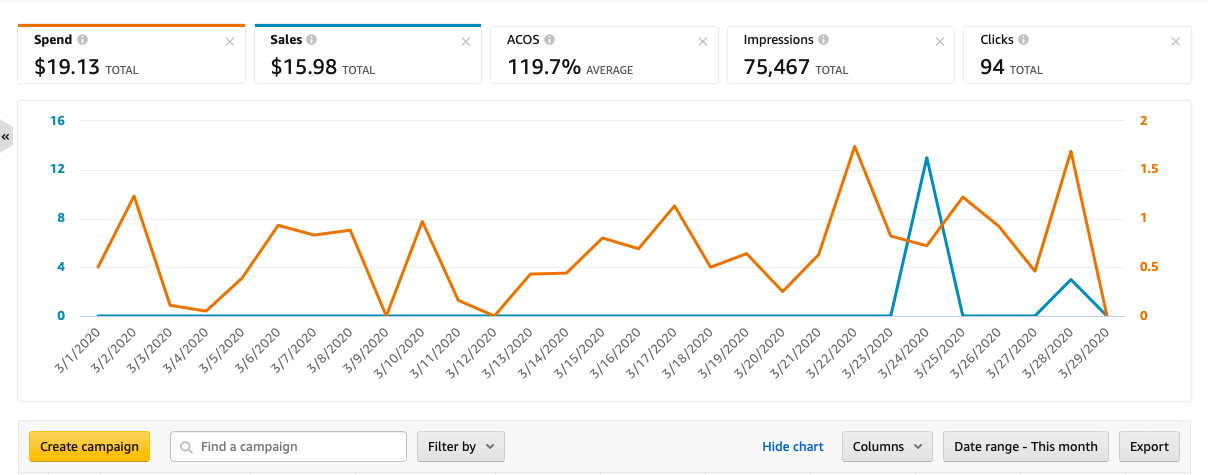
Screen Shot 2020-03-29 at 11.05.00 PM

This makes it look like I’m losing money, but Sales doesn’t include KU page reads, and Bryan will go into that with us, so I’m not freaking out that my spend is more than my sales. But see, I have only spent not even $20.00 for the month of March, and I wanted to show you that to prove to you that ads don’t have to be expensive!

For the $19.13 I’ve spent so far this month, I’m running:

10 ads for All of Nothing

4 ads for His Frozen Heart

10 ads for The Years Between Us

0 for Wherever He Goes and the other books in my backlist

That’s not a crazy ad spend for 24 ads, and a lot of authors run more ads than that at any give time.

What I’ve made so far in sales and KU Page reads:

Screen Shot 2020-03-29 at 11.31.46 PM

So I’ve spent 20 dollars to make 20 dollars. That’s a little more than breaking even, but when you’re just starting out that’s better than losing. Since I’ve adjusted my blurb on The Years Between Us, I’ve started getting sales so don’t despair right away if you get impressions or clicks without sales. Things can be changed. They aren’t set in stone–take comfort in that. Plus you only have to run the number of ads you’re comfortable with. I dip my toes in, obviously. I don’t have time to do more than that.

Anyway, it’s late here, so I need to wrap up. I just really can’t say enough about Bryan and his challenge. He taught me so much, and I can’t wait to do the challenge again! I hope you join me!

Until next time!

end of blog post graphic

The Big Five Using KU? Let’s Discuss

2020 indie publishing predictions

I know we got this virus thing going on, and we’re all stuck at home. I’m struggling to keep going with a writing schedule and blog schedule because even though being home and not having to do anything is a writer’s dream, my body really does only want to dream and it’s a struggle to stay awake. I still walk, and blog, and yes, I’ll even be going to work. Not sure how that’s going to play out, but, anyway. My Mac ate some of my Vellum files, so I’ll be reformatting some of my books too, as this drags on.

At any rate, I will keep my blog posts up, of only because 2020 will be over by the time these prediction posts come out, so I want to get them done. Without further ado, we’ll keep going on, to what I think, is a very interesting topic.

The next prediction Written Word Media talks about in their 2020 predictions is that the Big Five Publishing houses will start using KU to push their huge author backlists. Michael Anderle predicted this saying, “We will see Big Five publishers using KDP (Amazon Kindle Unlimited) in 2020 as they seek to acquire income with their enormous backlists.”

This is interesting to me because:

  1. We know how much the Big Five hates Amazon. Using KU would require them to set aside prejudices and admit that Amazon isn’t the bad guy. I don’t know if this can happen. I feel like there is too much resentment toward Amazon to admit that KU can/will help them sell books. They already hate being dependent on Amazon – we know how much they depend on the retail giant, and we know how much they hate it by the amount of complaining they did last year before Christmas when Amazon didn’t order as many books as expected due to storage space. It was all the traditional publishing industry could talk about until Amazon increased their orders and all was right with the world.
  2. They still look for the “big book” every year. Their business sales model still depends on finding a huge book and shoving everything they can at it. (See: American Dirt) There’s no mid list anymore and they make a lot of their sales with the tried and true authors like Nora Roberts and Stephen King. The prolific authors who put out two books a year and make a gazillion dollars on each one. The Big Five are always looking ahead for the next big thing (which can be a good thing) and don’t, in my opinion, care about older books (which is bad for their authors but good for us indies–more on that later).
  3. The Big Five don’t like to share. Macmillan has already limited books that go to libraries, saying borrowing library books negatively affect their bottom line, when there are several studies that prove the opposite. With those kinds of attitudes, I doubt they would enroll books, even older books, in an author’s backlist in a subscription service. At least owned by Amazon. The idea that they start their own subscription service may be something worth looking out for.
  4. The price of KU may go up. The chances the Big Five being content with how much a page read is worth (usually about .0045 cents) is slim to none. If the Big Five lobby for a higher page read royalty — someone is going to be unhappy. That could be the reader who may need to cover that with a higher per month subscription price (right now a Kindle Unlimited subscription is 9.99/month), or us indies will get shafted having less royalties to claim (traditionally published books have always had more perks than we’re offered). Amazon will do what they need to do to make money and keep customers happy. Luckily for us they don’t kowtow to the Big Five, but that means they don’t care about what us indies want or need, either.

I feel with the bad history that is between the Big Five and Amazon a partnership won’t be likely. Amazon is stealing authors away like Dean Koontz and Sylvia Day. And they have their own imprints that make money and keep the Big Five from those potentially well-selling authors. Amazon doesn’t need the Big Five backlist, so I don’t see it will be likely they would give the Big Five a deal that they would be happy with.

I have agreed with most of the predictions made in this article so far, but not this one. There is too much bad blood.

But what if it were to happen? The number of books available would number into infinity. If the Big Five allowed even a fraction of their authors’ backlists into KU, I feel like that would be the beginning of the end for us, at least in KU. And perhaps even on Amazon in general. In the past, readers would by indie, and maybe still do, because our e-book prices are cheaper than a Big Five publishing house. I’m not saying readers are settling, but in these economic times, readers save where they can. If suddenly hundreds of thousands of traditionally published books are available, essentially for free, I have a hard time believing readers won’t devour those books. If that happened, I have my own prediction — indie authors would pull out of KU. The small fish, like us, not the authors like Michael Anderle who already make hundreds of thousands in KU, and move over to Kobo and Nook. We would focus on the smaller platforms that Draft2Digital helps us publish on ….

  • Apple Books
  • Barnes & Noble
  • Kobo (including Kobo Plus)
  • Tolino
  • OverDrive
  • Bibliotheca
  • Scribd
  • 24Symbols
  • Baker & Taylor
  • Hoopla

…. and we would put all of our energy into going wide more than ever before.

No one has come out and said that the bad blood between the Big Five and Amazon hasn’t given indies the space to find readers, but I believe it has. What would we do if the traditional publishing houses and Amazon saw themselves as partners instead of rivals?

I would hate to find out.

What do you think? Would KU stay the same if the Big Five started using it? Let me know.

The next prediction we’ll explore is the scammers are going to keep on scammin’. See you then!


end of blog post graphic

Amazon Ads: Bad news.

Amazon ads and bad news probably go together in sentences from a lot of indies. I’m no exception, but not through any fault of my own. Kinda.

When I did my last update, I was breaking even, and pretty happy with that.

After some ads took off and ate up all my money with no return, I had to pause them. I was 70 dollars in the hole, and I had to try to figure out why.

The culprit was easy to spot.

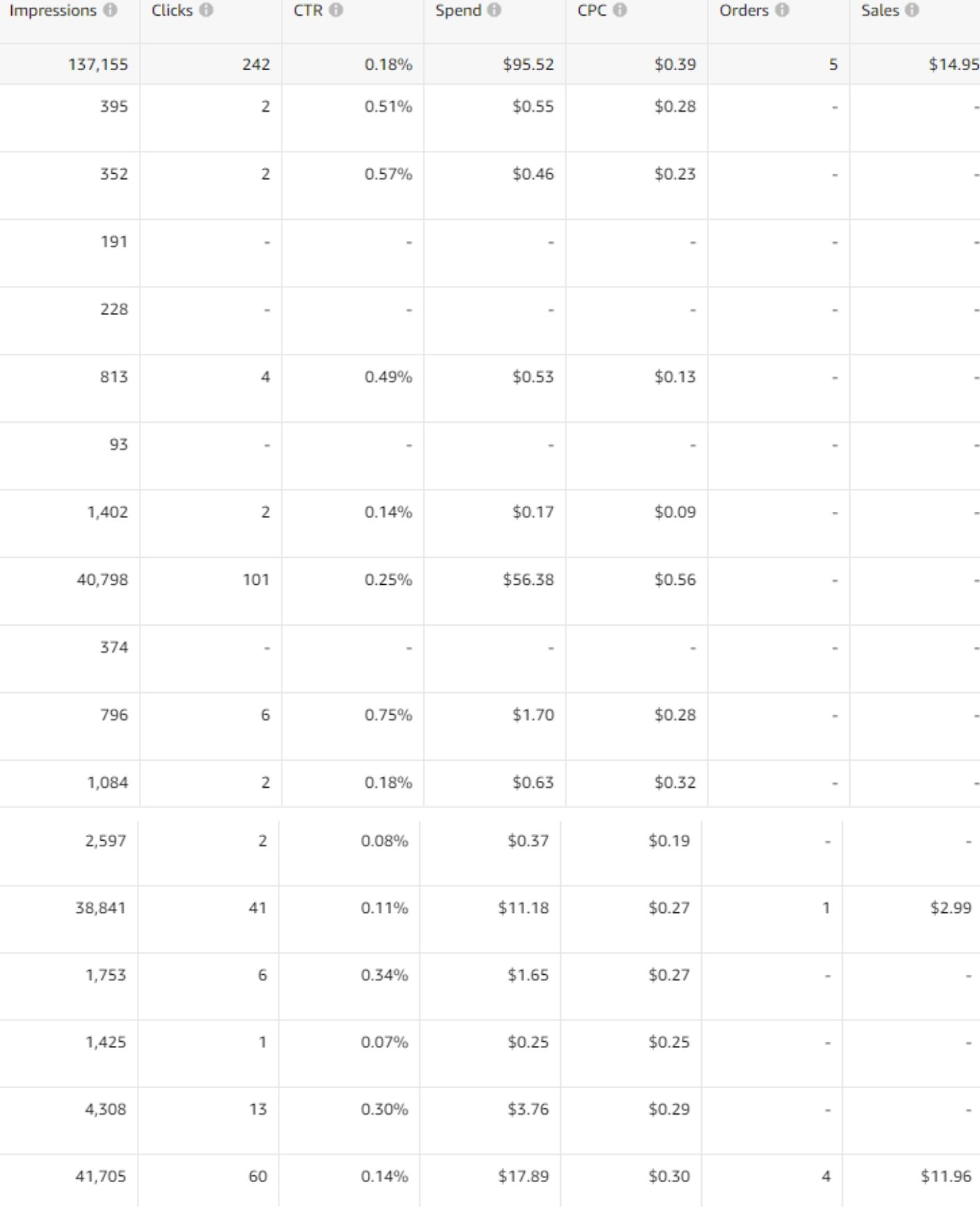
ads.jpg

These are my ad results for The Years Between Us from September 20th when I started Bryan’s ad challenge to today October 19th when I’m writing this blogpost. The numbers look impressive. Look at those impressions! Look at all those clicks!  I mean, in all the times I’ve tried running ads, I’ve never had results like this. These tell me a couple things:

  1. Bryan’s advice works. (My keywords were good.)
  2. My cover is good.
  3. My ad copy is fabulous.
    They fell in love.
    The wrong person found out.
    Now he’ll do anything to protect her.
    Even if it breaks her heart.
  4. My daily spend was good enough for Amazon to show my ad around.
  5. My bid for clicks was high enough for Amazon to show my ad around.

But.

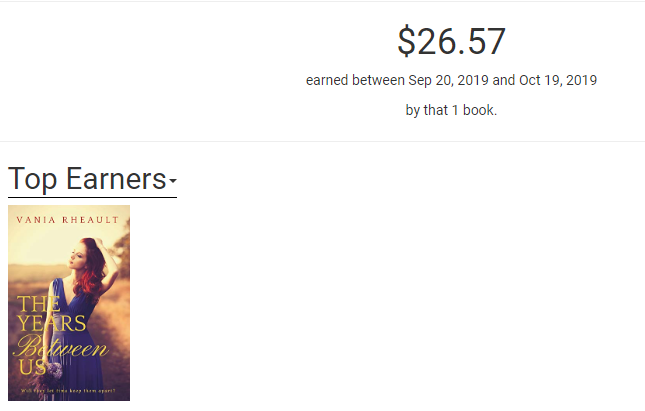
My ads, in roughly a month period, generated only $26.57 in sales and KU page reads with an ad spend of $95.52. That’s not good. (The sales column above doesn’t include KU reads so that’s why the numbers are different. The Amazon ad dashboard does not include them and BookReport does.)

book report results for the years between us

You have to be honest ask yourself why that is.

In my case, I’m sure it’s the blurb. I have a good number of clicks. I should have made more than $26.57. They liked the cover and the ad copy enough to click, but they got to the blurb and it turned them off.

That’s the only thing I can think of.

This is the blurb without having to click READ MORE (or above the fold, as they say):

Zia Bishop is in love with an older man.
On the night of her high school graduation, she persuades him to take her virginity, and the wrong person discovers their secret.

Matthew Harcourt knew he should never have made love to Zia, his best friend’s daughter.

And I guess that is enough to make people turn away. Now, this story is not naughty. It’s not dirty. If it was, then I would have used a grittier, sexier cover and marketed it as a “Daddy’s Best Friend Makes Me Wet” novel.  This is a pretty romance, with the bulk of the story taking place when she is 25 and he is 50. Still a wide gap, but maybe it doesn’t sound as weird when she’s 18 and he’s 43.

So, I paused all my ads. I’m going to rewrite my blurb, focus on a different aspect of their relationship.

The first page introduces them at her high school graduation party. So I could still lose readers if they borrow it in KU and decide after five pages they don’t want to read more.

If that happens, I may need to change the cover and target readers who will read OM/YW (older man/younger woman) romance and hope they like the softness of it, or pull it from KU and see if I can find a way to get more reviews, though I’m hesitant to try Booksprout again. If nothing works, I may just have to write off The Years Between Us completely and just forget about it.

There are things I can do, and everything needs to be tested to find out what works and what doesn’t. The blurb is the easiest experiment, so I’ll try that first.

Everything in stages, but that’s the plan so far.

The point is, there are steps I can take to try for sales, and if you find yourself in this position, you need to make sure you are constantly checking on your ads so clicks don’t eat through all your cash.

I should have paused my ads earlier, but seeing those results was pretty amazing. I have a little money to experiment, and I wanted to see what would happen. Sometimes page reads can come in later. In the Kindle Unlimited program, readers can borrow up to 10 books at a time. The Years Between Us could be sitting on quite a few Kindles waiting in a reader’s queue. But I’m not going to let clicks eat up my ad dollars if I don’t have proof of that.

All of Nothing is still making me some spare change every day, so I’ll keep my ads paused until I make up that ad spend money.

Then we’ll try again.

How are your ads doing? Let me know!

Want a list of older man/younger woman books? Goodreads has a shelf of recommendations. 🙂

Until next time!


end of blog post graphic