Unknown's avatar

About Vania Margene Rheault

Vania enjoys reading and writing. She's lived in Minnesota all her life, and with a cup of coffee in hand, enjoys the seasons with her two children.

All of Nothing’s blurb. How I rewrote it.

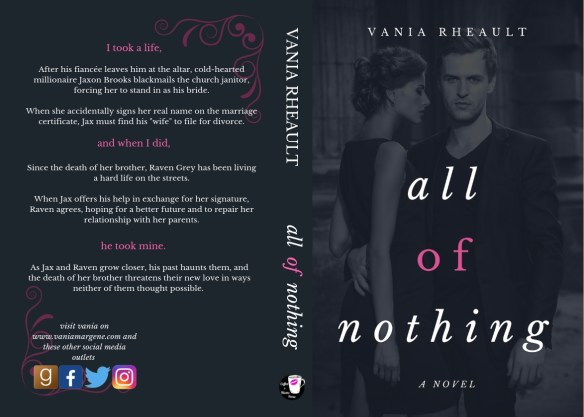
All of Nothing ebook cover

Click here to read All of Nothing! Available in paperback and Kindle Unlimited!

If you’re brave and take a look at your reviews from time to time, there may be some common themes that readers have picked out with your book. If you have a thick skin, sometimes this can be a benefit–readers can (and probably will) see things about your book that you didn’t realize yourself.

With All of Nothing, I knew Jax was a jerk, and I made him that way. An accident he was involved in damaged him beyond all comprehension. In the book he was cold and heartless because underneath the armor, that’s exactly what he wasn’t.

I had a lot of fun with his character arc, but some of the readers were put off by just how mean he really was.

So, when I rewrote the blurb, I knew I needed to make this clearer so his attitude and actions toward Raven weren’t such a shock.

Writing a blurb is difficult, and at the end of this blog post I’ll list a few resources you can look into that may help you on your own path to writing your blurbs.

***

This was the old blurb:

“I took a life, and when I did, he took mine.”

After his fiancée leaves him at the altar, cold-hearted millionaire Jaxon Brooks blackmails the church janitor, forcing her to stand in as his bride.

When she accidentally signs her real name on the marriage certificate, Jax must find his wife to file for divorce.

Since the death of her brother, Raven Grey has been living a hard life on the streets.

When Jax offers his help in exchange for her signature, Raven agrees, hoping for a better future and to repair her relationship with her parents.

As Jax and Raven grow closer, his past haunts them, and the death of her brother threatens their new love in ways neither of them thought possible.

***

I’ve linked to the podcast before, but the Best Page Forward podcast took it apart. Abigail Dunard made some good points, and so did Jim Heskett, and when I rewrote it, I tried to keep their thoughts in mind. I wrote the original blurb with tips from Bryan Cohen’s book, How To Write a Sizzling Synopsis, but I must not have done that great of a job. Anyone who teaches blurb-writing will tell you to measure how good a blurb is by the number of conversions to your ads, but if you don’t run ads, it’s difficult to measure if the blurb is working or not. (Plus, if you use that reasoning, it may be your cover that isn’t doing it when your blurb could be perfectly fine.)

Anyway, I also read Brian D. Meeks’ book about writing Amazon descriptions. He goes about it in a completely different way. It’s a very pared down approach, and does not resemble Bryan’s more book summary style at all. I decided to give that a try.  And only time will tell if I hit the mark.

When writing the new blurb, I used Brian’s tips on copywriting, things I gleaned from the reviews, and tried to take out the confusing parts of the blurb the podcast hosts pointed out.

I ran it by a couple people who liked it, but until I start getting more reviews and more feedback, I still may not have made the right changes. The beauty of being an indie, though, is that you can make any kind of changes you want, nothing is locked in. Because I did do a cover update at the same time as rewriting the blurb, I went ahead and replaced the blurb on the back cover. But that isn’t always necessary, and if I tweak the blurb again, I’ll leave the paperback cover alone.

***

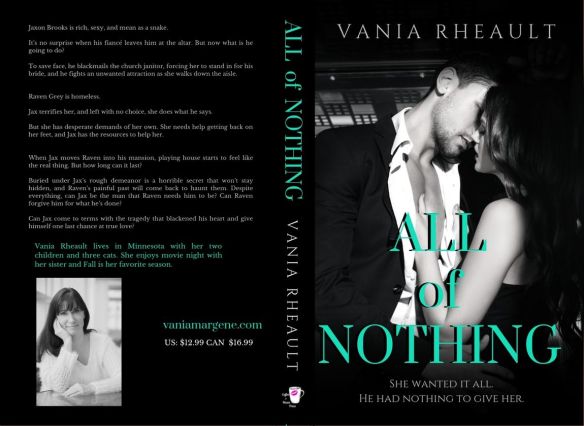
Jaxon Brooks is rich, sexy, and mean as a snake.

It’s no surprise when his fiancé leaves him at the altar. But now what is he going to do?

To save face, he blackmails the church janitor, forcing her to stand in for his bride, and he fights an unwanted attraction as she walks down the aisle.

Raven Grey is homeless.

Jax terrifies her, and left with no choice, she does what he says.

But she has desperate demands of her own. She needs help getting back on her feet, and Jax has the resources to help her.

When Jax moves Raven into his mansion, playing house starts to feel like the real thing. But how long can it last?

Buried under Jax’s rough demeanor is a horrible secret that won’t stay hidden, and Raven’s painful past will come back to haunt them. Despite everything, can Jax be the man that Raven needs him to be? Can Raven forgive him for what he’s done?

Can Jax come to terms with the tragedy that blackened his heart and give himself one last chance at true love?

If you like enemies to lovers or a bully hero, All of Nothing is perfect for you! Read it today!

***

The one huge departure from the other blurb is the call to action (CTA) at the end. I hate telling people what to do. I leave my kids alone, I didn’t run my ex-husband’s life, I don’t even like to give advice unless it’s asked for, and then I’m fully prepared for anyone not to take it. My back matter doesn’t ask readers to sign up for a newsletter, give a review, or read the next book. So putting that last sentence at the bottom really threw me, but Brian swears by it, and well,  it’s way down at the bottom, so what did it hurt? (And I do realize I’m letting opportunity go by with no CTA in my back matter, at all, and I’ll try to think of something when my wedding series drops.)

Is it better? Is it worse? I have no idea.

That is part two in what I did to revamp All of Nothing. I’ve been getting good feedback so far on the cover, and I’ve been kind of messing around with Wherever He Goes. But I don’t want to get so caught up in busy work that I’m not working on my current books.  I’m still on track to put this quartet out by the holidays, and I’m going to keep my eyes on that prize.

In the next blog post, I’ll go over metadata and keywords!

Thanks for reading!


Need help with blurbs?

Check out Bryan Cohen’s book.

Check out Brian Meeks’ book.

Listen to Libby Hawker’s tips on YouTube. Her videos are cut into parts, just to let you know, and this link starts with part one. This was quite some time ago, and trends change, but sometimes if you can piecemeal advice from different sources, you can turn that advice into something relevant today.

Bryan Cohen and Chris Fox did a presentation about Blurb, Cover, and Title at the 20books Vegas conferences last November. This is such a great resource, and one of the conferences that I plan to go to! Take a listen to this video on how blurbs, titles, and covers work together to sell your book.


Thanks for reading, and let me know if you have any blurb writing tips!

end of blog post graphic

Choosing Amazon to self-publish. What’s so bad about it? My answer? Nothing.

amazon love hateWarning! Lots of thoughts that are a bit scattered, but I try to keep them coherent at least. I’ll blame writer’s brain and the fact that I’m almost done with book three of my series. Yay!

Okay . . . carry on.


If you read my blog here in there, you’ll know my feelings toward Amazon are complicated, with a capital C.

But I’m not alone.

There are lots of people who think Amazon is either a devil or an angel, depending on who you talk to, and if it’s on Monday, Wednesday, or Friday. (On Sunday you might find a select few in church praying for Jeff Bezos’s soul.)

Dean Koontz’s book deal with Amazon only added gasoline to this already wicked fire. Was he smart? Greedy? Some accused him of starting the toppling of the traditional publishing model, although a few other bigger-named authors have inked deals with Amazon too, like Sylvia Day, with less scrutiny.

Everyone is quick to point fingers, but the fact is, traditional publishing has been on a decline for years because they cling to an old model that is no longer working in the changing landscape.

Depending on huge bestsellers like Stephen King, Nora Roberts, John Grisham, and James Patterson is harmful. People who champion this say coddling the big authors funds the little authors. But I questioned this in two ways. The mid-list is shrinking. Who exactly are they funding? And more importantly, if new authors are not being sought out, their careers nurtured, who will replace these top authors? We can’t depend on all authors like Stephen King to have children who will take over their publishing empires.

One of the most frustrating things about traditional publishing is the lack of risk-taking. Yes, they are the gatekeepers of quality, but while they are busy keeping quality inside their walls, they are also keeping quality out, too. Only so many books are published every year—and those numbers include already established authors. There’s no room to grow.

Yes, they are the gatekeepers of quality, but while they are busy keeping quality inside their walls, they are also keeping quality out, too.

No one ever said if you want to be rich write a book. Some publishing houses or small presses won’t give an author an advance anymore, and if they do, it isn’t much.

Traditional publishing asks a lot of writers who want to be published:

  1. Query an agent. This could take months, if not years.
  2. Go through edits with said agent, if you’re lucky enough to follow the lengthy guidelines required to query each agent and have one sign you.
  3. Wait for your agent to sell your book. If she can. And that’s contingent on a few things: what kind of book you wrote, what’s selling, and what other agents are peddling. There are not many editors to go around.
  4. Then you might have to go through more edits with that editor.
  5. Wait a year for publication.
  6. Market your own book (with a cover you may not like and edits you don’t agree with, but you wanted to be traditionally published, right?).
  7. Make a fraction of book sales because your agent and publishing house take a percentage off the top.
  8. Hope your first book sells so maybe your agent and editor will take a look at another book.

Never mind that after you’ve gone through all of that, depending on what kind of contract you signed, your book isn’t yours anymore; your rights are gone.

To be honest, the more I learn about traditional publishing, the less it appeals to me. And to other writers. And where do writers turn when they want to publish, but don’t want to go the traditional route?

Amazon.

To be clear, publishing with an Amazon imprint is still considered being traditionally published. You can’t be considered without an agent. Which does make me a bit confused. If agents are so vocal about Amazon ruining traditional publishing, how will an author find an agent willing to submit their manuscript?

I listen to Print Run Podcast and the two agents who host make it clear how they feel about Amazon, Amazon’s view on books, and what they are doing to publishing as a whole. Take a listen to their latest episode where they discuss the Koontz defection, and cross them off your querying list if you want a deal with Thomas & Mercer or Montlake.

And that brings us back to what traditional publishing thinks we should do. As authors, we want our work read, not shoved under our bed because an agent’s intern was having a bad day and rejected our query.

We turn to Amazon as self-publishing authors.

But that isn’t what enrages the traditional publishing industry. What makes them so mad is that authors who publish on Amazon are making money, and there’s nothing they can say about it, or anything to defend themselves. I’ve seen proof of writers who can make good money publishing quality books. Consistently.

Living wage money.

In traditional publishing, where does the money go? To the CEOs of the huge corporations that own the publishing houses, and to the big authors who earned the gigantic advances. There is no mid-list in publishing anymore. We’re all over on Amazon earning 70% royalties and keeping our rights to our books.

Yet, somehow this is all Amazon’s fault. Mostly because Amazon is accused of not caring about books. It’s brought up time and again Jeff Bezos started moving books because they are compact and couldn’t break.

The traditional publishing houses, and anyone associated with them, holds on to the philosophy Amazon doesn’t care about books. I can say the same about the traditional publishing industry, too. If a book doesn’t sell, you’re out. Your career, too. There are no second chances, no molding of careers. Can an industry who doesn’t pay their authors, or help them sell their books, say they care about the writer or the book? They aren’t publishing for art, they’re publishing for money, and authors aren’t getting a piece of the pie. Caring about a book and caring about selling a book are two different things, but they don’t have to be mutually exclusive. I love my books. I love selling them, too.

Maybe books are loss leader on Amazon, but that doesn’t change the fact that Amazon gives every writer something that an agent or traditional publisher won’t or can’t.

A chance.

A lot of authors take that chance and turn it into a four, five, or six figure career.

And Amazon is the bad guy?

I get Amazon lets too many things slide: book stuffers, plagiarism, letting indie authors publish crap that wastes customer dollars if they don’t look closely enough at the product. But the thing is, it doesn’t make them any different than any other company. Everyone has bought something brand new from a store that didn’t work when it should have. People buy cheap crap, because stores sell it, all the time. It doesn’t make it right, but Amazon isn’t doing anything new.

You can say they treat their employees like crap, but again how is that different from any other company? We all have not-so-nice things to say about where we work. Walmart is a huge culprit of this. Not long ago it came out that their workers were working off the clock to get all their work done.

Questionable ethics abound. Starbucks employees are racist. McDonald’s serves unhealthy food. Jimmy John’s founder trophy hunts. No one stops drinking coffee, and McDonald’s is still the number one fast food restaurant in the United States.

Authors don’t have a problem making money doing something they love. And if everyone else does, it’s time to do something about it.

Traditional publishing isn’t letting more authors in. Every year they keep more out.
Barnes and Noble is still in shambles, though it would be great if the new owners could give Amazon a run for their money. Apple Books doesn’t seem to be a contender, and you have to jump through more hoops than a circus tiger to publish with Google Play. When I was wide, Draft2Digital wasn’t able to publish my books there.

Everyone can complain about Amazon, but no one is stepping up to compete. Shouldn’t that be what the traditional publishing industry’s job?

Dean Koontz obviously felt that his publishing house wasn’t going to give him what he wanted or needed for the next handful of books in his career.

That’s not Amazon’s fault.

Amazon may not love books, but they are forward-thinking and are willing to pay authors for their work.

What do you have to say, traditional publishing industry?

Seems like all you can do is point fingers when you’re the only one in the room who can do something.

Untitled design

All this paper is good for something. I’d rather write another book for my backlist than take the time to query agents who will reject me.

I may have vented some frustration with Amazon in the past, but the truth is, writers should go where the money is, and for now that’s KU for the page reads and a 70% royalty  for self-publishers (or an imprint if you can get it). With no one else willing to give authors competitive alternatives, I’ll take my chances.

And instead of writing 500 query letters, I’ll take that time to write another book.


It’s important to note that in some genres it makes more sense to query. I write Contemporary Romance. That’s one of the top genres that does well in the self-publishing space. YA fantasy, middle grade, and picture books do better when you can take the time to query. I’m not saying you can’t self-publish, but those kinds of books require a different kind of marketing, and you’ll need to do your research and make sure you understand how you’re going to reach your audience once your book is self-published. Always research the best way to publish your books.


There’s a lot of opinion on the state of publishing and whether or not querying is a viable option. Amazon is accused of not caring about books, and training readers to want free things. Traditional publishing is accused of not moving forward and staying in the past. It’s interesting to take a look at all angles and read different sides to different stories. For more reading look here:

You can read another opinion piece from the New Yorker, here.

This is a great read on both sides. PUBLISHING INDUSTRY NEWS
Amazon’s Influence on Authors & the Publishing Industry

Stay Away From Traditional Book Publishing by Dean Wesley Smith

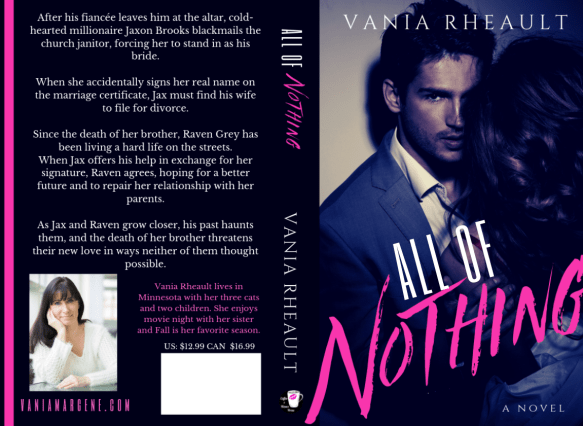
All of Nothing’s make over.

I first blogged about All of Nothing getting a face lift last week, or was it the week before? I’m not sure, but you can look here, if you’d like to read the initial post. I said I was going to go over what I’m going to do to breathe a little life into the book.

The first thing I did is redo the cover. It went from this:

All of Nothing Paperback Cover

To this:

all of nothing second coverjpg

I would say that’s an improvement. I don’t have the proof yet, and I suppose writing a blog post about the cover without the proof seems to be a bit too forward thinking, but that’s okay. I can post it when I get it. I know the title doesn’t seem to be centered, but uploading it into KDP Print proved to be one over-correction after another. The title may very well be too much to the left, but what’s what the proof is for.

At any rate, covers can go through a lot of revisions and just all around bad ideas before an epiphany is realized and you think of what you wanted to do all along, or you stumble upon the perfect couple at 2am when you shouldn’t have been awake anyway.

The first cover I came up with looked like this:

all of nothing second cover FULL TITLE

No one liked it. I put it on the Indie Book Cover FB group for feedback and while no one had anything BAD to say, no one liked it, either, and everyone agreed to take out A NOVEL at the bottom. I think I came up with a nice tagline to put in its place.

It left me a bit stymied because it has a grittier feel than what I had before, and gritty and kind of mean, more alpha, bad boy, asshole was what I was going for.

But I’m glad I posted it and listened to the feedback because one poster said she bought a premade using the same guy. She even gave me the name of the site. It’s a closed group, so out of respect I won’t post the cover, but I’ll give you the website and you can take a peek yourself if you want to see the cover she bought.

I played around with it some, putting into play some of the advice I received from the group; doing something different with the tint, but overall, I guess I felt it wasn’t doing what I wanted it to do after all, I gave up for a little while.

all of nothing take two

That wasn’t even all that bad . . . but that’s okay. Trying out new things until you stumble upon something else that could be better is part of the creative process.

Going through DepositPhotos one day I came across this couple:

couple in elevator two

A lot of what goes through my head when I look at photos is, what is the steam level? That was one of the things I was aiming to up on this cover: fully clothed models weren’t depicting what my books were about. Where can I put my the title? Where can I put my name? With my limited skills, what can I do to it to make it stand out? This is important because my skills are LIMITED. I can only do so much in GIMP, and I need to know if the picture is decent as is, and if it’s not, what needs to change? A cluttered background? Can I get rid of that zooming in? The color? How real are the models. Do they look too model-y, or too human? A nice medium is what I shoot for. I probably looked at this couple while looking for others and I passed them by. Until almost a fully-formed cover with these two popped into my head, and I was able to create almost a perfect cover in half a hour.

I used what little skills I have in GIMP to fade the top and the bottom and using a few tips I learned from my friend Aila’s blog post about Canva, I was able to make the rest there.

Next week I’ll take you through how I rewrote the blurb and my process for doing it!

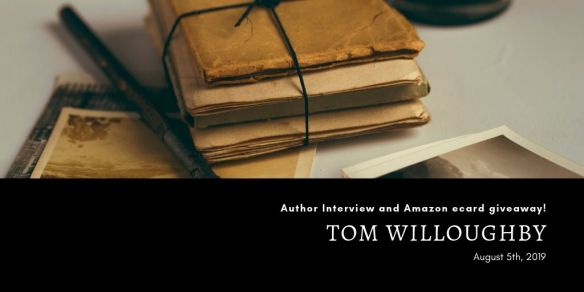
Plus, on Monday, I’m doing an author interview with my friend, Tom, whom I met at the Sell More Books Show Summit! His debut book will be live Monday, and I’m so happy to be part of his launch! Look for an awesome interview with him, and a $25 Amazon ecard giveaway, too!

Author Interview with tom willoughby


Thanks for reading, and I hope you’re enjoying your week! I haven’t made much progress on my 3rd book in my series, as these days off this week just have flown by (plus the weather is gorgeous and I’ve been spending time outside!) but I still plan to have it done by the weekend. 12-15,000 words left. We will see! Wish me luck. 🙂

thank you for your patince


Downtime. Not doing a damn thing.

You know how it is. You have a long list of things you could be doing. As writer, publisher, and entrepreneur, that list is long. There’s always something, and writing new words is right on top.

What’s after writing?

  • Writing a blurb.
  • Looking at hot guys stock photos
  • Reading a non-fiction book
  • Listening to a podcast
  • Beta reading
  • Reading  a book in your genre
  • Creating an ad (after you’ve read the book about it, of course)
  • Blogging, reading and commenting on other people’s blogs

But sometimes you turn on your laptop, a cat crawls into your lap, and boom. You’re tired, and you’d rather watch the next episode of Outlander than see if your blurb is converting (if you don’t know what that means, you need to read Mastering Amazon Descriptions: An Author’s Guide: Copywriting for Authors by Brian D. Meeks. Another thing you can add to your list! Yay!)  I’m sure Diana Gabaldon thanks you. But I probably should point out that without her writing the words, there would be no show. Maybe Outlander was a bad example.

I’m in that predicament tonight. The things that I could be doing right now? Working on the new cover for All of Nothing. Working on the blurb. Writing more words for the third book in my Wedding Party series.

Instead I’m sitting with a fan blowing on me. I’m a little nauseated from sipping too much Prosecco on an empty stomach. I was grinding my teeth in my sleep last night so I have a toothache on the left side of my jaw, top and bottom, that feels a little more than mild, and all in all, I’m just tired.

And feeling like this is always a conundrum. Do you give in, or push through? Give in and practice a little #selfcare, or do you, in fact, get some shit done?

I suppose it depends on where you are in your schedule. Don’t have one? Well, nothing gets done simply by dreaming, and if you give yourself a pass too many times, you’ll end up with a handful of days where nothing got accomplished. A schedule isn’t a bad thing.You need to be a self starter and self motivator if you want to keep getting your stuff done. It can keep you on track. A schedule or a plan can at least be a guide in that if you do start letting too many days go by, you can tap yourself on the back and ask yourself what the heck is going on.

Taking a break to breathe is advisable, but if you want books to publish, you have to write them, too.

I could put on some coffee and at least get one or two small things done. Work on my blurb. Look over what I have for my cover. I’d like to swap them out so the book is ready to go when I put all my books back into KU next month. The cover is going well, and I’ll update you on that probably Thursday. I’ll be swapping out the cover for IngramSpark, too, so that will be lovely, though I’m getting used to the IS user interface and dealing with the cover template isn’t so hard anymore.

I had a soft deadline of getting book three done by the end of the month. I’ll be close, but maybe not finished. But that’s okay. Without the deadline I probably wouldn’t have made as much progress as I did. I’m proud the book is almost done. It’s a good book with a strong plot and relateable characters. It seems crazy to say that I’ll have finished three books this year.

But I guess that’s the point of this blog post. I wouldn’t have been able to accomplish that had I given myself too much downtime.

For tonight I’ll try to calm my stomach down, make some coffee, and see if I can check one thing off the list before going to bed.

I’m going to a writer’s meeting tomorrow, so that should be interesting. I’m not a joiner, and while I know the value of networking, I can’t lie. More than a little bit of me wants to skip it.

When you decided to be a writer, did you know how many people would be involved?

I didn’t either.

I feel like I should offer you something since you made it this far and have given me 15 minutes of your time or so, so I’ll end my blog post with this.

I recently read Make Money on Medium: Build Your Audience and Grow Your Income with Medium.com. I’m always open to new things, but after reading the book I realized I don’t want to write for Medium–I like blogging for the audience I already have. But whether you’re a blogger or a Medium writer, Nicole gives some good tips for what to write, how to write, and headlines. I’ll share one little tip that she tells her readers about, and that is a blog title, or headline evaluator.

Headlines or titles are important in that you don’t want your readers guessing what your content is about. You could have a GREAT blog post, but no one will read it if you title it something weird. (That goes for book titles too, but that would be a different blog post.)

There are a few headline generators, and you can Google them.

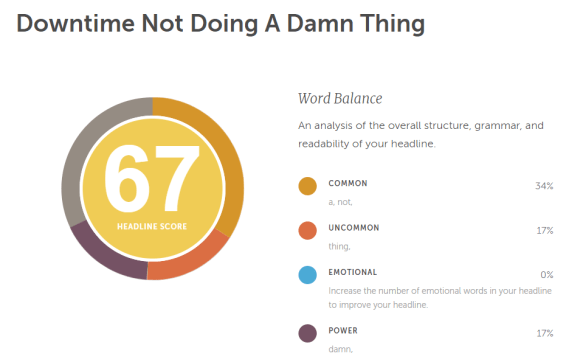
Coschedule.com will analyze your title (if you give them a few pieces of info about yourself and your business) and tell you if it’s too weak. It didn’t like the title I came up with for this blog post:

blogtitle analyzer

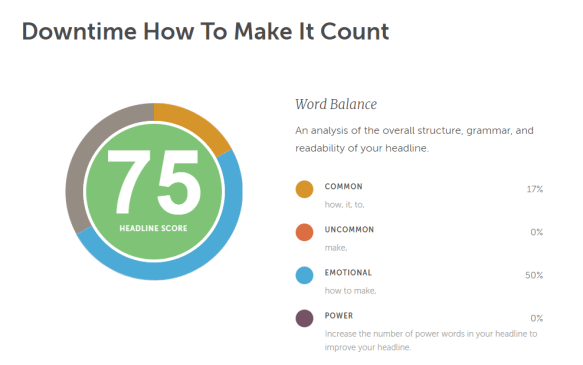
Nicole suggests that you want your book to be at 80 or better. She even admits that she might spend more time thinking up a good headline or title than actually writing the post. That seems crazy, but on the other hand, no one is going to read what’s inside if the title isn’t appropriate, so she isn’t that far off the mark. Being she’s a HUGELY popular writer on Medium, I would take her word for it.

You can plug in titles forever, but just to see what I could do, I changed my title:

blogtitle analyzer2

That’s actually a vast improvement, but a lie. That’s not what this post is about. Mainly it’s about not feeling guilty if you don’t feel like doing anything, but also keeping those feelings under control so your to-do list doesn’t look like Mount Kilimanjaro by the end of the week/month/year. Everyone knows how fast time goes.

Anyway, if you’re interested in writing for Medium.com I suggest you take a look at Nicole’s book. She offers you some great tips on how to get started, how to follow and pick up followers, and how to write for a pub. If you’re on the fence about blogging, but feel you should be giving out content in some way to get your name out there, writing for Medium could be a good way to do that.

What am I going to do now? I still haven’t shaken off my blahs, but I did take some Aleve for my mouth and made a cup of coffee.  I could work on my blurb or watch another episode of Outlander.

I’ll let you guess which one.

Have a great week!

thank you for your patince

All of Nothing is Getting a Makeover!

Anyone who has read my blog on a fairly consistent basis knows my motto, if I had one, would probably be “Onward and Upward” or “Never Look Back” or something along those lines. I’m not a fan of going back, especially if you’re fixing shoddy work to begin with. Do it right the first time or don’t publish until it’s ready.

rebranding all of nothing blog post

But with writing and publishing, there’s always going to be something bigger, something better, news, tools, software, maybe even someone you meet, something you learn, that can help you do something in a better way, or in a more efficient manner. And you’ll want to go back and fix something.

And that isn’t a bad thing. We always want to keep learning, keep moving forward, keep honing our skills.

That’s why I decided to go back and fix All of Nothing. Not edit it or rewrite/revise it.  No, I think the insides are very strong, and I’m really proud of that book. I mean, the blurb, the cover, and looking up new keywords for the metadata for Amazon and ad targeting.

  1. Cover. I was super happy with the cover when I made it back in October of 2018, and I received good feedback, too, albeit from other author friends, not readers. Since then my skills have developed more, I know better places to find stock photos, I know to look at other covers in my genre so I know what is hot right now since trends change. This is why I redid the covers for my trilogy. They didn’t depict what genre it was (some were calling it “sweet” romance when it’s steamy), I didn’t research what was selling in Contemporary Romance for indie authors, and over all they looked homemade. This is All of Nothing‘s problem, too, and I need to rectify those issues so the book fits in and it entices readers to want to buy it or borrow it in KU when I enroll it next month.
    This is the worst thing I have to do with the revamping of the book. Not only do I have to replace it on KDP and order the proof, I have to replace it on IngramSpark, too. Either I need to join the Independent Book Publishers Association, or pay the fees. I’d rather join the IBPA because free file uploading at Ingram is covered in their yearly fees. That works for me since The Years Between Us is still not being offered there. Sigh.
  2. Blurb.  No one can write good blurbs.  No one except the staff at Best Page Forward, Bryan Cohen’s blurb writing business.  I offered All of Nothing‘s blurb for critique when their podcast started up, and naturally, the hosts shredded it. I didn’t know it was that bad. If you want to listen to the Best Page Forward’s critique of All of Nothing‘s blurb, click here. I recommend the podcast, but unfortunately, I can’t afford Bryan’s prices for a blurb. One of the FB groups I’m in offers blurb critique so I’m going to rework the blurb and see if I can’t find something that better explains what the book is about. I’ve been reading a lot of copyrighting books lately, so hopefully I can come up with something better suited with a little help from the critique group.
  3. Keywords. I’m going to be delving into this a little more. I came upon a new sub-genre called bully romance that I think Jax falls into quite well. Feedback indicates

    he’s not likable until the last part of the book (read, the ending) and if I can prepare readers for how harsh he is to Raven, that can only be a plus for me. This will help me target readers if I decide to do any ads. But for now I’ll focus on new keywords and phrases for the seven spaces KDP gives you when you publish. It’s a great idea to keep those keywords fresh. I bought Publisher Rocket, so I’ll be using that to help me, though I’m going to have to take some time to learn how to use it.

That’s what I’m going to be doing with this book. Covers take a lot of time, and I’ve already started playing with various ideas. I’ll blog about those next week.

Do you have a book that would benefit from any or all of the above? How are you going to go about it? Got a plan? A list? Let me know!


thank you for your patince

Changing your Point of View: How you write, and thoughts on 1st, 3rd, past and present tense

change pov blog post

Change comes whether we want it to or not. Sometimes change happens so slowly you don’t know it’s happening. Sometimes you’re not paying attention and the old way you’ve taken for granted is suddenly gone.

This happened to me, though I think I was more in denial this was happening than embracing the change. Maybe I was hoping it would go away, or maybe I was hoping the old way would hang in there. The latter may still have a chance, but the former isn’t going to happen.

What am I talking about? The way fiction is being written. Not even by indies, as this change has been happening with the traditionally published books in the past couple of years as well.

To explain, let me go back.

Like all writers, I grew up reading. Nancy Drew, The Babysitters Club, Sweet Valley High. Slowly, I graduated to Sweet Dreams romances, VC Andrews and Harlequin Desires and Temptations.

And looking back, I realize there is one thing all those books have in common–they were written in third person past tense.

It stands to reason then, that when I began writing my own stories, I too, wrote in third person past since I grew up reading it. Never would I think this way would become outdated, but I’m afraid that it has.

Now books today are written in first person present, and that doesn’t seem like that’s going to change any time soon. Take a look at any new book, especially a romance in Kindle Unlimited, and you’ll see what I mean. I liken this to how Mike Campbell loses all is money in the The Sun Also Rises by Ernest Hemingway:

“How did you go bankrupt?” Bill asked.
“Two ways,” Mike said. “Gradually and then suddenly.”

It seems as if first person snuck up on us, and then suddenly it was everywhere.

And as a writer who writes in third person past, this is troubling because this isn’t about catching a trend or even writing to market, it’s about adapting to change as not to be left behind.

It used to be first person, be it past or present, served one purpose–the sole reason why the writer chose to use first person when writing their novel: to tell the story of “I.”

change pov blog post2

Who was the “I?” A girl with magical powers? A young boy out to seek his fortune? The author chose that way as a device to tell that ONE person’s story through their eyes. Middle grade and YA were (are) written in that fashion so the young readers could more easily envision themselves in that role.

I can’t remember the first person book I ever read–and I must have read some; they weren’t non-existent as I was growing up, but they obviously didn’t make an impact on me. And when I was a young adult, and now a “real” adult myself, I don’t read much YA.

And maybe this is the point.

I’m outdated. At forty-four years old, I’m writing in a way that is being used less and less, except by the authors who have been writing for as long as I’ve been reading. Nora Roberts, Brenda Novak, Robin Carr.

When you read and enjoy first person books, that is what you’ll probably write. Books like the Hunger Games, Twilight, 50 Shades of Gray took the lead of a style of writing that is prominent now. You may be shaking your head, but think to when those books were written and how popular they were. The first book in the Hunger Games Trilogy was published in 2008. Twilight, 2005. Divergent, 2011.

I’m an old lady.

When thrillers and romances are now being written in first person (and present, too) where do you fit in if you like to write in 3rd person past tense, or even 3rd person omniscient?

I write contemporary romance, and when others who write in my genre use first person, it confuses me. There is no “I” in contemporary romance, there are two characters. His and hers. Or his and his. Or hers and hers. Depending on what you write. There is no single “I” on a journey to a happily ever after. Writing a two-sided romance using first person, to me, defeats the purpose of using first person.

Is this an old way of thinking?

Some of the greats still use 3rd person past, Nora Roberts holds true. So does Susan Mallery. Brenda Novak still does, and Robyn Carr as I mentioned above. The Harlequin lines, though they are going through some rearranging at the moment, still seem to publish 3rd person past romances, at least their little pocket romances like their Intrigue and Desire lines.

And to really confuse me, authors are starting to use a mix of points-of-view, and what’s even more mind-numbing is that it’s becoming popular, like The Mister by EL James. Maxim tells his story in first person present, but Alessia shares her story in third person present. I would love to ask Erica why she wrote it this way.

It seems like these days authors use POV as an artistic tool. Does it work, does it not? I have no idea. They say anything that takes your reader out of the story is bad. But what is bad is subjective.

Dark Places by Gillian Flynn tells two stories. One story is present day and written in first person past, the other story took place while the female main character was a child and it’s told in third person past. She obviously choose this as a stylistic choice. Does being with the “I” character makes us feel more intimate with her? I don’t feel it would have changed the story much had she written the present day timeline in third person past. But with the popularity of her books, no one seems to mind what tense she chooses.

Have I had any complaints when it comes to my third person books? No, not that I’m aware, but nor would I know how many sales I’m either gaining or losing because of my choice.

So what is a writer to do? Keep writing in a style you like and are good at? Practice a different POV? I’ve tried writing first person present, and I liked writing it as much as I like reading it, and that’s to say, none.

And I will always believe writing a romance in first person POV when the author intends to show both sides of a relationship doesn’t make sense, and you can pry my opinion out of my cold, bloody fist.

change pov blog post3

But it’s obvious that what is coming out by younger romance writers that my viewpoint is not shared, and it’s not shared by their readers, either.

We need to adapt with change, though. When will my dislike turn into simple stubbornness? And when will that stubbornness keep me from reading books I may otherwise have enjoyed? I can’t be an old curmudgeon waving my cane hollering “3rd person past” at every writer I meet.

Point of view can bring on choices that you need to make besides just how you want to write your book. If there’s an “anything goes” with what’s between the covers, our blurbs and ads need to reflect that. Blurbs have always been written in third person present. Some unspoken, unwritten rule has ordained this since the beginning of time, and it didn’t matter if your books were written in first, third, or alien.

Now though, if your book is written in first person, blurbs are changing to reflect that. The first book I grabbed off Amazon that is self-published and in KU happens to be written in first person past and the blurb is also written in first person. Maybe a coincidence, maybe not. Is this how blurbs need to be written now? When did the rules change, and where do you read them in the updated Author Handbook?

What about ads? Ad copy isn’t the same as writing your book, though blurbs and ad copy are cousins, I guess. Ad copy is supposed to be snappy, hook your reader into buying the book. If you sell a book with snappy first person ad copy, but your book is written in third person, will that go over well with your reader?

I have no idea. You’ll hear it in reviews though, guaranteed. Or at the very least, wasted ad money for clicks that don’t turn into sales.

Looking at “how it always used to be done” may not help in these quickly changing publishing times. For another look at how to write blurbs and in what POV look at this blog post by Writer Unboxed. The author of the article mulled it over a lot more eloquently than I did. Marketing Copy: The First- Versus Third-Person Debate


I’ll keep writing in 3rd person past. It’s how I write best.

Write how you write at your best because after all, it doesn’t matter if you write in first, third, or alien, it comes down to giving your readers a good story.

But I caution you using POV as a stylistic choice to cover up lazy, or poor, writing. If you’re going to experiment, make sure you have plenty of betas on hand to tell you if it’s working or not.

You can do whatever you want to do with your book, but you still want people to read it too. Even aliens.

change pov blog post4

That was some really bad Sunday night humor. And with that I am going to bed. I hope you all have a lovely week of writing ahead!


thank you for your patince

graphics made with font and photos from canva.com

A Snippet of Book One of my new Wedding Party Quartet

Series sell. Readers get invested, and that can mean the world to an author. Personally, I prefer to write standalones. Maybe because for now, I prefer reading them, too. But I recognize the value in writing a series, and after writing three stand alones,  I planned out a four-book series consisting of full-length novels.

I’m going to write them, edit them, format them, design the covers and drop them all at once. Risky, perhaps. But there are authors who swear by rapid release, and for consistency reasons, I would finish them all before publishing them, anyway.

Because I said I would update you as I write them, here is the first couple scenes of the first book. This was originally the second book in the series, but I felt it was a stronger start. The second book will need a bit of fluffing up, but nothing too terrible, and I’m looking forward to adding to the plot as I learn more and more about my characters.

Book One is about Callie Carter and Mitch Sinclair. Mitch has been in a horrific accident that has left him scarred, both physically and mentally. Callie has been under her father’s thumb for many years and accepted an offer to be a bridesmaid for a chance to breathe and figure out her life. Little did Mitch and Callie know that Marnie Zimmerman and James Fox’s nuptials would be the catalyst for such significant change.

Enjoy this small, kind of edited, excerpt from the first book of the Wedding Party Quartet. It doesn’t have a title yet, but that’s just one more thing I’m working on as I write. 🙂


“You’re here!”

Callie Carter tugged her suitcase into the Rocky Point Resort’s lobby as Marnie Zimmerman’s shriek zinged across the room.

“I told you I would be, but my dad didn’t make it easy,” Callie said, easing her case to a stop in front of the registration desk.

Marnie frowned. “You deserve the break.”

Callie set her purse on the counter next to a display of resort brochures. “No one knows that more than me. I had the time, and there wasn’t anything he could do about it.”

Her father didn’t believe in taking a break. Horace “Ace” Carter didn’t believe in down time. Rest. Taking care of her emotional health, her physical health. He believed in getting the job done. And for the past ten years, she had. But rubber bands, stretched too tightly, eventually snap, and Callie was almost there.

“I’ll make sure you have fun . . .” Marnie said, linking her arm through hers while the agent ran her card and handed her a small stack of papers.

“Here’s your key, Miss Carter,” the desk agent—her nametag read Sophia—said, handing her an honest-to-goodness key attached to a maroon keychain with the gold Rocky Point Resort logo stamped into the plastic. “You’re in room two-thirty-one, next door to Marnie and James.”

“. . . Starting tonight.”

Callie pulled her suitcase behind her. She’d left a few dresses hanging in her car, and she’d have go to back for those later. “What’s tonight?”

“I planned a get-to-know-you dinner. Jared is picking up Leah in Marengo, and she’ll be here this afternoon. I can’t wait for you to meet her. Hell, I can’t wait to meet her!”

“You are positively giddy,” Callie said, laughing. She stopped at the base of the short set of stairs that would take them to second floor. Purse hanging from the crook of her elbow, she hugged Marnie. “I’m happy for you.”

Marnie hugged her back so hard her spine cracked. “I am happy, and I’m happy you could be here.”

“I wouldn’t have missed it.”

She’d been honored when Marnie asked her to be a bridesmaid, and hadn’t thought for a second about saying no.

Standing outside Callie’s door, Marnie said, “I know you want time for yourself after that long drive. Take a bath, order a bottle of champagne, whatever you want. We’re meeting downstairs for dinner, and you’ll meet everyone then. I’m so excited!”

Marnie’s platinum blonde hair shimmered in the fluorescent lights, her pin curls, thick red lipstick, and clear skin giving her a Marilyn Monroe glow. She even had the curves to go with it, and Callie had always envied Marnie her softness.

Callie worked out seven days a week, three-hundred and sixty-five days a year. She had to. It was part of her job. Speaking of . . . she might be on vacation, but she still needed to workout. “You said the resort has a workout facility?”

“Yep,” Marnie said. “It’s downstairs by the pool. It’s not as big as the set up in your basement, but it will work.”

“Thanks. I’ll see you tonight, then.”

Callie didn’t feel the need for a bath, but a light nap sounded divine.

She let herself into her room and tucked her suitcase into the closet. The room smelled like any hotel room she’d ever stayed in: air freshener and the scent of recycled air.

A huge gift basket sat on a table tucked under the window that overlooked a thick swatch of trees. A brochure said there were woods to the west, the lake to the north, ski slopes on the east side of the building, and the town of Rocky Point on the south side. The resort offered quite a few amenities, Callie noticed, skimming the resort’s brochure. Maybe she would try her hand at skiing while she stayed there.

Callie washed her face in the sink and dried her skin with the bleached white hand towel. She hung it on the bar over the toilet and frowned at the water pooling at bottom of the bowl. “That’s great,” she muttered.

She needed a working sink. If all the pipes were connected, the bathtub might be affected, too, and she wanted to be able to shower in the morning. Or tonight after dinner.

“I need maintenance,” Callie said, using the landline phone on the nightstand to call the front desk. It wasn’t that late in the day, and she hoped someone would be able to come by her room soon. “My sink is plugged and won’t drain.”

She recognized Sophia’s voice. “We’ll have Mitch up there right away.”

“Thank you.”

Callie should have asked to be transferred to room service but she didn’t want to call back. She could save her appetite for dinner, and even though she was on vacation, she shouldn’t give in to wanting to drink too much. Her father told her she needed to be in control at all times. What if someone needed her? He always had an example at the ready of a time when he’d been able to help someone.

Service was a calling.

Ace Carter spoke of their occupation as if they were ministers or missionaries.

And he expected her to behave as such.

But why did being responsible mean she couldn’t have fun?

Someone knocked on her door, and she pushed the thoughts away. This was supposed to be vacation. A break. She’d fought hard for it and won.

Callie opened the door expecting an older man, balding, wearing a t-shirt and stained overalls carrying a red battered toolbox, and she blinked in surprise at the man a few years older than she standing in the hallway.

Her gaze traveled from his dark brown hair to his green yes. Slim, but strong, with the way he carried an enormous toolbox.

He shifted slightly, and asked, “Did you need maintenance?”

The right side of his face and neck made her hide a gasp behind her hand.

Through the crackling of heat in her ears, her mind whispered, fire.

***

Mitch was used to the wide-eyed stares, the stunned silences, the pity and the sneers. He’d become numb to it, and he ignored the shocked gasp the woman emitted when she saw the right side of his face and the scar that started at the top of his hairline and rippled down his temple and cheek, across his jaw, and into the neckline of his work t-shirt. It spread farther than that, but besides doctors and nurses, few had seen it, and Mitch intended to keep it that way.

“Maintenance?” he asked again.

She moved her hand away from her mouth. “Y-yes. The sink in the bathroom won’t drain.”

“I’ll take a look.”

When she didn’t move, he reached out a hand to nudge her from the door, but she flinched away.

So this was the way it was going to be. When he’d taken the job, the manager of the resort, Desiree Arnold, told him not to put himself into situations that could cause trouble for either party. If he felt the need to have someone with him while he did repairs, then that’s the way it would be. When she offered him the job, Desiree hadn’t brought up his scars at all, but Mitch didn’t need her to point out the obvious. He looked a hell of a lot scarier with his scars than he’d look without them.

“Would you like me to call Sophia and ask her to sit with you while I fix your sink? Or would you like to go to the bar and have a drink while you wait? It’d be on the house.” He carried vouchers in his toolbox to offer guests who didn’t want to be alone with him. A free drink to get them out their room so he could work in peace.

No one turned down free drinks, and her refusal took him aback.

“No, it’s fine. I’m sorry. You took me off-guard.”

“I usually do that to people,” he said mildly, stepping into her room. Before he shut the door, he asked, “Are you sure?”

And that question took him back to the last time he’d tried to make love to a woman. She’d been adamant she could handle the scars.

But it turned out she couldn’t, and he’d never tried again. With anyone.

She nodded. “I’m fine. I, ah, washed my face, and the water didn’t go down.”

“Sounds like an easy fix.” And it did. He’d spent the past seven years as the resort’s maintenance man, drawing on his own experiences fixing things around the house with his dad. Desiree, being in a jam when the current maintenance man quit unexpectedly due to a heart attack, had hired him on the spot, making it clear it was probationary. But there hadn’t been anything in the resort he couldn’t repair. His three month tryout ended with a pay raise and a small room with a twin-sized bed. Mitch didn’t need to stay there, but Desiree liked having on-site maintenance twenty-four/seven, and he didn’t have anything else to do.

The sink sat inside the spacious white-tiled room that held the bathtub, shower stall, and toilet.

Last month, Desiree had warned him that several of his old classmates would be trickling in for Marnie Zimmerman’s wedding and they would be filling the resort for two weeks. At the time he’d wondered why she’d bothered to say anything. It wasn’t like he’d never worked with a full resort before. The resort brought in tourist dollars for Rocky Point, and Desiree and her sales manager worked harder than anyone he knew to keep the rooms full all year round.

It was only after, while he thought about their conversation over a tuna sandwich, that he realized what she’d been getting at.

He didn’t recognize this one though. She hadn’t graduated from Rocky Point. He would have remembered.

Mitch hunkered down onto the floor with his toolbox and removed the extra toilet paper, box of Kleenex, and a hair dryer from under the vanity to reach the pipes.

He didn’t bring  a bucket, and he shoved the wastebasket under the pipe to catch the water as he removed it.

The brunette disappeared, and he worked in silence.

The culprit of the clog was a wad of hair and dirt, and a small diamond ring.

Satisfied he’d fixed the problem, he cleaned up. Dirty water filled the wastebasket, forcing Mitch to take it with him. He couldn’t empty it into her bathtub or sink. Desiree hired only the best housekeepers and Sophia said this woman hadn’t been in her room long. Maybe if she would have gone to the bar he could have dumped the water and cleaned up after himself, but he wouldn’t try it now.

“I’ll have housekeeping bring you another wastebasket for the bathroom. I’m sorry I had to use this one.”

She lay on the kind-sized bed staring at the ceiling. “Did you find what was clogging the sink?”

“Yeah.” Free of dirt, the ring sparkled, a platinum setting hugging the modest diamond. “Did you lose a ring?”

“No. Can I see it?”

Mitch shrugged. He didn’t know why not. He’d only take it to the registration desk so they could research the history of the room and ask if anyone had lost a ring recently. If they couldn’t find anyone who had, the ring would sit in the safe as part of their lost and found.

She rolled off the bed and took the ring when he offered it to her.

“I would be freaked out if I lost something like this.”

“I wouldn’t buy something like this,” he said. He caught the bitterness in his tone and pursed his lips.

Startled, her gaze met his. “You don’t want to get married?”

Mitch took the ring from her fingers, his skin brushing hers.

The way she looked at him, like she didn’t see the scars, not once she moved past her initial reaction, made him think that one day maybe he could find a woman who could see through his injury.

He snorted.

Yeah, when pigs flew.

“I learned a long time ago women want Mr. Perfect, and I have never been, and never will be, that kind of man. Have a good afternoon, miss, and enjoy your stay.”

Mitch dropped his toolbox with a large clatter outside her room, and hugged the wastebasket stinking of dirty water close to his chest.

Closing his eyes, he tried to forget about hers.

Callie and Mitch blog graphic

The age-old question, ‘what do you want from your writing?’ isn’t the real question at all. The REAL question? What can your writing GIVE YOU?

We’ve all been asked the $50,000 dollar question: Why do you write? Do you write for success? For the fame and fortune? Do you have a story that must come out no matter what? We all write for a reason, the reason that keeps us coming back to the laptop again and again.

But the fact is, after the writing is done, what can, what WILL, writing give us?

There are different kinds of writing, and each medium gives us different things:

  1. Blogging. Blogging gives us a place to vent, a place for our voice to be heard. Blogging lets us share information, be an authority. (That’s where the word AUTHOR comes from, don’tcha know?)  But blogging can only give you those things if you have an audience. Also known as, a reader who will read your blog post, maybe share it, maybe leave a comment. Your voice can only be heard if someone is listening. Will the blogger make a sound if no one is around to hear it? Yeah, and her voice sounds like this:
    wah wah wah
    You have to have good content, consistently, to find an audience who will enjoy your posts and keep coming back to you. And that’s difficult. I’ve blogged for the past few years, and finding consistent things I like to blog about and that I think others would enjoy hearing about, is downright hard. I’m not complaining, I love blogging. I wouldn’t do it if I didn’t. I put a lot of my heart, soul, and time into my website, and I blog to keep it current. That’s something I get out of blogging. Good SEO. Everyone once in a while someone will tell me they learned something on my blog. That’s great, too. But I understand when bloggers give up, because the time it takes, money (let’s get rid of that pesky .wordpress.com at the end of our domain addresses, okay?) and the pounding our heads into the walls to come up with ideas. Well. There’s not a lot of return on investment there, is there?
  2. Other social media. You’re writing when you post a picture on Instagram and tell your audience the story behind it. You’re writing when you update your Facebook Author page. You’re writing when you tweet. What kind of payback is there from spending time on social media? There is some. You find camaraderie, you find support. You can find people who will help you publish, both indie and traditionally. You network. You support the “big guys” by buying their books and promoting them. But besides being involved on social media for all those things, you hope one day you meet the right person who can introduce you to the next right person (hello agent!), you tweet something that goes viral, and that maybe, because you cultivated a social media following, you might sell some books. But realistically, the “might” is pretty big. Skyscraper big. Authors learn early on that joining social media and screaming
    BUY MY BOOK
    will annoy everyone very quickly, and eventually get you muted or blocked. Which, by the way, is the exact opposite of what you want to be doing. Just a little FYI in case you’re doing it wrong. Stop it!
  3. Writing books. If you ask any writer, they’ll tell you that they would still write even if no one were to ever read anything they’ve ever written ever again. And I believe that because there is something that keeps us writing. The innate human need to tell stories and to listen to stories. It’s how we learn, it’s how our cultures are passed down from generation to generation. Someone may not read our stories now, but maybe in 50 years? 60? You never know! Storytelling is in our blood. There is satisfaction in storytelling. There is happiness in typing THE END to a book or a short story or a novella. There is joy in it.
    cricket
    But anyone who has ever published a book to crickets will tell you that sometimes you better be happy with self-satisfaction because that’s all you’re going to get. I was reading my friend Dave’s blog post right before I wrote this, and he gave me the idea for this post. He went through a lot with his release. A lot of anxiety and lot of pushing through panic publishing his book. And I wonder, if you asked him, if he knew what the outcome would be, if he knew that after all he went through publishing his book, if he would do it again.
    Was the payoff big enough?
    What was the payoff? That’s different for different people. Maybe it’s simply holding it in your hand. Maybe it’s seeing it “out in the wild” when your friends and family buy it to show their support. Maybe it’s that first review. Maybe it’s that first review by someone you don’t know.

But this is what this whole post is about–this is what it took 791 words to say. Those small things, they better the hell get you through, because in this day of self-publishing, in this day when 50,000 new books are published on Amazon every month, THAT’S ALL YOU’RE GOING TO GET.

You might not believe me when I tell you this isn’t a bitter post. You probably won’t after all the whining I’ve done about sales these past few months, and the huffing and puffing I’ve done about Amazon and KU. Those days are gone because I’ve made some decisions that feel right, and come hell or high water, I’m going to stick with the choices I’ve made. (My publishing career isn’t a ball in a pinball machine–I need to stay steady to gain ANY traction.)

This isn’t a bitter post, but it is realistic. You’re not going to set the world on fire when you hit publish. Anywhere. Not on FB when you publish an updated author post, not in a Tweet, though you may get a few hundred likes, and good on you if you can. You’re not going to change the world with a blog post. Someone did that already, back in 2011.

This is a new age of publishing, and you HAVE TO find little things you love about it to keep going, or you might as well quit. You’re not going to strike it rich with a book, or two, or even six, as I can tell you. 50 might be the new 30, but it used to be you could make okay money if you had 6-10 books out, and you can’t do that anymore. Indies making any kind of money have 10+ books out. Sure there are outliers, like Jami Albright, but for us little people who don’t have the means to go to an RWA conference and rub elbows with big authors who will put us in their newsletter, success is going to come much slower. We’re talking years. And the slower you write, well . . . you don’t need me to do that math.

So the question of this blog post wasn’t what do you get out of writing? It was, what does writing and publishing give you? 

Besides bills from hiring editors and formatters and graphic designers to do your book covers, what DOES writing give you, and is it enough to keep you going until it finally gives you what you want?

And what is it you want?

Fame and fortune, of course. Fame and fortune.


thank you for your patince

Writing Burnout. Are you treating your characters like co-workers?

is writing a job

I’m tired.

Not chronically tired like some folks I know are. Be that from having a new baby, taking care of someone who needs more help on a daily basis than normal, having a chronic illness and dealing with the pain. I mean, not like that kind of tired. That’s bone-crushing physical AND mental exhaustion.

Maybe I do feel more tired than someone who doesn’t deal with carpal tunnel on a daily basis. Yes, I had surgery on my left arm, but that didn’t take away 100% of the pain in that arm, and I do have some pain in my right arm, too. I don’t know if I’ll ever have surgery on my right arm . . . the pain was never as bad as my left, and surgery on my left arm/hand did bring my pain down from almost crying every day to a low level of discomfort that can come and go depending on how much typing I do that day. (Spoiler alert: that’s usually a lot whether I’m hurting or not.) So, to me, that was almost a 100% positive change. But I can still sleep funny and bring the pain in my back that’s connected to the nerves in my elbow roaring to life, and well, all I can do is hope I sleep better the next night.

I do realize how lucky I am because some of my friends deal with fibromyalgia, endometriosis, even cancer. Some people I know are just plain tired, and their doctors can’t find a reason for it. (And I won’t go into depression. I know that’s a different kind of struggle, and one, thankfully, I don’t have.)

But there’s a different kind of tired, that may or not be tied in with how my arms feel on a daily basis.

There’s a tired I feel from writing. I write a lot because I enjoy it. I really, really do. Anyone who is a writer who puts out consistent content enjoys it. We would have to, or we’d all be crazy in a matter of months.

I treat writing like my job, or I wouldn’t get anything done, no matter how much I enjoy it. I shoot for weekly word counts, I give myself soft deadlines I usually meet just because I like the characters I’m working with, and it doesn’t bother me to treat them like the co-workers they are.

But like any job, there comes a time when you get tired. There are one too many rude customers at the retail place where you work. If you work in a call center, maybe there is just one incident too many where someone tells you to “fuck off.” Sick of office politics, mind-numbing meetings that don’t go anywhere. Overbearing bosses who won’t leave you alone to do your job. And most of the time you can’t quit your job. It pays the electricity, pays for the food on the table, pays for the roof over your head. It pays for the laptop you use for your second job, the editing, the formatting, the cover design for the other job that you hope will maybe someday replace the first.

But in all honesty, is that second job any better?

Finding a publishing team, finding a street team, a review team, finding readers. Finding a typo in a manuscript you’ve read a gazillion times. Blah.

This isn’t a blog post turned pity-party.

But it is a blog post exploring how you can keep things fresh.

  1. Get some sleep. Let’s face it. I’m tired because a lot of the time I don’t sleep well. Our apartment doesn’t have central air, so it’s too hot, it’s too cold. It’s stuffy, and I can’t breathe. It’s always something. I have three cats, so they’re no help, either. This morning at 6:45am Pumpkin woke me up gacking up a hairball. Of course I had to get up and clean it, or the next time I got out of bed I knew I would step in it. Luckily I was able to fall back asleep (today was my day off my first job) but as anyone can attest, broken sleep doesn’t feel like any sleep. I need to go to bed earlier. That almost always helps. I just have to be a grownup and remember that just because I can stay up until midnight every night doesn’t mean I should.
    Case in point: Last night I stayed up to do this cover for Millie. I like doing covers, but probably I should have gone to bed. 🙂
    More than sisters. They're friends.
  2. Eat better. It’s easy to get caught up in the junk food thing us writers can have going on. A bag of chips while we type away? Sure. A fast food meal to give us more time to write when we get home from our first jobs? Yeah. And that goes for water, too. Put the wine and bourbon away and grab a big glass of water. The joints in your hands will thank you.
  3. Find your fun. Writing is work, no matter if you enjoy it. Designing book covers is fun, but you’re still using your creative side to make it look appealing. Blogging is fun too, but you’re still putting down ideas, and if you struggle with carpal tunnel, then it can become painful real quick. And pain can take an emotional toll. What else can you do for fun that doesn’t include writing and publishing in some capacity? Go to the pool with your kids? Go to a movie? I have movie night with my sister at least twice a month. Grab a bowl of ice cream and find the silliest thing on Netflix. Do this on a regular basis. Maybe not the ice cream part. Fruit. Fruit and Greek yogurt. And the movie. 🙂
  4. Take a break. Probably the main reason I don’t take a real break from writing is because I seriously might not ever pick it back up again. Not writing would create a hole in my life, that’s for sure. Before I wrote all the time, I ran. (I completed a half marathon in 2015.) So what would I do for that 10-15 hours a week I didn’t write? Maybe I would go back to school. Maybe I would dump my first job and get a different first job that would require more time and energy. Maybe I would stop writing, but still edit for others. I don’t know. I DO know that I don’t have to be so hardcore all the time. What if I wrote for 5 hours a week instead of 10 or 15? What if I put out one book a year instead of three? I promised myself after this quartet is published I will take a real break. A real fiction break, anyway. I have a non-fiction editing book that I want to try my hand at writing. If I can make a good go of it, it could turn into a good writing resource for other authors, and a different stream of income for me. Or maybe I’ll beta read for someone. Maybe I won’t do anything but binge Game of Thrones from beginning to end.
  5. Find your friends. Writers are notorious for being introverts. We like spending time alone. We hate the phone. But us writers are human, and we need the human contact. We need people, even if that’s in small doses. Don’t turn down the wedding you were invited to. Call up a friend and invite her to brunch. I just got invited to a writing group meeting at the end of the month. They are romance writers in my area. I would be silly to say no. So I didn’t. Some things are hard to do, and if you think it will take more energy than you are trying to save by forcing yourself to go, then don’t. Anxiety is a real thing. But you need people around you. You can die of loneliness.
  6. Improve other areas of your life. (Meaning, if you can, get rid of the aspects of your life that make you unhappy.) I got chubby after I quit running. There’s no denying health quotemy metabolism is so low its having tea in hell with the devil. I’d feel better if I lost some weight. That would probably help with my physical tiredness. I would probably sleep better. I felt great when I was running. I heard somewhere that humans, in this day and age, have no idea how GOOD the human body is designed to feel. America is rampant with overweight people, and unfortunately, that has become me, too. Could I put running/walking into my daily schedule? Sure. Would I write less, yeah. Well . . . anytime you feel better physically, you feel better emotionally, and you do better in all aspects of your life. So maybe, maybe, I wouldn’t write less. But even if I did, I would figure better physical health would be a good trade-off, and you would, too.

The fact is, writing can burn you out if you’re not careful. And I love writing too much to let myself burn out. I take writing seriously, maybe too seriously.Burn out

Even when I’m taking a break, I’m “working.” Listening to a podcast, reading a non-fiction book. Reading a writing magazine or a lit mag. It’s crazy how totally I have immersed myself in this writing business.

I need to lighten up, because I want to be in this for a long time.

How do you keep writing fun?


Joanna Penn has a great blog post on burnout, and is the author of the Healthy Writer.

To purchase Joanna’s book, look here.


My books are no longer wide. Please bear with me as I make changes to my publishing schedule and platforms. In the meantime, by books are available on Amazon (though not yet in KU as it take time for books to be unpublished various places) and you can give my Amazon profile a follow for updates on new releases. 🙂 Thank you!

My Midlife Crisis. I Mean, my Mid-Year Check In.


It seems completely crazy to me that half the year has gone by. After a crappy winter, my first as a divorced lady, plus a surgery (old news) and dealing with a POS car on top of all that, my spring smoothed out, THANK GOD.

surgery photo

How I started 2019. This smile was before I started puking from anesthesia.

Blaze got better and is fitting into our new family dynamics. I post a lot of pictures of her and my other cats over on Instagram. If you want to follow me there, click here for my profile link.

My car, after $600.00 in repairs, is running all right, but the countdown is on to buy something better.

I published The Years Between Us in May, but that too, is old news. Though, really, it doesn’t feel like old news. It still feels like a brand new book. Not many people have read it, and it has 0 reviews on Amazon. I have it on BookSprout, and if you want to nab a copy for review through that service, click here.

I had a nice vacation last month to Georgia with my sister, and I met up with David Willis, a fellow writer I met on Twitter a couple years ago. I can’t even tell you how much I adore the ocean.

This slideshow requires JavaScript.

Spring is about new beginnings. Summer about shaking off the winter, sleeping in, and picking up more hours at work. Things are going as well as anyone can say their life is going.

Planning my next six months won’t be much of an undertaking. Like Adam Croft said in a New Year’s interview with Joanna Penn, he doesn’t treat the new year any differently. He does what he needs to do to get the things he needs done to write and publish books. And I feel that way about the rest of 2019.

When you are running your own business, being a self-starter and a self-motivator is a must. No one can force you to do the work. All you can do is look in the mirror and ask yourself if you want to sell your books or not. If the answer is yes, well, you can’t sell what you don’t have.

I’ll be finishing my Wedding Party series in the next few months. I’m 18,000 words into book three. As I write, I’ve been exploring covers. Formatting will be a snap with Vellum, but to put links in the back of the books, I’ll have to publish all of them at once so the links will be available, then I’ll need to add the links to the back matter and swap out those files. It’s nothing less than what other successful indies do, but it still sounds like a pain in the ass.

Anyway, anyone keeping track of my progress knows I’m getting a little fed up with this lack-of-sales thing I’ve got going on. It’s not my way to whine–in fact I tend to avoid those who do on a consistent basis. I can’t handle how energy-sucking it can be. I need all the energy I have for myself.

In the next 12 months, you’ll be seeing a lot more progress reports from me. I’ll do this because:

  1. not all of us are making money at this writing thing, and it’s okay to talk about it.
  2. if I find something that works for me, I want to share it because it might work for you, too.
  3. I’m at a point where my backlist should be making me a little money. Focusing on writing and not marketing has been at fault, but this is why I’m experimenting now. I thought All of Nothing would be a game-changer for me, and it has been in some ways. It’s the most-read book I have. But that was luck or better timing as when I used a free day and ran a Freebooksy, All of Nothing was in KU.

Why in this business does it feel like all roads lead to Amazon_ HMMMM.

My personal life probably has a lot to do with how I look at sales. But I’m not different than any other writer using their royalties to buy a better place to live, buy a newer vehicle, or pay down credit card debt.

Anyway, I’m doing what I can and what I can afford to do.

In September, I will be a part of an author panel and luncheon at the Fargo Public Library. I’ll be able to sell my books there too. A lovely woman who connected with me via LinkedIn emailed me the opportunity, and I said yes. While it may not yield any results, it made me remember that local networking can be just as important as networking online.

Something like this makes me excited I’m wide–if, after the luncheon, the library wants to carry my ebooks in their lending catalog, my books are available in the library program through Draft2Digital.

I’ll continue to blog in lieu of a newsletter. I prefer to blog, and every time I publish a new post, I gain new followers, so thank you for reading!

This post needn’t be too long. I’m struggling to write my books and stay afloat like many others out there. Some may have it better than me, some may have it worse. But as I have said many times in the past, we can only work with what we’ve got. Keep your chin up and a smile on your face.

Why in this business does it feel like all roads lead to Amazon_ HMMMM. (1)


Care to share how your 2019 is going? Drop me a comment.

Share a little triumph that will carry you for the rest of the year. ❤


My books are wide! Find them at your favorite ebook retailer.

Don’t Run Away: books2read.com/dont-run-away
Chasing You: books2read.com/Chasing-You
Running Scared: books2read.com/running-scared

Wherever He Goes: books2read.com/whereverhegoes1
All of Nothing: books2read.com/allofnothing1
The Years Between Us: books2read.com/the-years-between-us

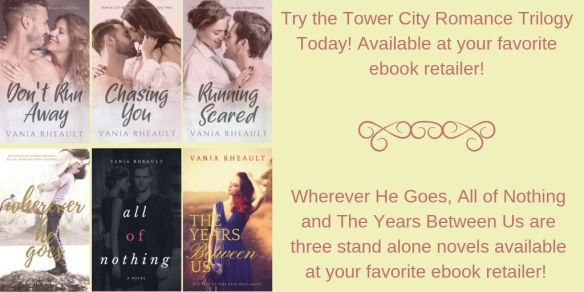
Try the Tower City Romance Trilogy Today!

all graphics made with Canva.com