Where do you find readers? Part 2

finding readers for your books blog posts part 2


In part one, I wasted your time went over a few things you can do to draw in readers. Starting with a quality product. That’s mandatory, but not everyone does. You’ve seen the poor covers, bad blurbs, and horribly written look insides. But no one is immune, and if you’re not selling books, or not selling as many books as you think you should be, try to find an unbiased opinion and see if you can find where the problem is.

Now, with that being said, readers are out there. But how do you find them?

Start Small

There are promo sites that don’t cost an arm and a leg. How well they work, I have no idea. But if you listen to lots of podcasts of author interviews like I do, you’ll slowly build a list of promo sites that are used by other authors. Some of these require a certain number of reviews. Almost all of them vet books so if your cover doesn’t look nice, or the person who runs the promo site thinks your writing is terrible, they won’t promote your book, no matter how much you pay them.

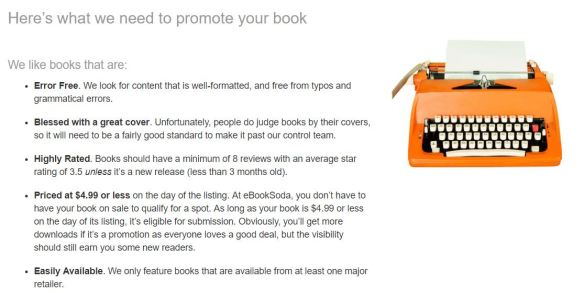
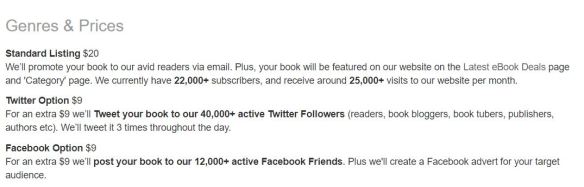
eBookSoda. Their prices have gone up since I’ve checked into them last. They review your book before they promote, and they do have a few guidelines you have to meet for them to accept your book.
ebook soda promo site

ebook soda promo site2

At twenty dollars to give it a try, that doesn’t seem like a huge investment. I’ve spent more and have gotten nothing in return.

eReader News Today.

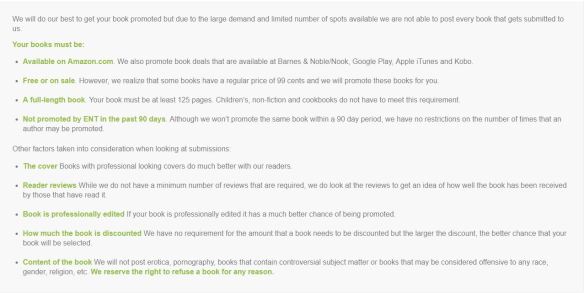
They are a little spendier, but I’ve heard good things about them. They also vet, so be prepared for an actual person to look at your book.
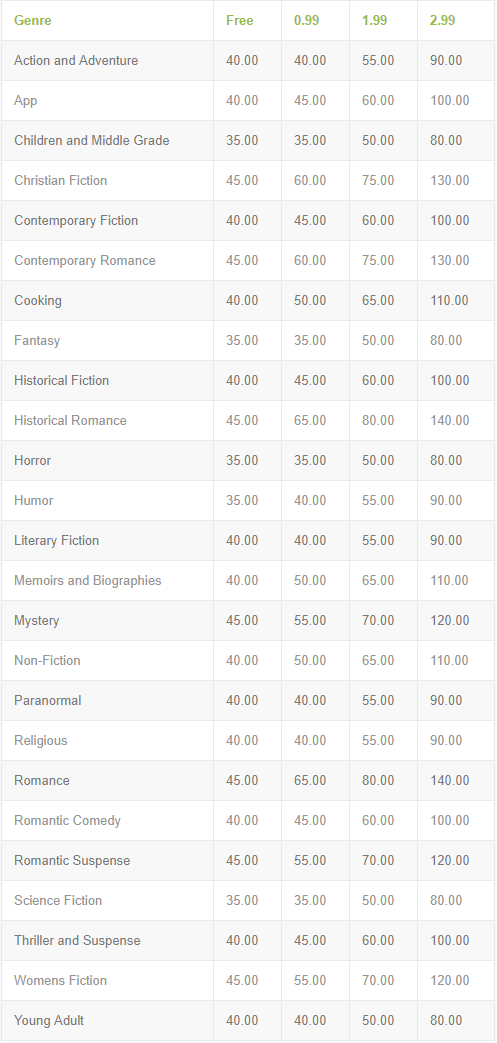
ereader-pricing-table-heading

ereader news today requirements

I’m not going to go through every single promo site out there. I’ve only used Freebooksy and BargainBooksy for my promos, but when I release my next book, I may spread my wings a bit. There are promo sites out there that cost less than what they charge, and they may expose me to new readers.

Dave Chesson has a very large list of promo sites if you want to browse. But the main idea is that putting money into the marking of your book doesn’t have to break the bank.

Paying to Play

Indie readers don’t want to accept that to find readers (especially if they are on Twitter and tweet about their book for free all the time) that at some point you are going to have to invest in your books. There is no other way for anyone to know your books are out there. There’s billions of people in the world. How are you going to reach them if you can’t break out of Writer Twitter? It’s next to impossible.

Richard Blake had this to say about the current state of advertising:

2018 ushered in a time when visibility we used to take for granted on Amazon basically disappeared. The long tail on new releases has been compressed to only weeks, and with the elimination of free books from the also boughts and from the search functions, it’s almost impossible to get any free visibility now on the largest seller of books in the world.

So what’s left?

Paying to play, also known as advertising. The rest of this blog will be devoted to my experience with Zon advertising, and the conclusions I’ve drawn after reluctantly beginning a concentrated effort about mid-year.

If you’re interested in what else he has to say, you can check out and subscribe to his blog here.

I’ve written about my success, or lack thereof, about Amazon before, and you can check out my blog post here. So I’m not going to bother rehashing old ground. If you want to learn how to do them, there are a lot of authors who provide courses and books. My favorite is Brian Meeks. He has a book about Amazon Ads, and I used to recommend it a lot. I’ve heard that Amazon has changed the way they do ads, so his step-by-step instructions are no longer applicable. Concepts of patience, testing, and slowly building your ad, however, are still great advice. Despite not being able to point you in the direction of his book, he’s done several interviews for podcasts as well, and he spoke at the 20 Books to 50K Conference in Vegas this past November. Check out his talk!


If you want more details, check out Chris McMullen’s blog post about the recent changes and how to work with them.

I’ve had a little success–meaning my bids are getting clicks, I’m seeing some buys, and I’m not spending a huge amount of money (not in enough to put me in the black with ROI, but you have to start somewhere). Figuring out ads is like learning to swim. You’re going to get a lot of water up your nose before you can float without drowning. This is a bad metaphor for me, as I still only know how to doggy paddle, but such is life.

I haven’t tried Facebook ads, mainly because I’ve heard they will take your money and run, unlike Amazon. Plus, I don’t have that many books out yet. I’ve read Michael Cooper’s book, Help! My Facebook Ads Suck! and that was extremely helpful. He, too, was at the 20 Books to 50K conference and you can watch his talk. 🙂

I’ll do a Part 3 later. I’ve given you lots to consider right now. Please go through those promo sites. If you can save five dollars a week and buy a $20 dollar promo for a reader newsletter once a month, that’s a great start when you thought you couldn’t afford to run ads at all.

Thanks for reading, and let me know if you have any thoughts, ideas, or things you’re going to try going in to 2019 and selling your books!


Good luck!

Where do you find readers for your books? Part 1

finding readers for your books blog posts part 1

This question sucks because 1) no one knows the answer, and 2) even if they do, their answer might not work for you.

What are the variables that make one person’s amazing results different from someone else’s?
* Genre. Thrillers. Contemporary Romance. Urban Fantasy. Epic Fantasy. Someone might have just had a great launch of their Suspense novel and you want to duplicate that for your Bigfoot Romance. Their methods probably won’t work for you.
* Quality. Your friend may have paid out $400 for a quality cover, had two editors edit it, and used a professional formatter to make their insides look as professional as they can look. You don’t have a budget like that. If you don’t, you’re already a million miles behind your friend–even if you write in the same genre.
* Your friend has a backlist and you don’t.

If you take into consideration these three things, answers to the question, where do you find readers, are going to be incredibly different.

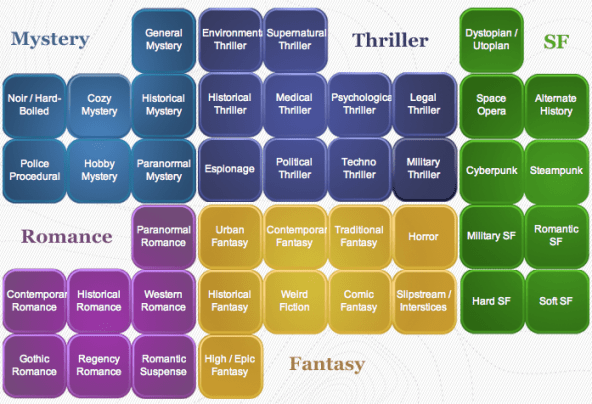
A quick note about GENRE before we move on: you’re writing what you want, but you do have to keep in mind that the more niche you write the more you shrink your audience. On the other hand, you have a better chance at standing out in a smaller niche. At any rate, here’s a nice chart. If your goal is finding readers in a bookstore (you’re probably querying then), you need to know where the little high school girl who stocks books after classes is going to put yours. Knowing your genre also makes marketing a bit easier because, hey, no one reads all the books, and you only want people who read your genre to read your book.

Literary_Genres

click the picture to read about the 17 literary genres

Quality

You know how in the grocery store you have to choose between a dented can and a can that’s not dented? Which do you choose? The undented one, right? Because we’re trained to look for things that are perfect. We don’t buy apples with bruises, we buy the milk behind the first one. When you are asking your potential reader to choose between your poor-quality cover, bad blurb, and insides with typos against a book with a nice cover, an intriguing blurb, and insides without typos, who do you think they are going to choose?

This seems like a no-brainer, but authors are too close to their own books to see if something is working, or, more specifically, not working. I’ll show you what I mean:

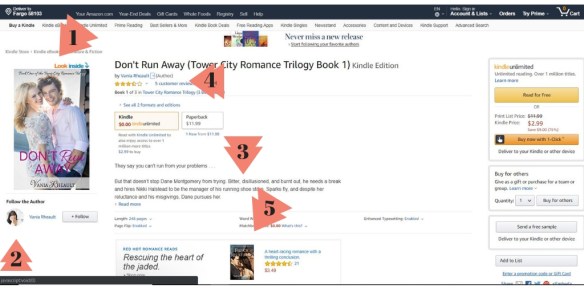
amazon sell page of a book

This is the sell page of my book, Don’t Run Away. It’s the first in a trilogy. People look at these things when they bring up your book be from an ad, from a friend’s recommendation, whatever.

  1. A good cover. You need one. YOU NEED ONE. I’m not saying mine is the best, but hoo-boy, it’s better than some out there.
  2. A nice author photo. No one talks about these, but with social media, readers want to interact with their favorite authors. They want to see you are a real person. If they tweet to you that they enjoyed your book, or if they say Hello on your FB author page, they think it’s really cool when you say thank you, or Hi! back.
  3. Well-written blurb. You need a good blurb to draw them in.
  4. The reviews help. The more the better, obviously, because. . .
  5. Amazon is more than happy to show your potential reader something else they can buy instead of your book. If your cover and blurb miss the mark, they offer another choice in the same genre your potential reader can click on.

If you take a look at the screenshot above, you can see the book they are advertising at the bottom has a nice cover and more reviews than mine. At that point, I’m hoping my blurb brings them in, or the first couple sentences of the look inside if they make it that far.

If you’ve written a strong blurb and you make your potential reader click READ MORE look what happens:

screen for blog 2

The ad disappears. We don’t have very long attention spans. A good blurb could mean the difference been a sale and a pass.

I watched Bryan Cohen and Chris Fox tear part a couple of covers and blurbs on a recording from a 20 books to 50K conference this year in Vegas. Take a look and see if you can make your selling page better:

Backlist

No one thinks about backlist when we look for readers. But the fact is, self-publishing is a vicious and competitive environment. These days to find any traction, you need to have about 15-20 books written already. When I first started publishing, that number was six. Self-publishing has exploded to the point where 50,000 books are self-published every month. (That stat was pulled, I think, from Michael Anderle during this same conference.)

The most important thing that self-published authors have is a backlist of 15-20 books. This is because most self-published authors make the bulk of their money on their backlist.  — The Complete Creative

The idea is that if you manage to pull one person into your readership, you can offer them more than just one or two books. You want them to read them all.

You can liken finding readers to any cliche you want. Rome wasn’t built in a day. Publishing is a marathon, not a sprint. Start at the base of the mountain and work your way up. It all amounts to the same thing–finding readers takes a lot of time.

book-publishing-quotes-by-jo-linsdell-315693

No one disagrees it starts with the best book you can produce. And then write another.

the best advertising you can do

Stay tuned for part two of where to find readers!

Until next time!

My Writing Plans & Goals for 2019

hello 2019

Lots of people feel like 2018 sucker punched them right in the gut. But to be honest, I think a lot of people felt like that about 2017, too. Each year may be better in some ways, worse in others, but it’s fair to say that each year brings about new challenges. Sometimes we can rise to the occasion and kick ass, and sometimes we can’t.

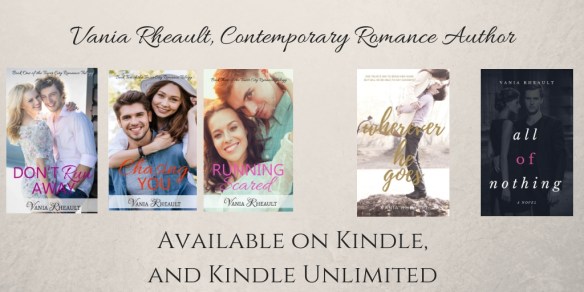
I got a lot done in 2018. I released two books I’m proud of–Wherever He Goes and All of Nothing. Each book brings me closer to improving my craft and realizing my goals of being a career writer.

I went through a divorce and came out, for the post part, unscathed, due to my kids, the support of my sister, and the love and a support of a special man in my life. We’ve had our ups and downs, too, and I hope in 2019 we have more ups than we do downs, but time will tell.

As far as my writing goals for 2019, it’s something that I talk a lot about on this blog. Write what you want, but don’t be disappointed if it doesn’t sell. So I’m going to follow my own advice. While my stand alones are doing okay (for the lack of marketing I do for them) there’s lots of evidence out there that series sell. I’ve seen this myself in read-through for my trilogy (at least when I boost up the first book with a promo).

That being said, it’s time to write another series. I’m going to set aside 2019 and write four books in my Bridesmaid Quartet. That subtitle may change–I may change it to The Wedding Party, or something else entirely as the wedding that brings this group of friends together will remain in the background and is only a catalyst for the things that happen. I’m even tinkering with making the Bride a matchmaker of sorts. These four books are in the planning stages, as you can tell, while I edit The Years Between Us. I’m going to edit my May/December romance, send it out to betas (if you want to read it, send me an email or DM on Twitter!) and more than likely put it on an extended preorder. I released All of Nothing on October 16, and I need to sit on The Years Between Us while I write my series. I won’t wait for a long time–I’m thinking maybe an April release–but I don’t want to publish it as soon as it’s done because then I won’t have anything for quite a while.

To make up for that time where I’m not publishing anything, I’m going to be doing a lot more blogging and maybe some Instagram posts in regards to my series’ progress.  I’ll be doing aesthetics, sharing more snippets than I have in the past. I’ll be releasing my character sheets for my characters. In short, I’ll be blogging about what goes into writing a four book series, and all the headaches that go into tackling 200,000-280,000 words.

Right from the start this presented a challenge because I already wrote about a group of friends with my novellas, Summer Secrets. Those were erotica, but still. It’s easy for a writer to write the same thing over and over again, so I need to be careful to make these different. Comparing my sexy novellas to this series will always be in the back of my mind.

plans and goals for the new year

Other things that will be happening in 2019:

I’ll be getting carpal and cubital tunnel surgery done on my left arm in January. The 10th to be exact. Progress on my series will only go as quickly as I can recuperate. I’ve heard from several people that it’s a piece of cake, and even my doctor said I’ll be back to everyday activities after two weeks. I’ll then be scheduling my surgery for my right arm.

If surgeries and recovery go according to plan, I’ll be attending the Sell More Books Show Summit in Chicago in May. I cannot wait to take a short vacation, meet some other authors, and learn how to sell more books!

I’ll be moving my list wide and paperbacks to Ingram Spark extended distribution. I blogged about that already, but since my books don’t drop entirely from Select until February, dispersing them wide and doing the covers to meet IS guidelines will be a project that will take a few months. I think I’ll be doing a lot of that during recovery as I’m hoping that tweaking my covers to fit the IngramSpark cover templates won’t be too complicated.

Learning a screen-recording software so I can record some barebones tutorials on how to make book covers in Canva. I scouted around YouTube a few months ago to see if making a full cover (back, spine, and front) for a paperback was even possible using that particular software. I didn’t find anything that had all the steps a newbie writer would need to successfully make a cover, and for it to actually come out looking nice.

Unfortunately, this isn’t going to be one of those things that is on the top of my list. First off, because I’m not sure how deep I really want to go into the non-fiction sector. There are some full-time writers who split their time between fiction and non-fiction, like Joanna Penn. I still have a day job, and if I have a few hours, I’d rather write my fiction books. But because I didn’t find anything about this topic, I think it would be a real help to the indie community if I could record a couple how-to videos. Especially since I’ve done it twice now and have the paperbacks to prove it can work. But I would need to find/buy software and learn how to use it. Then I would need to take the time to map out the videos and record them. I don’t know how to edit anything, either. So. Plus I’ve been tinkering around with writing an self-publishing self-editing book, and I don’t want to put my fingers into too many pies.

Mostly though,  I abide by the old, “Should you be writing, instead of . . . ?” question when thinking about doing other things, and the answer is almost usually “Yes.” It’s what I enjoy the most and what I hope to build my career on–my fiction books.

Because, after all, who doesn’t love a happy ending?

Happy New Year, everyone, and I hope 2019 goes very well for you!

the end

KDP Select/KU vs. going wide, IngramSpark and other musings

GOING WIDE VS KDP SELECT

The other day I pulled my books out of KU. For those of you who may not know what that is, Kindle Unlimited is a program through Kindle Direct Publishing that is offered to authors who don’t publish their ebooks anywhere else. They get paid from a giant slush fund for “pages” read.  Some authors think that Amazon is the best, and there isn’t anywhere else to publish. But where is there to go if you decide you don’t want to give Amazon exclusivity? Kobo, Books (aka iBooks), Nook, Google Play, and a few others that can be reached through an aggregator like Draft2Digital or PublishDrive are available for indie authors. Thank goodness indie authors have a choice.

choice street signs

It’s a little scary, since I have been getting a few page reads here and there, mostly since I paid for a FreeBooksy promo not long ago. Usually that will put my book on the radar for a while, but tends to taper off. Like today, I’ve only made $4.81 in page reads, compared to my highest day ten days after my promo, which made me $56.80. That’s just for All of Nothing, when I ran a free promo for it on November 9th. It’s been a pretty long tail, still getting page reads more than a month after my promo, but I’m thinking I can do better.

It is scary, thinking about losing even those meagre page reads, but there is one thing I have to remember: even if my books aren’t in KU anymore, anyone shopping on Amazon who wants to read my books, can still buy them. What I’ve made today in page reads would calculate into 2.5 people buying my book at $2.99. Sometimes I think authors forget about that part of it. Just because you’re not in KU anymore doesn’t mean authors can’t buy your book. That is really a powerful thing for me to remember, and it makes it easier to feel better about the decision I made to go wide.

I’m really excited about the opportunity publish my books on Kobo. Kobo is growing and right now, according to an old 2016 stat, they have 26 million users worldwide. That’s a lot of readers. And with Kobo Writing Life, I’ve heard they are very friendly and want to work with indie authors.

Some indies go wide from the start, but lots more, not knowing how or where to publish, stick with only Amazon. Neither of these paths is wrong. When I first moved into publishing, I was happy to deal with one vendor. I only had to deal with one file to format, and one upload. One price. I stuck my books in KU and mainly forgot about them as I wrote the next.

But as you publish more books, and you start to learn what other successful indies are doing, you have to think about where your want your business to go. You hear about the risks of putting all your eggs into one basket. But then you hear about authors making hundreds of thousands of dollars in KU reads. (And you also hear about how Amazon can, at random, target one of those authors and essentially take all their income away with a single push of a button.)

Joanna Penn continually says you need to think about more than one stream of income. For her that means speaking gigs, writing non-fiction, her podcast, and other things she has going on in her career, but for indies who don’t do as much as she does, it could simply mean not counting on one company for all your income.

I’ll be going direct with Kobo, since that is how you access their promotions tab. But I’ll likely use Draft2Digital to publish my books everywhere else.

If you’re interested in going wide, and you want to learn what Kobo can do you for you, Joanna Penn recently had a guest on her podcast who works at Kobo, Camille Mofidi. You can click here to listen to it. Mark Lefebvre used to work at Kobo, but now has moved to Draft2Digital. I love Mark and used to listen to the Kobo Writing Life podcast where he would frequently talk about what works on Kobo to sell books. He also wrote a book, Killing It On Kobo: Leverage Insights to Optimize Publishing and Marketing Strategies, Grow Your Global Sales and Increase Revenue on Kobo (Stark Publishing Solutions) on how to use Kobo to sell your books. Mark also did a recent interview on The Science Fiction and Fantasy Marketing Podcast hosted by Lindsay Buroker, Jeff Poole, and Jo Lallo. You can check it out here

My books won’t completely drop out of KDP Select until February, so I have to wait. You don’t want to make Amazon mad at you, so if you decide to go wide, please make sure that your books have completed their three months within the program. If you have several books like I do, you’ll need to wait until they have all dropped out before going wide, as their months could overlap. Plus, they don’t do that automatically–you have remember to uncheck the box in your KDP dashboard.

As for my paperbacks, I am changing that up, too. I’ve seen first hand that if you don’t use KDP Print to distribute to Amazon (or CreateSpace before) Amazon can play hardball and sometimes make your book unavailable or out of stock. To me, this would be a pain in the butt because who has time to police their books all day? I’ve published all my books through CreateSpace/KDP print, and I have found no issues with quality as I’ve heard some complain about. But I have moved my books out of Expanded Distribution on KDP Print and only use them to supply to Amazon. Then, after they drop out of their system, I’m going to publish my paperbacks with IngramSpark and use them for Expanded Distribution. The reason I’m doing this is because I want to approach my local bookstores about carrying my books.

Seeing the benefits of going wide may take a while. But I’m in this for the long haul, and I don’t mind waiting. I need to start thinking about what I want for my business as I grow my backlist, and going wide and using IngramSpark for paperback expanded distribution feels like the right way to go. But only time will tell.

Wish me luck!

Blog signature

for a little while longer. 🙂 


Laying the Groundwork for a (Romantic) Series

Series sell. Us indies are told this all the time. Write a strong first book in a series, hook the reader, and have natural read-through to the next three or four or five plus books. While my trilogy hasn’t taken off, (i.e. I can’t pay the rent with royalties yet) I do have some read through–people I have reading book three who wouldn’t be around had the first book been a standalone.

But there are a lot of questions to consider when thinking about a series:

  • Where is it going to take place?
    You need a setting that is interesting enough that the place of your books will hold

    interesting setting

    An interesting setting becomes a character in and of itself.

    the reader’s attention for that amount of time, lends plot potential, and is a place that you won’t get sick of as an author. A detective series could take place in a large city. There’s enough fodder for lots of crime, and the possibility of cops sitting around playing poker in a city full of millions of people is low. Lots of romances take place in small towns, but if you’re working with a small town, you need to make sure your characters have something to do. A town with one stoplight, where the only gas station closes at 8pm, doesn’t leave much opportunity to use setting as a character, unless something happens like a natural disaster such as a tornado. So when you’re planning your series, you have to keep the setting in mind. Susan Mallery’s Fool’s Gold series is based in a town called Fool’s Gold and its Mayor proves to be quite the matchmaker.


  • How many people are you going to start with at first?
    A series will evolve and change as you write (new characters will be introduced, for

    group of people

    Plan your characters.

    instance), but when you sit down to write the first book you’ll need to keep in mind where you want the first few books to go so you can lay the groundwork. Weaving future plots and characters into current narrative will clue your reader into the fact that yes, there will be more books about the characters they will come to care about, and yes, they will want to read the next and the next and the next. But you can only do that when you know what’s going to happen in the first handful of books. It can be a woman and her three best friends, or a guy and his two sisters. Nora Roberts does this well, and my Four Bridesmaids Quartet I’m planning is modeled after her Bride Quartet. (I’m not copying her–I’ve read Nora since I was a teenager, and I admire her plotting skills and the construction of her books. I wouldn’t be the writer I am today had I not read so much Nora Roberts growing up. She’s definitely influenced my writing for the better. :))


  • What are the characters’ backstories?
    Your characters’ backstories need to be related to the plot somehow. Say your three sisters had an abusive mother and their relationship with her bleeds into their relationships with their boyfriends. If you go bigger (a longer series) and it’s your town that has the problems, like a tornado, or hurricane, or a flood, your characters need to have personal problems associated with the town to create conflict. A popular romance trope is a stranger comes to town, and he’s got a ton of secrets. Only the widow in the falling down ranch house can breech his rough exterior to his secrets beneath. But he’s he’s also an electrician and can help rewire the school after the fire! That helps the town accept him and he feels like he belongs and he stays after he falls in love with your FMC (female main character).


  • What is your plot?
    Is your main plot going to be wrapped up in each book (like the detective solves the crime, and the next book would be the detective solving a new crime?) or is your main plot going to arc over a few books? If you’re hoping to write so a reader can pop in at book eight and not feel like they’ve missed anything, you’ll need to wrap up the plot at the end of each book while foreshadowing your next story. This is why it’s always best to know what your next book is going to be about so you can weave in those clues.


Publishing Your Series

The bullet points above are the writing part of it, but before you begin a series, it’s best to have some kind of idea about publishing.

  • Your publishing schedule.
    As an indie, you have complete control of your publishing schedule. Are you goingwaiting for a series to publish them as you write them, or are you going to save up a couple and publish them together? A week apart? Two weeks apart?In this case, being an indie author is definitely a perk. You don’t have to make your readers wait a year between books like the traditionally published authors do. But because of impatience, many indies publish as they write, without a thought as to making a reader wait for the next book. I haven’t met one author who likes to sit on books. (But I have heard of plenty of stories about the benefits to the authors who do.) The minute the book is ready, they hit publish. But what does this mean if you’re writing a series? How fast can you write the next book? Do you do this full-time and can publish the next one in two months, one month? Do you have a team that will edit and format and do your covers for you? What is the point of publishing a book one if it’s going to take you two years to publish the next?


  • Consistency.It’s really hard to go back and make changes to a book that’s already been
    changes

    This is a pretty kind of change. The kind made to your book after already publishing isn’t this pretty, and it’s time-consuming.

    published. Not that it’s hard from a technical standpoint–just make the fixes and upload the new file. But what about those readers who have read it already? Your plot and characters are already in their heads, and you want to ask them reread your book for the new information so the next book will make more sense? Sorry. It doesn’t work that way. If you write a book one, and something happens in book two to make your consistency fade away like fog in the sun, you’ve got a problem, if you’ve already published. But if you haven’t–good news! Just make the changes. As you add to the series, this isn’t realistic, I know that. You’re not going to sit on seven books. No one would. But in all practicality, sitting on two or three books to make sure your plot is going smoothly and you don’t have any big plot holes or changes that need to be addressed is pretty darn smart.


  • Covers 
    If you’re doing your own covers, or if you’re going to be buying premades, orbride_quartet nora roberts working with a designer, it’s very very very important that your covers not only fit the genre, but that your series will look like a series. That means your author name looks the same, that your pictures you choose are cohesive. It means that the series name is on all the books.Here’s Nora Roberts’ Bride Quartet I was telling you about earlier. It’s a lot easier to plan how your covers will look–at least the first few, if you wait to publish.
    It’s also helpful with titles. If you’re doing a trilogy, or a quartet, or even a quintet, it will give you a chance to think of titles that match the theme of your plots.


After my May/December romance, I am going to write a quartet. Yes, I will wait to publish until they are all done. I will do my own covers, and I’ve already thought of titles that will match the theme of the books. I have my town chosen, I’m mulling over characters now. It will take a lot of patience to write this series, but as I stated at the beginning of the post, series sell. I’ll have a trilogy and three standalones in my backlist, and it’s time for another series.

Are you writing a series right now? Are you publishing as you go? How much time is between them? Let me know!


Blog signature

My not so happy review of the Happy Book Reviews service

I listen to the Sell More Books Show podcast. I love listening to the self-publishing indie news they cover every week. Some weeks are lighter than others, but it’s a great way to keep up with all the changes in the industry.

The show is hosted by Bryan Cohen and Jim Kukral who are also hosting the 2nd annual Sell More Books Show summit I’m delighted to attend next year in Chicago.

Bryan does a lot for the indie community. He’s published several non-fiction books including How to Write a Sizzling Synopsis,  a book I recommend regularly, as I use it every time I need to write a blurb. He also runs a business based off that book, in case you ever feel like you just can’t write another synopsis.

Jim Kukral also does a lot for the author community: creator of Book Marketing Club, he also founded and curates the Happy Book Reviews website.

I went into the brief history of these gentlemen because I trust them and I admire all the hard work they do for us indies.

But sometimes things don’t work as well as they could, or should, and Jim’s Happy Book Reviews is one of those things.

feedback-2800867_1280

As indies, we all want those five-star reviews for our books. 

At $25.00, he promises to put your book in front of thousands of readers who want to download your book for free and leave a review. This sounds great! At this low fee, my book was available for twenty-five downloads on a first come, first serve basis, to people who would read it and review it with no obligations for me to do the same.

It really could be a boon for us authors who need reviews for that social proof we’ve written a good book.

But my enthusiasm waned the moment I received the email that contained the newsletter that featured my book.

In the whole month my book was available for download, my book was downloaded twice. Yep. Twice. Out of twenty-five copies available.

There were, in my opinion a few reasons for this:

When you sign up, you’re encouraged to sign up for the newsletter. This seems like a no-brainer because you want to see what your book looks like in the newsletter. But as my friend Aila points out–if all the recipients of the newsletter are other indie
authors . . . writers don’t read. If they do, they are helping out their friends by beta-reading or acting as a critique partner. Jim promises he’ll put your book in front of readers, but I suspect that what he’s doing is putting your (and my) book in front of a whole lot of indie authors. Who don’t read other indies, at least, not for pleasure.

The first email went into my Promotions tab and not my inbox. You can fix this, of course, but how many emails do people miss because their email marks the newsletters as ads? (Which, technically, they are.)

Happy Book Reviews will take anything. I’d never speak negatively about someone else’s work, but I have to admit, I was appalled at the company my book kept. I try to be professional in all ways. And while my books may look indie (there’s really no help for that no matter how good you are) some of the books featured in that newsletter looked downright cruddy. Jim will accept any book when what he should be doing is vetting them. While the information isn’t available to me, I wonder how many readers unsubscribe when they see the lack of quality in these books.

quality control

Someone needs to be in charge of quality control


**I can understand why he doesn’t do this. Jim and Bryan frequently talk about gatekeeping and I realize Jim doesn’t want to be in the position of determining what is “good.” But I don’t think this is any different than any other promo site where they only allow in quality books. They have a readership to keep happy, and offering them schlock is not the way to go about it. Someone, somewhere, will always play God, and with the products and services Jim, as a book coach, offers, he’s in a better position than some to determine what is “good.”

Only the blurb is available. I know it would take up more space or cost more to send it out the newsletter, but it would help if a potential reader could read the first couple pages of the book they’re considering downloading. It would have helped me avoid the boring contemporary romance I downloaded 1) because I wanted to try the service myself and 2) the cover and blurb looked okay.

The newsletter isn’t broken up into genres. My book sat next to children’s books, paranormal romance, thrillers, and history books. If he could separate the books into genres that could help readers find the books they like. I had a positive Freebooksy experience because of this.


The time for my book has run out, and there’s no time limit for those two people who have downloaded my book to leave a review. So I’m not even sure if those two people who downloaded my book will come through. But $25.00 for two reviews is too much.

I know why Jim will never do any of my suggestions–it’s too much work. He’s a savvy businessman, and I’m sure these suggestions have been brought up to him by other people in the past.

But it must work for some authors, or he’d close down the website. Everyone who uses his service can’t have the experience I did, or his inbox would be full of complaints.

Maybe I’m a black sheep, but somehow, I don’t think so. Wherever He Goes is a solid book. Anyone who reads the first page knows I don’t head hop, I don’t have any typos, and my inciting event happens on the first page of the book. Not Chapter 4.

Unfortunately, I do not feel like my book fit in with the others featured, and unless he makes changes, I won’t be using his service again.

You may have a different experience, and at $25.00, it’s a cheap risk. But I’m also aware that $25.00 could buy you two paperback books, five Starbucks coffees, or could reimburse a beta-reader for her time. If you’re poor, $25.00 can go a long way, so you’ll have to decide if it’s worth the risk.

My blog is about my experiences with the services offered to indies, and my adventures in publishing my books. I want to help. This was my experience, and unfortunately, it could have been better.

I’ll still listen to the podcast (and I encourage you, too) and I’m looking forward to the meeting Jim at the summit.

But the Happy Book Reviews feature isn’t for me, and I wish you luck if you decide to ever give it a go.

October through the end of the year goals.Whatever.

Everyone is doing October/end of year goals, so I thought I would, too.

I don’t have many.

  1. Finish All of Nothing. This includes finishing the editing, writing the blurb, doing the full cover for the paperback, formatting for both Kindle and paperback. Sending it out for betas and hopefully publish by Halloween. It was my target goal from the beginning, with Thanksgiving being the ultimate maximum amount of time I wanted to take. It looks like Halloween is more than doable–at least for the Kindle. Using KDP Print for the paperback takes longer, just for the simple fact ordering and waiting for a proof is a lot more time consuming than it used to be through CreateSpace. If you’re launching a paperback by a certain date, be prepared and give yourself plenty of time for the KDP Print hassle.

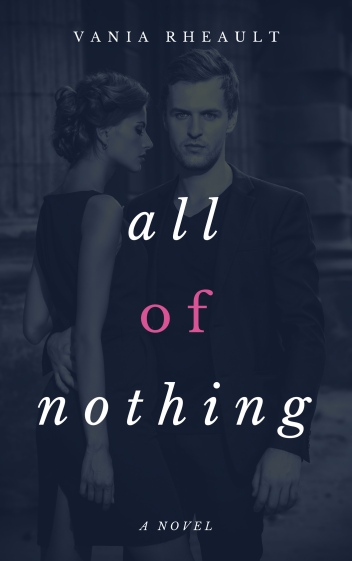
    Here’s the working cover I made in Canva. We’ll see if I stick with it.

    allofnothing
    Made with a Canva template and a photo I purchased from CanstockPhoto, it’s a simple cover which I hope conveys the darkness of the story.  No chick lit for this author. 😛

  2. I have 2,000 words into my next book (a beautiful May/December romance that will be a counter to the dark romance I’m editing now) already written, and a few pages longhand that I need to type up. I would at least like to get the handwritten stuff typed up this month. I would love to get the whole thing written and published by March of next year. I have a bookselling summit I’m attending in May, and the more in my backlist, the better.
  3. I did a Happy Book Reviews feature for Wherever He Goes that I am not terribly impressed with. I’ll do a full blog post on how it turned out. But for now, it’s safe to say, don’t waste your money. If it sounds too good to be true, it probably is.
  4. In my other blog post about marketing, I said I was writing a non-fiction book on self-editing. I’m going to be working hard on that in the coming months, and hopefully have that ready to go by no later than this summer. My fiction comes first, and I want my new book to be ready by the summit, but depending on my health (see number 5) I’d like to get the editing how-to book done by June.
  5. I have carpal tunnel and I’ll be going for a nerve test this Thursday. My carpal tunnel runs from my elbows into my neck, shoulder blades, and back. Meaning, I’m in a ton of pain a lot of the time. I let it go too long. I know. And I’m paying for it now. But the truth is, I’ll more than likely be having surgery and the recovery time for both arms will set me back. I know voice-to-text can be a life-saver to some, and I may still be able to blog that way for a bit, but chances are, I won’t be able to work on my fiction for a while. The break is much needed, but not that wanted. We’ll see how it goes.
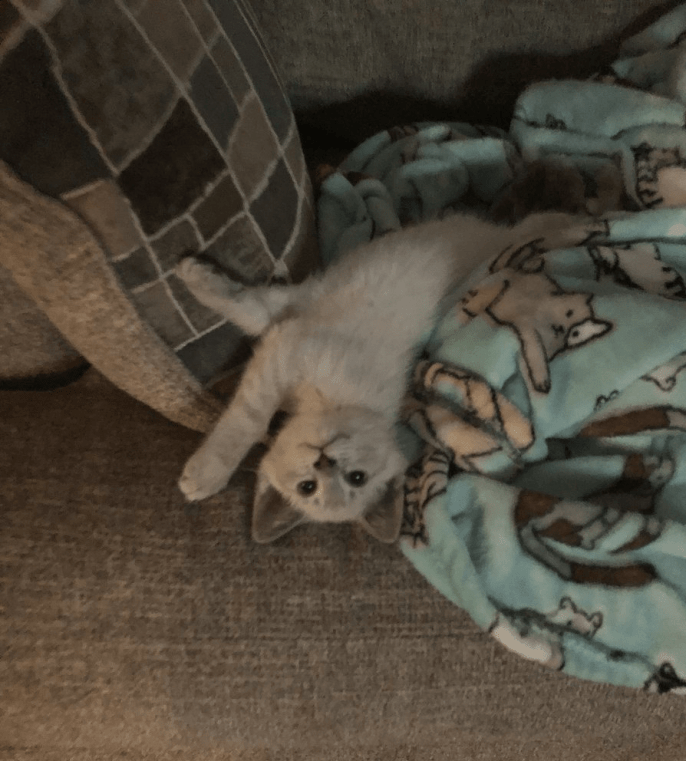
  6. These are lofty goals when I have a new kitty to play with! My husband moved out, and the kids and I replaced him with a new kitten named Blaze. It wasn’t really like that (LOL) but it’s hard to resist playing with her, or snuggling with her when she’s sleeping. She’ll be a good recovery pal. Here’s a pic:

    blaze
    It’s tough not to share pictures of her all the time, so if you follow me over on Instagram, you can see a lot more of her. 🙂

Those are pretty lofty goals for the next few months, but I’m hoping it’s nothing I can’t get accomplished. All of Nothing is the big item on my plate right now, along with keeping this blog going with indie news and writing tips.

Also, since I will be working on my editing book, if there is anything you struggle with when it comes to self-editing LET ME KNOW! I would love love love to include anything and everything indie writers struggle with.

Happy Fall, Everyone!

book and fall leaves

Branding. What Does it Mean for You as an Author?

There are a lot of questions about how marketing and branding are different and how they are the same. In this two or three part blog series, I’ll explore what branding and marketing are, and how they work together.

What is branding?

What do you think when you think of a brand? Sometimes you think of a logo right away.

Starbucks mermaid.
The Nike swoosh.
The golden arches of McDonald’s.
Verizon’s red check mark that looks like a V.

But brand is just more than a cute logo. What do you think of when you think of Starbucks? Pumpkin spice lattes. Fairtrade coffee. Maybe sensitivity training after that one barista called the cops on those two black men who hadn’t gotten around to ordering coffee yet because they were waiting for a friend.

As a business, when people see your logo, or think of your brand, you want them to think about good things. Pumpkin spice lattes. Good. Fairtrade coffee. Good. Racist employees. Not good.

McDonald’s has yummy fries. Cheeseburgers. Heart attacks and obesity. Shake machines that never work. Probably every big-named brand will have some things that will mar their reputation.

As a person, you have a brand whether you realize it or not. As an employee, are you dependable? A team player? The person your boss knows will stay late? Or are you a slacker? No one wants to work with you on projects because your coworkers know you won’t pull your weight.

You have a brand as a friend. Are you always late? Maybe it’s so bad your friends tell you a different time than when they show up because they’re tired of waiting for you. You have a brand as a bad friend. Or maybe you always buy the drinks when you go out for dinner. Good friend. Good brand.

These brands associated with you take years to cultivate, years of the same behavior. That’s why creating a brand as an author is difficult and confusing. It takes years.

branding a heifer

Author branding doesn’t have to be this painful! Poor cow! 

It’s also why thinking about your brand when you are just starting out is important, because once people start to think of you in a certain way, it’s hard to change their minds.

What do you want your readers to think of you in relation as an author?

You don’t want people to hear your name and have bad thoughts associated with you and your author brand or books.

Examples of bad things people can associate with your brand (YOU):

  • She fights with people who leave poor reviews
  • He doesn’t put out books in a timely fashion. She makes her readers wait.
  • Her books are full of typos
  • She’s not friendly or supportive of other authors in her genre
  • She complains a lot online. ie, she’s a whiner
  • He doesn’t seem friendly, and fans are hesitant to reach out

The way you are perceived by people who pick up details about you, as an author, is your brand.

If you don’t believe me, think of some big-time authors:

Stephen King
His brand is horror. Other things I think of when I hear his name: He hates Trump. He got hit by a truck and almost died. He probably didn’t intend the latter, but I read about it in his book, On Writing. The former wouldn’t surprise him—his tweets are full of disgust for our President.

Nora Roberts
Contemporary Romance Author
Redhead
Maybe you think of her pen name, JD Robb
Prolific. She always has a new book out. And it’s always a bestseller, too.
I’ve read a lot of her books, and I know she loves Ireland. Lots of her books are set there. It’s part of her brand to me.

JK Rowling
Harry Potter, naturally
Billionaire, philanthropist
Maybe you think of the Harry Potter theme park. Maybe you’ve been there.

EL James
Overnight success
Poor writing
BDSM
Twilight fan fiction
Bitch

Her brand is less than favorable. Be it jealousy, or whatever else, maybe the way she behaves in interviews, rumors of the way she acted on the set of the 50 Shades movies, no one likes her. She’d have to hire a good public relations firm to fix her reputation–if she cared what you thought.

You really don’t want people hearing your name and thinking “bitch” or “asshole.” No matter what area of your life you’re talking about.

First and foremost, write good books. Your brand won’t matter if your product sucks. You’ll have a great brand with nothing to sell.

Be friendly online. Be professional. It won’t take much for people to associate you with being a nice person—if you really truly are a nice person. Help people. Stay away from drama. Don’t interact with trolls. Don’t defend yourself and your books if someone gives you a one-star review.

Maybe look at creating a logo. Some authors’ trademark is simply having their names look the same on all their books. I suck at this because I have fun designing my own covers. But that’s a conscious choice I make whenever I release a book.

melissa foster books


Maybe my imprint will catch on. I could make a different logo with a free logo maker, but I don’t want to give people too much to remember.

When people hear my name I want people to think Contemporary Romance. Well-written books. Happy endings. Friendly, cheerful. Awesome blogger. Maybe people will think about my cats because I post pictures of them on Instagram from time to time. These are all good things.

That is author brand. It takes time to build. You have to start slow and you have to do it right.

That’s why publishing just an “okay” book your first time out is a bad idea. That “okay” book may not be enough to impress your readers and they won’t give you another chance.

Wow them from the get-go. In every aspect!

You never get a second chance to make a first impression.

You-will-never-get-a-second-chance-to-make-a-first-impression-1

And if you have to turn your brand around, that makes the marketing part of it that much harder and difficult for you.

This blog post is already close to 1,000 words, so we’ll visit Marketing in the next post, and talk a little bit about how to combine Brand and Marketing!

See you next time!

end of blog post signature


Author Interview with Daniel Mattia, Author of Debut Novella In Crows’ Claws

author interview daniel mattia


Dan and I chit-chat on Twitter a little bit, and I asked if I could interview him, and he was amazing and said yes! Dan published his debut novella, In Crows’ Claws on July 7th of 2018. Writing and publishing is hard work, and everyone has a different experience when it comes to publishing. Listen in to see how he fared in the big bad world of indie-publishing!


crowHow long have you been writing? How long did it take you to write
In Crows’ Claws?

I’ve written almost all of my life. I’m 28 now, and remember writing short stories and tales all throughout my childhood. I continued writing throughout my early teens, then stopped for a few years until about 2010.

During that time, I was at the tail-end of a severe bout of depression and found solace in my writing. It was during this time that I started crafting the fantasy setting of Fyrndell, the world in which In Crows’ Claws is based. I wrote quite a few short stories during this time, all of which have helped me to further flesh out and build upon this setting, but In Crows’ Claws is the first I’ve published.

I wrote the first version of In Crows’ Claws in 2010 or 2011 as a weekly web serial. It was a way to ensure I wrote on a consistent basis and the accountability of publishing a new chapter on a set schedule held me to that promise (for the most part).

The original serialized version took about three or four months to write and was fairly raw. That’s not to say it wasn’t written well-enough for publication, but it certainly didn’t meet my current standards.

crowWhat surprised you most about the writing process of this novella?

The emotions I had to invoke in order to represent the mindset of certain characters. I generally write without much personal emotion; I think there needs to be a sort of cold logic when you’re going through the actual craft of writing. I’m not writing how I feel, but how my characters feel, so it’s important for me, as the author, to be as emotionless as possible.

But as I wrote – particularly in the cases of Ahri and Nextiarc, two of the main characters in In Crows’ Claws – I discovered myself feeling how they felt in some of their specific chapters. Ahri, especially, starts off as an excited and optimistic young man who quickly finds out that the world of Fyrndell is a cold, dark place and the “truths” he felt he knew aren’t entirely accurate. The second-to-last chapter, especially, makes me tear up every time I read it – and, again, I’m not someone who has that happen often.

The chapters written from Nextiarc’s point-of-view surprised me even more. They were actually the most difficult to write because, in order to write from the POV of a literal monster who not only enjoys killing but venerates the very act, I had to adopt a rather dark and violent mindset. I had to write his POV chapters in short bursts because writing in his mindset for long actually frightened me.

crowWhy did you decide to publish?

To prove to myself that I could. I have so many stories I want to tell, particularly in the world of Fyrndell, but I’m someone who often has a self-defeatist attitude and can easily give up before I even try. Forcing myself to publish a finished work (along with the encouragement of some close friends) was what I needed to do first before I could even think of repeating the process.

crowWhat was the biggest obstacle when publishing your novella? What did you do to overcome that obstacle?

Formatting. My workflow, and the software used, is atypical from the workflow used by many other Kindle authors. I had to adapt and figure something out for myself despite there not being much information available for how to do it. Luckily, I discovered the Kindle Create software, which helped me to format and publish the Kindle version without much pain – after, of course, I had converted the book to the proper file format.

crowWhat do you mean by workflow?

In this context, workflow basically means process. Like you were witness to on Twitter during my editing/formatting phase, I didn’t write the novella in Word so exporting from the software I used (yWriter, something akin to Scrivener) meant much of the formatting advice I found online needed some tweaking to apply to my situation. On top of that, I completed the last editing phase in Kindle Create instead of the actual doc, which was a stupid idea, since it meant the final editing copy was locked to a proprietary format and couldn’t be easily converted to a friendlier format, ie. a .doc or .pdf.

crowWith publishing your debut novella, what is one piece of advice you would pass on to a writer who is thinking about publishing for the first time?

Don’t underestimate the value of editing. No matter how much or how little editing your work needs, it will always be better after you’ve put some solid editing time into it. I’d recommend hiring an editor to do it for you, but there’s no excuse for not editing yourself if you can’t afford an editor. Do at least three editing passes in which you read every word and every line.

crowWhat is next for you writing- and publishing-wise?

In Crows’ Claws is sort of the spiritual precursor to what readers can expect from the next Tales of Fyrndell book. My next work will be a novel in the same setting that takes place in a distant kingdom under siege from an invading neighbor, eventually introducing readers to a cold war that’s heating up quickly.

crowWhat will you do differently the next time around?

I’ve already identified where in my workflow I need to make changes to make the formatting process easier and more simple. The next release will come out in both Kindle and paperback format and will (fingers crossed!) not be such a pain to format and release into the world!

Thanks for the interview, Dan! It sounds like we have some spectacular stuff to look forward to!


yWriter is a free writing program similar to Scrivener. If you have been thinking about Scrivner, but don’t want to pay, try yWriter. You can find it here.

Editing and formatting your books for publication can be kind of tricky. Dan isn’t the first author to . . . put it informally . . . mess up. Even after the books I’ve published, I still find shortcuts and different ways of doing things every time.

Formatting your Word file for conversion to download to KDP (Kindle) doesn’t take that long at all. I blogged the instructions here.

If you’re interested in reading In Crows’ Claws you can find it here.


In Crows’ Claws Description

“This desert is the domain of death.”in crows claws cover for blog

The world of Fyrndell is a place of ancient powers, myriad races, and untold secrets. It is a world where gods may or may not exist, where heroes are few and far between, and where technology progresses at a haphazard pace.

IN CROWS’ CLAWS tells the story of two opposing armies as they race across the continent to a recently-unearthed desert tomb believed to be the final resting place of the goddess Konia. Read the letters sent home from Ahri Vestesson, crowkeeper for the Order of the Orthodox Knights of Fyrndell’s Crusade Army, as he wrestles with matters of faith and purpose while longing to return home to his betrothed. The letters of Marshal Taves Khest, veteran general of the Imperial Expedition Force of the Mhedorian Empire, will demonstrate his duty and ability while he leads his army to and through the desert to claim the glory of capturing the Tomb of Konia in the name of his empress.

But the desert holds many secrets and even more dangers still, for both armies will encounter a brutish and violent warband sworn to the service of Tavradyss, God-Prince of Conflict, and led by the even more vicious Nextiarc.

IN CROWS’ CLAWS is a tale full of action, ambiguous divinity, and heartbreak as three armies converge on the Tomb of Konia, desperate to lay claim to its hidden secrets…


Check Dan on these awesome platforms and thanks for reading!

crowAmazon   crow  Goodreads  crow  Twitter  crow  Facebook crow

Whine a Little . . . Over There

There’s been lots of whining on Twitter lately. More specifically, authors whining about not seeing books sales. Even more specifically, authors not seeing their books sell.

Maybe it’s because we’re in the dog days of summer, or people aren’t looking forward to school starting, or the crap we’re all going to have to deal with when THE HOLIDAYS start in full-swing October first.Dog Days of Summer

But whatever it is, it needs to stop. Because YOU, and nobody else but you, can make sales happen for your book.

Mostly, this is on Twitter. I can say it louder for the people in the back. TWITTER ISN’T FOR SELLING BOOKS. If you’re a member of Writer Twitter, you’re a member of WRITER Twitter. There’s a reason why it’s called that. Because we’re writers. Join READER Twitter. It’s gotta be there somewhere. Maybe #amreading is wedged between #IhateTrump and #turtlesareweird. If you’re convinced Twitter is the only way to sell books, or it’s the only way you want to try, break into the #amreading crowd. Or try. I’ll leave a light on for ya.

But if you want to take stab at moving books instead of whining about it, explore these ideas. First though, you need to take a look at your book.

  • Cover needs to be decent. Needs to depict the genre, needs to fit in, but stand out (in a good way.) Join an FB cover group and get some critiques. Taking a second look at your cover and if it’s not up to snuff, fix it. It’s killing your sales before they start.
    Books to consider:

    Cover Design and YOU!: Dos, Don’ts, and Choices
    Why Does My Book Not Sell? 20 Simple Fixes (Writer’s Craft)

  • Make your blurb awesome! This is easier said than done. Bryan Cohen is great at this. He teaches webinars and he runs a business doing this. And he makes very good money doing it. But he shares his knowledge, so don’t just moan you don’t know how to do it. Read about it. You’re a writer. Research. Here’s his book. He breaks it down so you can do it, too. With his guidance, I write my blurbs in half an hour. Here’s a Book Description Critique with Bryan Cohen hosted by Reedsy. Watch it.
  • Make sure you have a decent title. No one told me this before I published, and now my very first book has a stupid title I can’t change because I don’t want to waste the money I spent on my ISBN number. If you don’t have any reviews and didn’t purchase your ISBN number, you can change your title. Changing your title and ISBN number will lose you reviews so if you only have one from your best friend Angie, she’ll probably post it again if you republish with a better title.
    Grab some ideas from Dave Chesson; he’s got some good ones.
  • Make sure your “look insides” (first sample pages) are decent. This can make or break you if all the other parts about your book are spot on. If you don’t have a solid POV, if you have typos, if your formatting is messed up, the best cover in the world won’t save you. Try to get your hook within the first few pages of your book so it’s included in the look inside. Turn that browser into a buyer!

Now that we covered that and your book is up to par, you’ll need to ask yourself what you’re doing to help your book sell. Tweeting every day isn’t going to help. So what can you do to spike sales?

  • Are you spending any money?  You have to spend money to make money. I’m not kidding. Lots of people are like, “I don’t have any money to put toward selling my book.” Then you’re not going to sell your books. No business has ever opened that didn’t need seed money. Investors. Start-up money. You buy stock for your shelves, you fork over for rental space. You pay for wages for your employees before you’ve even sold one thing. Your book isn’t any different. Nobody ever went into business for themselves because they needed money yesterday. Starting a business is a lifelong endeavor. What can you put your money toward?

    *Pay for promos. I spent 80 dollars to give away 4,000 copies of Don’t Run Away in a free book promo for FreeBooksy. It got me some reviews, and lots of KU reads for the whole trilogy. I made my money back and then some.

    *Pay for giveaways. Goodreads did away with their free giveaways but because you have to pay, the market for giveaways isn’t so saturated. People have debated as to whether or not it’s a good thing, but I think it is. I haven’t tried them yet, but in the spirit of trying one new thing with each new release, I’ll be trying it when I publish All of Nothing this fall. Read about them here.

    *Pay for ads on Amazon. This isn’t as scary as it sounds. I’ve been blogging about my experience. It won’t break the bank to give it a try, but it’s important to do it correctly. Brian Meeks has a wonderful book about it. Amazon changed the platform a bit, so his instructions are already outdated even though his book is only a year old. But his advice is still as good as gold, and just as valuable.

    *Pay for ads on Facebook. These are trickier than Amazon ads. At least, I’ve read that they are. I haven’t tried Facebook ads, and if you don’t have the money to spare, I would suggest going with Amazon ads first. I’ve spent under five dollars experimenting with Amazon Ads. But if you want to try FB ads, again, do it correctly. Michael Cooper has a super great book about it. It’s important to try ads correctly, otherwise you’ll blow through money, claim they don’t work, and you may write off a great way to let people know about your books!

    *Pay for a blog tour. I used to hear a lot about these two years ago when I joined Twitter, but not so much anymore. You don’t have to pay someone to set up a blog tour, but if you pay a legit person they’ll know the best blogs to submit your book to. I’ve never tried one of these. They’re time-consuming. Either you have to fill out an interview sheet or compose a guest post for that blog. If you’re doing a full tour, that could consist of anywhere between 5 to 20 or even more blog sites. That’s a lot of guest blogging and interviews when maybe you should be writing your next book.

    *Reviews. If you do this in a legitimate fashion, this can be a coup for you. I have not tried it because the service I wanted to try distributes the books to readers through BookFunnel and that goes against KDP Select’s terms of service. I pulled Wherever He Goes out of Select to try this review service, and it comes out September 3rd. It wasn’t doing well in KU anyway, so I didn’t see the harm in trying. I’m going to try Happy Book Reviews. I’ve heard good things and so-so things about results. But if you have a good book with a good blurb and good cover, and the plot/genre isn’t too weird, you may get good results. Give it a shot.

  • Are you writing more books? The best marketing you can do is release new books. Lots of debate on quality versus quantity, but if you just can’t scrape up the cash to put toward your book’s promo, at least writing and releasing is free. *As free as you can get without spending money on cover, editing, etc. I’ve heard you drop off the Amazon algorithms after three months, so you want to release something every three months. Try releasing tie-in novellas. Or just dig in your heels and write the next book. I see lots of people trying to build careers on one book, and that only works if you write a non-fiction book and your career is already based on that book. Readers expect more from you. Keep them happy.
  • Offer to guest blog on other people’s websites in your genre. Ask “up.” Someone in your genre who has more followers than you. Someone whose website gets a bit more traction than yours. This is where your tweeting should come in handy–you’ve made connections, don’t be afraid to ask. Most people would love to host a guest blogger. It frees up their schedule for the week. But make sure your book is up to snuff or they’ll turn you down. And be prepared to giveaway a book. That seems counterproductive to sales, but lots of bloggers want to reward their readers for showing up.
  • Think local. Ask your town’s newspaper’s lifestyle section to do an article on you. If you have local small magazines, ask them to do a profile. Ask your indie bookstore if you can do a signing, or if they’ll sell your book. Heck, maybe get together with a couple of indies in your area and ask Barnes and Noble if they’re willing to do an Indie Night. Asking is hard. We’re introverts at heart, but even if the answer is no, at least you can say you tried.
  • Take a hard look at your book. Besides the cover, the editing, the blurb, the title, ask yourself, is this something someone would want to read? Especially if this is your first book. Indies like to experiment when they’re starting out. We’re finding our niche; we’re finding our passion. Experimenting with your hamster detective series is cool, but can you get sales? Maybe not. So take a hard look at your book before you throw money at it. It may not do any good. And that’s the sad truth. If you can be honest with yourself and say yes, my book has readers, all I have to do is fine them, then good luck!

Whining about lack of sales isn’t going to help you sell books. After a while it becomes annoying, and you end up tarnishing your reputation. If your first book isn’t working, then move on. Write something else. Write something better. We get better at our craft with every book we write.

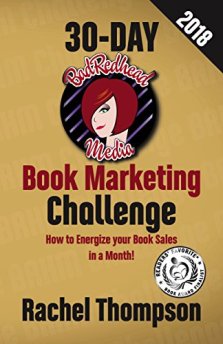
book marketing challengeRachel Thompson says we don’t get traction with our careers until we have at least 6-10 books under our belts. As the self-publishing industry gets more competitive, that number may get higher. If you’d like to read her awesome book about marketing, you can look for it here.

Book sales are subjective. What works for you may not work for someone else.

The best advice I can give you is write well, and publish often. Stay consistent. Build your brand on a genre you love to write.

Sales take time.

Have patience, and good luck!


buy image for blog