How Free is Self-Publishing?

It costs absolutely nothing to publish a book. Nothing.

free

There are free word processing programs like Google Docs. You can use a library’s internet and computer. Platforms like Draft2Digital and Amazon’s KDP will provide you with some kind of book identification number so you don’t have to buy ISBNs for your books.

All you need to do is write, make a cover in Canva using their free website, use a free for commercial use picture from Pixabay, Pexels, or Unsplash, and you are a published author. All for free.

But when isn’t that a good idea?

Do you know Amazon has over 7 billion books in their Kindle store? And writers publish more every day.

So not only are you competing with everyone you know on Writer Twitter, you are competing with writers who are not on Twitter, big time indies who don’t have much time for social media. You’re competing with traditionally published authors, and those authors range from anywhere between The Big Five to tiny university presses.

You’re competing with writers from the US, Canada, (do you know how many writers I know who live in London, Ontario? A lot!) the UK, Australia, and many other countries.

Over 7 billion books.

Okay. What what is this blog post really about now that I’ve made you feel like crap?

Spending money.

Self-publishing is free.

Until it isn’t.

I do everything myself. For my trilogy, and Wherever He Goes, I wrote them, edited them. I formatted them and did the covers. The orangy hue on the third is my fault. I didn’t have the skill to fix it. It doesn’t look bad on screen, but the paperback could look better. That’s just the way it is, and I accept that.

What can you pay for when you self-publish?

  • Editing
  • Formatting
  • Cover

Those are the three big ones. But we can go further:

  • Beta Readers/Critique Partners/Book Coaches/Book Doulas
  • Blurb writing
  • Reviews/Arc review services like NetGalley
  • Advertising, ie, Facebook ads, Amazon ads, Promotions
  • ISBNs
  • Paperbacks for giveaways
  • Giveaway fees like on Goodreads

No one is saying you have to pay for all of that–or any of it.

It’s up to your discretion how much money you want to pump into your books.

See, this is the problem. No one wants to admit that they publish their books to sell them. Which leads an author not spending one dime on their books.

They are publishing for themselves. I repeat this over and over again like a broken record:

If you only publish for yourself you have no right to complain if your books do not sell.

But if you can admit you want people to pay to read your work then you have to take a hard look at your book.

Is the cover you made yourself doing the job?

Is your blurb up to snuff or is it confusing and off-putting?

Are there typos in the first few pages of the Look Inside?

If you can’t put out quality work yourself, then you’re going to need help.

It’s that simple.

And that difficult because saying you need help is a lot easier than being able to afford said help.

That being said, you can teach yourself how to do these things.

If you just shut down on me, it’s because you don’t want to take the time to learn. That’s okay. I wear clothes every day. That doesn’t mean I want to learn how to sew.

But what I’m trying to tell you is that you must find a happy medium between doing things for yourself and hiring out the help you need to make your book desirable to readers.

Because remember, readers have 7 billion choices.

Listen, my books aren’t pretty. Use the look Inside Feature for any of my books and you’ll see basic formatting. The embellishments are non-existent.

That’s fine. I taught myself enough to get by, and that’s good enough for me.

Readers aren’t going to care if you have fancy chapter headings if your story sucks.

So, being I’ve published a few things, I can suggest where you should put your money–if you have any, or where you should ask for favors from friends–if you have any. Just kidding!

  1. Editing. If you’re a newbie writer, this means a developmental edit as well as a line edit and proofing. Plot holes, flat characters. Developmental editing can be more of a job for a critique partner or someone from your writing group. Ask someone who reads your genre so they have a handle on the tropes and feel for the type of genre your book is in. Once you have a stellar story and a solid look inside sample, you need a good cover.
  2. Cover. Canva.com offers design classes. You need to train your eye and learn what makes a good cover. It can make or break your book. Plus, if you push your book in any way, ads, promos, giveaways, your cover will be the selling point. Look at your genre on Amazon. Look at templates. Try to duplicate them yourself in Canva. You may need to spring for a photo, but that’s not as expensive as you might think. I buy mine on canstockphoto.com for seven dollars apiece. Photos are even cheaper if you buy a credit package.

    A word of warning though. I write romance, and slapping some text onto a smiling couple is a lot different than making a cover for an Urban Fantasy novel. Fantasy, of any kind, requires a certain kind of cover. Negotiating a price with someone on Fiverr is a lot better than publishing a book that does not have an appropriate cover. Your sales will stop before they even start. I’m sorry, but that’s just the way it is.

    Sometimes you can find a pre-made template that’s cheap.

    Sometimes you can even find a photo on a photo site that is already doctored to how you need/want it to be. Set aside hours, days, if not weeks, to click through pictures. I’m barely 20,000 words into my next book and I’m already looking at photos.

  3. Formatting. Formatting for Kindle takes five minutes. All you need to do is set the options in Word so when you upload it into KDP it converts correctly. If you go wide and you use Draft2Digital, you don’t even have to do that. (Smashwords is a different story, and your Word file has to be formatted correctly or it won’t convert through their “meatgrinder” and they won’t publish your book.) Draft2Digital seems easier to work with, but I’m in KDP Select and haven’t used either of those services.


What is the cost of self-publishing? It can cost as much or as little as you want to put into it.

Someone opening a business always needs to invest. Paying for services is investing in your book business.

I used to think that I didn’t want to invest in my books because I may never get that money back. But that was incorrect thinking.

If my books are well-written, have a nice cover, and are formatted as to not turn anyone off from reading it, eventually, I will see that money returned to me by way of sales.

My books will be sold for years and years.  As I slowly make a name for myself, my sales will increase. It will take time, but I’m in it for the long haul, and I have patience.

I’ve put money toward my books by way of taking the time to learn how to do things for myself. I read lots of editing books. I read tons of blog posts about what makes a good cover. I’ve practiced making covers. I’ve learned to format my files. It took time. But time is money. I’ll eventually see dividends on the time I invested in my books.

time is money

It’s a personal choice.


This blog post begins a self-publishing series about how you can do most of these things by yourself if you want, and where to look if you don’t. I’ll give you the resources I used to learn and you can decide for yourself if it’s easier for you to hire out, or if you can’t afford it, where you can spend time learning things on your own.

Look for my next blog post about editing resources.

Thanks for reading!


The Scary World of Amazon Marketing Services

Writers need to get their books out there. Twitter doesn’t sell books. Neither does Facebook–at least not on your personal profile. There are only so many copies Aunt Edna wants. And she’s not going to pay your bills. (If she is, that’s no one’s business but yours.)

So what is an author to do? Well, you can write more books. You should be anyway. What else? Instagram the shit out of your life hoping to draw some attention to your fabulous #writerslife.

What else?

Pay for promos, maybe. I’m assuming I’m still getting some KU page reads from a Freebooksy promo I did a few months ago. (To read about that, click here.)

I’ve come to the conclusion after a few years on Twitter, the only way to find readers is to write books and tell people (who aren’t on Twitter) about them (you know, actual readers). I’ve decided to dip my toes into the world of Amazon ads.

amazon adsNow, lots of people have told me that they don’t work. I bought Brian Meeks’ book, and he tells me they do. But you gotta be smart, and you gotta be patient, and you gotta test. Test and Test. And Test.

Oh, by the way, you have to have a decent book, good cover, good blurb. Because if you don’t have a quality book, no amount of advertising will sell your POS. (Sometimes people forget about that part.)

So, I’ve been running ads for a couple of weeks. Brian says this isn’t hardly any time at all, and I agree. Buying and running ads on Amazon isn’t the magic trick to selling books and getting famous. You need to have patience, and you need to know what you’re doing.

At first, I bid low (like Brian advised–he walks you through the entire process), and piecing together information from other sources, I realized this was way too low. I write contemporary romance, and it’s a highly competitive market.

The thing with Amazon ads is you need to bid high enough that Amazon will show your ads, but not so high that if someone clicks on your ad but doesn’t buy, you don’t go broke paying for clicks that don’t turn into sales.

It’s called a sweet spot, and from what I can tell, few people have the patience to get there. Or they are too scared they are going to waste a lot of money trying.

I’ve been running ads for 13 days, and this is what I have so far:

ams ads so far june 18

Remember, 13 days isn’t hardly any time at all. But for anyone scared to run ads, take a look: I have 12 ads running right now, and I’ve spent 35 cents. Not dollars, cents. None of the ads are doing particularly well, and I assume it’s because I’ve bid too low. The ad for Don’t Run Away that has over 3,000 impressions, hasn’t cost me anything. But those impressions could have given me a few page reads in KU if someone saw the ad, but didn’t click and just decided to try the book in KU anyway. Where and when someone decides to read your book if it’s enrolled in KU will always be a mystery.

Here are my KU page reads for DRA. I took this screenshot on June 18th. The same day I took the screenshot of my ad dashboard.

sales and ku reads for dra

Nope, I don’t have any sales yet. But I haven’t gone broke trying, either.

So anyone who is wanting to try this but is afraid of losing money can err on the side of caution, figure a few things out, and go from there.

I’m surprised that DRA is getting impressions, as the second set of ads I did for Wherever He Goes is a higher cost per click (which you would think would buy me more exposure), and I think the cover for WHG is better than DRA. But maybe the blurb is better written, or the characters resonate better with readers.

So where do I go from here? I plan to bid a bit more for WHG, and see if I can’t get some impressions, at least. Maybe I could even do another set of ads for DRA at a higher bid, and see if that doesn’t ramp up my impressions even more and hope those turn into clicks. Or I could do nothing, and wait to see what happens, because 13 days of ads is hardly any time at all.

But I’ll keep an eye on it. I just wanted to let you know a high daily limit doesn’t have to scare you.

And if you take anything away from this it’s this: if your ads are successful, and you are getting a ton of clicks but they aren’t turning into sales–you need to look at your book. You need to look at your cover. Your Look Inside pages. Your blurb. Don’t pay for ads for a crappy book. Make it better.

I’ll keep you posted!

Beach Reads Giveaway Coming Soon!

Super fun beach reads giveaway!


Even though I said I wouldn’t do many giveaways anymore, it’s SUMMER and that means an opportunity to do a beach reads giveaway!

Let’s break out the beach towels, hit the beach, or the pool, or even the backyard and the sprinkler, and pull out those books while you bake out your brains and try to banish those hold-over winter blues!

I’m in the process of putting together a fabulous giveaway. Need a beach towel–I’ve got you covered. Hypo-allergenic sunscreen? Check! Pool-safe beverage container? Check! Cooler? Check! And most importantly, books.

domenico-daniele-411075-unsplash

Did someone say SHARK????

Lots and lots of books!

I’ve got my fellow author friends sending me books–all the books! And that means an awesome assortment for you to try your luck at winning.

Mystery/thriller, Women’s Fiction, Romantic Tragedy, and Contemporary Romance are just a few of the genres that will be included in the giveaway!

I’ll post a link soon, so keep an eye out for more information!

Until then, enjoy the weather, and keep reading!


Photos by Unsplash


Acknowledgements and Dedications

dedicationRelationships come and go. No one knows this better than people ensconced in social media, or, more specifically, the writing community online. One day you’re good friends with someone, and the next they’re not talking to you anymore. Blocked. You don’t know what you did, what you said, but suddenly you are no longer in communication with someone you used to speak with every day.
And it hurts.

For my mental health, I’ve pulled back with speaking to some people I used to talk with quite frequently on Twitter and Facebook. For one thing, there’s not enough time in the day to talk to everyone, and for another, it’s easy to get wrapped in a relationship that’s one-sided. While I love to support my friends, sometimes, dammit, I need a little support too.

That being said, I’ve made good friends online. Such good friends, I’ve mentioned some of those people in the acknowledgments of my books.

dedication4

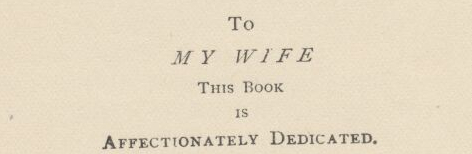
Until recently, my dedications have been to my kids, “family” in general, my mother. And while I’ve been married for 16 years, never once have I dedicated a book to my husband. I always felt like a dedication belonged to someone who cared about me and my writing, and while I know my husband loves me, he’s never been interested in my writing. This isn’t anything I’ve kept to myself, sometimes tweeting my frustration. On the other hand, part of that is entirely my fault. I never wanted him to be a part of my writing. I wanted something that was just for me, and that’s what writing is for me. My escape. My passion. So maybe, in all this, I was punishing him for something that was my own doing. I don’t know.

But this post is about what happens when you acknowledge someone, or dedicate your book to someone, who no longer holds that significance in your life.

I realized that looking at my proof for Wherever He Goes I have a choice to make.

Some of my closer friends know I met someone on Twitter. A friendship that began because of our love of writing turned into something more. At least, as more as something could turn into with him living down south and me stuck in the frozen tundra of Minnesota. And through it all, I drifted further from my husband than I already was, and just these past couple months we decided to separate.

dedication3

That’s when I finally dedicated my book to a significant other, someone who loved me, supported me, supported my writing, believed my books could take me all the way.

Only, the joke’s on me because that relationship crumbled around me, and now I’m left with nothing but words on a printed page.

So I have a dilemma. Do I change my dedication page?

Authors every day have that choice. With self-publishing, making changes to your book is simple and the changes take effect almost immediately. You can wipe out a whole relationship in 24-72 hours. Actually, KDP only takes you about 4-6. Whole friendships, whole relationships, poof.

Should authors do that, though? How right is it? People move in and out of our lives. They teach us something, give us something, and then sometimes they move on. We do the same for other people, maybe without even knowing it. A simple tweet, a DM. Those friendships can grow deeper–you help a person publish a book. You bitch talk about the publishing industry; you are a person’s cheerleader while they query. You help them through a bout of depression, a case of writer’s block. Someone does the same for you, and you thank them for it. Then, one day, you’re not talking anymore. They’ve moved on.

dedication6

But the acknowledgments and dedication pages are still there, remain untouched, a testament that those people affected us, helped us grow, changed us for the better.

My southern gentleman did all that for me, until he couldn’t anymore. It doesn’t make our relationship less meaningful. It doesn’t make what he did any less important to me.

But every time I open that book, I’ll hurt. I’ll have to swallow back tears because the support I treasured, the support I needed, is now gone.

It’s up to you on a personal level if you want to change your acknowledgments and dedications. I understand completely if someone did something to you that you cannot, ever, forgive.

Your readers won’t know the history behind your acknowledgments and your dedication pages.  I’m willing to bet some readers don’t even read them.

My mantra is always move forward, always move on. There will always be another book. There will be pages and pages of acknowledgments and dedications ahead of me, if I’m lucky.

And, you know, if I ever run out of people, I haven’t dedicated any of my books to my cats, yet.

dedication5

You never know.

Dedications1

Deciding What’s Really Worth It

Because of some personal circumstances, I went back to full-time work a couple weeks ago. To say that I have not adjusted well is an understatement. I don’t want to sound whiney, like a little kid being made to do something she doesn’t want to do, but it’s definitely a rude awakening when all of a sudden all the writing time I’ve enjoyed is gone.

I know most, if not all, my adult writer friends also have some kind of full-time job, and many of those also add small children to the mix. There, at least, I am fortunate. My son is 18 and will be graduating from high school soon. My daughter is 12 and as soon as she comes home from school, she runs and hides, all her energy gone from putting up with her peers all day long. But that doesn’t mean I don’t have laundry to do, dinner to make. By the time I have a free moment, I am spent. Not maybe physically, but emotionally, all I want to is mindlessly scroll Twitter until it’s time for bed.

So, lately, I’ve been exploring what I can give up, and what I want to keep, in order to have the time and energy to keep writing.

office-620822_1920And it’s more than that, too. I consider myself an indie writer, publisher, marketer of those books. That means staying on top of publishing trends, practicing writing, reading about craft. I just finished Stephen King’s On Writing. There is always something to do when you are an indie writer: build your platform, market your books, run ads.

What do I do on a daily, weekly, monthly basis? Let’s explore:

Daily:

  1. There isn’t anything that I do absolutely every day, except be on Twitter/Facebook (and I can’t even claim I post regularly on my FB author page, either!). I enjoy it, and I follow influencers, top people in the publishing industry. Agents, editors, other writers. It’s easy to write this off as a time waster, but if you follow the right people and use it for more than watching weird gifs, it can be a great networking tool. I’m fortunate to have the account I do, and for that reason alone, I like to try to keep up with it. I have a lot of friends and support on there. Sometimes I do fall behind, and for that, I apologize.
  2. I should add writing to this, but for the most part, I can’t. Sometimes I am physically unable to write. Lack of time or whatever, sometimes I just can’t. It doesn’t help that right now I am formatting and creating my cover for my current novel. Any free time I have is going to that just to get it done. I’m tired of looking at it, and I would love to start a new book.


Weekly:

  1. Listen to podcasts. I try to keep up with these as they come out. To give myself a podcasts-2633018_1920two-fer, I try to go for walks as I listen, to get my exercise in. There are two that I absolutely love: The Sell More Books Show and Print Run Podcast. The Sell More Books Show talks about indie news, and I keep up on a lot of things going on in the indie-publishing world. Print Run is run by an agent and editor out of Minneapolis, and they talk about the traditional publishing industry. They’ve opened my eyes to a lot of things, and to their credit, they are candid about their jobs. Others that I try to listen to:

    a) The Science Fiction and Fantasy Podcast. I don’t write fantasy, but a lot of the guests on there talk about their marketing strategies that can work for everyone.
    b) The Creative Penn. Joanna runs a great podcast and keeps you updated on everything from indie news, craft, author interviews and more. At this point, she’s a staple of the indie writing community.
  2. Write. Finally, I can put this on the list. I would go nuts if I couldn’t write. Even when I have to write longhand at work, it’s better than nothing. When I was working part-time, I could write 5,000-10,000 words a week. Especially if the story was going well. Now, well. I haven’t been working long enough to fall into a routine to see how far I can push my limits. And now with summer coming, I just don’t know. All I can do is my best, and so far, I feel like I am failing miserably.
  3. Read craft books/editing books. Being I can read at work if it’s slow, (no internet/computer/device access though, that’s why I buy my books in paperback) I can read a lot. I read Stephen King’s book in two days. I read lots of books, which is a major boon for me. It’s harder to write at work on certain days since a) I can only writing longhand and 2) if it’s busy, I lose track of what I’m doing and my writing becomes choppy. It depends on the day, and what calls I’m scheduled to take. Weekends are better for writing.


Monthly: 

  1. Blog. My blogging schedule leaves a lot to be desired. Some of my most dedicated arms-3404941_1920friends will crank out two blog posts a week. I can’t do that. Not only do I not have time, Good Lord, where do they find the content? I’ve added book reviews to my blog schedule (of craft and other non-fiction books) just to add some filler. But contrary to what others say about how important blogging is to your platform, this is the one that I let slip first.

  2. Helping others. Sometimes I’ll edit for free for someone just because I know how hard it is to find help at a reasonable rate. While I limited that to once maybe every three months, or when I come across someone who really needs the help and have nowhere else to turn, I fear I may not be able to do any of that anymore. Which saddens me, because I really enjoyed it.
  3. Author interviews. I don’t do this often, but this falls into blogging, and while it might be easy to email questions, formatting the answers into an enjoyable blog post (see my lovely interview with Aila Stephens) can take a lot of time.
  4. Spend some time on Goodreads. I try to add all the books I’ve read to my shelves, and give a star review, even if I can’t write a quick review on there. Sometimes I’ll try to copy and paste the review I write for my blog into the review on Goodreads, like I did for The Continent.


So, obviously, as an indie writer, you need to make time to write. If you’re not writing, you’re not doing much of anything. But if you are writing and publishing, it’s hard to figure out what you can drop since you’re running two or three businesses single-handedly while working a job and raising a family.

business-3385079_1920What could I drop? Blogging, probably. I blog for indie writers, and well, indie writers don’t read indie books. That is not where my audience is, and it was one of my mistakes when starting up my blog. I could give up Twitter, but it’s my main source of writerly companionship. Sometimes I don’t walk as much as I want to, and that’s sad, because MN weather is really nice right now, and I don’t want my podcasts to pile up (when I don’t walk, I listen to podcasts to make the chores and errands go a little bit faster).

This probably isn’t a good time to figure out a writing schedule since I’ve only been working full-time for three weeks, and in that time I’ve been editing Wherever He Goes and have moved on to formatting and creating the cover. I’ll have a more accurate depiction of how I can figure out a writing schedule when I start my next book.

All in all, I’ll just have to try to find some balance like everyone else I know. Pull up my big girl panties, and write when I don’t feel like it. Walk when I’d rather take a nap. Be careful not to burn out.

Lots of people seem to have a handle on it, and lots of people seem like they don’t, too. I’ll just have to look at this as a speedbump in my writing career. It’s not easy to think that way, since I write romance, and romance is notorious for the pressure. It’s not unheard of for a romance writer to publish anywhere from 5-10 books a year. I’ll never get to that point. Even if I didn’t have to work, at all. I’d never make it.

So, I’ll echo the advice I hear over and over, and something I have even told others: Find a balance. Do the best you can. Work with what you have.

It’s all you can do.

Let’s Talk Engagement

There has been a lot of talk of engagement on Twitter lately. What exactly is engagement? The Macmillian Dictionary defines engagement as

definition 4: the action of parts of a machine when they connect with each other or definition 6: the feeling of being involved in a particular activity.

You could even go as far as to say engagement means definition 3: a battle between armies, because, let’s face it, Writer Twitter isn’t always friendly.


woman-593134_1920

She’s cute, but forcing people to talk to you isn’t pretty.

No matter which definition you choose, engagement means a give and take between people or things. So when someone on Twitter says they don’t follow back without some engagement first, or they threaten to unfollow you if you don’t engage with them, what does that mean exactly?

This kind of attitude has always baffled me because first of all, they don’t understand what kind of social media tool Twitter is, and second of all, TWITTER IS F*CKING HUGE. “As of the fourth quarter of 2017, the micro-blogging service averaged at 330 million monthly active users.” Obviously, no one is going to have 330 million followers, but even in Writer Twitter, the number of people following you can grow to the double digits quickly.


So what does engagement really mean? What are you asking for when you expect (demand?) people to tweet with you?

i#followFriday (1)For sake of simplicity, we can pick on a relatively small account. Say you’re following 300 people. You have more people following you; let’s say this number is 1,000. We’ll keep an even number because my math is terrible. Let’s subtract the 300 you’ve followed back, leaving you with 700 people following you that you have not returned the favor to. Let’s subtract 200 of these because we’ll just assume they aren’t real people. Sexbots and whatnot. That’s 500 people, writers, potential friends, and connections, mind you, you’re not following. What if all of a sudden half those people started engaging with you.  You tweeted something funny, an article that hit home. They try to chat with you. Suddenly you have 250 people engaging with you.

What are you going to do, ignore them? This is your dream come true! You want engagement! Now you’ve got it! Oh, you say, 250 people aren’t just suddenly going to want to talk to me. Okay, fine. What about half that? What if 125 of those people started tweeting with you? Then what? You still don’t buy that? Okay, 75. It’s #FollowFriday. They haven’t been pissed off by your snotty attitude yet, so they try to get into your good graces by giving you a happy shoutout. Seventy-five #FollowFriday happy weekend shoutouts. Yee-haw!

i#followFridayYou better believe you respond to these people because this is what you wanted, right? All right, I know I’m being facetious, but let’s be real for a minute. Even if you had 25 people on a daily basis wanting to tweet with you, that’s a huge time suck. There are days, like #FollowFriday, or #WriterWednesday, where I do get quite a few notifications, and I do have to take the time to sit and thank everyone. I’m getting to the point where I may not be able to always answer all my notifications, but for now, I’m trying my best. I respect my followers, as should you. Someone thought you were interesting enough to follow, or you’re part of Writer Twitter, whatever, and you thank them by . . . ignoring them. Nice.

I admit, you can look at my numbers, and see my following and followers are not even. And that is fine. Some are bots, some are huge accounts I know will drop me after they get a follow back, huge marketers with 100K following/followers, writers who only tweet their books and nothing else. Yes, I do not follow those accounts. And I’m not suggesting that you do.

I follow back writers, readers, bloggers, agents, anyone human related to the reading/writing/self-publishing/traditional-publishing industry.

What I am suggesting is that with an engagement entitlement attitude, you do not.

I get that if you’re a big-time author you’re not going to follow back everyone. I was lucky and Karen M. McManus followed me, or vice versa, before she became famous. You can see that she’s no longer following everyone who follows her. I was lucky, and I’m able to tweet with her now and then.

one of us is lying

Buy Karen’s awesome book here!


So, why do I have a problem with this attitude, this need for engagement on Twitter? Because it’s the wrong platform for it. I’ve suggested to a few people on Twitter that if they want to keep their groups small, then they should invite 200 of their nearest and dearest and form a private group on Facebook. Chat away until your heart’s content, and you won’t have to worry about those pesky people wanting a follow back without saying hi first.

Twitter and Facebook are different.

Twitter is used for quickly exchanging information. Read an excellent blog post about editing, tweet it! Found a shortcut for formatting? Share it. Twitter is also for supporting your colleagues. Congratulate someone on their new release. If someone has a question, and you just read a book about it, let them know! Twitter has it set up now that tweets pop in your feed from people whom you do not follow. They did this to broaden your horizons and help you find more people to connect with. Don’t be annoyed by it! Use it to find your next Critique Partner or Beta Reader. If you need something, would you rather be able to ask 200 people, or 10K? Build up your account. Spread out your reach.

i#followFriday (2)Twitter is like being at a gigantic party! Grab a drink and say hello to everyone. You may not exchange business cards with every person you meet, but you never know when you’re going to make a connection. Or know someone who knows someone who can help you. It only takes a moment to follow back a living, breathing writer.

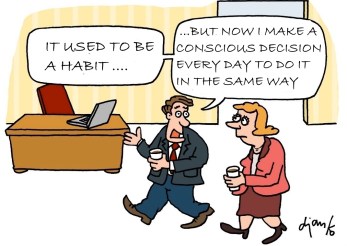
Do not insist on engagement. Twitter isn’t made to be a small group of people, your profile open to the public, and anyone can enter.

If you want privacy, switch over to Facebook and start a small writer’s group there. Share resources, tips and editing, vent. You’ll be happier.

I adore tweeting with people. Maybe I’ll only tweet with them once or twice and they’ll slip away, but that doesn’t mean they’re gone for good. They’ll pop back up one day, and then I’ll be the one to say hi.

And I’ll just make one last point before I go–you’re a part of Writer Twitter. Doesn’t that mean you’re supposed to be, oh I don’t know, writing? Insisting on engagement isn’t fair to the people on Twitter who spend the bulk of their time either working their day job, taking care of kids, and in the little time they have left, writing. Don’t punish your connections for doing what you should be doing, too.

Come say hi to me on Twitter and tell me what you think! I’ll see you there!


Happy writing Vania Margene

Toxic People–How Do We Get Them Out of Our Lives?

Humans are creatures of habit. We like to park in the same parking spot every day, be it at work, school, the shopping mall. We buy the same seat locations for movies. We use the same person at the salon.

It’s the same thing for the people we interact with. We all have that friend from elementary school, we brag we’ve been married for 10+ years, we’re still in touch with college professors, even though you’ve been graduated for twenty years. We latch on to people, and we can’t let go.

But what if that person we meet at our coffee klatch, or writing group, or your daughter’s best friend’s mother, what if that person you thought to be a good friend . . . isn’t?

You know the one I’m talking about, even if you don’t want to admit it. That friend who never has anything nice to say about your work. That friend who can’t compliment you unless it compliments her. That friend who can’t do anything nice for anyone unless she benefits from it as well, in some way. That person who promised you she would do something and never does, though she’s full of apologies.

That kind of behavior can sneak up on you, and maybe it takes years. And maybe that person is so fully ensconced in your life that booting them to the curb seems . . . maybe a little too dramatic. I mean, after all, it’s not really harmful they treat you that way. Is it? If they hurt your feelings, that’s not on them, it’s on you for being too sensitive. Because she did do that one thing for you a few months back, though it was a couple weeks too late, and you didn’t need it by then, but she made the effort, right?

Friendship-quotes-Bad-Friend-Quotes-Picture-Quotes
http://pinit.top/quotes/friendship-quotes-bad-friend-quotes-picture-quotes-3/

Maybe you’re part of a group, and others can’t see her for what she is, and if you extricate yourself from the group, you won’t just be rid of her, but you’ll lose a couple of good friends.

And maybe, this is what will always be in the back of your mind, WHAT IF SHE TREATS OTHERS BETTER THAN SHE TREATS YOU.  That this isn’t just her personality, but something personal she thinks and feels toward you? She kicks you, and you come back for more because that one thing was a fluke, and she’ll never do it again. Only, she does. But they are small things, a back-handed compliment, a comment that doesn’t quite sit well with you, but maybe you’re touchy because you’ve had a bad day, and you keep brushing them off.

The thing is, you’re not imagining this stuff. It’s how that person is really treating you. Once you can face it, once you can fully understand that it is HER and not YOU, you need to figure out what to do about it. This “friendship” has probably been years in the making, and you just realized after one too many pretty insults that you can’t take it anymore. But she’s a major stakeholder in your life now. You talk all the time. Your kids have playdates. Maybe your husband is best friends with yours. These are real-life examples, but I’ve been burned by people I’ve met online. Sometimes dumping someone in real-life is easier than online. You stop answering texts, you stop going on double dates. If it’s your daughter’s best friend’s mother, think of it as a favor to your daughter. How is your daughter’s friend going to grow up with a catty woman like that for a mom?

No, online is a bit different because I’m swimming in an aquarium of writers (sometimes there are sharks in there!), where everyone knows everyone else, and cutting someone out of your life means not knowing what they are doing anymore. Professionally. You don’t want to miss what they are going to do next, what kind of contacts they make. Because not only could something they know help you, it could elevate your career to the next level. And this isn’t a joke. Networking is important. It’s important in any career–it’s why all industries have conferences, retreats, etc. So this isn’t in your head, and it’s okay to have FEAR OF MISSING OUT when you think of cutting someone out of your life.

But honestly, how much of a career will you have if you are not taking care of your mental health? Being a writer is hard enough as it is without having to suit up in armor every time you jump online.

Here are a couple tips to help you sweep out that pesky person who just cannot be nice.

  1. Shake things up in your real life first. Park in a different parking spot at work. Take the kids to school using a different route. Try a new restaurant. Doing small things like this can alter your brain’s neuropathways, and you can teach yourself that change isn’t bad. Especially change you instigate yourself. Studies show that you can handle change better when you start it. I’m not saying dump her before she can dump you, but disentangling yourself from that kind of friendship may be easier on you if you do it, rather than if she does it a few months or years down the road. Other ideas: Take your evening walk in the morning. Walk it backward. Not backward backward, you could hurt yourself! But from finish to start. If you take road trips with your sister and always head east, go west. This is good for your writer’s brain. You’ll discover more, engage more with your surroundings.
  2. If you truly do fear for your professional career, take matters into your own hands. Book a writer’s conference, follow a few more influencers and leaders in the writing community, add another publishing podcast to your playlist. If you can fill the hole not talking to your “friend” anymore will create, it won’t be so hard to say goodbye.
  3. Make new friends. Twitter has a gazillion users, start talking to some of them! Start a book club on Facebook, or start an online writer’s group that will share promo sites, inexpensive cover designers, editors that will swap work with you. Whatever you think you are going to miss from your friend, there are others who know just as much or more than she does.
  4. You do have people in your life that mean more to you than she does, so cultivate those relationships. Maybe you haven’t spoken to your old walking buddy in some time, or that coworker you used to like to hang out in the breakroom with, but she got a new job and you haven’t spoken with her since she left.

Fear of missing out is a real thing, but it’s still just in your head. It comes from being chosen last during gym class at school, or your friends ganging up on your on the playground. It comes from people flocking around a writer who just got an agent, and you feel left out in the cold. No one wants to be excluded. But the fact is, no one puts all their problems online–you only know the shiny parts, what they choose to display. Insecurity, jealousy, and fear are probably three of the main reasons your “friend” treats you the way she does. That’s not an excuse but a reason. Maybe she has a serious case of writer’s block, and she hasn’t written for months, or maybe sales weren’t what she thought they’d be during release week, and she’s jealous of your KU page reads. It could be anything. But the fact is, you don’t have to put up with it.

You don’t need to burn bridges or start tweeting or posting derogatory things about her. Or tweeting subliminal tweets about how good friends should behave. You don’t even need to unfollow (on Twitter) or block. Facebook makes it easy to stay friends with someone but not see their posts anymore. Unlike her author page. You can be a grownup about it; just stop engaging. Because you and she are both part of a community, and there’s no point in slinging mud. Be civil. Chances are she may not notice. Chances are she has a lot of friends and a few weeks of distancing yourself may just do the trick because she’s friends with a lot of different people.

Probably the biggest piece of advice I have for you is this: social media is good for networking, for getting to know people, for learning the tools of your craft and business, but overall, social media doesn’t sell books. If you’re in it to sell books, you need to write more and find ads and promo sites that work for you. Networking can help you do that, but that’s all it has to offer. Social media can be a support or a distraction, but it won’t skyrocket you to bestseller status. Only you can do that, in front of your laptop–writing.

Do you have other tips to help ignore or get rid of toxic people in your life? Let me know!


Happy writing Vania Margene


My Next Few Weeks

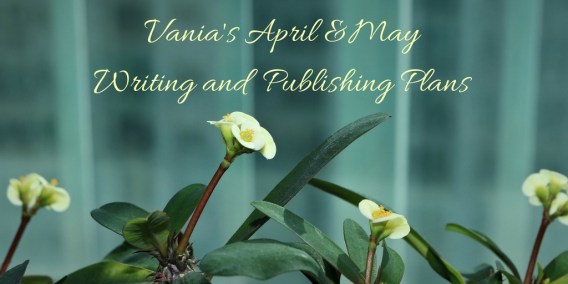
Vania's AprilMay Plans

Last week I finished Wherever He Goes. At 77,863 words, it’s one of the longest books I’ve written, and I’m very proud of how the story came out.

What does this mean for the next couple months in terms of my writing schedule?

Take a look:

Plot out my next book.
I left a few threads open while I wrote Wherever He Goes, and I need to decide if I want to close them up or write a companion to the book. The companion would be about Aiden’s brother Dylan. I foreshadowed a few things about him, but his story isn’t fully developed in my head yet, so I need to think, do I want to leave the threads loose in case his story comes to me, or tie them off and move on? I’m hoping a solution will come to me while I edit. For now, I have another book I need to plot out that has nothing to do with Wherever He Goes. I want to get most of the bones of that book written down before I forget any of it.

I start edits on Wherever He Goes on April 2nd. My editing process is long and contains many steps, mostly because I edit myself, but mostly because even if I did pass my book on to an editor, I would give them as clean a version as I could. My editing process includes:
Initial read-through. This is where I fix blatant typos and plot holes I noted while writing that I didn’t go back and fix. I’ll fix character discrepancies and repetition. I’ll fix my characters’ overall arcs. As I get to know them, my writing loosens up, so I’ll even out the flow of the story. All this is easier on the screen.
Print it out. I need this step because this is where I put my chapters in (I write without breaking up my book) and make sure the plot makes sense. I have an easier time with this when I can “see” the book laid out in front of me. Often this is when I beef up scenes or take out parts that don’t need to be there.
I listen to my manuscript. I have Word read my book to me. This is where I do line edits, and I pay special attention to dialogue and syntax. One day I’ll do audio for my books, so I pay special attention to this step. This step gets rid of wordiness, and it takes about four to five days to listen to it all.
I proof the proof. You can see a lot of typos and long paragraph blocks that need to be broken up when you read the proof you order from CreateSpace or wherever you publish through. You can find repetition, errors, and there have been times I’ve caught huge consistency issues. Always read your proof as a reader would. Take your time, sip on some coffee, tea, or other beverage (keep it non-alcoholic so you have a clear head). This step takes me about three days. I take my time because this is the last step, and the last time my eyes will be on it.

After I edit, I’ll put in the changes and order another proof to make sure my formatting stays perfect.

I don’t have a pre-order set up for Wherever He Goes, no blog tour set up or anything. I did a successful Freebooksy for my first book in my trilogy, so I know I have readers out there. I’ll do a soft release for this book because I hope I’ll already be a few thousand words into my new book.

I’ll still continue to blog. Lately, I’ve been doing more book reviews on the non-fiction I’ve been reading. I have a lot of time at work and I’ve accumulated a pile of books that could be useful to other indie authors. Plus, it’s content, and I’m horrible at blogging consistently.

I’m going to basically stop doing Twitter giveaways. They are useless. There is too much free stuff out there and they are a waste of money. No offense to the people still doing them–I wish you well. This includes doing a Goodreads giveaway. Until I can know for sure you get the bang for the buck, a promo site like Bargainbooksy may make more sense. And cents.

Summer is a time when things slow down, and people take vacations, do things with their families. I still would like to try to write 1,000 words a day and publish another book by the end of the summer. Trying to stick to a three-book a year schedule may be tough because I have to have a whole book in my head before I start writing. I have bits and pieces of plots bouncing around in my brain, but nothing fully realized yet. So I have this next book to plot out, then I hope something comes to me.

Vania's AprilMay Plans (1)

That’s what I’ll be doing for the next little while. I’m excited to release Wherever He Goes. I have the cover tentatively worked out, and you can see it on my Facebook Author Page.

I don’t have any writing conferences to attend this year–a few things take precedence like my son’s high school graduation. I also have a few things going on I don’t have the liberty to discuss, but I’m going to guess will be very time-consuming.

I also need a couple days to make box sets of Summer Secrets and my Tower City Romance Trilogy. It will be a pain in the butt, but worth it!

I’ll be busy between now and Fall, but I’m looking forward to the challenges!

What are your plans for the next little while?

Happy writing Vania Margene


images created with http://www.canva.com

Author Interview–Aila Stephens

Everyone loves to hear how a launch goes. Was it successful? How many books did they sell their first day? Their first week? How many page reads did they have if they were enrolled in Kindle Unlimited?

Book launches are exciting.
◊Cover reveal!
◊Excerpts!
◊Author interviews!
◊Blog tours!

But what about after? There is always going to be someone else who releases a book and our attention will be jerked away by a shiny new cover.

What happens after the launch? What happens months after the first week of sales? How does an author keep the momentum going?

I spoke with author Aila Stephens to find out. Listen in—maybe she’ll tell us all her secrets.

astericks

You launched Sex, Love, and Formalities, the companion to Sex, Love, and Technicalities in November of 2017. How did that launch go for you? Can you give us a quick rundown of what you did to prepare? You hosted a giveaway, as well, correct?

Sure! I drank a lot of coffee. I panicked a little…no, no. I mean, yes, I did those things, but really, I talked Formalities up on social media a little more than I did when I launched its’ predecessor. I had much better-looking bookmarks printed up, and I spent a little more time and money on the book trailer than I did for the first one. I love having a book trailer for my books. It’s mostly a total vanity thing, but they’re still fairly rare in the indie community. Giveaways are pretty hit or miss, I don’t think that’s a secret, but I look at them as a necessary evil.

I did have a giveaway. It’s no secret that giveaways are pretty hit or miss, and there’s never any rhyme or reason to how many participants you get, but this one had decent participation. I gave away two signed copies of my books along with coffee and tea, a mug, and even a nice shawl to throw over the shoulders as it was quickly turning wintertime.

That was a great giveaway! I was bummed I couldn’t enter. You also did a free book promo for book one during the launch of book two using some of your free days allowed to you in the KDP Select program. Can you explain how you promoted that, if you did? If I remember correctly, your stats for that free book were rather impressive.

I promoted using Twitter and my Facebook author page.

I am going to strangle myself for this, but I cannot for the life of me remember exactly how many free copies of Technicalities were downloaded during those days, but it was several hundred—maybe even closing in on a thousand. I’d tell you concretely, but apparently, Amazon won’t let me go back that far. Whatever it was, the top ranking I got on Amazon that day was #14, for Women’s Fictions > Crime, and I believe it was #20 for Women’s Fiction > Romance.

That’s fantastic! Did your free promotion for book one bolster sales for book two?

In the weeks following that free promotion, I did have several thousand “normalized pages” of Formalities being read on Kindle Unlimited, which was very nice.

…If only all those free books and KU pages led to reviews, right?

It’s hard to tell if the sales of Formalities since then have been directly related to that free promotion, though I suspect most are.

Did you find it easier to launch book two since it was a sequel?

I did. I had so many—so very many—mistakes I learned from with Technicalities. I think that’s kind of a great thing though, learning from one’s own mistakes. I made a few with Formalities which I hope to avoid with the next book, and I’m sure I’ll make some with it that I’ll try and avoid with the one after that…and so on and so forth.

What are you doing, four months after your launch, to keep sales going? And are your methods working?

Still drinking coffee, still panicking. Ha! No. It’s not in my nature to go for the hard-sell. I do share pictures of my covers from time to time on Instagram, though it’s fruitless. What I think has helped me the most to see continued sells and KU reads has been my blog. I didn’t have the best track record of consistently blogging, but after my launch, I decided to make blogging my second priority to writing more books. I blog every Monday and every other Thursday. I’m still trying to wean myself from blogging just to other writers and figuring out how the heck you blog for readers, but I digress.

At the end of every blog post I include a small, hopefully unobtrusive, advertisement I made for my books and I link it to them on Amazon. I have noticed that I usually sell something on Tuesdays and/or Fridays, and my KU pages have remained rather steady.

This is a comfortable way for me to garner attention to my books without me feeling like a spam-artist.

Again…if only those translated to reviews.

What have you learned from either of your books to help you launch and maintain momentum for your next book?

I want to give a little more time between finishing the book and launching the book. With this next one I want to seek out ARC reviewers on YouTube (which, honestly, excites me and kills me a little on the inside), and I also want to spread out smaller, but still impressive, giveaways. I am still researching some launch tactics, but these are the main ones I intend to employ this go-round.

Do you have any tips for those who are seeing declining sales after their launch?

I would ask them what they’re doing to keep putting it in front of people. Like I said, there isn’t a soul out there who can say I’ve sent them an auto-DM going, BUY MY BOOK!! But I endeavor to have a quality blog I drive traffic to several times a month, in the hopes that by the time someone gets to the bottom, they’re intrigued enough to take a look at my books.

You can’t publish a book and then expect people to find it without a little elbow grease.

Have you ruled out paying for ads or promotions?

Not at all! I just don’t want to do it for two books. Once my next book comes out, I’ll shell out a little money for advertising and see what comes of it. Three is by no means the magic number, but I will chalk it up to research, too. I can’t afford to be anything except financially prudent with this, but I’m excited to see what happens with it.

I’ve read the best advertisement to promote your work is to write another book. Do you believe this is true?

Absolutely. I wish I had the ability to write full-time so I could crank them out faster. I think in today’s world, we’re all so accustomed to instant-satisfaction that we don’t want to fall in love with a book or an author if they’re not producing anything else. It’d be like watching The Paradise on Netflix and falling in love with it only to learn they shucked it after two seasons. We binge-watch in this day and age, and readers binge-read. This is why there is so much advice out there saying book series are the moneymakers.

…says the girl writing a standalone book right now.

Think of Harper Lee. To Kill A Mockingbird is a priceless piece of American literature, but for the longest time—fifty-five years!—there was only one published out there by Ms. Lee. I don’t know how well that sort of publishing schedule would work in this day and age. 😉

I guess the secret is to write such a thought-provoking, moving book, that your book is mandatory reading in all schools! Thanks, Aila, for taking the time to chat with me!

Vania, thank you so much for sitting down with me again for such a lovely interview! I am always honored and humbled that someone of your talent and expertise has time for little ol’ me.

And to all of your amazing readers, thank you so much for taking the time to get to know me!

Love ya, mean it!  -Aila

Aila always makes me blush. I hope you enjoyed her interview and maybe learned a little something about how to keep the momentum after your launch from drifting away. Help keep her momentum up by downloading free copies of her books here (March 27 and 28) and give her Amazon profile a follow while you’re there. 🙂

Aila is leaving her mark all over the interwebs, and you can follow her Instagram account, Tweet with her on Twitter, like her Facebook author page, and definitely give her blog a peek. She’s in the middle of a wonderful writers’ resources series you don’t want to miss!

Thanks for reading!


Quotes taken from the websites in the photo captions, and photos taken from http://www.pixabay.com and http://www.unsplash.com. Graphics created with these photos in http://www.canva.com.

Self-Care and the Healthy Writer

health is not valued

I’ve let myself go, and not in a good way. Not like I’ve decided to stop worrying about things I can’t change, or that poor review, or what someone thinks of me.

No, I used to run, not from my personal demons or bills, but literally–10k, 5k races, I even ran a half-marathon. I used to love it, the accomplishment, the exhilaration, the sheer pleasure of being outside. Just me and the squirrels.

That changed when I found writing. For a while, I did both. I wrote, went to work, I went on runs. But slowly, as writing became more and more important to me, running became less and less and soon I stopped altogether.

Since I’ve stopped, I’ve fallen into a routine: get up, get the kids to school. Then I settle in to write for three or four hours. I take a shower after that, do chores, pick up the kids from school, then make dinner. The evenings are spent online chatting with friends, maybe watching some Netflix. Maybe writing if I’m really into a scene. Then I go to bed. I can usually write about 10,000 words a week, maybe more if I don’t have to labor over every word, if I know what I need to write ahead of time.

Nice work if you can get it.

There are only so many hours in the day–everyone knows this. Especially the writer who only puts down 100 words before having to do something else.

Who has time for exercise?

When I was writing and running, when, for those few months before one passion overtook the other, I used my running time to plot books. I would listen to music, or if it was early in the morning, I would run in silence and think about my characters, what trouble I could create for them while I effortlessly ran my six mile route through a pretty city park near my apartment.

These days, in a time where families need two incomes to make it work, and you have little kids watching TV all the time and the noise stresses you out, or you listen to a book while you make dinner because you don’t have time to read, we don’t think a lot about self-care, exercise, even eating right. We do what we have to do to get through the day with our sanity intact.

The other morning, tired, after dropping the kids at school, I crawled back into bed with my cat and let my mind drift. I thought about where I was with my book, the people giving me a hard time on Twitter, what I did last week. I dozed, let my thoughts drift for a couple hours while my cat’s head rested on my arm.

We don’t do this very often for a lot of reasons: guilt, thinking it’s a waste of time, knowing chores could be done, words could be written, but we should.

Creativity is hard work. Writing is emotionally draining, maybe physically, too, if we deal with carpal tunnel, eye strain, or back pain. Many writers deal with anxiety or depression, especially if they are querying and waiting for news.

I’ve started walking–I can’t jump back into running just yet. Nothing abandons you faster than stamina, but I’ve promised to lace up my shoes, get some air, get my blood flowing, my heart pumping.

I used to listen to podcasts, but I’m going to try to walk maybe every other time in silence, let my mind drift. Think about plots, notice how the sun sparkles on the snow, take time to breathe. Let my characters speak to me.

calm mind

If you are drained, strained, stressed, you’ll have nothing for the page.

I’ve let myself go, and in the process, I’ve gained weight, and every year my bad cholesterol numbers go up along with my BMI. But not only have I lost some of my health, I’ve lost the peace running gave me.

Self-care is important, and how you do it is up to you. Sit outside and listen to the neighborhood dog barking, read that book, go to coffee with a friend.

Breathe.

Fill your creativity well.

Take care of yourself.

Because you don’t have anything if you don’t have your health. The Healthy Writer

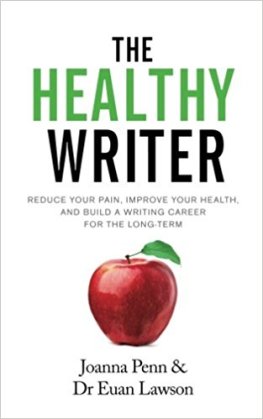
To encourage you to become a healthy writer, I’m giving away two paperback copies of this book by the fabulous Dr. Euan Lawson and Joanna PennThe Healthy Writer: Reduce your pain, improve your health, and build a writing career for the long term. She’s a wonderful part of the indie community, and we’re lucky to have her as a professional role model. (I did not get any kick-backs for giving away her book–I bought the paperbacks myself on Amazon.)

Spring is coming! Get out there!

Click here to enter the drawing!

park-737228_1920