The “As you know, Bob . . .” Syndrome. What it is and why you should stop it.

as you know bob

I didn’t feel like being on social media last night, and I didn’t feel like writing more. It was a bit of a busy day, and I had felt off all day, too. I got in 2,000 words, and that was fine being I had done 5,000 the day before. Not all my days off can be high-output days, and I realize this as long as I keep moving forward at a pace I’m comfortable with.

Anyway, I decided to hop on my Kindle and see what is out there by way of contemporary romance. Maybe find a another book to read, since I finished my last one, Next Girl to Die by Dea Poirier.

I downloaded a sample of a romantic suspense, and like everything else indie these days in romance, this was written in first person present. But that wasn’t what bothered me. (Okay it did, but I already roared about that in a previous blog post.) What bothered me was that the first scene started as an “As you know, Bob” scene and it gave the book a horrible start.

What is an “As you know, Bob” scene? It’s a scene were characters are sharing information with each other that they already know, but they are talking to fill the reader in.

The dialogue in the scene I read sounded like a biography because one character was telling her best friend all about her boyfriend. This is so unrealistic and implausible. If they are best friends, share everything, and talk on a regular basis like the scene implied, the BFF would already know about her friend’s boyfriend. It was obvious the scene was written to introduce the reader to facts about the boyfriend, and it slowed everything down to a screeching halt. I managed three page “flips” before closing out the book and deleting the sample from my Kindle.

How do you avoid an “As you know, Bob” scene? Here are a few ideas.

  • Ask yourself if the characters already know the information they are talking about. If the answer is yes, then you don’t need the scene, or give them something different to talk about. Dialogue is designed for characters to pass new information on to each other, not go over things they both already know. As a writer how do you know you’re doing this? When you get lazy and your characters start saying things like, “You’re so forgetful! I’ve told you this a thousand times . . .” Or “I don’t know why I have to keep telling you this over and over again . . .” Sure, sometimes we do forget things in real life; sometimes we do need a little reminder here and there. But a girl’s best friend won’t need a refresher course in a current boyfriend.
  • Find a different way to introduce the character.
    It was obvious this scene was to introduce the boyfriend. But instead of a whole dialogue scene about said boyfriend, how about waiting until the boyfriend needs to show up? He’s going to be part of the story, the blurb said so, so why feed us backstory right then? Why write a scene that has a character saying “Well, you know my boyfriend is a multi-millionaire. He started his company from scratch in his mother’s basement and only two years later sold it to Facebook for a hundred million dollars. Now he’s partying all over town and treats me like a queen!” When you could wait and actually have the MC meet him:

    So this was Jasper Hargrove, the famous boyfriend. Self-made millionaire and creme de la creme of Manhattan society. Pictures in the tabloids didn’t do his face justice. He looked like he stepped out of a Hugo Boss photo shoot and smelled just as good.

    Feeding readers information in real time will always sound better.

  • Ask yourself if the information is even needed.
    What you think your readers should know and what your readers actually need to know are two different things. Sometimes the best information is no information. Let your readers fill in the gaps on their own. Do we need to know the boyfriend is a self-made millionaire, or that he created a start up living in his mother’s basement gorging on Doritos and Mountain Dew? Is it enough to say he’s a millionaire?  Sometimes a little mystery can go a long way.
  • If the information is needed, can your reader find out about it in a different way?
    Maybe the MC reads an article about him in the paper, or an industry magazine. Maybe she’s watching TV and a news clip comes up. You don’t need much. The scene that lasted three pages? That could have been condensed into a couple of lines.
  • Read the scene aloud or have Word read it to you and be honest. Does the conversation sound like crap? Does it sound unrealistic? Think of the characters and who they are. The scene might have worked if the friends were getting reacquainted after being apart for years and years. But even then, the boyfriend and the friend were going to be key players in the book. An info dump disguised as dialogue is still an info dump. If there’s not any new information being passed along to either character, if the scene isn’t offering anything new, if it isn’t moving the plot along, then get rid of it. It does take a lot of practice at successfully dropping backstory into a novel, but I’m finding less in this respect is always going to be more.

Thanks for reading!


Have never heard of “Well, you know Bob . . .” Syndrome? Here are a few more articles about it:

The Sneaky Secret Life of “As You Know, Bob…” by K.M. Weiland 

As You Know, Bob: Info dumping in dialogue by Erica Ellis

Do You Have “As You Know, Bob…” Syndrome?–How Writers Can Butcher Dialogue & How to Fix It By Kristen Lamb


end of blog post graphic

Downtime. Not doing a damn thing.

You know how it is. You have a long list of things you could be doing. As writer, publisher, and entrepreneur, that list is long. There’s always something, and writing new words is right on top.

What’s after writing?

  • Writing a blurb.
  • Looking at hot guys stock photos
  • Reading a non-fiction book
  • Listening to a podcast
  • Beta reading
  • Reading  a book in your genre
  • Creating an ad (after you’ve read the book about it, of course)
  • Blogging, reading and commenting on other people’s blogs

But sometimes you turn on your laptop, a cat crawls into your lap, and boom. You’re tired, and you’d rather watch the next episode of Outlander than see if your blurb is converting (if you don’t know what that means, you need to read Mastering Amazon Descriptions: An Author’s Guide: Copywriting for Authors by Brian D. Meeks. Another thing you can add to your list! Yay!)  I’m sure Diana Gabaldon thanks you. But I probably should point out that without her writing the words, there would be no show. Maybe Outlander was a bad example.

I’m in that predicament tonight. The things that I could be doing right now? Working on the new cover for All of Nothing. Working on the blurb. Writing more words for the third book in my Wedding Party series.

Instead I’m sitting with a fan blowing on me. I’m a little nauseated from sipping too much Prosecco on an empty stomach. I was grinding my teeth in my sleep last night so I have a toothache on the left side of my jaw, top and bottom, that feels a little more than mild, and all in all, I’m just tired.

And feeling like this is always a conundrum. Do you give in, or push through? Give in and practice a little , or do you, in fact, get some shit done?

I suppose it depends on where you are in your schedule. Don’t have one? Well, nothing gets done simply by dreaming, and if you give yourself a pass too many times, you’ll end up with a handful of days where nothing got accomplished. A schedule isn’t a bad thing.You need to be a self starter and self motivator if you want to keep getting your stuff done. It can keep you on track. A schedule or a plan can at least be a guide in that if you do start letting too many days go by, you can tap yourself on the back and ask yourself what the heck is going on.

Taking a break to breathe is advisable, but if you want books to publish, you have to write them, too.

I could put on some coffee and at least get one or two small things done. Work on my blurb. Look over what I have for my cover. I’d like to swap them out so the book is ready to go when I put all my books back into KU next month. The cover is going well, and I’ll update you on that probably Thursday. I’ll be swapping out the cover for IngramSpark, too, so that will be lovely, though I’m getting used to the IS user interface and dealing with the cover template isn’t so hard anymore.

I had a soft deadline of getting book three done by the end of the month. I’ll be close, but maybe not finished. But that’s okay. Without the deadline I probably wouldn’t have made as much progress as I did. I’m proud the book is almost done. It’s a good book with a strong plot and relateable characters. It seems crazy to say that I’ll have finished three books this year.

But I guess that’s the point of this blog post. I wouldn’t have been able to accomplish that had I given myself too much downtime.

For tonight I’ll try to calm my stomach down, make some coffee, and see if I can check one thing off the list before going to bed.

I’m going to a writer’s meeting tomorrow, so that should be interesting. I’m not a joiner, and while I know the value of networking, I can’t lie. More than a little bit of me wants to skip it.

When you decided to be a writer, did you know how many people would be involved?

I didn’t either.

I feel like I should offer you something since you made it this far and have given me 15 minutes of your time or so, so I’ll end my blog post with this.

I recently read Make Money on Medium: Build Your Audience and Grow Your Income with Medium.com. I’m always open to new things, but after reading the book I realized I don’t want to write for Medium–I like blogging for the audience I already have. But whether you’re a blogger or a Medium writer, Nicole gives some good tips for what to write, how to write, and headlines. I’ll share one little tip that she tells her readers about, and that is a blog title, or headline evaluator.

Headlines or titles are important in that you don’t want your readers guessing what your content is about. You could have a GREAT blog post, but no one will read it if you title it something weird. (That goes for book titles too, but that would be a different blog post.)

There are a few headline generators, and you can Google them.

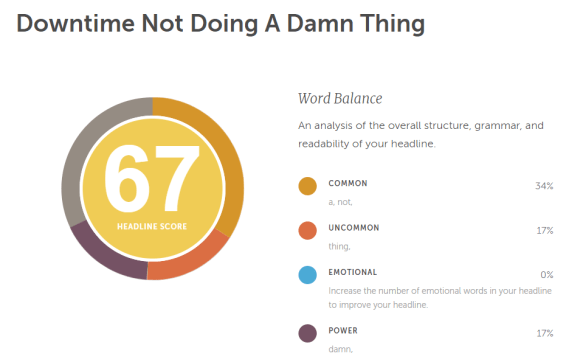
Coschedule.com will analyze your title (if you give them a few pieces of info about yourself and your business) and tell you if it’s too weak. It didn’t like the title I came up with for this blog post:

blogtitle analyzer

Nicole suggests that you want your book to be at 80 or better. She even admits that she might spend more time thinking up a good headline or title than actually writing the post. That seems crazy, but on the other hand, no one is going to read what’s inside if the title isn’t appropriate, so she isn’t that far off the mark. Being she’s a HUGELY popular writer on Medium, I would take her word for it.

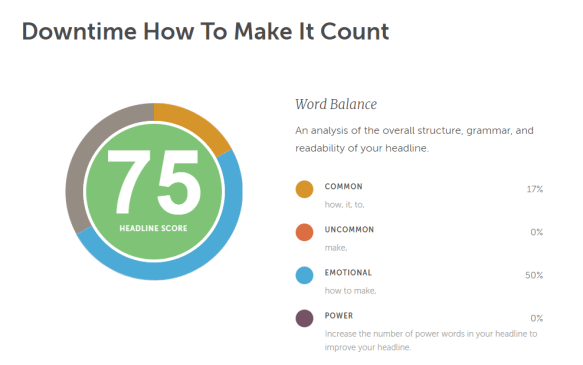
You can plug in titles forever, but just to see what I could do, I changed my title:

blogtitle analyzer2

That’s actually a vast improvement, but a lie. That’s not what this post is about. Mainly it’s about not feeling guilty if you don’t feel like doing anything, but also keeping those feelings under control so your to-do list doesn’t look like Mount Kilimanjaro by the end of the week/month/year. Everyone knows how fast time goes.

Anyway, if you’re interested in writing for Medium.com I suggest you take a look at Nicole’s book. She offers you some great tips on how to get started, how to follow and pick up followers, and how to write for a pub. If you’re on the fence about blogging, but feel you should be giving out content in some way to get your name out there, writing for Medium could be a good way to do that.

What am I going to do now? I still haven’t shaken off my blahs, but I did take some Aleve for my mouth and made a cup of coffee.  I could work on my blurb or watch another episode of Outlander.

I’ll let you guess which one.

Have a great week!

thank you for your patince

Mistakes I See New Authors Making

Indie books versus traditionally published books

I’ve been reading a little indie lately. I hate splitting up the two — indie vs. traditionally published. Books should be books no matter who has written them or how they were published and printed.

But I have been reading some books I’ve found on Writer Twitter and in some author Facebook groups.

Even though we shouldn’t separate books by who has written them or how they’ve been published, there is still a little issue of what does make them different.

Quality.

Indies say taste is subjective and that quality means different things to different people. I certainly say this when it comes to my own writing. But I’m not blind to the issues my books have–especially Don’t Run Away, my first “real” book I count toward my backlist. I’ve gotten good reviews and bad reviews. The bad reviews have a point. I didn’t know as much about plot as I do now. I didn’t have as much practice in character arc as I do now.

Indie books versus traditionally published books (1)

And that’s too bad because it’s the start of a trilogy, and I’ve said this before. If you don’t have a strong start to a series, no one will read the others because your readers will assume the other books are more of the same.

But I also have positive reviews suggesting the book isn’t a total train wreck and investing a little money in promos and a little time redoing the covers hopefully won’t be a total waste down the road.

I went into this blog post with the information about my own book to let you know I understand. I understand the mistakes new authors make because I have made them myself.

The problem is, we have to move beyond those mistakes if we hope to attract readers. With six books in my backlist, I’m hoping this is something I can start doing. And soon. Attracting readers that is.

What have I noticed in the indie books I’ve been reading? Here’s a short but important list:

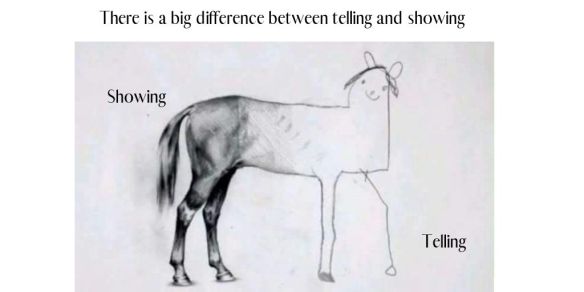
Telling, not showing. I’ve seen this in 99% of the indies I’ve read. In fact, I’ve read it so much I’m willing to go out on a limb and say this is probably the biggest thing that sets indies apart from traditionally published authors. No matter how bad you (or I) think a traditionally published book is, it will never be bad because the culprit is telling.
Indie books versus traditionally published books (2)

Telling is 100% an indie problem because a book full of telling will never make it past an agent or an editor at a publishing house.

The book I just ordered has a letter to the reader in the front matter, and she even states she enjoyed being the narrator of her characters’ story. And her book reads exactly like that. Two hundred and fifty pages of her telling us what her characters are doing and feeling.

No thanks.

I’ve worked with some writers in an editing capacity and unfortunately telling is probably the hardest part of writing to stop doing. There are whole books written on showing vs. telling, and I have no interest in writing one. The best way you can stop telling is write a lot, find your voice, listen to feedback, know your telling words, and write more.

  1. Write a lot. Find your voice. James Scott Bell has a lovely book about finding your voice. He explains it so well it will turn your writing around. It really will.
  2. Know who your characters are. Who are they as people? Their likes, dislikes. How they react to certain situations. What are their tragic backstories? Characters are people, not puppets. Part of finding your voice is knowing how your characters sound when they think and talk and being able to translate that onto paper.
  3. Know your telling words. Think, thought, feel, felt, see, saw, know, knew, heard, could hear. Felt is horrible. Search for it. In lots of instances just deleting those words will take the telling away.
    She realized he was lying to her.
    He was lying to her. All this time she’d believed whatever he told her. Now she was paying the price.

    We’re already in her point of view. You don’t need to tell your reader she realized he was lying. Just say he was lying to her. We understand she realized it because we’re in her head and she thought it. When you use these words you slip out of your character’s POV.

  4. If you’re still having a problem, work with an editor or a beta reader. Lots of writers can’t see it in their own work, but they can see telling in other writer’s work. Choose betas and editors who won’t lie to you. The book full of telling I’m reading now? It has 17 4-5 star reviews. That means 17 people lied to her.

Speech tags. I made it to Chapter 4 of a different book. It popped up in my Twitter feed so often I decided to give it a chance. I ordered the paperback, and wow. By Chapter 4, I counted more than 35 speech tags. I couldn’t read any more. I think we’re all victims of speech tags at some point in our careers. I know I was when I wrote Summer Secrets. My editor helped me with a few–but she should have been much, much harder on me. Since I’ve written more and honed my dialogue skills, I rarely use speech tags anymore. If you find you use speech tags, work on stronger actions and better dialogue to evoke emotion. Don’t depend on speech tags for clarity.

Here’s a before and after. Tell me which kind of dialogue you’d like to read for an entire book:

“I did. Just not the way he thought. A couple of goons caught me outside the hospital—” Callie bit off.

“The hospital. Jesus Christ,” Brandon snapped. “Do I have to check myself out and drive up there?”

“No! Just listen to me,” Callie yelped, pulling over in the middle of a residential section. She should’ve driven with Mitch. She had no idea where the police department was and couldn’t use her phone’s GPS while she was talking on it.

“I defended Mitch on the ice a couple days ago,” she stated, “and I dumped one guy on his ass. Tonight he and two of his friends caught me outside the hospital. Mitch happened to be right behind me and stopped them before they could do anything. I’m on the way to the station to give my statement,” she explained.

“Are you hurt?” he asked urgently. “You beating up guys? Callie, you’re supposed to be having tea parties and watching strippers. What the fuck?” he growled.

There are seven speech tags in this little section. They don’t sound terrible, in fact, upon reading this, you might think they actually lend something to the scene. But this is just one small section of a book. When you have a book that’s heavy on dialogue like my books are, reading all those dialogue tags can be tiring.

Look at that section again. These two characters are talking on the phone having a heated discussion. How did the writer make the dialogue sound? Do they sound like real people? A brother and sister who care about each other? Do you need the tags? Most sections of dialogue don’t need tags if you write the characters well enough the readers don’t need to be told who is speaking. Read the same section without tags. Does what they are saying draw you closer in because there’s nothing taking you out of the moment?

“I did. Just not the way he thought. A couple of goons caught me outside the hospital—”

“The hospital. Jesus Christ. Do I have to check myself out and drive up there?”

“No! Just listen to me.” Callie pulled over in the middle of a residential second. She should have driven with Mitch. She had no idea where the police department was and couldn’t use her phone’s GPS while she was talking on it.

“I defended Mitch on the ice a couple days ago, and I dumped one guy on his ass. Tonight he and two of his friends caught me outside the hospital. Mitch happened to be right behind me and stopped them before they could do anything. I’m on the way to the station to give my statement.”

“Are you hurt? You beating up guys? Callie, you’re supposed to be having tea parties and watching strippers. What the fuck?”

Sound better? If not, that’s cool.

Exercise: Take a book you particularly enjoyed. Find a dialogue section (the longer the better) and count how many tags the author used. You might be surprised.

Nothing is happening, or the author tries to make a big deal out of nothing. I did this with Don’t Run Away, much to my sincere regret. I made Dane make a big deal about being married before and how nasty his divorce had been. And now I look back and think, who cares? Everyone goes through a divorce (or it seems like it, anyway), and yes, those divorces can be nasty. Especially when kids are involved. I understand small things can be a big deal, but they should still be only a small piece of the whole puzzle. And readers have called me out on it, calling Dane a weak character for not being able to move past his divorce. That’s what the book was about, but I still should have made him more ready to be in a relationship than I did. Or made Nikki smarter so she steered clear of him.

In the book where I only reached Chapter 4, all the characters had done up until that point was sit around and talk. And not about anything particularly interesting. Ask for feedback from someone who won’t lie to you. If the beginning of your book is boring, if there’s nothing happening, no one is going to get to the part where it finally does.

If you have a too slow of a start, people will bail before they get to the good stuff. If you want help with your first pages, read Your First Page by Peter Selgin. He walks you through what will make your first pages pop!

Bad formatting. I buy paperbacks because when it’s slow at work, I can read. We’re not allowed tablets, but I prefer paperbacks anyway. That being said, a lot of paperbacks I see are a mess inside, and all I can think is I hope to God they never host a book signing or do a giveaway on Goodreads. Maybe authors don’t put much time into their formatting because they don’t think they’ll sell many books. But the problem is, you will sell some at a convention, or you’ll want them for giveaways, or you may want to stock them at your indie bookstore. If the manager of that bookstore flipped open a poorly formatted book, he’d probably tell you to fix it first. Draft2Digital has a free paperback formatting tool. Or give someone a $25 gift card to Amazon and ask they do it on their Vellum software.

It’s a sad fact that you could have the most entertaining story in the whole world but no one will want to read it if your book doesn’t look like a book inside. I struggled with this too, when I published 1700. I cried, literally, until someone reminded me about the KDP Print template. Back then it was CreateSpace, but they do offer a free interior template. There weren’t the easy and free tools available there are today. (It’s crazy how the industry has changed, even in three years.) Even if you don’t know how, there is no reason why your book should look like a mess. And if you really can’t find the means to format a paperback book, you’d be one step ahead not offering one at all.


These are only four things I’ve found in the latest indie books I did not finish (or DNF in shorthand), but they are doozies and enough to turn away any reader. In the case of the woman whose book is all telling–she’s putting herself in a tough spot. She wants to write a series, but she’s waiting to see if her first book takes off before working on a second. Her book will never take off, but not for the reasons she thinks. It’s too bad.

Reading indie is a valuable experience. I love to support my friends, and of course, there are some fabulous writers out there making a living off their books.

The issues I’ve outlined can be fixed over time by studying craft and writing a lot. It’s not a coincidence that a lot of indie books I find fault with are an author’s first book.

We all mess up our first book. Unfortunately it’s a really important book. You can’t build on a crumbling foundation.

What are some things that you’ve noticed in indie books? Anything that has turned you off?

Let me know!

Thanks for reading!


My books are available everywhere! Check them out!

Don’t Run Away: books2read.com/dont-run-away
Chasing You: books2read.com/Chasing-You
Running Scared: books2read.com/running-scared

Wherever He Goes: books2read.com/whereverhegoes1
All of Nothing: books2read.com/allofnothing1
The Years Between Us: books2read.com/the-years-between-us
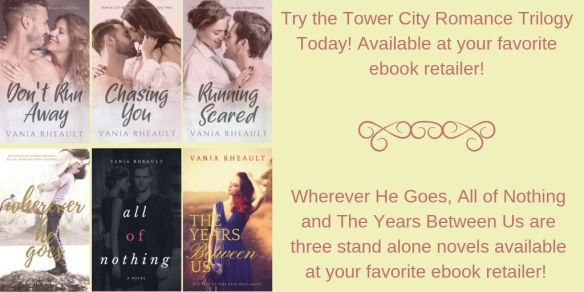
Try the Tower City Romance Trilogy Today!

all graphics made in canva. all photos taken from canva except for the horse meme that i don’t feel guilty grabbing online because it’s everywhere.

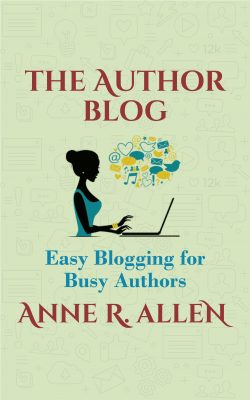
Writing Resources Non-fiction Spotlight: The Author Blog: Easy Blogging for Busy Authors by Anne R. Allen

the author blog book coverI read Anne’s blog sometimes. Not as much as I should because she writes about some very important topics, and she’s a great resource for writers. Every so often I’ll tweet out a link to one of her posts.

So when I saw she wrote a book about blogging, I bought it ASAP, and one for a friend, too.

This book is great for the author/writer who isn’t sure if they should start an author website or a blog. It’s for the blogger who has been blogging for a while and who not seeing results (results like comments, subscriptions). It’s for the blogger that has lost his or her way. It’s also a wonderful source for maybe a more seasoned blogger who may need to get back to basics.

I belong to one or more categories. I’ve been blogging for over two years, and only now just starting to find some traction–and it’s very little. But Anne reminded me of a few things I’ve forgotten along the way. Simple things like tagging your blog posts with the titles of your books, or remembering to tag a photo with a description for your visually impaired readers.

Anne explains SEO and offers us blog ideas. Something we all need from time to time.

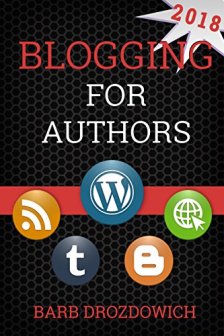
blogging for authors book coverI was delighted to see she knows Barb Drozdowich and recommends Barb’s book about blogging.
I know Barb from Rachel Thompson’s #bookmarketingchat on Twitter, and I have also read her book about blogging. It’s just proof that we’re all friends here. 🙂

If you’re interested in purchasing Anne’s book, click here and this will bring you to her website. She offers links to all her retailers there.

If you’re only interested in buying it from Amazon, you can click here for the buy-link.

Blogging may not be for everyone, but knowing how to start, and how to do it right, can save you time, money, and lots of frustration down the road.

Thanks, Ladies, for writing these awesome books!


Callie and Mitch blog graphic


How Do You Make Your Book Stand Out?

We all want our books to stand out, and we all go about it in a different way.

Some spend hundreds of dollars on a cover. Some spend hundreds of dollars on a developmental edit to make their story and characters the best they can be. Some authors do fancy formatting.

vellum formatting ad

This is a picture of a formatting sample using Vellum. For more information on the software visit www.vellum.pub

Some authors do all of that.

Some authors do all of that and invest hundreds, even thousands, in ads.

Experts in book marketing would say you need to do it all to help with discoverability.

Readers may say to make them happy, all that would be a given.

And I’m not disputing any of that.

What I’m talking about are the extras.

Some traditionally published books have them already.

Say you have a baker for a main character. Some authors will add their own baking recipes to the back matter of the book along with a short explanation of the family history behind it, or a funny story.

Maps are always popular–especially if you’re world-building like in Game of Thrones. I know that I looked over the family trees a lot when I was reading them to remember who everyone was, and who the members of the families were.

In some contemporary romances, I’ve seen maps of towns where a series takes place.

I’ve never tried a recipe I’ve found in the back of a book, but I could see the appeal of adding a few. You could encourage book clubs to have a baking/cooking night along with their book discussion. Hey, even suggest what kind of wine would make a good accompaniment.

Some writers will add discussion questions. I’ve seen this a lot in traditionally published books, even in “lighter” books where I didn’t think a discussion was necessary. I wanted to add discussion questions to All of Nothing, but I forgot. They may have been a nice addition to The Years Between Us, too, but again, being excited I was finished with the book, I forgot to write them and add them into the back matter.

Something I have seen added to books are playlists consisting of the songs authors listened to while writing the book. I found in one “look inside” of a Kindle book, the author included the actual YouTube links to songs she wanted you to listen to get you in the mood to read the following scenes.

I caution against this for one, you need to make sure the music is free of copyright, and two, you never know how long those links will remain active. If the links are ever broken, will the author know? Or care? Will she edit the book to take them out or replace them? I don’t like to go back and go back fixing things. It’s always the next book for me. I wouldn’t want to keep an eye on my backlist like that. It’s bad enough keeping my own front and back matter up to date.

I’ve also seen back matter that included an interview or question and answer session between an unknown interviewer and the author. I think it was in the last Twilight book Stephenie Meyer answered questions. This could be an interesting addition to back matter as well.

In The Years Between Us, Zia held a showing at a gallery. I created an invitation for the showing in Canva and included it in the front matter of the book. It shows up black and white in the paperback and simple e-readers, but it will show in color on a tablet.


In this vein, I think I’ll make Marnie and James’s wedding invitation and include that like I did Zia’s gallery showing invitation.

One of my characters, Autumn Bennett, who will be my female MC in book four of my series, is a writer for the town’s newspaper. She writes for the Lifestyles section, but also blogs for their website. During the course of four books, she’ll blog about the wedding, and interview the bride, groom, and guests as human interest pieces. I’m thinking about creating those blog posts and offering them as bonus content in some way. That would be no-brainer newsletter content, but I don’t have one and I don’t want to start one right now. So I’ll be thinking how I want to share that content.

The real question that comes from all this, is . . . is it worth it? Playlists, poems written by your characters, invitations, motivational quotes, even pretty chapter headings–are they all worth it?

They may not be, money-wise. The more photos a Kindle file has, the more Amazon charges you to deliver the file to someone’s Kindle. Those pennies add up. (Hat tip to Mark Leslie Lefebvre for doing some quick math in Killing it on Kobo, as Kobo does not charge that delivery fee.)

Also, if the photo is a spectacular array of color, only a fraction of your readers will be able to see it in color.

Indies are constantly fighting for discoverability and adding bonus content like that hasn’t taken off quite yet. I think mainly because formatting extra content is so time-consuming–especially for a newbie author. And adding extra content would make it more expensive if you hire out formatting services.

I was lucky, and I formatted The Years Between Us with Vellum. The software inserted the invitation with no problem, especially in the paperback. I didn’t have to worry about gutters or margins. All I had to do was make sure the invitation was 300 dpi for printing, and I did that in GIMP.

Vellum even allowed me to add the pretty chapter starts to Summer Secrets that I tried to do the first time around. I was too new and lacked the experience to insert them using Word and CreateSpace.summer secrets chapter starts

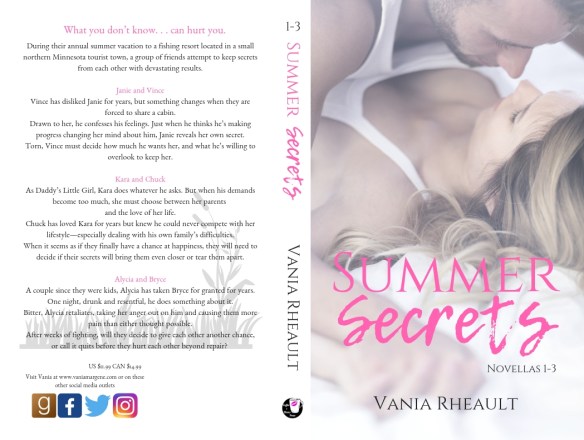
I also carry that image onto the back of my paperback books, and I’m really proud of that, too.

Summer Secrets Novellas 1-3 New Cover

But when it comes down to it, should you take the time to offer more content? Could that time be used to make another editing sweep, or start a new book?

Readers may appreciate the extras, but only if they enjoy the story.

The book’s recipes won’t matter if your baker’s story falls flat (pun intended) and your reader doesn’t make to the end to see them.

What readers want is a good story that pulls them in, and characters they’ll grow to care about.


As a side note, while I was typing out this blog post, I came up with another reason why indies don’t want to offer bonus content to the backs of their books.

Indies focus on a CTA, Call To Action. Indies want their readers to leave a review, or sign up for a newsletter, or buy the next book. Back matter is valuable real estate, and I don’t think most indies format their books with a lot of gunky back matter to get in the way of their important call to action.

And for what it’s worth, you need to be careful how much extra “stuff” you put backBe careful when considering adding bonus content to your book. there. We don’t hear much about the bookstuffers anymore, those pesky indies who would load up a Kindle file with 5-10 books to make a crap-ton of money with the KU page reads. But even if we’re not hearing about it much right now, it’s still happening. They know it takes a while for people to catch on to their new pen names.
Anyway, I wouldn’t want you think that offering bonus content was a fabulous idea and to get in trouble in any way for it. Offering a bonus novella in the back of your book, or offering the first half of a second book in a series, is too much. Put the novella for sale separately. Only add the first scene of the new book. It’s just a word of caution. Bonus content can be taken too far.

Please read KDP’s guidelines for adding bonus content.

While adding character profiles and outlines of the book before it came to fruition can sound like a great idea, keep in mind that as the guidelines states, it should enrich the reader experience.

I think that’s sound advice, especially since the reader experience begins with the story.

If you can hook them with a fantastic story, then all that extra content will be exactly that . . .

A bonus.

And maybe they’ll leave a five star review, too. Who knows?

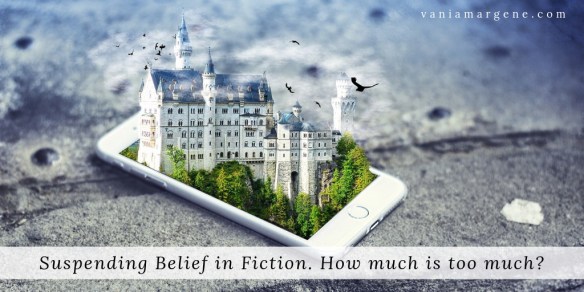
Suspending Belief in Fiction. How much is too much?

Suspending Belief in Fiction. How much is too much_

As authors, we ask our readers to open their minds and believe the unbelievable. Writers of fantasy and sci-fi, paranormal and horror wouldn’t make a penny if readers couldn’t put aside reality and enjoy a good story. The Martian would never have taken off, and we would never know who Luke and Leia and the rest of their universe are, never mind them being household names.

Writers who write in those genres have a flexibility not all of us have–yet they are still held to some kind of realistic expectation. Why do characters behave the way they do? Why are things the way they are? It’s why in comics and huge worlds like Game of Thrones and Star Wars, origin stories are so popular. Knowing why helps us understand.

Writers who write contemporary fiction stories that take place in the real here and now struggle with this, too. More so.

When I wrote All of Nothing, I struggled with what I could get away with and what I couldn’t. If you read my reviews on Goodreads, you’ll see that to some people, I failed. Jax Brooks accidentally shot someone, and I made him suffer for it–for 15 years. I got called out on it. No one would suffer for that long, or to that extent, for 15 years. Or would they? Did I make him suffer for too long? Should I have shortened my timeline?

Raven Grey was homeless for 13 years. That’s a long time to be homeless. I didn’t write her with a mental illness or a drug addiction, so anyone who wasn’t afflicted with something like that . . . would they have let themselves live on the streets for that long?

I asked the reader to believe she would have. I’ve never been homeless, or feel that hopeless. So I guess I truly don’t know if someone would drift through life that way when they had resources at their disposal to help them. But when she did turn her life around, it made it that much more poignant. Did making Raven homeless for so long add to the story, or did the implausibility of her situation take something away?

We’ve all read books that ask the reader to set aside real-life expectations. But how much is too much depends on the reader. I stopped reading Stephanie Plum at number 15 because after so many books, I just didn’t find the character believable anymore. She fumbles around as a bounty hunter suck in a love triangle, and she never changes. After so much time you’d expect her to take self-defense classes, or at the very least, learn how to shoot her gun. But she doesn’t do anything because Janet Evanovich relies on Stephanie’s ineptness as a bounty hunter to give us a laugh. And that’s great. I did enjoy the first fifteen books, and the couple of books that took place between the numbers. But eventually, and this is where real-life comes in, people need to grow and change. Most writers who aren’t writing a series only have one book in which to show us that their characters have changed, grown up, learned a lesson. That Stephanie Plum hasn’t grown, changed, in 15+ books (I think Janet’s up to 25, but I lost interest a long time ago) just makes her character worse.

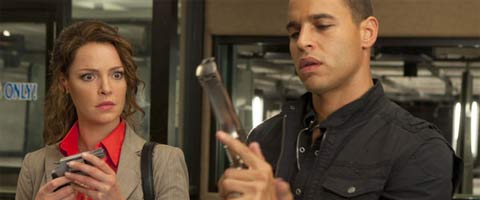
stephanie plum

Katherine Heigl as Stephanie Plum. Her expression says it all. You can read the article and see more pictures at cinemablend.com or by clicking here.

No one is going to believe that in all the time that goes by, if Stephanie really wanted to take a real stab at being a bounty hunter she wouldn’t try to improve her skills.

But do readers care?

Janet Evanovich is a bestselling author, so I’m guessing most readers are along for the ride and don’t care Stephanie still can’t shoot, still can’t choose a man, and still blows up every car she drives.

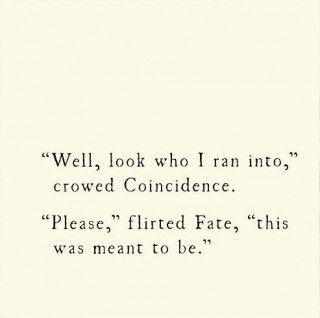
I read something once that said as writers, right away we’re asking our readers to believe in a coincidence, an act of fate. Like the man meeting just the right woman at the beginning of a romance. Or a man killing the wrong person at the wrong time at the beginning of a mystery, or a child kidnapped just as a famous detective travels through town on vacation. How was it that Hercule Poirot happened to be on the Orient Express?

coicidence and fateAlmost every inciting event will be a coincidence, and readers accept that because that’s how a story starts.

But anything you ask her reader to believe after that just builds up until the reader throws the book across the room in disgust because the writer has asked them to believe too much.

Readers aren’t stupid, and you can’t write to them as if they are, yet some writers can get away with asking their readers to believe the impossible.

In 50 Shades of Grey, Christian Grey is a self-made billionaire at twenty-seven. Doing what, who knows. It is possible, but not likely. Not unless you’re working from your mom’s garage creating the next big thing that will replace Facebook.

Anastasia Steele was the same way, professionally. Would she really be an editor at an distinguished publishing house because her boss was fired? Probably not. She majored in English Literature. A publishing degree is a real thing.

How do you know how much is too much?

Unfortunately, you probably won’t know until you get feedback. Hopefully that is in the form of beta reader feedback and not bad reviews.

Here are some guidelines to keep in mind:

  1. How old are your characters?
    If you have a 20-year-old who is running a million-dollar company, ask yourself why. Why is your character 20? Is he a genius? How does his age contribute to the story? Could he be 30? 40? Could he have a different occupation? Are you writing the next Doogie Howser?
  2. Keep technology in mind. 
    All of Nothing Paperback Cover

    Do you want to check out All of Nothing? It’s now WIDE and you can click here for your favorite retailer.

    Today, anyone can know anything with a touch of a few buttons. If you’re keeping your characters in the dark about anything they could find out online, you better have a good, and believable, explanation.
    I walked a thin line of that myself in All of Nothing. Jax didn’t know the identity of the person he shot, and Raven’s parents didn’t know the identity of the policeman who killed their son. How did I explain that? The city paid Raven’s parents not to ask questions, and they kept Jax in the dark to help him put the accident behind him. That’s why I put the accident so far in the past. I didn’t need social media interfering in my story. These days, everything is splashed everywhere online. Especially police brutality. Everyone knows everything in an instant. Maybe even with a video. I couldn’t afford that because the whole premise of my book were the facts Jax didn’t know whom he shot, and Raven’s family didn’t know who took her brother’s life. Yeah, this blog post revealed a big spoiler, but did I pull it off? You’ll have to let me know.

  3. Keep your timeline in mind.
    Unless you’re writing the next 24, your characters are probably going to need time. People don’t fall in love in a day. Murders aren’t solved in a day, or even a week. People trapped in a cabin during a blizzard with no food won’t live two weeks without something to eat.
  4. Because I said so.
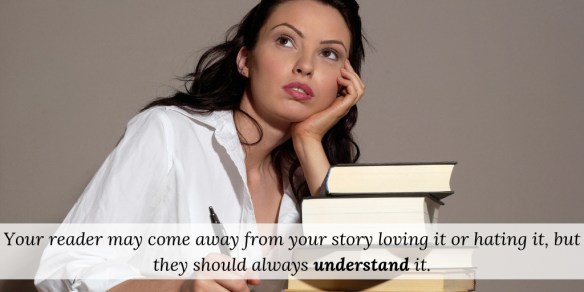
    If you have to say this, or any derivative of this phrase to someone asking about details of your story, you’re covering up lazy, sloppy writing. Because I said so is for children who don’t want to eat their vegetables. If you have to explain any aspect of your story, you’re doing it wrong. You can’t be over every reader’s shoulder trying to validate and justify all your choices. Your reader may come away from your story loving it or hating it, but they should always understand it.

    Suspending Belief in Fiction. How much is too much2

Human nature is weird. There are things people put with for years and years, and in the same situation, a different person would tolerate it for only a moment.

Sometimes you can get away with it. Soap operas do. After a few years watching Days of our Lives, I finally asked, “If living in Salem was so miserable, why didn’t they just move?” You can’t tell me Bo and Hope wouldn’t finally have found some peace and quiet if they would have moved out of Salem and away from Stefano DiMera.

When I was writing The Years Between Us, I confronted this possibility as well. The whole book depends on blackmail and lies, much in the vein of a soap opera. I had a few beta readers read it and I asked them if it was too much, and all of them said no. I hope it isn’t. I hope the plot is still believable. I hope that what people willing to do for love is enough of a reason to carry the story along. You’ll have to decide.

Your readers will only accept so much. You can’t please everyone, of course, but at some point you are going to have to keep an eye on what is believable and what is not. You’ll have to decide if inconsistencies and discrepancies are intentional or the byproduct of lazy writing. Plot holes are never okay, and explaining why a character did something by saying “She was crazy, that’s why!” isn’t good enough. Even crazy people live on their own plane of reality, and it’s your job as a writer to show us that.

Suspending Belief in Fiction. How much is too much3

As writers, we are always going to be asking our readers to believe something that has a small chance of happening in real life. But after that initial leap, keep your story grounded in facts, otherwise you are going to lose them.

Fiction is fiction, we read to escape, but your story needs to make sense, or the next thing you know, your bounty hunter will have been on 25 jobs and still won’t know how to shoot a gun.

And that’s just not realistic.

Callie and Mitch blog graphic


picture attribution:

Andy Meyer from Pixabay” cellphone with castle

coincidence and fate

woman with books, canva.com

woman on stability ball, canva.com

Writing is a Bitter Business

I was talking to a friend the other day about blogging. I enjoy her blog posts and I asked her why she doesn’t blog more. She said, “I think I sound bitter.” I thought about that, and while I didn’t think that was true, I realized she had a point.

Writing is a bitter business.

When I say writing, I mean all aspects of it. Finding the time to write, the building of your writer’s platform, publishing, and finding readers.

Why is writing a bitter business?

Let’s explore:

  1. Writing is hard.
    No one appreciates what you go through on a daily basis. Writing words is hard, and lonely. And no one can make you do the work. It’s not like going to a real job where you get paid every two weeks, and you can get fired for not showing up. Sometimes it takes months to earn royalties; sometimes it takes years. Sometimes the only payment you receive for your writing is your own sense of of accomplishment. If that isn’t enough for you, how do you keep going? What makes you turn on your laptop or open that notebook or open that Google Docs app on your phone day after day after day? Besides raising children and being a faceless trash collector, I can’t think of a more thankless job.
  2. There’s no pay.
    I touched on this a bit in number one. Not only is writing hard, you’re not getting paid. I’m not getting paid for writing this blog post. I’m not getting paid for the books that are on sale on Amazon right now. I don’t get paid to tweet, update my Facebook author page, or write a long description to go with a photo on Instagram. If you feel bitter because money isn’t flowing to you, you need to think about what you can do about that.
    Do you not have books for sale? That should be your main priority. Do you offer helpful, evergreen content on your blog? Maybe sign up for Ko-fi and ask for consumers of your work to tip you for it, or start a Patreon account. The problem is, when you’re new and just starting out, getting paid is hard. No one knows who you are. But to be fair–this happens in every profession. They are called interns.

    intern joke

    taken from pinterest

    And they work for free. Sometimes if the internship is a part of their university curriculum, they PAY to intern for credit toward their diploma. I pay to blog. I pay for my domain name, and I’ve upgraded my WordPress plan.
    I’m doing the opposite of getting paid, and probably so are you.

  3. No one cares.
    This is a big one, and the one that trips up my friend. In a sea of writers and free content, no one cares what you’re doing. I feel this myself when I release a new book. I press Publish and get on with my day. There is no big cover reveal, there’s no blog tour, there’s no FB author page takeover or FB party. There are a couple reasons why I do this. One, I’m building a back list; I’m always writing the next book. And two, I know on certain platforms like Twitter, that’s not where my readers are, and announcing it won’t do anything for me. Sure, there might be a couple of people who will congratulate me, and that’s nice. But anyone cultivating their social media accounts hoping for sales will come away bitter. So I publish and keep writing.
  4. You feel like you’re screaming into the void.
    Let’s be real–that’s what blogging is at first. You blog to no one. You have zero followers, and when you check your analytics, you have zero visits.
    But that happens to absolutely everyone who starts a new blog. Everyone. It’s made even worse when you don’t have a solid social media presence to announce your blog on. Blogging is hard for writers. Do we blog for other writers? Do we blog for our readers? How do we do that if we don’t have a book out yet? What do we blog about that hasn’t been said a million times? You put in a couple of hours writing, making graphics in Canva, push Publish . . . all for nothing. It’s very easy to become bitter. To read my thoughts on starting a blog, look here.
  5. You don’t have support at home.
    Your significant other says you’re not making money, so you’re better off investing your time somewhere else. Like at a real job. Your kids want you to play. Your husband won’t help with chores. No one wants to walk the dog or scoop litter. You get accused of wasting time online when you’re trying to build a social media platform and/or write through a sticky scene in your story. Laundry needs to be done. You feel like a trout swimming upstream and some days you feel like there’s no point in fighting all this resistance.
    The problem with this is everyone needs their own life outside of who other people perceive them to be. You’re more than just a partner, a mom, a dad, a daughter or a son. People can’t see you writing, or rather, they can’t see the results. When you relax in the bath, you’re taking an hour to yourself. When you go for a run, you are doing something for your health. When you spend an hour doing almost anything else, people can see that. Appreciate it. Why is writing different? You spend an hour in front of the computer for months, sometimes years, and you walk away with your hands empty. Never mind that during that time you might have published two books digitally on Amazon. It still looks like you’ve wasted all that time. And if you don’t have sales, it’s easy to agree with the crabby husband who wants you to get a job, already. Yeah, it feels like all that work was for nothing, and bitterness takes hold.
  6. There are too many of us.
    Holy cow–the writing community has exploded on Twitter in the past couple of months. There are more writers online than lice on a kid’s head during an outbreak at school. It’s easy to feel invisible. What’s worse is we all want the same thing. We want agents and book deals and readers. And it hurts when we see other writers

    candle quote

    picturequotes.com

    earn those things. (I do say earn, because querying is hard work!) We’re told over and over again there’s only so much shelf space at the bookstore, there are only so many agents, so many publishers. While Writer Twitter is supportive, no one can deny there’s a current of competitiveness underneath the goodwill. We’re competing against each other. The saying is true–lighting someone else’s candle won’t put out your own flame–but it’s hard to watch someone get what you want. Especially if you are really trying your best.


What can we do to shake the bitterness?

  1. Define your success.
    What does success mean to you? For some people that simply means finishing a book. For others, it’s pushing the Publish button. Still for others, it’s their first five-star review. The thing with success is you need to be realistic. We all know EL James didn’t become famous over night, nor did Hugh Howey. We all start somewhere, so you need to start small and celebrate the small successes, no matter how tiny they are. That might mean buying a bottle of Prosecco for your first ten blog followers, or going out for a night of dinner and dancing with friends when you finish the first draft of your book.
  2. What do you want from social media?
    I know a few people with a love/hate relationship with Twitter, and I understand the struggle. I do. You put all this time in engaging with other people, tweeting, connecting, networking–and for what? That depends on why you’re on there. If you don’t enjoy it, don’t do it. It will show in your lack of engagement and lackluster content. If you don’t like Twitter, focus on a Facebook Author page or cultivate a following on Instagram. Because the fact is, you may hate social media, but even if you do the bare minimum and only have a website for an author landing page, you still need somewhere to announce you have one. This is especially true if you’re not publishing and you don’t have back matter in a book to use to direct your readers to your website or newsletter sign up.
    So what do you want from your social media platform? Twitter is a great place to connect with other writers. A Facebook Author page can give your readers a place to find you. Start a Facebook reader’s GROUP and form a book club or place to talk about books. If you live in a cool place like my friend who lives in Hawaii, or you have lots of pets–whatever you think will interest an audience–if you’re more visual, maybe post pictures on Instagram. But the sooner you realize that social media is more for being social and networking than selling whatever you’re peddling, you may form a truce with start to enjoy yourself. I like Twitter. I keep up care about other peoplewith industry news that way. A ton of agents and book bloggers hang out on Twitter. If you ever plan to query, befriending agents and creating a professional connection can’t steer you wrong. Social media is about caring about other people. Think of the 80/20 rule. 80% of your content needs to be about other people. If you care about other people, other people will care about you.
  3. Realize that writing is a long game.
    No one got famous overnight for writing. It just feels like they did. That debut that turns into a blockbuster is few and far between and usually has a team of people behind the launch. This year will be my third year in indie publishing. I don’t make much in sales. I only have 226 people subscribed to my blog. I have barely 100 likes on my FB author page. I have 14.7 followers on Twitter, but when I tweet something I’m lucky if I can get five likes. I could get bitter about it, but why?

    In fact, in a delicious piece of irony, on Twitter I asked writers what made them bitter about the writing/publishing industry. No one answered.

    I love to write and all of the stuff I mentioned would just be a bonus. But I’ll get there. Three years might seem like a long time for someone who wants instant gratification, but guess what? Publishing doesn’t work that way. I’m still a baby in this industry and I’m smart enough to realize it. If you’ve been writing for a year with nothing to show for it, realize this is common. People have wildly exaggerated expectations when it comes to self-publishing and while 12 years ago it could have made you rich like Amanda Hocking, it’s not true anymore. There are too many of us and times have changed. It doesn’t mean you have to throw in the towel, but it does mean you have to change your way of thinking.
    If it helps, think of the intern. She might be an intern now, but in ten years she could be CEO of the company. But she’ll never make it that far if she quits.
    Or lets all those coffee runs make her bitter.

  4. Remember this is about craft.
    Sure, those people who are selling crappy books might have a sales bump every once in a while, but are they are selling to new people all the time, or are they cultivating a loyal readership with well-written stories and lovable characters? It’s easy to get caught up in the other stuff–Facebook, blogging, Twitter likes, but the fact is, none of that matters if you aren’t working on your craft. Build a foundation on good stories.
  5. People may be cheering for you without telling you.
    You could have fans without knowing it! People who want to see you succeed. They follow your blog, look for your tweets. They’re disappointed when you don’t update your author page on Facebook. You can’t assume you’re in this alone, because that probably isn’t true. Snowstorms begin with a single snowflake. Your core readership will begin with one reader. Don’t disappoint her by being bitter.

In closing, I know it’s hard. I’m right there with you. I entered All of Nothing into the RITAs, and it didn’t advance. I tried not to be bitter. Especially since I think All of Nothing is my strongest book so far. And especially since I compared it to the books I had to judge as part of my entry, and especially when I read the list of finalists.

This isn’t anything a writer wants to admit. We should all be supporting each other and be happy for one another. And I’m delighted for the finalists. But I wish I had been one.

women helping women

It doesn’t mean I’ll never have the chance to enter again, and that doesn’t mean I won’t advance in a different contest some day.

But if I let my bitterness win out, then no, there will never be other contests in my future, or other books, either. So I need to keep my focus on why I write.

Because I love it. Simple as that.

And that may not be the case for you. There’s no judgment here. If you can’t write without the support of a loved one, if you can’t blog because no one has subscribed to it, if you don’t want to finish your book because when you tweet about it no one encourages you, then don’t.

Writing isn’t for everyone. Circle back around in a couple of years when circumstances in your life change. Circle back around when your priorities have shifted. Circle back around when you’re ready to put in the time and the work.

Writing is between you and your readers. That’s it.

And there’s nothing bitter about that.

bitterness

Antagonists: Who, What, When, Where

I rarely give out writing advice, preferring to focus on indie publishing, promo results, and my own progress. I feel those topics are a lot more useful than writing tips. After all, you can finding writing tips anywhere. But I was thinking about antagonists and how ambiguous and subjective they are.

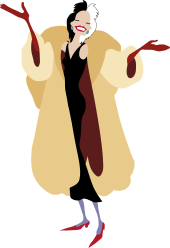
cruella de ville

Cruella is a perfect example of an evil villain. Who would want to kill cute puppies for a coat?! picture from pixabay

Antagonists in a story are usually the villains. The bad guys. Twitter chats center around them. What is their favorite color? What are they doing right now? What makes them bad? What makes them evil? What do they eat for breakfast? The hearts of their enemies, of course. Which is everyone.

There are some pretty famous villains in books and movies:

Professor Moriarty, Sherlock Holmes
Lady Tremaine, Cinderella
Annie Wilkes, Misery
Sauron, Lord of the Rings
Darth Vader, Star Wars
Joker, Batman

**For more examples, since I could list them forever, look here, and here.

These are tangible characters; in these stories they are flesh and blood. They do cruel things to our main characters. Who they are is pretty cut and dried.

But sometimes things that aren’t always people can be the antagonist in a story, and sometimes the protagonist will be his own worst enemy, which will also make him the antagonist.

Let’s explore that one first.

When the protagonist is also the antagonist

woman with demons

Characters who have to battle inner demons can be their own worst enemies. photo from pixabay

This happens a lot in romance. Characters have been burned before and refuse to fall in love again. Or they don’t believe they deserve to be in love, of having someone care for them. They’ve done naughty things in the past and they believe they need to atone for those sins for the rest of their lives. This is actually a pretty popular trope in a romance. Where the hero has been in the military and something happened to his team, or the detective/cop whose partner is killed on a case and our hero blames himself. He doesn’t feel worthy of love, or he thinks why bother because he’ll just fuck that relationship up too, or worse, get her killed through his own negligence.

In these cases, the protagonist is also the antagonist. They are battling inner demons. There is a lot more to the plot than that, but in the end your hero’s love interest is supposed to help them see they are worthy of love. S/he feels they fail toward the end of the book and the hero/ine realizes if s/he doesn’t get his shit together, he’s going to lose out on the love of his/her life.

Memories, nightmares, the ex still in the picture, precinct cops who blame your hero for the death of their team member, a child left behind, they are secondary antagonists used to enforce your character’s beliefs about himself.

Gone With The Wind

Scarlett and Rhett photo taken from huffington post

Scarlett O’Hara had a couple things working against her, namely her immaturity, selfishness, and her love for her family’s plantation, Tara, not to mention, Ashley Wilkes. She wasn’t ready for Rhett to love her, and she had to live through the deaths of her father and two husbands, plus a war, before she grew up enough to understand Rhett. We all know his famous last line, and by the time she gave a damn, he didn’t.

What are other things that could be an antagonist?

Animals

Jurassic Park is a good example of this. There was no antagonist, per se. John Hammond wasn’t evil–he just wanted to open a theme park where people could enjoy seeing dinosaurs. (This brings about the ethical question, “Just because we can, should we?” But that would be the theme of the story, which is a little different than what I’m talking about here.) There were a couple of people around who were selfish and greedy, but they were not the cause of the problems in the story. I’m thinking of the first movie–the old original with Sam Neill and Laura Dern.

Other books/movies that have used animals as antagonists?
Moby Dick Herman Melville
The Birds Alfred Hitchcock/Daphne du  Maurier
Cujo Stephen King
Anaconda director Luis Llosa
Jaws Peter Benchley
Piranha director Joe Dante

It’s important to note that in most cases, humans were not ordering or forcing these animals to attack. They were not weapons. Be it survival, nature, self defense, or rabies, these animals were acting on their own accord.

Disease

Disease is a popular antagonist. In Outbreak, a man who wants to sell a monkey on the black market passes along a fictional Ebola-like virus, Motaba, and all the characters spent their time doing damage control. As with the animals, it’s important to note that in cases where disease is used as the primary antagonist, it is not being used by a human as a weapon, in which case the human using biological warfare for power/revenge/etc would be the antagonist and the disease would be the weapon. In Outbreak, I’m thinking of the movie with Dustin Hoffman and Renee Russo, there were other people who wanted to contain the disease in a different way than our characters, and others who wanted to keep past illegal activity a secret and would do anything to make that happen. Does this make them antagonists? Sure, and they provide more conflict and more hurdles for our main characters to jump over. But the main antagonist is the disease. Without it, there would be no story.

Other stories that use disease:
Andromeda Strain Michael Crichton
Two by Two Nicholas Sparks (a secondary character dies of cancer)
The Fault in Our Stars John Green
Five Feet Apart Rachael Lippincott
My Sister’s Keeper Jodi Picoult

I was taking a look at some other opinions about whether disease could be an antagonist, and I found rather snarky blog post saying of course not. I think she missed the point of using disease as a plot device, and you can read it here.

Nature

The setting of where your book takes place can be a powerful antagonist. When your characters are trying to farm land that won’t grow crops and your characters are dying of hunger, or your characters are involved in a plane crash and they have to escape a mountain covered in snow to survive.

The weather can be a powerful antagonist, as well. Tornadoes, hurricanes, floods, and other natural disasters that will put your characters in harm’s way are fabulous antagonists.

Books/movies that use the land and weather as antagonists:
Twister director Jan de Bont
The Mountain Between Us Charles Martin
Alive director Frank Marshall
To Build a Fire Jack London
We Are Unprepared Meg Little Reilly
For other books that use nature as an antagonist, look here.

Mental Illness/Addiction

This may be unfair, but a character with mental illness can be the antagonist. This might take the form of an alcoholic like The Girl on the Train, or a character being a complete psychopath like Gone Girl. I read a book by Lisa Unger where her male MC went completely delusional, living his “perfect life” in his head while his real life fell apart. Characters who believe they are going crazy like The Woman in Cabin 10 are their own antagonists. That doesn’t mean there isn’t a human antagonist, as the case with The Woman in Cabin 10, but the plot is even murkier and the characters harder to trust if they are suffering from a mental illness or addicted to drugs.

Unreliable narrator is what this writing trend is called, or Grip-Lit as Tara Sparling likes to call it. To read her blog post about the subject, click here.

Other books where the character is also a psycho, I mean, antagonist, and/or battling addiction:

The Shining Stephen King
American Psycho Bret Easton Ellis
The Flight Attendant Chris Bohjalian


Antagonists aren’t always cut and dried, like a kidnapper in a mystery, or a serial killer in a murder thriller, but that doesn’t make the story boring when the antagonist deviates from what we normally think of as the villain. I frequently use blackmail and secrets in my stories.

As a new writer, you may not fully realize that an antagonist does not need to be a real person, and you restrict yourself if you feel you need to put a human into this role.

I just finished A Spark of Light by Jodi Picoult and while there was a real flesh and blood antagonist holding those people hostage, the women’s center where the story takes place is just as much the antagonist in the story for the feelings, emotions, ideals and heartbreak that building stands for, for the people being held in that clinic.

An antagonist is anything that works against your character to keep them from what they want. If you don’t have a flesh and blood human to do that, what do you have? A cemetery like in Pet Semetary?  A sinking ship like the Titanic? A concept like freedom in The Purge?

Open your mind to what a good antagonist can do for your story. Maybe it will be an AI like Hal, or maybe it’s infertility like The Children of Men.

Whatever you choose–make it hurt.

Those make the best antagonists, and those make the best stories.

Thanks for reading!

jared and leah for end of blog posts

If you find my content useful . . .
Buy Me a Coffee at ko-fi.com

How Much Research Do You Do?

How much research do you do for your books_

Any writer knows doing research is critical. Different kinds of papers and essays require different kinds of research. Even some of my blog posts require a bit of research–at the very least I like to add additional links to the ends of some of my posts so my readers can look to other opinions and other resources.

This is where the old axiom “write what you know” comes in. Not to get out of having to do research, but because as you are learning craft–character arcs, plot, finding your voice and wrestling with syntax, grammar and punctuation–it’s easier to focus on learning those things without the added burden of researching and incorporating what you find into the story, too, not to mention doing it in a believable way.

How much research do you do for your books2

Writing a police procedural without any law enforcement exposure would be difficult, I imagine, without immersing yourself in research. The same with writing about doctors, lawyers and any other professional occupation with which you may have little to no knowledge or education.

The last thing you want your readers to say is “That’s not right” or “It doesn’t happen like that” or worse yet, someone who actually does the occupation you’re writing about saying, “That’s not true at all.”

Some professionals who have gone into writing are Tess Gerritsen and John Grisham, a doctor and lawyer respectively.

Wikipedia has this to say about Tess: “In 1996, Gerritsen wrote Harvest, her first medical thriller. The plot was inspired by a conversation with a retired homicide detective who had recently traveled in Russia. He told her young orphans were vanishing from Moscow streets, and police believed the kidnapped children were being shipped abroad as organ donors. Harvest was Gerritsen’s first hardcover novel, and it marked her debut on the New York Times bestseller list at number thirteen. Following Harvest, Gerritsen wrote three more bestselling medical thrillers: Life Support, Bloodstream, and Gravity.”

Wikipedia has this to say about John: “John Ray Grisham Jr. is an American novelist, attorney, politician, and activist, best known for his popular legal thrillers.”

As you can see, it was easy for them to segue into the types of books they started writing because their backgrounds supported the subject matter.

castle_richard_castle_kate_beckett_stana_katic_nathan_fillion_98247_2363x1615Some research is pretty hardcore–think Richard Castle shadowing Kate Beckett in Castle. The chances of a a police department, in New York City, nonetheless, allowing a civilian to shadow a homicide detective seems pretty slim–even if you are a bestselling author who is friends with the mayor. But lots of police departments host ride-a-longs as part of community outreach, and that could be a small in for and of you who wants to write about being a cop. This is what I get when I Google police ride along for my area.

The internet makes research easy–Google Maps can show you pictures of anything in the world. It’s how I wrote parts of Wherever He Goes, when Kat and Aiden were on their road trip. They traveled through states I have never been to before. I even made up the casino they visited in Las Vegas because I have never been to Las Vegas and I couldn’t accurately describe a casino there. I spent hours pouring over photos and descriptions of various parts of the United States to get their settings just right. It was only after they eventually moved into familiar territory that I relaxed.

Settings are hard because not only are you dealing with the actual land formations, you have to think about temperature, climate, and bugs. Kat finds a scorpion in her hotel room. I had to research that, too, because I assure you, I have never seen a scorpion anywhere but behind glass at our zoo. And I plan to keep it that way.

When I wrote Don’t Run Away, Dane owned his own store. I’ve been in a running shoe store many times, but I’ve never run my own business. So I had to talk with someone who had. And yeah, real-life store owners run a tight ship financially–so I wrote Dane broke–but he was doing what he loved.

I’m well aware I’m lucky. Writing a romance ensures I can focus on the romance of the story and not have to get bogged down with details of a character’s occupation.

I like to think I know enough about life in general that if I decide to write a heroine who works at a bakery (or who owns her own) she’s up at 2 am and baking by 3 so she has pastries to sell by the time her store opens at 7. There’s no way she’s going in to work at 9–not unless she has help. And she very well could. Just be sure she can afford to pay her employees.

I’ve written my heroes into occupations I know nothing about, and I’ve done the minimal amount of research required to be able to say, this is what they do, and that’s about it. When I wrote about Aiden screwing up a big case as an Assistant District Attorney, I modeled his case after the OJ Simpson trial. I watched a lot of footage from that trial and read a lot of articles. His story in the book wasn’t about him losing the case, or why, it was about him being able to move past the fact that he did, and what that meant for his career and the rest of his life.

In Romance, their tragic backstories, personal demons, and falling in love take up the most space on the page.

But I’m fully aware that if I ever wanted to stretch my wings as an author (and I know I will want to at some point) or delve into another genre like Women’s Fiction, I’ll need  more than just a romance to carry the plot, and that will probably require more research than I’m used to doing.

I read an interview with Jennifer Egan about Manhattan Beach, and boy, did the woman research. You can read about her process here.

What’s funny though, is when I speak to other writers, they say the more research they do, the richer their story becomes because they have more facts and details at their disposal.

I truly believe this. But as an indie, the pressure to crank out books is stifling, and it’s hard to give up writing time for research no matter how useful it will end up being.

I’m reading A Spark of Light by Jodi Picoult, and the amount of research and the number of people so spoke with . . . it’s crazy. Not to mention the hours of shadowing she did. It was more than nailing down the details–she was recording thoughts, feelings, and beliefs about the topics she was writing about that she also gained from the research. She has a bibliography in the back of her book two pages (front and back) long, and an acknowledgement section the same length.

This is another reason why I like romance–I love the idea of falling in love, being in love with love. I’ve had my heart broken. No research required to know how it feels when you fell someone you love them, but you don’t hear it back.

How much research do you do for your books3

It’s nothing short of devastating.

I wonder if this is why some indies start out writing fantasy. Everything comes from the imagination. The government, the currency. Magic, laws. The world-building is incredible. Everything from the ground up. This can be liberating–but it can also scare the crap out of you. To create a world from nothing . . . You still may need to research when you write fantasy–how do you saddle a horse, or do your characters ride bareback? What are the parts of a ship? What are parts of a castle called? When I was writing my fantasy, I had to research those things . . . but the magic, the laws, the kingdom, those were all mine.

Starting with what you  know can definitely help keep momentum going if you are a first-time writer. If you do end up exploring an area you aren’t familiar with, ask for help if you can find someone who is familiar with your subject material. At least they can point you in the right direction, or tell you if you are missing the mark.

Where do you go for research?

Let me know your favorite books and websites!

Here are a couple of mine:

If you want to know about any job occupation, did you know the Department of Labor has a list of job descriptions for everything? Take a look here.

Google Maps/Images has can show you everything you need to know about a setting.

YouTube. You can find almost anything on YouTube. Right now for Jared and Leah, I’m “learning” how to fly a little plane.

The How-To Books for Dummies. Immerse yourself in a occupation, and it can carry you for a long time. Like, if you’re writing a series about a lawyer. A little research could help you write many books in a series.

Thanks for reading!

jared and leah for end of blog posts

photo of Tess taken from https://rizzoliandisles.fandom.com/wiki/Tess_Gerritsen and the photo of John was taken from https://www.penguin.com.au/authors/john-grisham
photo of Castle and Beckett taken from http://www.wallpapercraft.com

If you like my content . . . .

Buy Me a Coffee at ko-fi.com

When Friends Turn into Business Partners . . . Sometimes it doesn’t work out

friends to business parnters blog post

I’ve never met a community so full of people willing to help. I’ve met authors who will share anything and everything. How they use ads, how they write blurbs and the resources that taught them how. They share their favorite blogs, podcasts, promo sites, non-fiction books. There are even authors who will share how much they make in sales.

So many authors are helpful and generous. (And if you run into one who won’t share anything, well, keep an eye out. I’ve found those people are users, and you won’t get anything in return for the information you share with them.)

I’ve made a few friends on Twitter. Some are better friends than anyone I’ve met in real life. Some have come and gone. Some needed so much hand-holding it was physically draining to be friends with them. Some acted like their work was the only thing worth discussing, and I’ve faded away because I believe friendship should work both ways.

I’ve had some small successes as an author, and I like to share, too. It’s a horrible feeling to be snubbed when sharing something you’re proud of.

friends or enemies

But there are those who stick around–you feel a kinship, support goes both ways, and you settle into an online routine of touching base, reading each other’s blogs, retweeting news and book cover reveals, and helping with book launches.

Inevitably this will lead to your friendship moving more into a business relationship.

You’ll be asked to edit for someone or do a cover. Maybe she needs a critique partner or he needs a beta reader. It could even be as simple as doing an author interview for a blog.

Friendships can easily blur into business and while the transition feels easy and breezy, if you don’t treat that relationship with the respect it deserves, not only are you risking your business relationship with that person, your friendship will be broken as well.

The culprit of all this is the nonchalance and the cavalier attitude of writers. They aren’t treating their business with the respect it deserves, so they see no harm in treating you the same way.

I treat my books as a business. I always have and I always will. When I do something for you, I do it in a decent amount of time, and to the best of my ability. And that’s always what I’ve done.

business peers

But I haven’t always been treated with the same courtesy.

I paid someone to edit for me, and one day she told me she was editing my book while she was having her hair done at the salon. I guess it was too much to ask that she edit my book in a quiet place where she could focus. I paid another, and she waited months before even starting to edit my book. I have patience–I have two children, three cats, and an ex-husband. I have patience. But when you pay someone for a service, even if she’s a friend, you expect them to treat you with professionalism.

Those people were my friends. Circumstances being what they were at the time . . . they aren’t anymore.

What’s funny is recently one of them asked me for a favor. I guess it wasn’t so funny when I didn’t respond.

Most of the time I can separate friendship from business. (I treat my Twitter account as part of my business, and I rarely unfollow anyone for crappy behavior. Most times the only thing that will earn you an unfollow is if you do it to me first.) And I can stay in touch with someone friendship-wise even if we don’t/didn’t work together so well in the business aspect of things.

I edited for someone, and that didn’t work out like I had expected. We’re still friends because I expressed how I felt, and she apologized. I don’t hold grudges, but just like anyone else, I remember how people treat me.

When you treat someone like crap, you’re burning bridges, plain and simple. The author so quick to help you? They may not be so quick to pull through for you next time.

So what can you do to keep your friendships intact if it moves into business territory?

  1. Set boundaries and expectations.
    Before work exchanges hands, hammer out what expectations are. Does she expect to get paid? Is she doing it for free? Are you sure? Is there an expectation you’re going to help her down the road? Is there a deadline? Can your friend meet it? If she can’t, can you change it? If you’re too rigid with what you need, it’s better for your friend to pass. Which brings me to:
  2. Don’t be angry if your friend can’t meet your needs.
    A lot of indie business is trade and favors. Money doesn’t always exchange hands. That’s common when indies operate in the red–especially when just starting out. You may feel desperate because if this particular friend can’t help you, who will? People who know what they are doing, and willing to do it for free or on the cheap are few. If you need her, it’s YOUR job to bend, not hers. If you can’t, understand where she’s coming from, take a deep breath, and move on. While writing is a business, it will always come in secondary to children, jobs that pay the bills, and maybe even an evening of self-care if she’s had a bad day. If your needs are more important than that, hire out and pay for the priority. Your friend helping you isn’t a right–it’s a privilege.
  3. Keep communication open.
    Maybe you think she’s not working fast enough. Or you haven’t heard from her in a couple of days. Or worse yet, you haven’t heard from her, yet she’s posting on social media. It’s easy to go from simmering to boiling if you expect her to be working on your project but she’s posting a new blog post every day. It’s easy to get annoyed–trust me, I know. Maybe she already had them scheduled, and she IS working on your stuff. You won’t know unless you ask. If you need constant reassurance like daily updates, request it before you give her the project. That way you can remind her you asked.
  4. Keep social media in mind.
    When I edited for my friend, she never stopped posting her publication date. She was building buzz–I get that. But her manuscript needed work, and the more she posted and the more I edited, the angrier I became until eventually I felt like I was doing it for nothing. So remember–you are friends and she can see what you tweet, post on your Facebook author page, blog, and anything snarky by way of a bitchy meme on Instagram. But the same goes for her. If she’s tweeting she’s editing a pile of garbage, or the person she’s editing for is dumber than a box of rocks . . . you may need to rethink if you want her working on your project. A good friend doesn’t necessarily translate into a good business partner. (I would rethink my friendship with anyone who would put something like that out into the world, anyway.)
  5. Know when to quit.
    Ideally, you want to work things out before this step. If you can’t, the next best thing is to back out before your business relationship destroys your friendship. Be clear why you don’t want to work with him anymore. Try not to let hurt feelings muddy the water. He may have hurt your feelings, but that is only as a bi-product of unprofessional behavior that may not have been intentional. And don’t flip out if he has to back out on you. Maybe it has nothing to do with professionalism. His private issues are none of your business unless he wants to divulge them. That depends on how good of friends you are. But if it is due to not being able to work together, learn from the experience and move on. Having a truthful “We make better friends than business partners” talk can salvage a friendship. Don’t be defensive.

Not all friendships cum business relationships are going to fail. I’ve heard of several people who have worked together for years. There relationships are based on respect and a mutual admiration of each other’s work.

It’s up to you how much you can take–and it’s up to your friend what her limits are if you’re the one behaving badly. Publishing is scary and stressful, but alienating people who want to help you makes it more so. And it won’t do your career any good if someone labels you as difficult to work with. You may be passed up for opportunities and you won’t even realize it.

stressed out

If you’re the one slighted, do your best to move on. If that means you’re no longer talking to that person, so be it. Publishing IS stressful, writing, emotionally draining. You need to protect your mental health, too.

Friendships can come and go, but it’s difficult to repair a business connection.

Don’t burn your bridges. You never know when you’ll have to circle back.


To be clear, I didn’t mention any of my experiences to throw my friends and acquaintances under the bus. I mentioned them to demonstrate I know how it feels to be treated in a manner that is hurtful and unprofessional. I have other examples of people using my generous nature against me–to the point of a friend of mine saying I should stop helping people.

I couldn’t do that, though. For every one person who ignores what I offer, five people appreciate any information I can give them. Be it my favorite stock photo sites, or a reminder that KDP Print offers templates to format the interiors of paperback books.

For every one person who ignores my edits, another person’s writing is brought to the next level.

I’ll probably never stop helping people. I enjoy it too much. But neither am I a doormat, and if you treat me poorly, that’s on you, not me.

If you treat anyone without respect and kindness, you need to look inside yourself and figure out why. But the secret is no one has to be friends with you, no one has to do business with you, and one day you may very well find yourself alone.

being helpful

If you enjoy helping and being part of the writing community, don’t let one bad apple ruin the whole barrel. There are lots of people out there who need help–and one day you’ll find yourself in a group of friends you can trust to help you in return.

That’s what the writing community is all about.

photos taken from pixabay or canva. graphics made in canva.com

jared and leah for end of blog posts