Brief Author Update and KDP Changes

Words: 2543
Time to read: 13 minutes

I haven’t been doing much except re-editing my Lost & Found trilogy and redoing the covers. I said in a previous blogpost that book one didn’t have the problems books two and three had, but I was mistaken. I went back and edited it more thoroughly which took time, and then I read all three of them again just to make sure I didn’t edit in any typos. My proofs come today, but I’m not reading them–okay I might spot-check them, but that’s all–I’ll page through them to look for formatting errors and make sure the back matter is how I want it, and then I need to move on. They are going to be as good as they’re going to be and I’ll have to be happy with that. I’m pleased with cover changes, and I hope that it will bump up sales. I haven’t been pushing them because I didn’t like the covers, but now I can promote them with confidence. I’ve said I don’t have imposter syndrome, but maybe I do. I’ve never been fully confident thinking my books are any good to read, but my trilogy is good, and I remembered that editing them. It’s a good story arch, and I want people to read them.

Just because I like the story, I’m reading my duet over again. Not with the express desire to edit them, though I am making changes and editing out the “when” sentence structure if I come across it. I also like “because” and with a quick sentence rewrite, I can usually edit it out. These aren’t bad–I hadn’t fallen into a writing tic while I was writing these, and I’m reading more for pleasure than to edit them. After those are done, I have a lot of admin stuff to do, and I’ll spend most, if not all of my free time in in the second half of November and all of December getting them done:

*Changing from the MailerLite Classic to the updated and newer version of MailerLite. We need to do that by February and I’ve heard stories ranging from it’s super simple to horror stories of lost email addresses. There’s a tutorial somewhere, so I need to watch it. Luckily, I don’t have anything complicated there, just one landing page and one welcome email that is sent to everyone regardless of how the sign up. It should be cut and dried, if not, dare I say, easy, but we’ll see. I’m going to set aside a whole day for it because I don’t want to stress myself out. This is a good time to redo my welcome email anyway, make it prettier, but I think I’ll have to redo the integration I have set up with Bookfunnel. I have 771 subscribers right now. I’m not running an FB ad to my freebie at the moment, so the past few subscribers I’ve managed to gain have been through the back matter of my books only. I’ll send an email letting my subscribers know that my Christmas novel is live, then I won’t send one out until I’ve moved my account over. That’s the top item on my to-do list for now.

*Publish my rockstar trilogy to IngramSpark. I always let a couple of months go by between publishing on KDP and publishing on IngramSpark. I’ve heard it’s good to let them settle, and it’s what I’ve always done. I’ve never had an issue publishing to IS after KDP, so I’ll keep doing it that way. The interiors are the same, but I’ll have to tweak the covers. IS uses different paper and the spines are thinner, which means I usually have to adjust the font to avoid it lapping over to the front or back covers. I can’t do that until my trilogy is done and published with new covers. I want to put the Lost & Found covers back there pushing readers who like trilogies to buy my other one. This is a back matter page of Safe & Sound telling readers I have my rockstars available:
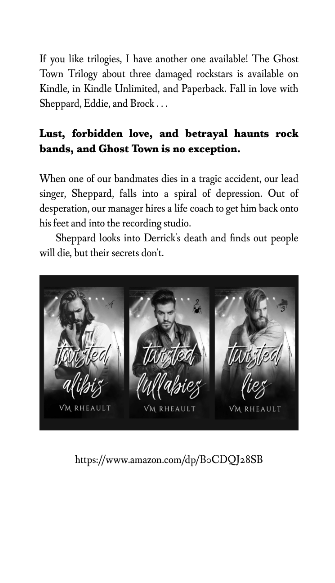
I made the graphic in Canva. One of the best things you can do is use your back matter wisely! I do the same things with all three of my standalones–if you like this standalone, I have another available, and you can find it here.

*Make hardcovers for the rest of my books. I offer hardcovers of my Cedar Hill Duet and Rescue Me. That was all the further I got with my hardcovers, but now that my books will be 100% finished, I can make hardcovers of the rest. I’ve never sold a hardcover (only a handful of Large Print I can’t offer anymore because KDP blocks them as duplicate content) but I like how the buy-page shows more than one buying option and it shows readers that I’ve invested in my book to make other versions available.

*Try to enjoy the downtime and the holidays. That list will take me more than a few days, and while I’m not writing, I’m going to try to enjoy the holidays. I have a tooth that’s going to need to come out soon (I have PTSD from a root canal gone bad and I will never subject myself to another one) but I’m going out of town from November 15-18th and I would like to have it done after I come back. There’s no good time to have an extraction, and my November is busier than it’s ever been, but having an achy tooth in my mouth ups my anxiety, and I would like it out the sooner the better.

*Plan my next books. I’m thinking of another duet, but bigger ones, 150k per book or so. I want to incorporate the underground king concept I blogged about here, with the kidnapping/psychic element that’s been knocking around in my head. To write these as well as I want, I’m going to need to read some dark mafia books. I want these dark too, but not in the sex kind of way, well, not only the sex kind of way. Drugs, crime. Violence. The vibe I was looking for when I wrote All of Nothing. I don’t have a plot yet, and I still have to put my series up, but it’s never to late to plan.

*Try to enjoy walking more. I have a lot of negative feelings associated with going for walks, and I’m trying to sever those ties. When my ex-fiancé and I would talk, I would go outside for privacy. As our relationship deteriorated, I didn’t go outside just for privacy, I would go outside because we were fighting and I needed to walk off the nervous energy (and the fear but let’s not get into that). Walking now brings back a lot of those memories and feelings. We’ve been split up for a long time, and I’m used to him not being in my life anymore. Our five years together were more tumultuous than happy and splitting up was better for both of us. Still, those feelings are still there, and I need to push them aside to enjoy walking again. I also walked to get air at the beginning of the pandemic to try to quell my anxiety. I wasn’t anxious because of COVID though I know many were. I was anxious because unbeknownst to me at the time, I picked up a box of Snuggle dryer sheets, and they were wreaking havoc on my girlie parts (more specifically, they gave me bacterial vaginosis). Three years later, I’m still having issues my gynecologist doesn’t seem to understand, and now walking brings back those feelings too–of sucking air into my lungs, trying to calm down because while those dryer sheets were screwing up my body, they were also screwing up my mind. I’m still dealing with the side effects of that unfortunate purchase, but at least I know the cause of my health issues. There’s nothing keeping me from going for a walk and enjoying what that time outdoors used to mean to me–plotting my next book, listening to music, listening to publishing podcasts, and enjoying the health benefits that come with moving your body. I’m already doing better for myself recognizing those ties, I just need to do better with making time to do something about it.


I should probably make this a different blog post, especially since I don’t know if I’ll have time to post anything next week, but I wanted to chat about some of the new features KDP has been rolling out.

The first one is KDP will allow you to schedule when your paperback goes live. This isn’t the golden ticket people think it is though. While it’s nice you can schedule a release date, that doesn’t mean it’s on preorder. The only way you can schedule a preorder of a paperback is to publish it through IngramSpark, and I really discourage you from using IS to fulfill Amazon orders. You’ll end up with a bunch of problems, that, unfortunately, will be difficult to fix with the way I’ve heard IS’s customer service is since the pandemic and Robin Cutler’s exit. I’ve also heard that you need to have your files available before you choose a date (this was in an FB group and I have no idea if it’s true or if placeholder files can be used), but that actually makes sense, because the only nice thing I can see about pre-scheduling is that you can order author copies before your book goes live, and they won’t have the ugly stripe over the front. Paperbacks aren’t a big consideration when it comes to my books–most of my sales come from KU. I like to offer paperbacks, and Vellum makes it easy to format them and make them pretty. Lots of people were excited about this new development, but they still need the 72 hours to review your book and you can’t order author copies until your book has passed that review. As far as I can see, nothing much has changed there, except you can schedule and check it off your launch list.

For more information about using IS with KDP, look here: https://www.authorimprints.com/ingramspark-pre-order-amazon-kdp/#:~:text=Pre%2Dorders%20are%20accumulated%20in,or%20before%20the%20publication%20date.

The other thing KDP is playing with now is opening up audiobook creation using AI. So far, it’s by invitation only and in the beta stages. Beta in KDP language can take years (look a how long the new reports were in beta and how long the old reports hung around) and how long it will take to open to all of us (or at all) will be something to keep an eye on.

Of course this caused an uproar in the writing and author communities. Some are really against AI anything, and some totally embrace whatever AI has to offer. I like to be in the middle–there are good and bad aspects of it, and I think if you totally brush it aside because of the bad, you can miss out on the good. I don’t like using AI art for covers, and it’s becoming prevalent with romance authors because hot men who haven’t been used to death are becoming harder and harder to find–especially for authors on a budget who can’t afford to look beyond DepositPhotos. The only problem is, I can spot these a mile a way and all the covers that use AI to generate a man standing in a suit with a blurry background behind him are starting to look the same. No matter how long or how hard I have to dig, I will always buy stock. I believe in paying the photographer and I believe in paying the model. I don’t think creating an audiobook is entirely in the same category as using art. AI in this regard, I believe, is just technology moving forward. There is already text-to-voice options on devices, and using AI in this way is just opening up accessibility for readers who want to listen to the books they consume and for authors who can’t afford to pay a narrator. I don’t like gatekeeping and telling someone they shouldn’t create an audiobook because they can’t afford it is in its own way. There could be drawbacks to using text-to-voice, and we won’t know what those are until authors start reporting back. There needs to be way to correct the voice if it pronounces something incorrectly. The voice has to sound natural, but those voices are getting better day by day. On the author side, you have to take the time to listen and edit if that option is available. You can’t just upload your book, let AI spit out an audio version and put it up. There was one woman on Twitter who was using AI to translate her books into German, but she wasn’t using someone who knew German to double-check the translation. That’s irresponsible and scary. God only knows what it was coming up with. The last thing I want is to be a laughingstock in Germany. Good luck to her, I guess.

When it becomes available, I’ll give it a try. Apple already has given its authors a chance to create audiobooks with AI, (and people were excited about that, so I don’t know why KDP is getting flack) so it will be interesting to see how this goes. Just because I try it doesn’t mean I’ll publish with it. I might not like the voice choices, or because I write dual first person POV, I may not be able to publish using a female voice for the female POV and a male voice for the male POV. I’m definitely not going to shun something before I can even experiment with it. Ethics aside, you have to think of what you want for your business. I don’t listen to audiobooks–my mind drifts too much for me to concentrate–but I’m hearing now that listening to an audiobook is experience. It’s doubtful something that KDP offers will compete, but it’s nice to have to the option.


That’s about all I have for this week. I’ll be out of town November 15-18th. We’re driving down to the Twin Cities and we’ll be going to Mall of America, looking at a few museums, and going to the zoo if the weather permits us to be outside. I may take a pass at blogging or just put up a quick post I’ll write Sunday. Things won’t be calming down much after that either–we have The Ballad of Songbirds and Snakes to watch that following Tuesday, then Thanksgiving. We’ll be at the end of the month after that, and I have my birthday to celebrate. We’re going to Napoleon and out for a fancy dinner so I’m really looking forward to that. All in all a very busy month and I think I’m going to sleep all of December.

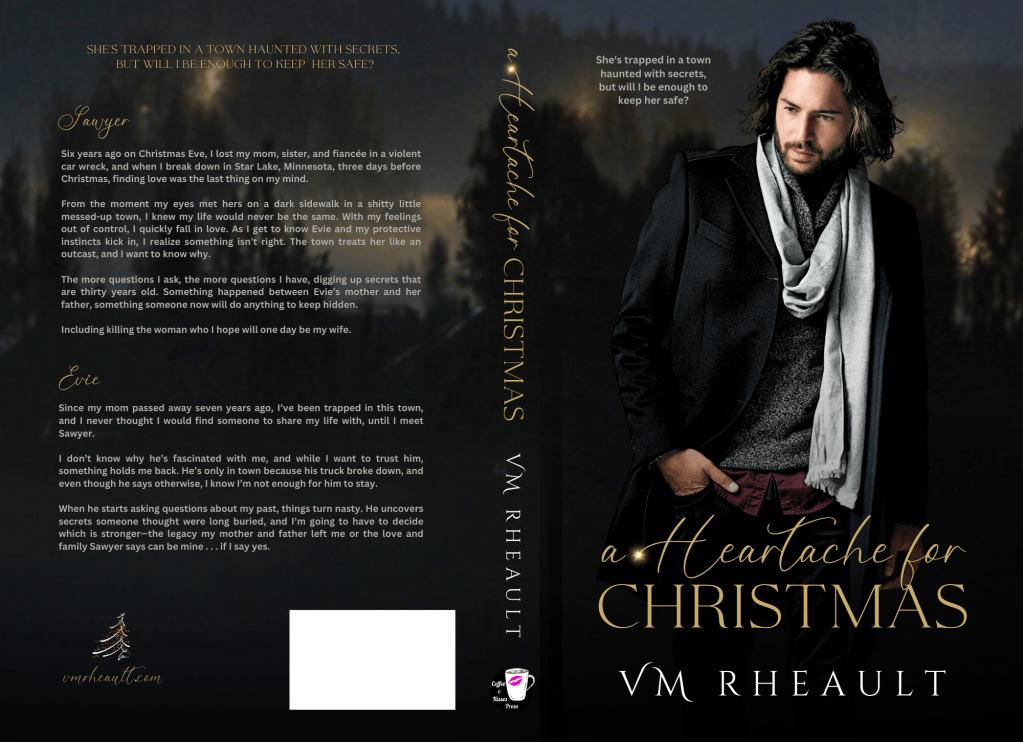
For my last piece of news, A Heartache for Christmas is available right now–it went live today! The reviews have been coming in through Booksprout, and readers are really touched by the story (and I am really really in love with the cover!). You can find it here: https://www.amazon.com/Heartache-Christmas-VM-Rheault-ebook/dp/B0CM2BLRPF/
Enjoy your week, everyone!

How “Self” is Self-Publishing?

This has been on my mind a little since there’s not a day that goes by when i see something online putting down authors who publish their own work. We aren’t included in some award competitions, people say readers don’t read self-published books (though I still don’t understand how readers know), and just a common misconception everywhere that self-published books are “less than” books that are gate-kept.

The problem is, not many, if any, books are truly self-published. What do I mean by that? Let’s take a look at book creation, design, and publishing.

Content: If you’re a writer, chances are 100% that you’ve brainstormed with someone. You’ve hit a plot hole and need help, or you can’t parse out your characters’ backstories to align with their present story. You bounce ideas off someone, more than likely another writer, who lights that creative spark that helps you figure out A to Z. Maybe you plot and use a plotting software like Plottr, or you use a plot generator or trope generator. Writing is a solitary endeavor, to be sure, but we rarely do it alone.

Content Part 2: After you’ve written your book, there are very few people who publish that book without a second set of eyes, be it a beta reader, editor, or proofer. Even though my editing routine is pretty hardcore (I mean, I listen to each and every book I publish, and that takes several days) I still miss things that a proofer picks up. I haven’t always used a beta reader or proofer, and with this pen name, I’m trying to get better with that. A second opinion (other than your own) can go a long way. While betas and editors can be expensive, there are ways around it–trading for services or asking a friend who isn’t in the indie community to help you in exchange for lunch. It could very well be by the time an author’s book is ready to publish, that book has been read by an editor, a proofer, and several beta readers.

Interior: Vellum makes it easy to format your own books. I’m lucky and my ex-fiancé bought me a Mac and the software. I format all my books with it, and to pay his kindness forward, I format for others for free. If you don’t have the resources to format your own book or don’t want to take the time to learn how using free software from places like Reedsy and Draft2Digital, an author is going to pay for their books to be formatted. Word does an okay job, but the PDF for the paperback can get a little complicated. I offered a lot of resources for formatting in a different blog post and you can look at them here.

Blurbs: Blurbs are probably one of the most difficult parts of publishing your book. You need one that’s hooky, that will draw a reader in, and if there is one thing out of any part of self-publishing that I make sure I do, it’s get help with my blurb. A bad blurb will turn away a potential reader just as quickly as a bad cover. A great-sounding blurb is your biggest marketing asset next to your cover. You have no idea how convoluted or confusing your blurb sounds until you workshop it. Especially with people who haven’t read your book before. Don’t put your blurb up on your book’s buy-page without feedback. No matter how good you think your blurb sounds, it can be better. Your book will thank you for it.

Covers: Considering my blog post on how to create your own cover in Canva has been viewed over five thousand times, more authors than ever are doing their own covers. It isn’t any wonder since cover designers can be a sketchy bunch, and costly, too, even the designers who are just starting their businesses because they have to recoup stock photo and font fees. You may do your own cover, but if you do, get feedback. I’ll post my covers on the Indie Cover Project on Facebook (find it here https://www.facebook.com/groups/582724778598761) and grab some tips. Often, people will see things you don’t. It’s tough though, because sometimes they’ll suggest improvements you don’t know how to do if you have limited skills, or they’ll suggest things that don’t go along with your genre. I’ve gotten some good feedback, but if you post your cover there, thicken your skin up first.

Marketing/Advertising: There are a lot of resources for indies on learning advertising platforms and marketing tips. Bryan Cohen, who offers a free Amazon Ad Profit Challenge every three months, runs a Facebook group, and that group has over twenty-seven thousand members in it. That is a lot of people to help you if you do the challenge with Bryan. Author Unleashed, another Facebook group hosted by Robert J. Ryan, has almost six thousand members in it. Authors Optimizing Amazon and Facebook Ads – Support Group, also on Facebook, has almost seven thousand members in it. That is a lot of support if you’re running ads and have questions. There are a ton of books, Facebook groups, webinars, and classes that will teach you what you need to do to market your books effectively.

Publishing: There are a lot of Facebook groups, podcasts, blogs, and books that talk about publishing. You can also join Facebook groups for authors in your genre. I’m in several for romance authors. Members are more than happy to answer ISBN, wide vs. KU, and other questions that constantly pop up. Right now there’s a big conversation about the Adult/Explicit Content and 18+ readership that KDP has started. If you have a publishing question, the 20booksto50k group is great for it. You can even tweet your question, but I’ve read some convoluted and not entirely true information over there, so it would be worth it to get a second opinion if you ask there.


Considering all the steps indies take while they’re writing, packaging their books, and publishing indies rarely do this alone, and if you truly do, I encourage you to find a group or create your own. I spent the better part of the past 7 years I’ve been publishing networking and getting to know the wrong people. Find authors who have the same goals as you do. I’ve run into some issues online lately and with writing acquaintances because we don’t have the same goals. I want my books to sell and will do what it takes to make that happen. Not everyone thinks like that–unable to separate the art from the business. I take my writing seriously. It’s not a hobby. I consider it a second job. If you feel like that too, hang out with authors who feel the same. It will save you a lot of hurt down the road.

I’m sorry this blog post was late! I was so busy formatting over the weekend, this post completely slipped my mind. I don’t want to start slacking as that is the easiest way for me to fall out of the habit of writing at all. After I post, I’m going to work on my covers. I’ll have a trilogy update for you next Monday.

Enjoy the 4th if you’re in the States, and have a great week!

What I learned from an author’s literal, overnight success

This month was a good month for Chelsea Banning who tweeted about her book signing. When Henry Winkler quote tweeted it, other high-profile authors in the writing community picked her up and offered her support as well. If that wasn’t enough, news outlets like CBS tweeted about her too, and as a result her book sold hundreds (maybe even thousands) of copies.

I could fill my entire blog post with tweets mentioning her, but instead, you can search Twitter for her name or follow her here.

Not every one was happy for her, and like Brandon Sanderson’s success with Kickstarter there were some people who, let’s just say, weren’t thrilled with her sudden luck. That’s fine. Some people think success isn’t due unless it’s earned through back-breaking hard work, like somehow how hard you hustle should be equated with the level of success you can achieve (which is a terrible American way of thinking, to be honest, and if it were true, I’d be a millionaire by now).

Instead of feeling sorry for myself and how few books I’ve sold in my lifetime (which I didn’t, but I know there were some who did), I thought I would use her luck and success as a learning experience. What did I learn watching her career explode right in front of my face? Let’s take a look.

Have a great product. One of the biggest lessons you can learn is to put out a quality product because you never know when or where that bump will come from. It’s much easier to share someone’s work if it’s good quality. While Henry Winkler, Margaret Atwood, and Stephen King didn’t personally endorse her book or share a tweet with her book cover in it, her momentum may have halted in its tracks if her cover was bad or if her book wasn’t good enough to share. Not long ago I blogged about an author whose TIkTok went viral. He sold hundreds of copies of his book, but it wasn’t well-edited and his reviews reflected that. I felt so sorry for him and his read-through. While you don’t know what you don’t know, and we’re always putting out the best quality product we can at the time, having your book at least looked over by betas who can spot typos or hiring a proofreader and getting an inexpensive cover from GetCovers can go a long way if you’re a broke DIYer.

Have a way to capture readers. Chelsea went viral on Twitter and her followers reflect that. She went from a small following to over 10k almost over night, but we’re told the best way to keep a reader is to start a newsletter and grab their email address. (Chelsea has one through MailChimp and you can sign up here.) With the uncertainty of any social media platform (Musk taking over Twitter evidence of just how shaky a platform can be) it’s better to keep your readers on land you own. When you start a newsletter, you can export your list regularly so if you ever need to change aggregators, you can and not lose any subscribers. Please don’t try to set up a newsletter through a personal email account or something like vaniarheaultauthor@gmail.com (that is a legit email for me but I don’t check it so email me there at your own risk), as it can be illegal to do so. For more information about making sure your newsletter is compliant, check here, and you can find another great resource here. I go through MailerLite, though I don’t have a double-opt in feature. When I run ads to my reader magnet, people can give me their email address voluntarily and at the end of the book, they have another chance to sign up if they didn’t before. My unsubscribe link is clear at the bottom of every email, and I do get some occasionally. I like it because I can create pretty newsletters with specially placed text boxes and images–nothing like what you can do with gmail.

Have something to offer your new (new) readers. I don’t know what Chelsea’s situation is, and of course you can’t predict when something like this will happen, but I hope she has another book coming soon! If not, she can use her newsletter to keep readers engaged between books–and maybe she already has a reader magnet she gives away to her subscribers. Like Brandon Sanderson before he started his Kickstarter, he already had the four books written and was able to capitalize on his hard work. It’s also a great marketing tool to be able to say all the work is already done. If Chelsea doesn’t have a second book in the works, maybe she has an idea and can put up a pre-order for the next book. That’s another reason why writing in a series is a good move, and having them look like they all belong together encourages sales and read-through.

Put yourself out there. That is probably the biggest takeaway I learned from Chelsea’s experience. She stepped out of her comfort zone and approached a bookstore to host a signing. If you were a little jealous of her success, look at what you’ve done to step outside your comfort zone. She tried, set up an event on social media, and when it didn’t go her way, she shared that, too. That alone is worth more than a pat on the back, and more than likely, that bookstore was happy to host her because, looking at number one, her book is professionally put together. I have an independent bookstore not far from me, but I have never asked them to carry my books on consignment or otherwise. I know they do, as I flip through the local authors section every now and then and there are always books with the KDP Print stamp in the backs. I just have never bothered as being on a bookshelf has never been my dream, and I know my readers are mostly in KU. But if all you’ve ever wanted is to see your book on a shelf, then what are you waiting for? Your courage could lead to bigger and better things like it did for Chelsea.

I’ll never resent anyone who puts in the work and reaps from that work. With the start of the new year upon us, how do you plan to create your own luck?


I don’t have much personal news for myself. We had a lot of snow last week, and I ran over something and now my car is leaking oil. I can’t get it in until Tuesday, so fingers crossed I can get my errands done without trouble before I can get it fixed. I wanted to be at least 50k into my rockstar romance by now, but it’s been slow going, and I’m only at 46k at the time of this writing. Hopefully when you read this I can be at 50k because I can write all weekend without much interruption. I have 30 days before my first book in my trilogy releases and I’m going to try to do a few things from the 30 pre-launch plan that came with Stephanie Burdett’s social media kit that I wrote about last week. If anything, at least I can get my FB author pages going so they don’t look so empty. After Christmas I’ll put all three paperbacks on Amazon and list them on Booksprout for reviews. And for a kick, I’m still going to put book one of my duet on a couple of free days and buy a promo or two bump up my pen name. Just a lot of waiting, but I have my WIP to keep me occupied, so it’s all good.

There’s one more Monday where I’m going to post my end of the year recap, and unless I have something I want to say, I’m going to take Monday the 2nd of January off for a little break. I always say I’m going to take a break, but I never do, so we’ll see.

Have a great week!

Monday Musings and Author Update

I don’t have much to share this week. I finished my edits for All of Nothing and Wherever He Goes. I uploaded the new interiors to KDP just fine, and the books are already live. IngramSpark is another matter entirely. The small edits created a page number change, and and I didn’t know this, but apparently no matter how many pages your interior changes, they make you adjust your cover. In All of Nothing, my interior changed by 200 words. That’s it. Not a significant change by any means, but they are still forcing me to tweak the cover. Same with Wherever He Goes. It’s insane, and I wish their uploading system was more like KDP in that you know right away if your cover is going to fit and you can adjust before your book even sees human eyes. It’s just a total pain the butt, and I swear, once those changes are approved, I am NEVER touching those books again. After I finish my rockstar romance I’ll have a bit of time and maybe I’ll go through The Years Between Us, maybe even my Rocky Point series, just for kicks because I really do like rereading my own books, and then I can walk away from those. I know you can’t keep going forward if you keep looking backward, but rereading my older books is fun and a break for me, so if I can edit them so they sound better, then it’s a win-win anyway.

I have been writing lately, and I’m 34k into my rockstar romance now. (I was at 28k when I was “stuck.”) I write my blogposts ahead of time, so I’m hoping by the time you read this I’ll actually be at 50k and planning the last 3rd of the book. I keep changing how I want it to end–do I want to go with a cliche and knock her up, or do I want to end it in a different way? I’ve never written an airport scene before, and I’m kind of in love with the idea of her going home and him chasing her to the airport and begging her to stay. I like both, so we’ll see what they decide to do when I get there. I also have to write the song he’s going to write in the book that sets his singing career back on track. That will be fun and I’m looking forward to it.


I wrote my newsletter for December yesterday and announced my trilogy release dates. I also gave them access to download the first book (the first 25 who want it, anyway) so those dates are set. I have to wait a couple more weeks before I put them up on Booksprout because when I do that, I have to publish the paperbacks so they can leave reviews on Amazon, and I don’t want the paperbacks up any longer than necessary when I’m holding the ebooks back.

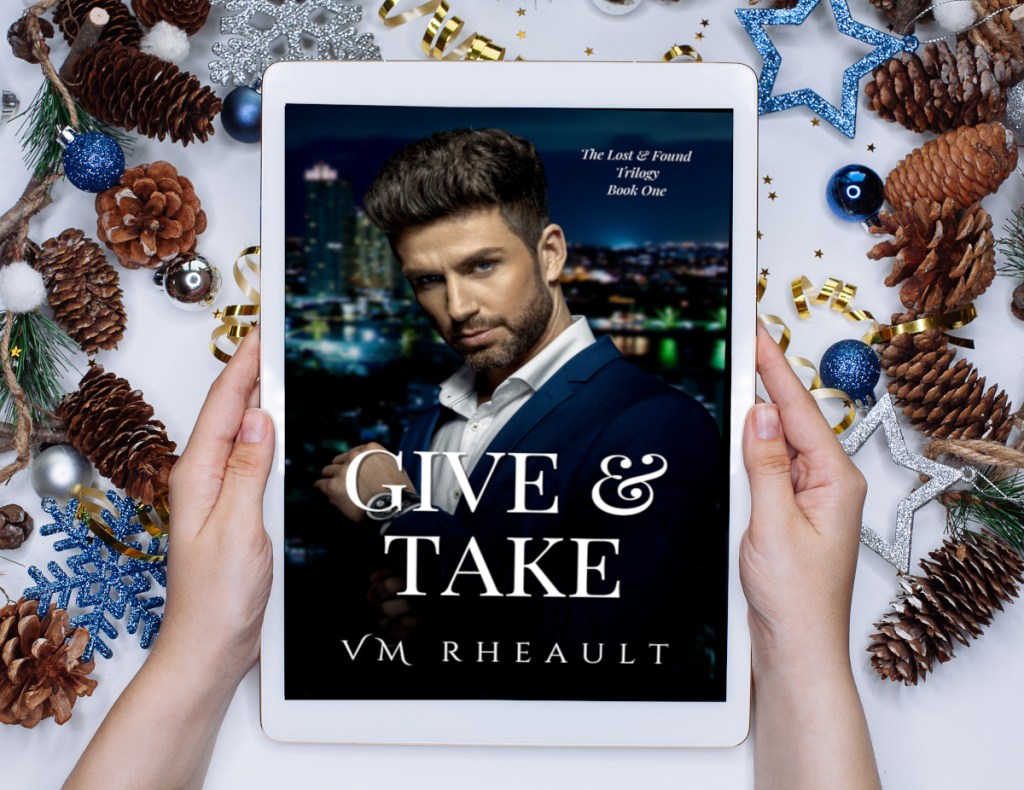
I was also looking at promo sites, thinking I might try Ereader News Today and Fussy Librarian and do a free couple of days for Captivated by Her when the trilogy releases. But, I was actually forward-thinking for once, and decided not to book a promo until all the books in the trilogy are out for read-through. (I’m releasing them a week apart.) This old dog can be taught new tricks. Then I’ll put the first free in April when I have a new launch and hopefully a new book will boost me and a promo will give me attention. Ereader News Today looks kind of hardcore–they ask you for your book’s star rating, and with Captivated having hardly any reviews or ratings, I’m actually prepared for them to turn me down. There are other places I can try, like Robin Reads, so that’s not really a big deal, it’s scheduling my free days around the promo dates they have available that takes some organization, and you can’t wait too long because dates fill up. Anyway, so I just need some patience, just a couple more weeks of sitting on these books. Made up these cute graphics for my newsletter:

Female hands holding tablet with Give & Take's cover on white background with Christmas cones, snowflakes and confetti. Flat lay composition top view.

If you count sales from other books, and why not, because selling a book is selling a book, last week I earned back my fee from my Freebooksy promo. Not from the series, but all combined, and while I’m disappointed, at least I got my money back. If we’re only looking at sales of my series, I’m halfway to earning my fee back, but my promo isn’t even a month old yet, so that could still be possible. I would have been extremely disappointed if I hadn’t yet at all because I don’t like the idea of wasting money, but I knew I had a chance since I have in the past. I’ll keep an eye on it. I was surprised to see Ereader News Today was $76 dollars for a free romance feature. Fussy Librarian is $50. Robin Reads is $75 for a free steamy romance slot. These prices can be spendy so you want to make absolutely sure that your book is advertising ready. If you’re interested in buying a promo from any of these, here are the links:
Robin Reads: https://robinreads.com/genre-divide/
Ereader News Today: http://www.ereadernewstoday.com/bargain-and-free-book-submissions/
Fussy Librarian: https://www.thefussylibrarian.com/advertising


Because it’s the end of the year, we’re thinking of 2023 and all the ways we can do better. I’ve never been one for New Year’s resolutions. Either you want to do those things or you don’t and promising yourself you’ll do them won’t get you very far if you don’t want to. But, I understand the need for goals (a dream is only a wish without a plan, blah blah blah) and one of the things I said I wanted to work on next year is my social media activity. I don’t mean hanging out on Twitter picking fights about giving away books, either (though it is fun and degrading at the same time like bad drunk sex). I saw in an FB group where they were recommending social media planners and kits to help with posts and ideas for engagement, and I bought the one from Stephanie Burdett (my bank did not like her, either, and flagged the purchase as fraud that I had to approve). She has a lot of prompts for both social media and blog/newsletter ideas, so the $27 was worth it to me. I don’t have to wrack my brain to think up something every day and I’m hoping it will alleviate the stress of posting. I’m not going to use these prompts on Twitter (I’ll drunk tweet on there instead), I’m going to focus on my Facebook Author page (that I rebranded as VM Rheault) and my V’s Vixens Read Romance page, at least so when I run ads if I get a follower or a like there the page won’t seem so empty. If you want to take a look at it, you can find it here: https://stephanieburdett.com/sm-calendar-fiction-authors/


That’s all I have for today. If I want to make it to 50k by the end of the weekend, I better get writing on my book. Coming up is my end-of-the-year recap and my 2023 plan and goals. Thanks for reading!

Author Update: My Freebooksy results and knowing what you want

I’m only 19,400 words into my new WIP since starting it November 10th, and I’m having a difficult time getting into it. There are a couple of reasons, mainly I don’t know when I’ll publish it, and without that sense of urgency and anticipation, finding the motivation to write is difficult. I haven’t been wasting my time not writing–I read a book that some writers on Writer Twitter were bemoaning for the “stalkerish” tendencies of the male main character. I didn’t find it terrible, not in that way, but let’s just say, the book needed an editor and the possessiveness of the MMC was the least of that book’s problems.

I also reread Wherever He Goes, and talking about editing, that could use an edit. Not with any typos, though I did catch one “reign” where I meant “rein” and I had Kat driving West to make to Florida from Utah, but the instances of “had” when there didn’t need to be blew me away, and I think I probably should have edited it first before offering it for free and giving away 77 copies during my free promotion over the weekend. It’s a super cute book though, I still love the story very much, but if I ever wanted to go back and fix all those past perfect instances that don’t need to be there, I could also recover it with an illustrated cover that would be more fitting than what’s on it now. Back when I published it, illustrated covers weren’t popular, but it would be very fitting for the kind of plot it is. That is a project for another day, or maybe never as you can’t move forward if you keep looking back.


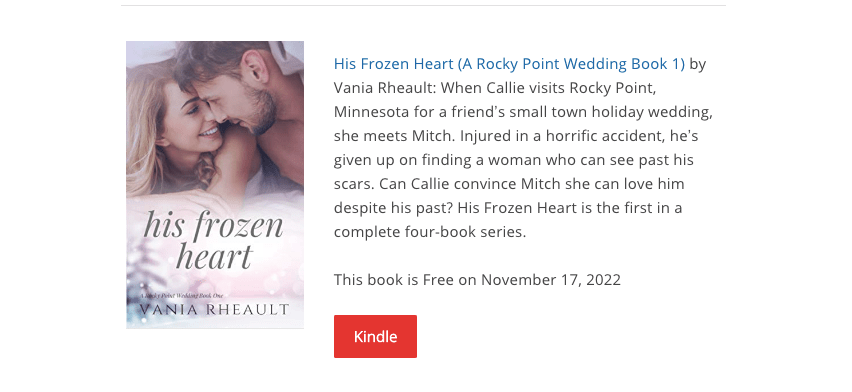
Speaking of looking back, I’ll give you the results I have for the Freebooksy deal I did on Thursday, November 17th. I took out a promo for that day, but I also extended my free days to the 18th and 19th. I don’t know why I decided to spend money on a Freebooksy for a pen name I’m not sure I’m going to write under anymore, except that I hadn’t ran a promo for those books in a long time, and I was just curious to see how they’d do. (Just a heads up–curiosity is not a good marketing strategy.) The problem with that mentality is, if you don’t have a plan or a desired outcome, it’s best not to spend the money. I’ll explain what I mean in a bit. The last time I did a Freebooksy on the first in my series, I earned my money back right away as it was a brand new series and I think I was still getting a lift from Amazon at the time. This time around, I gave away 2,583 copies of His Frozen Heart, the first in my four-book small-town holiday series. This is what the ad looked like in the Freebooksy newsletter:

I think the best it made in the free charts was number three in Contemporary Women’s Fiction.

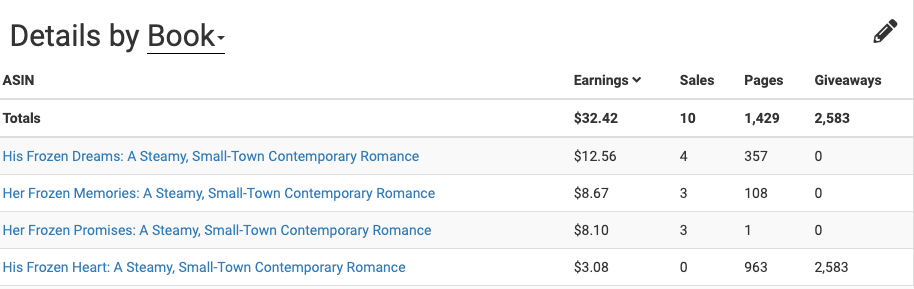
I don’t think I even made the top 100 with the holiday category that I wanted, but to me, it doesn’t matter where I fell on the free categories, because anyone can give a book away (I am all about bank over rank). My read-through didn’t come as fast as before, but hundreds of readers could spend the next several weeks or even months getting through my books. I may eventually recoup the cost of my fee, but I spent 115.00 on that promo, and so far have only earned 69.00 this month, which isn’t fair because I had sales of my duet and Rescue Me before the free promo. BookReport did a good job of breaking the numbers down so far:

ASIN	Earnings 	Sales	Pages	Giveaways
Totals	$32.42	10	1,429	2,583
His Frozen Dreams: A Steamy, Small-Town Contemporary Romance	$12.56	4	357	0Her Frozen Memories: A Steamy, Small-Town Contemporary Romance	$8.67	3	108	0
Her Frozen Promises: A Steamy, Small-Town Contemporary Romance	$8.10	3	1	0
His Frozen Heart: A Steamy, Small-Town Contemporary Romance	$3.08	0	963	2,583
Series Stats for the month of November
Standalone Stats for the month of November

So this brings me to what I really wanted to talk about today, and it’s this: always have a plan or some kind of vision of the ROI you want when you schedule a promo or run a sale. What is your reason why? Obviously, I had pie-in-the-sky hopes and dreams for this series and this promo, and I was hoping I’d make a lot of money. I have a couple of ideas why that didn’t happen but I should have given this promo a lot more thought before forking over the cash.

What did I hope to achieve giving my books away? If I wanted the exposure, what for? I don’t have plans to write under Vania Rheault anytime soon because those books are written in 3rd person and I’m not writing that anymore (and I don’t think indie contemporary romance in 3rd person is selling anymore either). Did I just want to see what would happen? Well, I’ve gotten half my fee back, so I can’t say it was an expensive experiment, but that money, if I really think about my plans for my releases coming up next year, could have been better spent. Did I just to give them one last hurrah before I turned my back on them for good? I love my books too much to do that, especially since I was just talking about re-editing Wherever He Goes and recovering it with an updated cover. So, for me, if I can’t answer those questions, I probably didn’t need to be spending money on a promo, “just for the hell of it.” It’s never a good idea, or a cost-effective idea, to throw spaghetti at the wall and see if it sticks. More than like it won’t, and all you end up with is a mess.

I didn’t have a concrete idea of what I wanted to achieve with this promo, and because money, especially this time of year, is in short supply, I kind of regret the ill-thought out spontaneity of my decision. I don’t regret all the copies I gave away, but I’m not nurturing that pen name anymore, and finding new readers for a limited supply of titles doesn’t make any sense.

So, before forking over the cash for a promo, or for any kind of marketing, really, think about what you want to get out of it. There are different kinds of return on investment after all, not just sales, and it’s okay to spend money for something other than that if you know what you want. Exposure is fine, and in these times, we do have to pay for that. Sales, how many do you want? How many sales or page reads would you need to break even or to reach your goals? Read-through? Is your first book strong enough to carry the read-through you’re hoping for? How many sales of books 2, 3, 4, etc do you want? What would make you happy? How old is your book, and have you had any new releases lately? Could you use a cover update before spending money? What about a fresh edit? Did you check your blurb to make sure it’s the best it can be before you pay for anything?

I’m glad that over 2,000 people thought my books were good enough to download. At least that tells me my covers are still decent, and the blurbs are holding their own. It also tells me that a promo on one book can affect the others. I didn’t run promos on my standalones and didn’t promote them in any way besides telling my newsletter about the free books that weekend. I simply put them for free and hoped for the best. So that was actually a nice surprise.

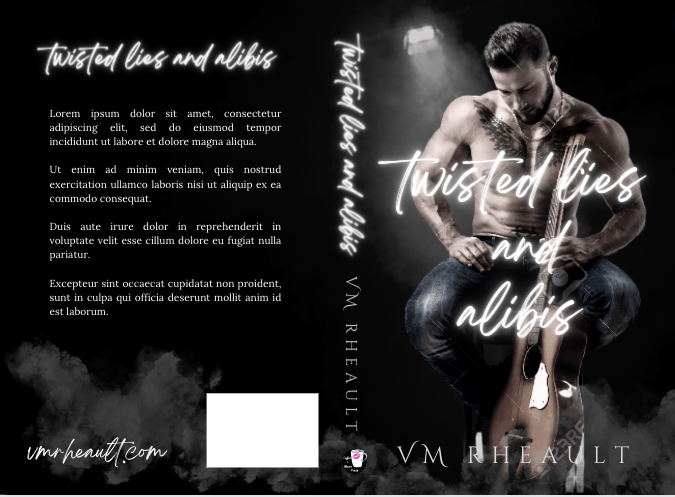
What’s next for me? This week is American Thanksgiving, so I’m going to be busy. I don’t have anything going on today (Monday) but I have Tuesday evening dinner and a movie with my sister. Wednesday my sister is coming over and we’re going to Downtown Fargo to snoop around, Thursday I work, but Friday I’m cooking and my sister and my ex-husband are coming over for drunk Trivial Pursuit and turkey. There won’t be much writing happening this week, but I am still excited for the story, and though I haven’t bought the images yet, I think this will end up being the cover. It’s a departure from the billionaire stuff I’ve been doing, as this is a rockstar romance, but it’s still in first person, so I’m hoping that I’ll still find readers. I haven’t had a cover come together so fast (besides Rescue Me, which took me ten minutes and I loved it from the first mockup) and likely it will stay:

stock photo preview from 123rf.com, cover made in Canva

Not sure what I’ll do with it once I’m done–doing anything for the sake of doing it isn’t wise, and while I would love to just hit publish and walk away, that’s the fastest way for a book to sink. Plus, if this is really the guy I’m going with, likely Amazon Advertising will kill any attempt to run ads which means back to Facebook–but only after Christmas.

My second set of proofs for my trilogy are good, all the little things fixed, so those are still set to publish after the holidays. I opened up book one on Bookfunnel if you want to give it a peek. You don’t have to give me your email address to download it. https://dl.bookfunnel.com/ntb40bhai8

Besides that I’m just keeping on keeping on. My carpal tunnel has eased up since I’m not writing so much right now, but the girlie stuff that has been bothering me for the past couple of years still hasn’t abated no matter what I try. Some people have suggested that because of my age and hormones, yadda yadda that maybe that could be just something that will never go back to normal. That could be, but it’s a depressing thought. I’m not the only one dealing with something on a daily basis, but it’s a bummer to have to put up with something so annoying with no hope of cure or treatment.

I hope you have a good week, and a happy Thanksgiving if you’re in the US and you celebrate!

Marketing ideas for your books

We tend to confuse marketing and advertising when it comes to our books. Advertising is what you do when you’ve already written it and published it and you’re only looking for readers. That’s running ads, buying a promo, tweeting about it, or posting in FB groups. That’s not really marketing. That’s shoving your book under someone’s nose and hoping they like it enough to buy it.

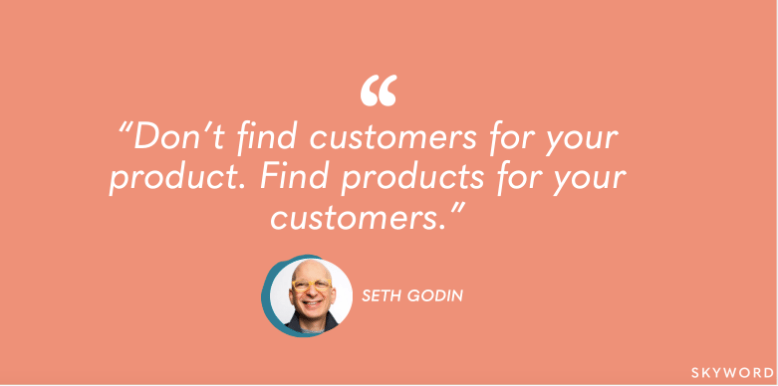
Marketing encompasses a lot more than that, and it starts with your product, a fact many indie authors don’t like because they prefer writing the book of their heart and hoping someone likes it enough to read it. That’s fine; whatever floats your boat. And honestly, it’s what you should do when you first start out. But writing the book of your heart, or the books of your heart, won’t get you very far unless you can meet in the middle between what you want to write and what readers are looking for. As I’ve said in the past, authors who can meet in the middle find their longevity in this business. Or rather than compromising on every book, write something you love, then something you know will sell, and go back and forth. I was reading Bryan Cohen’s new Amazon Ads book Self-Publishing with Amazon Ads: The Author’s Guide to Lower Costs, Higher Royalties, and Greater Peace of Mind and in it he quoted John Cusack, who said something like, “I do one project for them and one project for me.” I can’t find attribution for that quote, but for the sake of this blog post, let’s go with it. That’s not what this blog post is about, as it is your choice what you want to write, but as Seth Godin said, and I quoted him not long ago, “Find products for your customer instead of trying to find customers for your product.”

(And if you’re interested, a really great talk by Kyla Stone is available here. She talks about writing to market, but she couldn’t get to where she is today if she wasn’t writing what she loved to write.)

I’ve spent six years publishing and learning from my mistakes. Here are some tips I picked up from other authors and what you can implement with your next books.

Make sure your series looks like a series.
If you look at any big indie’s backlist all their series look like they belong together. It doesn’t matter if they’re all standalones and readers don’t have to read them in order. If they fit together, create their covers so they look like they do. Not only does a reader glancing at your Amazon page know they belong in a series, they just look nicer when they’re all branded in the same way. That means a matching background, maybe, cover models who have the same vibe. Create a series logo and add that to the cover as another way to identify one series from the next. If you do your own covers but publish as you write, create all your covers at once. That way you’re not stuck with one cover that’s already out in the world you can’t duplicate. That shoves you into a corner you don’t want to be in. Book covers are more important than we want to believe, but trust me. Look at any of your comparison authors’ backlists and see for yourself how they brand their series. Also make sure if you’re going to run ads that they meet Amazon’s policies. I had to tweak my small town contemporary series because Amazon kept blocking my ads. I had to zoom in on their faces and it ruined the entire look. I’m much more careful now.

These are books under this name. It’s easy to see the trilogy belongs together, the three standalones and then the small town series. Amazon didn’t like they were in bed. Too bad. They did.

Write in a series, but also don’t tie things up –until the very last one.
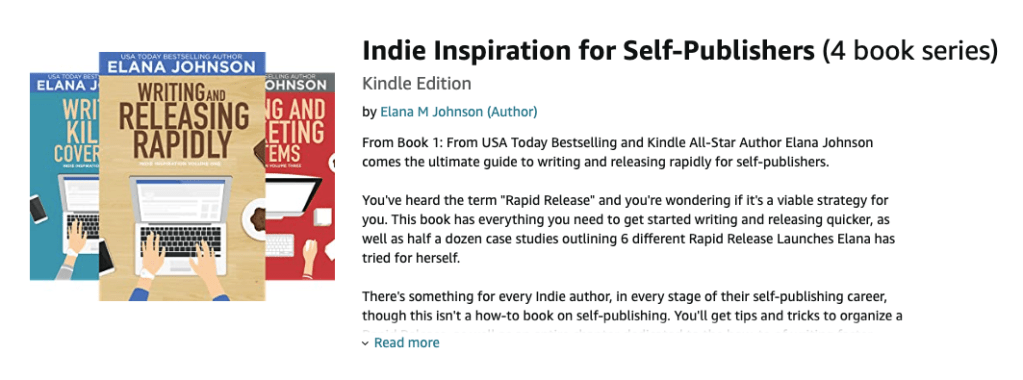
Elana Johnson calls these loops. You can end each book with an HEA, but with the overall plot, don’t wrap things up! This encourages the reader to read through your entire series to see how things finally end. With my small town series, everyone is in town for a wedding, and there are wedding activities throughout. The last book ends with the couple’s ceremony. What’s fun, the couple getting married isn’t even one of the couples featured in the books. They are background characters that help with the subplot of each book. That’s it. That might be a flimsy piece of tape holding the books together, but it was a fun way for me to end the series–with the reason why everyone was together in the first place. When Elana talks about loops, she doesn’t mean ending books on a cliffhanger, though it is well within your right and another marketing strategy you can incorporate into your writing. Elana has a wonderful series for indie authors, and you can look at the books here. I’ve read them all, and this isn’t an affiliate link.

Use your back matter.
When you write in a series, and the books are available, your Kindle can help you out by prompting you to read the next one. That can be a boost, but also, you want to take matters into your own hands and add the link to the next book in the back matter of the one before it. If you don’t write in a series, add a different book. If a reader loves your book, they’ll want to read more from you, and you might as well make it easy for them. Too many calls to action may confuse a reader, so you don’t want pages and pages of back matter asking a reader to buy a million books, sign up for your newsletter, and follow you on Twitter and Facebook. Choose the one most important to you, add it immediately after the last word of your book while they are still experiencing that reader’s high, and ask them to buy your next book or sign up for your newsletter. I have also heard that graphics work wonders and adding the cover along with the link is a great way to prompt readers to buy.

Introduce your next book with a scene at the end of the previous book.
This is one I learned from the writers in my romance group on Facebook. Say your novel is about Travis and Amy, but the next book is going to be about Rafe and Emily. End Travis and Amy’s book with a short chapter/scene in Rafe’s POV to get them excited for the next book. I haven’t started doing this, but the writers in my group give it 10/10 stars, would recommend as a great way to get readers buying the next book. Also, if you’re writing romance, readers gravitate toward those hunky men, so if you can, write from his POV. I’m definitely doing this with the trilogy I’m publishing in January, and with the six books that are with my proofer now, the third book ends with an HEA for that couple, but I added a chapter from the heroine’s POV for the next three books. I suppose I could have done it from his POV, but hers felt more natural, and I hope it will be enough to get the readers invested in her story and how the series plays out. You can do this with any genre you write in–if he’s a detective, maybe he stumbles onto a new case, or maybe something serious happens in his personal life. Whatever the case may be, add something that will entice readers to click on the link you’re putting in the back.

Bonus scenes for newsletter subscribers only.
I haven’t started this up yet because 1) you have to write the bonus content 2) I don’t know my newsletter aggregator well enough to make something like this happen, and 3) with my newsletter signup link already in the back, I’m giving away a full-length novel. If you don’t have a reader magnet, writing a bonus scene that is only available if readers sign up for your newsletter is a great way to add to your list and hopefully, the more engaged your list is, the more readers you have.

Looking at your entire backlist as a whole–or what you’ll be writing in the future.
If you think of marketing as an umbrella for your entire career, then think of advertising on a book by book basis. Marketing involves all your books, who you are as an author, and what your message is. That’s why so many authors want a logo–but attach feelings, emotions, and what you’re giving your reader in your books to that logo so they think of those things when they see it. It’s why soda commercials are always happy. They want you to equate having a good time with drinking their product. What do you want your readers to get out of your books? If you’re a romance author, an HEA, for sure, but what else? Is your brand a damaged hero? Found family? If you write women’s fiction, do you want your readers to expect a woman on a journey, or maybe sisters repairing their relationship? Best friends who have grown apart only to be reunited for some reason? Of course, that sounds like all your books will be about the same thing, but that’s not really the case. What is your theme, what is your message you want your reader to get from your books?

Publish consistently.
Training your readers to expect a book at certain time will help you build buzz as your readers will get used to your schedule. Figure out a comfortable schedule and try to maintain it. Once every 3 months seems like a good practice if you can keep up with that as you’ll never fall off Amazon’s 90 cliff. Also, if you’re writing a series, keep in mind readers don’t like to wait and you’ll have your work cut out for you if you can only release one book a year. You might just have to be resigned to the fact you won’t get the number of readers you want until all the books are released.

It’s a bit older now, but Jamie Albright spoke at the 20books convention a few years ago. She shared some good tips if you can only write and release one book a year.

Tweeting incessantly about your books isn’t marketing. Doing research on your next book before you write it, figuring out your comp authors and comp titles, doing cover research, and writing a good blurb is marketing. Running ads and buying promos to that book once you’ve written it is advertising.

It took me a really long time to figure this out–ten failed books because I genre hopped and was only writing what came to me. I didn’t publish on a schedule, didn’t have a plan. I’m still not publishing on a schedule, though I am going to try to aim for one book a quarter after my COVID stockpile is out into the world.

I’m getting a hang of this marketing thing, but it’s nothing you can achieve over night. I spent five years making mistakes. I’ll spend the next five fixing them.

Thanks for reading!


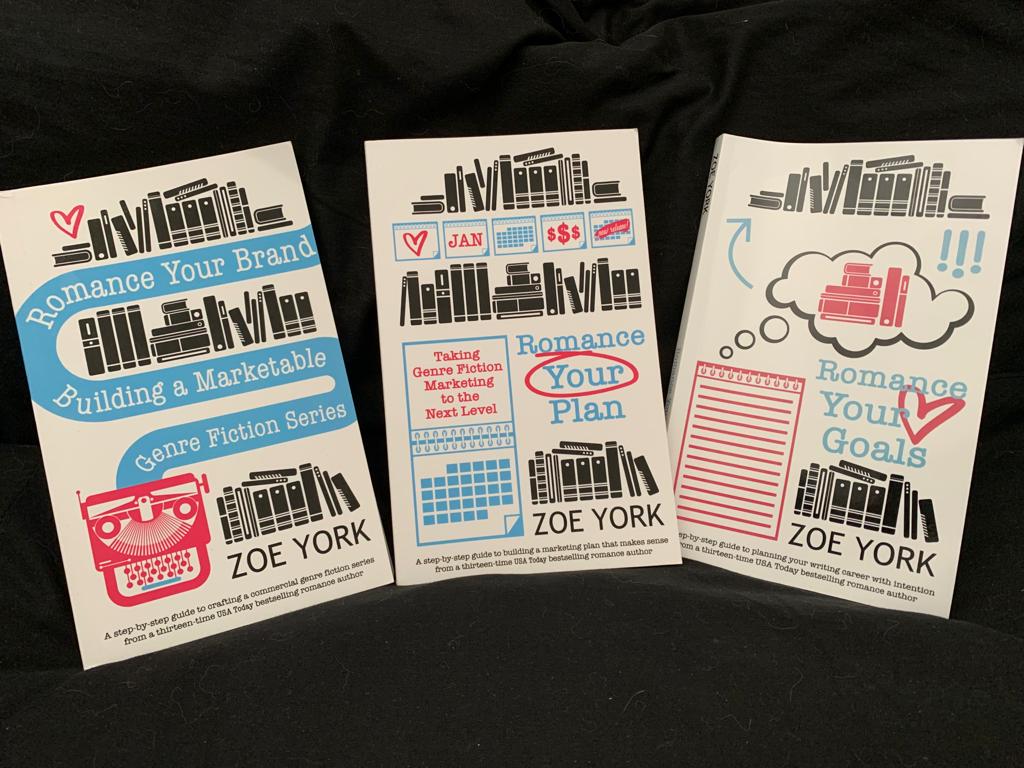
If you want resources on planning your career, Zoe York has a wonderful series of books that talk about that. You can get them here. https://www.amazon.com/dp/B082CZDK75

Sara Rosette also has a wonderful book on how to write series, and you can find it here. https://www.amazon.com/How-Write-Structure-Troubleshooting-Marketing/dp/1950054322/

The top 6 reasons listening to marketing advice is a pain in the A$$.

We all have marketing advice coming out our ears. I’m to the point where I don’t even care about marketing advice right now. I stopped listening to Clubhouse, I’m not an active participant in any Facebook group. All I’ve been doing is writing, writing, and more writing because let’s face it, marketing won’t do anything if you don’t have product. But more than that, marketing won’t do anything if you don’t have the right product. So here are my top six reasons why listening to marketing advice is a pain the you know what.

You don’t have the same backlist as the person dispensing the advice.
Frontlist drives backlist. Right? Maybe you’ve never heard it phrased like that. Maybe you’ve heard “writing the next book is the best marketing for the current book.” I like frontlist drives backlist better because sometimes we think that after a book is so many months old it will stop selling. Maybe in traditional publishing circles this is true–when bookstores yank your paperbacks off the shelves, but we’re digital now, and books on the digital shelf don’t get old. So when you have someone who’s been publishing for a while saying that their newest release earned them lots of money–you don’t know if it’s from the current release or if their new book bumped up all the books in their catalog. Listening to someone talk about how they are promoting their 20th book might not do much for you if you’re planning a second. They are 100 steps ahead of you. Take notes if you want, but chances are good what they are saying won’t apply to you. I’ve been in that position, too. Listening to big indies is discouraging. Rather than listening, I go write.

You’re not in the same genre/subgenre/novel length/platform.
If you write thrillers, what a romance author is doing may not help that much. Maybe you’ll get some ideas because a lot of marketing is universal, but for example, lots of romance authors are on TikTok right now. Whether that is beneficial for you, you would have to do your research and figure it out before you waste time learning how to make the videos. Marketing for wide isn’t going to be the same if you’re in KU, just like listening to a webinar on how to market a historical saga isn’t going to do much for you if you’re a children’s book author. Marketing advice isn’t created equal and it helps to figure out what you’re selling before listening to advice. Even marketing for historical romance would be different than marketing mafia romance. If you write short stories, chance are marketing those will be different than if you’re writing long novels.

They have money–you don’t.
It’s easy to say, “Oh, I bought a Freebooksy, put my first in series for free, and watched the royalties roll in through page reads.” That sounds like the answer to anyone’s prayers, except, then you rush to Written Word Media and see a Freebooksy spot is $40 to $175. If you’re trying to promote a standalone, there’s no way you’ll get that money back paying to give away a free book. Amazon ads aren’t nearly as expensive (I have six ads going and have only spent 4 dollars this month so far) but if you don’t know how to put together a Facebook ad, they are happy to take your money and run leaving you with no clicks and no sales. Unfortunately, there’s not a lot you can do for free anymore, all the begging going on right now on Twitter is proof of that. So it would be in your best interest to find a couple of nickels to rub together, make sure your book is advertising ready, and hope that you can find some traction with a low cost-per-click ad. If you’re afraid of losing money, do what you can with your product so that doesn’t happen. The person who DOES make their money back and then some on ads and promos has a product that people want and all they’re doing is helping readers find it.

They have a newsletter. You don’t.
Ever listen to a 6-figure indie author talk about their marketing campaigns? They give you all the sales numbers, all the rank, and someone asks them how they did it and they say…. “I emailed my newsletter and told them I had a new book out.” Where are the melting face emojis when you need them?

courtesy of Canva

Here they are. There is nothing so disheartening as thinking you are going to hear a nugget of information that will take your author career to the next level. Don’t get me wrong, you need a mailing list. That bomb she dropped is proof of that. Only, her list was six years in the making and you’re stuck on MailerLite tutorials on YouTube. That doesn’t mean you can’t listen and write down her advice for later. She built up her newsletter somehow and she probably has a lot of tips on how she did that. Gave away a reader magnet, joined in Bookfunnel promotions (or StoryOrigin), she networked with other authors and they featured her in theirs to get the ball rolling. But you have to understand that she’s six years ahead of you. I’ve heard Lucy Score has 140,000 subscribers on her email list. You may never, ever, get there, and her marketing strategies will not be yours.

They write and publish faster than you.
I remember when I settled in for a good marketing talk with a big indie author. I had a notebook, a pen, a cup of coffee, and I was going to absorb all the knowledge. She was talking about ads and promos and the usual, and then she got to how many books she released a year.

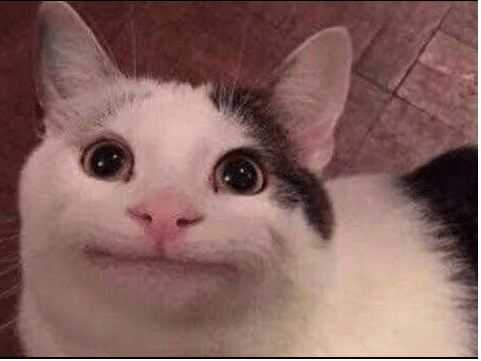
calico cat grimacing

That really sums how how I felt. There’s no way I could do that. I write fast–I can crank out four books a year with no help. No editor, no beta reader, no formatter, no one to do my covers, just me. But she multiplied that by four, and my heart sank. Obviously, their marketing techniques are going to be way different than yours. They can put a first in series for free, buy a promo, and get a ton of read-through from the get-go. They can run ads to several books and create boxed sets. What they can do in a year, you might be able to do in five, so you need to adjust accordingly. It doesn’t mean you won’t be successful, it just means you won’t be successful as quickly. When listening to marketing advice from prolific authors who are doing this as their day jobs, keep your expectations realistic. Save up advice that you might be able to use later, but realize that you can’t do anything without product first.

They could just be a better writer than you (for now).
No one likes to talk about craft. We don’t. It’s messy and subjective and it’s easy to start talking about rules and editing and first person vs. third person, and before you know it, you’re not talking to anybody anymore because everyone is ticked off about the Oxford Comma. But the fact is, good books sell. You can run ads and sell a bad book once, but you’ll never build an audience or a loyal readership off a crappy book. People work hard for their money and they don’t like to waste it. Time is precious and trying to read a book that isn’t well written is a drain when they could be reading something better, catching up with a show they’re behind on, or spending time with a significant other or their kids. You can’t be cavalier about asking people to spend time with you. People who have writing careers write good books. So if you’re discouraged because the authors you’re listening to are telling you that they don’t lose money on ads, and/or they have a huge newsletter, it’s because their books are good. Do you think this author has readers who are invested for the long haul?

I’m not making fun of anybody–he obviously has readers–I would do a lot for 458 reviews–but when 41% of them are one and two stars, you’re not offering content readers will come back for. Imagine how this book could have taken off if it had been well-written. It’s the first in a trilogy, and I don’t have to tell you the other two books aren’t doing well. The loss of potential is devastating to me. I can’t even imagine how he feels. Maybe he doesn’t even understand his own self-sabotage and is happy with the instant gratification.


It’s really difficult to listen to marketing advice. We all write such different books. Our genres will be different, our covers. Our willingness to put ourselves out there for the sake of networking. Our author voices and style will be different. Before you try to follow any advice, your books have to be marketable or any marketing you do will be for nothing.

This is why writing about marketing is hard. It’s why it’s difficult to listen to advice. And really, what no one talks about is how much marketing you have to do before you even write that book. We try to find customers for our product, when really, it’s a hell of a lot easier to find product for already existing customers. Finding your comparison authors makes it easy to find readers–their readers are your readers. We don’t like to study the market because we’d prefer to write what we want to write. The authors with the most longevity meet in the middle between what the market wants and what they love to write. It’s easy to do market research these days–Alex Newton of K-lytics takes the work right out of it, and you can watch a short trend report that he made this month for free here. https://k-lytics.com/kindle-e-book-market-trends-2022-september/

Read on for more resources and have a great week!


If you want to work on your craft, Tiffany Yates Martin has all her classes on sale for NaNoWriMo for $29.00/each. Check them out here! https://foxprinteditorial.teachable.com/


Monday Musings and What I’m Liking Right Now

This is the last Monday of August, and I hope the month has treated you well. I got a lot done this month, including finishing the last book of my trilogy. It came in at a little over 80k and I’m pleased with how all the books turned out. They still need editing, but I’m on track to release them in January. I still don’t have a firm publishing schedule for them, maybe a week apart, but I do know that I’m not waiting between books like I did for my duet.

Sales of my duet have been slow, and no reviews on Amazon for either book as of yet. I’m running Amazon ads and actually just created a couple of fresh ones with a higher bid hoping to get more impressions and a few more clicks. I contacted the Librarian’s group on Goodreads and had my second book added to my pen name profile. The one thing I dislike about adding a subtitle to an ebook is that it looks like a different book from the paperback, and I have no idea why the paperback of Captivated was added but the ebook of Addicted was after that. It’s annoying, and though I don’t have any kind of OCD, I grind my teeth anyway.

Not that I should care, I guess, but it just looks funny to me. There have been discussions wondering if adding a keyword-stuffed subtitle is necessary or even helpful (though we all know that it’s against Amazon’s TOS) but there is still no arguing tropes in romance sell. It is getting to the point though where I have seen so many qualifiers attached to a blurb, I wonder if it does anything at all: A steamy small-town second chance standalone happily ever after with no cliffhangers full-length novel. Are readers that picky or are we just so marketing-focused we’re compelled to spell out every dirty detail before a reader buys? I don’t have the answer to that, but it’s interesting to think about nonetheless.

I finished proofing the proof of Rescue Me, and it’s all ready to go in KDP. I’m still on the fence if I should use Booksprout to find reviews–if I am, I should publish the paperback now so I have a link and ISBN as they ask that information when you set up your book for reviews. (At least they used to. I’m not sure if they still do–the platform went through an overhaul over the spring and I’m not familiar with it anymore.) There is no free plan for that service like there used to be, and the kinds of reviews I was getting almost doesn’t make it worth paying the $9.00 fee. I feel as though most readers use it as a vehicle of accessing free books and if they do leave a review it’s a synopsis of the book (if they’ve read it) or a copy and paste of the blurb (if they haven’t). Still not unsure, but a standalone would be a good book to try it out with, at least, so I’m still considering it. Here’s a little thing I made on Canva. I think my copywriting skills are getting better.

I have the large print version stuck in my KDP dashboard, but after going around and around with the large print version of Captivated, I’m not going to bother to try. It can just be stuck in there. I never did get an answer from anyone who answers Jeff Bezos’ email, so I’ve given up offering large print. I asked in the 20booksto50K group if anyone had a workaround, and the only thing that made sense to me was when someone said KDP doesn’t want you to have two paperback books available and if I was stubborn and wanted to offer large print, I would have to create a hardcover edition. Printing is already expensive enough as it is–a large print paperback costing about 16.99 to earn any royalties, and adding a hardcover on top of that isn’t worth it. I don’t give up on many things, but fighting with Amazon is one of them.


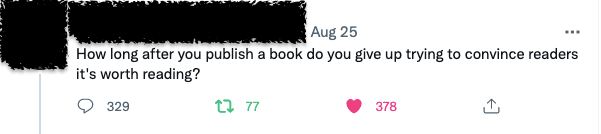
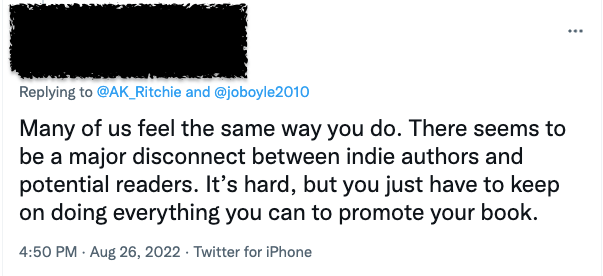
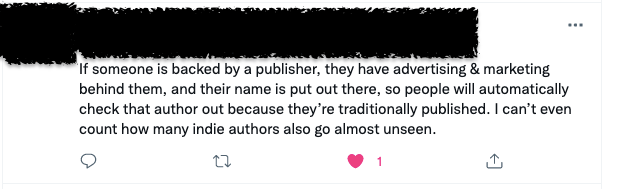
A tweet caught my eye this morning. Well, not this tweet as I answered her a couple of days ago when I saw it first, but I think the response I saw this morning was interesting.

I’m not 100% sure what he means–I asked for clarification but haven’t received a response as of writing this blog. To me, it can be taken two ways. 1) indies don’t know how to reach readers, which would be the natural assumption considering the original tweet, or 2) readers don’t like reading indie. When I first read the tweet, I thought that’s what he meant–that readers avoid indie for whatever reason. But then I read the tweet again after a couple cups of coffee, and he probably does mean indies don’t know how to reach readers. It’s interesting to me that he recognized it and lumped us all together and admitted it. I don’t know, I’m probably reading too much into it, it was just strange to see it in black and white. It’s also interesting to me because there is so much more to marketing your book and yourself as an author than just tweeting all the time. I’ve learned this creating my pen name and getting that going. Marketing begins with the products you want to sell so what is your product and what does it consist of?

*Genre/tropes
*Voice/writing style
*Cover
*Title
*Blurb
*How often you publish/how many books you have out and how many you plan to publish in the next year
*If you stick with one genre or if you genre-hop and/or sub-genre hop
*Metadata for your book such as categories and keywords

These are pretty important when you’re trying to market, and most authors don’t think about any of that until the book is published and they can’t find anyone interested in reading what they’ve written. If you don’t consider any of that, what you do after will be hit or miss. And what comes after that? Building a newsletter (though everyone says you should before you publish, and that’s a feat in and of itself) running ads, buying promotions in newsletters like Fussy Librarian and Ereader News Today. And after that, once you start to find some readers, you better be writing the next book or have one almost ready to go. That’s why indies don’t understand marketing. Marketing isn’t the same as advertising. https://www.outbrain.com/blog/marketing-vs-advertising-7-key-differences-you-need-to-know/

As far as the idea that readers don’t want to read indie–that’s a valid reason why there are some authors with no sales. They look indie. Their covers are only so-so and their books need editing. They only have one book out and it makes them look like a newbie (I am fully aware what my Amazon Author page looked like when I only had Captivated out and that’s why I’m going to publish my trilogy with little time between books). I don’t mean to insult indies. I am one, so why would I do that? But the less indie you look and your book sounds, the better your sales will be.

He answered me (real-time blogging is cool!) and I was actually kind of right on both counts:

I’m not going to argue with someone’s beliefs. I think in some way, shape, or form we all have to do a little marketing/advertising of our books. Tweeting isn’t going to get you very far.

Anyway, so that’s kind of what I’ve been thinking about today. I started my pen thinking years into the future. What my sub-genre would be, my voice/style of my books, the age of my characters and what that means for the ages of my readers. I research covers before I create mine, I try better to think of more relevant titles for my books–something I’m terrible at–but I know a title can make or break a book. Of course, I had to publish for five years before I figured out any of that, and I’ll have to publish for at least year before I know if that kind of preparation will pan out.

If you want to fall down the rabbit hole, I linked the picture of the original tweet to Twitter. I’m always interested to hear what others are saying about marketing and publishing.

September will be full of editing and playing with covers. I won’t start a new project until my trilogy is ready to go, but I do have loose plans what I want to write next. After tackling a trilogy, a standalone will be welcome. I had the idea when I was still writing in third person, but I think I can make it work in first just as well. There’s nothing stopping me from writing it in third and publishing it under my name and not my initials, but I rather like first person present and I might as well keep going with my pen name. We’ll see.


Oh, I forgot what I’m liking right now. Haha. Can’t be that great. Just kidding. When I have a bit of time, I’m going to listen to the roundtable talk moderated by Jane Friedman about the DOJ vs. PRH trial and what it means for authors and the book business. I didn’t follow the trial as it was happening, and if you didn’t either, but you’re curious, give it a listen.

Have a good week, everyone!

Until next time!

Knowing when to pivot. (What does that mean?)

a picture of zoe york's three books about writing and marketing romance.  look here to buy:

https://www.amazon.com/dp/B082CZDK75
To check out the series, look here: https://www.amazon.com/dp/B082CZDK75

I just finished Zoe York’s Publishing How To series, and I really enjoyed the books, her thoughts and experiences on publishing romance, goal setting for your author career, and so much more. She’s been writing and publishing for years now, is a full-time author, and has made a bestselling list or two.

What I’m about to say doesn’t have anything to do with these books–I’ll circle around to them–but lately I’ve realized that when it comes to writing, publishing, and marketing, you can consume all the marketing advice in the whole world, but you won’t get anywhere unless you have a good product, and more importantly, a good product people want to buy. That’s part of the reason why I haven’t purchased Mark Dawson’s Ads for Authors course (comes in at close to 1,000 dollars, and SPF offers it twice a year). If you don’t have the books to back up your ads, your ads aren’t going to do anything.

When I take a look at my publishing history, I was writing good books. I received the odd 1-2 stars most authors do, but on the whole, I’m writing good books. That’s important to me because I do most of the editing and production alone. But something was still off because over the past few years, I didn’t find any traction. One mistake was my newsletter, or lack of one, I should say, and the other was my lack of direction with the books themselves. (I also didn’t understand author brand, but that’s an old discussion we can have on another day.)

It was just this morning when a woman in a writing FB group was talking about this very thing. She was sub-genre hopping and couldn’t figure out why she wasn’t getting any traction. Maybe she’ll believe me, maybe she won’t, but I told her I had the same problems with my own books and decided to niche down.

desk with laptop, plant, and coffee.

be stubborn about your goals but flexible about your methods.

My issue with pivoting is that it took me a long time to realize I had to do it. Some writers who struggle may never understand that it’s not their marketing chops, or their covers, or their blurbs, but simply what they are writing in the first place. Depending on how fast you can write, that can take years. Years that can feel wasted because if you had been writing the right thing in the first place, you wouldn’t still be at ground zero wondering where it all went wrong. But that’s like a chicken and egg scenario–how do you know what’s right or wrong until you put it out there? And what are the metrics you’ve decided to pin that on? Sales? Reviews? I’m nowhere near making a full-time author’s salary–I checked my dashboard yesterday and made 2 cents. (That tells me someone borrowed the book in KU and opened it to make sure it borrowed properly, then went off to do something else. Or they read the first page, didn’t like it, and returned it. If I think to check back, I’ll see if that person read it or not, but that micro-level of caring is not in me and never will be.) Admittedly, those books are old now, and even dropping 10 cents a click in ad spend to those books is probably a waste of money because as we’ve determined, Amazon loves consistency and relevancy, and I won’t be writing any more of those books for the foreseeable future.

So what will make you decide that it’s time to pivot?

At the beginning of the post, I brought up Zoe’s book because in it she says knowing when to pivot and niche down is a personal choice, and it is. You have to look back at your books, where you are, and decide if it’s enough for you. I see indies making money. I want that, too. It’s not a driving force, but financial security is important to me, and who doesn’t want to get paid for doing what they love?

When we talk about pivoting, what does that even mean? It means taking a look at what you’ve been writing, looking at that lack of success those books are bringing in, and deciding to try something new. It can be as simple as what I did–turning from writing “Contemporary Romance” to Billionaire, or doing a full 360 and changing from Christian Romance to Horror. But then that begs the question too–will the pivot be in the right direction? I have no idea. I can’t even say if these new books will resonate with readers until I put them out. I THINK I’ve taken a step in the right direction: billionaire, first person POV. According to Alex Newton of K-Lytics, Billionaires are like vampires and will never die. So, that’s a good thing. But there are a lot of other things that can turn against me: writing style, the tropes I chose to write about, the issues (backstories) I’ve given my characters and decided to tackle in my writing. Changing from Contemporary Romance to Billionaire might not be the magic bullet I hope it is, and right now, I don’t have a plan C. I’m not even sure how long I’m going to give this pivot a go before I decide this writing business isn’t meant to be. I have enough books saved up to publish 4 a year for the next 3 years, so at least until then (because why not publish them since they’re written), but I’ve been skating financially since my divorce, piecemealing paying my bills with scraps of income from various places while giving my writing career a chance to do something, and I can’t do that indefinitely. As Kristine Kathryn Rusch says, there are easier ways to make money. Less stressful too, I bet.

desk with laptop plant and coffee

a pivot is a change in strategy without a change in vision. eric ries

So, if you’ve been banging your head against your laptop trying to figure out why you’re just not seeing the success you want, maybe it’s time to pivot. What is selling right now that’s close to what you’re already writing so you don’t go out of your mind? I’m not saying be a slave to the market, or to trend, though I’ve seen Alex Newton’s indie reports, and trends don’t change nearly as quickly as we like to say they do. I’m saying find something different to write that’s hotter, more niche than what you’ve been writing and see if that works.

All those who wander are not lost, but sometimes you think you know where you’re going and end up not knowing where in the hell you are. That was me before looking at my backlist and choosing to write Billionaire. All of Nothing has made more than all my other books combined, so I feel this pivot was a good choice. Now all I have to do is publish, wait and see.

Fingers crossed.

Author Comparisonitis and leveling up.

Last week, there was a little kerfuffle online about Sky Warren’s RAM (Romance Author Mastermind) conference, and like a true gossip, I like nosing around and seeing what the issue is.

I’m not writing this to call anyone out or judge any author, in fact, quite the opposite. If you’ve read my blog for any length of time, you know I blog to the new author, the one stumbling around trying to find his way in the industry where there are EIGHT MILLION books on Amazon with thousands more added every day.

This is a screenshot taken from a free webinar by Alex Newton of K-lytics. I screen-grabbed it in May of 2021, so the numbers are a bit outdated–and probably worse today.

I’m transparent in that I’ve written a few books, published them on my own–edited them with the help of a couple of beta readers, formatted them with Vellum, did my own covers. I haven’t found any real success–not the kind we really want when we publish a book. (We can all say we don’t want to make money or be a bestseller, but if you’re putting your book on Amazon, you’re hoping for an outcome such as that and there’s no point in lying to yourself. It will only bog your business down.)

So when conversation turns to leveling up, ad spend in the thousands, and launching to number one in the Kindle store and staying there for weeks on end, we have to realize that a conversation like this is like the difference between a janitor-in-training on his first day, and the CEO of that building conducting a billion-dollar meeting. It just isn’t the same.

I feel like these conversations come up every year, despite the information being proprietary to those conferences. You have to be making enough to be invited to attend RAM, and I am a long way off. That doesn’t mean I don’t appreciate the information that comes out of it, but in reality, I’m not in any position to take it, either. I wrote about that before in a different blog post–we’re all at different stages in our journey and what one 6- or 7-figure author can do is not the same as what I can do with the resources that I have. That doesn’t mean you can’t listen to them talk, or take notes, or tuck away what works for them for later use, but is it going to help you with what you need help with NOW? Probably not.

I think the conflict came with the latest episode of the 6 Figure Authors podcast when Andrea Pearson recapped what she learned attending RAM. You can listen here. (Usually they post it on YouTube, but this episode is not available there. You can also listen to it on your podcast app of choice.) Because I write romance, it’s interesting to hear what the big authors are doing in regards to their business, but I know I’m not there yet. I’m not even in the black most months, so I listen with curiosity, a huge grain of salt, and a wish in the back of my mind that one day these lessons will apply to me.

How can we listen and not compare ourselves to these authors? Here are some things I take into consideration:

Are you doing the minimum first? This is a big one for me because if you’re not doing the 101 stuff, you’re not ready for the 301 level coursework. You know exactly what I mean, too. Are you writing in a series? Are you sticking to one genre to find a readership? Have you started a newsletter? Is your book GOOD? That is something we lose sight of–your book needs to be GOOD. Well-written with on-point grammar and punctuation, good story/genre appropriate/following the expected tropes and reader expectations, good cover, good blurb. If you don’t have the core quality of your product down, you’re never going to level up, or be in a position where that’s possible. It’s the difference between the crappy Frostee Freeze and the huge, brightly-colored popular Dairy Queen. Where would you rather buy your chocolate-dipped cone? (No offense to the Frostee Freezes out there, but ours is located in the ghetto and looks like the movie set of a Lifetime murder movie.)

What are your business goals? Everyone talks about this–what do you want out of your book business? But the fact is, if you don’t know, nothing you consume will help you get there. Why do you write? What do you want to get out of your business? A bestseller? Hit the top ten in your category? Do you want to have a huge launch? How many books do you have? How many books will you have by the end of the year? Are you writing a series? How fast are you going to release them? How long are you willing to do this before you see any success? This is part of the 101 stuff I was talking about above.

Find information that will help you NOW. This is probably why I like listening to the presentations from the 20booksto50k conferences in November. They are very generous and post most of the speakers on YouTube. There’s a little bit of everything for everyone, unlike the mastermind classes where you already have to be at a certain level to get anything out of it. There are a lot of resources out there for newbies–podcasts and blogs, free ads courses, etc. Figure out what you need help with in regards to where you are at the present time. Are you working on craft? Looking for an editor? Exploring doing your own cover? Preparing for a launch? If you haven’t released your first book, listening to someone talk about how they’re spending 10,000 dollars on ads every month won’t matter to you, and it shouldn’t get you down. There’s no way you would (or probably could) spend that launching your first book. You’d never get that money back. Ever. There are so many resources for someone just starting out. My favorite is David Gaughran’s free course, Starting From Zero.

If you’re going to compare, at least be smart about it. I think a lot of what people don’t understand when they hear authors spending so much on their ads is that first, the authors have been writing for years and have a huge backlist (not to mention a huge readership), and second, a lot of their ad spend comes from savings of royalties already made. When you’ve been at this for years, you have savings. You’ve invested your money into CDs or high-yield savings accounts. When your interest accrued every year is as much as someone working a part-time job, you can afford to put some of that back into your ads. If you want to compare yourself to another author and base that comparison in reality, look at their genre. Is it the same as yours? Look at your backlist and how long it will take you to get to the same place. How is their book quality compared to yours? I could market my books the exact same way Janie Crouch does–but my books will never be like hers. Even if I copied the covers, genre, and tropes, our author voices and styles will never match. This is what they mean by “Your mileage may vary.” You are not another author and you never will be. How can you achieve your own kind of success?

I love this recap thread by Zoe York on Twitter. She’s so down to earth and pushes you to do what’s best for you and your books while giving you the encouragement to see that anything is possible if you work hard and don’t give up.

As far as I can see, there is no reason to get angry if someone wants to recap a high-end conference or be bitter they did. It’s the same as buying a marketing book from an author who is killing it. You can grab morsels of information but the likelihood you’re going to be able to apply 100% of what you’re consuming to your business that very second is slim.

Personally, I know why my publishing career is at a standstill. I made poor choices I didn’t know where poor choices. I know now through trial and error and listening to what mid-list authors have done to achieve their success. That’s why I did a 360 with my writing and started writing first person billionaire instead of the 3rd person contemporary romance. Will it help? I don’t know. I don’t know of my writing will resonate with readers. I may not know for a couple of years, and that’s something I’ll have to be okay with. Not everyone will make money in this business and I’ll have more choices to make if I’m not one of them. For now, I’m enjoying the process and I’m having fun writing. I’m not going to be condescending and say that’s all that matters, because it’s not. I want monetary compensation for the time I’ve spent writing and producing my books. Otherwise I would publish them on Wattpad or my own website and call it good enough.

You’ll have to decide what matters to you.

Your mileage may vary.

Thanks for reading!