Publishing Plan & Launch Plan: How they’re different and why you need both.

I’m struggling. I’m struggling for a myriad of reasons (some not related to writing–anyone know how to quiet an old cat at night?!), but the prevalent one for me right now is my publishing plan for the books I have written, and the launch plan I’m going to need to find readers for those books.

It’s tough because when you press publish, you aren’t guaranteed readers. It would be nice if we were, if we became overnight sensations, but that rarely happens and if it does, there’s a tremendous amount of work that goes into it behind the scenes.

The difference between a publishing plan and a launch plan to me is when we talk about a publishing plan, I think about how many books am I going to be able to publish in a given year, two years, three? How far out am I looking when I plan how many books I’m going to be capable of writing? That’s different for everyone. How fast you can write depends on your living situation, if you have kids, if you have a full-time job. Obviously, if you’re single with no kids and you’re already a full-time author, you’re going to be able to write quicker than a woman with a husband and children, a job, and maybe a sick pet. It also depends on where you are with your craft. If you can write your first draft so that you consider it practically your last draft, you can publish books faster than someone who needs a few months of editing. It’s important not to over-extend yourself, especially since Amazon allows year-long preorders. Due to COVID they are giving you grace if you have to move your preorder date, or cancel altogether, but that might not always be the case. Before COVID, if you missed your preorder date, you were suspended from creating preorders for a year, and I would imagine that at some point, they will go back to those guidelines.

A launch plan for the release of a book can consist of a Goodreads giveaway, stacked promotions, newsletter swaps, and everything in between.

How to optimize those things will be different for everyone, and while you can grab tips for a great launch, genre, how well your book is written, cover, the size of your newsletter and the authors you swap with, your backlist, how much you can afford to pay in ad spend, even what’s going on in the world, and I have no idea how many other factors, can influence how well your book does on launch day.

Planning your publishing schedule while optimizing your launch can be a nightmare. When you look at your launch plan/publishing plan it’s important to know your strengths and your weaknesses.

Newsletter. This is definitely a weakness of mine. I don’t have one . . . yet. Not even one for my 3rd person books I can hit up on the off chance there would be some crossover readers. Some authors have a large enough newsletter their whole launch plan consists of sending out an email to their newsletter and that’s it. It’s enough to make them sticky in the stores and their loyal readers will leave reviews.

Networking/Swaps. This is another area where in the four years I’ve been publishing I have failed. I have writer friends, sure. But I had no idea how important it is to network with other authors in your genre. Without a strong newsletter I can use for reciprocation and without romance author friends who are willing feature my books in their newsletter, I’ll have to rely on the kindness of strangers until I can pay those favors back with my own list.

Number of Books. This is one strength of mine, at least. Your launch plan will definitely look different if you haven’t banked some books, or if you don’t have a backlist written in your chosen genre. If you’re launching a new first in series, it’s better to have another book or two written so your readers know that more books will eventually come. Putting book two on preorder and linking the preorder to the back matter of book one can help. Fickle indie authors aren’t the only ones teaching consumers to be wary. Streaming platforms like Netflix can pull the plug on a new series before wrapping it up, and a lot of consumers now won’t try something new unless all the seasons (or books) are available. I know for me as a consumer, I was really disappointed when Amazon Prime released the first season of Carnival Row, but maybe because of COVID I haven’t heard of another season in the works. BUT as I have found out, rapid releasing when no one knows about you or your books doesn’t do anything and when I released my Rocky Point Wedding series last year, it didn’t matter how fast I released them–I didn’t have readers. I have this weird thing where I need to write a whole series first before I can even think about publishing. I many need to change my way of doing things to streamline my publishing schedule.

Ad spend. I’m fortunate that I have a little money for some ad spend. I can afford to book a promo with Freebooksy or BargainBooksy, ENT, etc. So far, if I put my first in series for free and pay for a Freebooksy with Written Word Media, I gain back my fee with sales and page reads. But that has never elevated my status or made my book “sticky” in the charts. I also play with Amazon Ads, but I’ve never worked with them to create second or third generation ads because I’d rather write more books than spend time playing with ads. Also, keep in mind that if you do plan to run ads at some point, your cover can’t be too racy. With stricter guidelines in place, Amazon has determined my Rocky Point covers are too sexy and they won’t let me run ads which could be a problem for you if you’re counting on an ads boost.


So, here’s my dilemma. First of all, I’m banking books as is my usual custom. I have six books in a series (serial, meaning no entry point except book one) that are completed. They’ve gone through a couple editing sweeps by me, and unless I’ve missed something, they sound strong: no plot holes, complete character arcs, etc. I spent the majority of 2020 writing and editing those. I needed a break, so I…

…wrote what I thought would be a standalone novel just to publish for the sake of hitting that publish button, but then I realized it could be a really cool book one of a series and while a paid beta reader read it and made her notes, I wrote book two of what will be another six-book series. That one has since been edited by me a couple of times, and is just sitting on my computer while I…

…thought I was writing a reader magnet for this newsletter I need to get going this year. The problem is, it’s a good book. It’s going to be a really good book, and I don’t know if I want to “waste” it by offering it up as a freebie. Obviously building up a newsletter is not a waste, and offering a full 85k book will be a good incentive to sign up for my newsletter. But, even though eventually I can put it up for sale, I would then need a new magnet anyway. So what difference will it make if I sell it now or later?

I’m at a loss, and while having 8.5 books on my computer almost ready to go (besides covers, formatting, and blurbs) is a good problem to have, I’m tired of publishing to crickets. I’m rebranding, writing new books under my initials instead of my first name, and if I can’t figure out how to make things better than the last four years, all I’m going to be doing is releasing books to no one. And let me tell you, I’m getting real tired of that.

Y’all, I’m tired of starting from zero. At some point, an author shouldn’t have to do that.

Another problem I’m having is that this is a new direction for me, and stockpiling books before I know if my style and voice are going to resonate with readers is ill-advised at best. Because now I’m stuck between a rock and a hard place. If I can’t find readers, then ALL the books I have on my computer I may not have a use for. I doubt that will happen–I don’t write in a vacuum and someone has looked at all the books in some way, shape or form–but it’s something to think about (like there isn’t enough to worry about, right?)

That’s why I’m interested in releasing one standalone just to see how readers react. While it wouldn’t be a huge release, I know a little bit to at least get a few readers and if I add a cookie to the back, it might not be a bad way to start building my list with organic signups. On the other hand, if it makes more of a dent than I expect, I would want something to publish next in the not so distant future.

The uncertainty is enough to give me a headache, but I appreciate you listening to me brainstorm. I mean, there are things I can do. Hire a consultant for one. There are a few indie authors out there who will chat for an hour for a fee. I can ask for opinions in my FB groups, and I think I will be doing that. Maybe an experienced indie author can give me a few pointers.

I know one thing–I need to publish something, soon. I need the high. But like a drug hit, it may not be the best thing for me. Or it could change my life. You just never know.

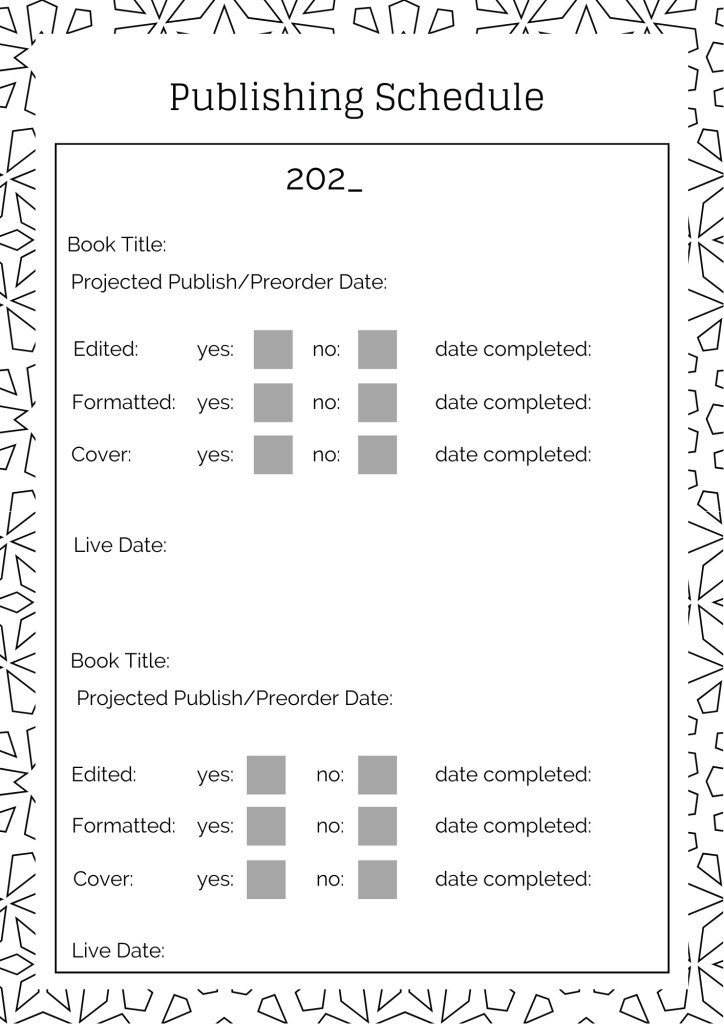
Here are a couple things that can help you with a publishing plan:

This is printable! Save it and print it for your own use.

A Book Production Schedule for Indie Authors: IngramSpark Blog

As for a launch, I’ve never had a successful one. I’ve never put the time and the effort to set up blog tours, newsletter swaps, promo stacking, the list goes on with what you can do. Normally I press publish, run some ads, and then feel sad when my book doesn’t make the splash I was hoping for.

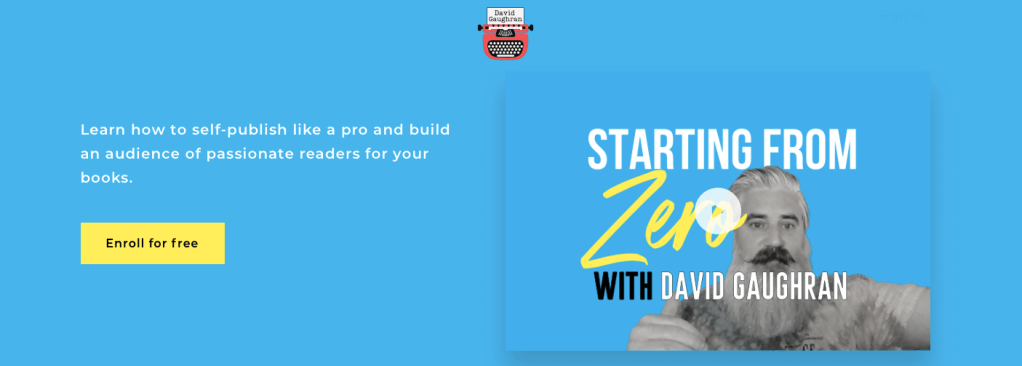
Since I’m starting at zero, this is worth another peek:

Screen grab taken from his website.

David’s course is free, and if you want to sign up, click here.

He also has an updated list of Promo Sites and you can find that here.

As for what else you can do for a launch, the resources can be it’s own blog post, and this is already a lot longer than I wanted it to be. I hope you find this useful, and thanks for tagging along on this journey with me!

Until next time!

Flexibility: When time and patience aren’t enough to achieve your goals.

Spotted in my Instagram feed.

As indie authors we have a lot of flexibility. Blurb not working? Change it. Cover not working? Change it. Didn’t edit your novel well enough the first time, give it another editing sweep and upload the new file. We have a lot of flexibility when treating our writing like a business. We can pivot faster than any traditionally published author, chasing trends if we’re fast enough writers, or researching sub-genres and hopping onto a hugely-demanded but underserved niche.

This quote jumped out at me this morning as I scrolled all my social media feeds while I sipped on my much-needed first cup of coffee. I like it because as indies, we’re able to search out new ways if something we’re doing isn’t working. The problem is, there is such variety out there that it’s difficult knowing when to give up and try something new or sticking with what we’re doing and hoping that our tenacity will be rewarded. We need to give something ample time to see if it’s going to work, and bailing too quickly before something can stick could cut off something that could be really viable to your business. On the other hand, sticking with something that’s not working out of fear of the unknown won’t get us very far, either.

Knowing when to keep trying and when to throw in the towel is something that needs to be taken as case by case basis and perhaps the thing you’ve moved on from could work for you later. With all the information available to indies right now, it’s easy to get overwhelmed with all the choices.

Here’s a not-so-quick list of some of the things that we as indies have control over, when to let things ride, and when to maybe give new things a shot:

  1. POV. Changing up a POV may not be an option for some people. You need to definitely work with your strengths and admit your weaknesses. If you rock 3rd person past, it wouldn’t be wise to change to shaky 1st person present just because that’s what’s trending in some genres right now. The quality of the work should always come first, or what you do after that won’t make much sense. I find writing 1st person present easier than 3rd person past. I can write faster, and as my paid beta reader just got through the first book my first series and liked it, I feel I’m capable in that area. A comment made on this blog on one of my posts said I didn’t like writing it, but that’s not true. I wasn’t sure if it was the right choice when I decided to write a book in it, that’s true. It wasn’t what I gravitated toward when I started writing because I’d read 3rd person past all my life and stuck with what I knew. But my books also were not selling that well, and since I had nothing to lose, I mixed it up. This is one area where I probably could have stuck with 3rd person past and eventually seen some level of success. On the flip side, my 1st person present books could flop. I don’t know. The amount of flexibility we have can be a pro as well as a con. If you’ve been writing in a POV you may not click with, or you haven’t found readers to click with it, change it up. You never know where a new POV will take you.

    If your current POV is not clicking with readers, you don’t have to change POV to find traction. Maybe changing subgenres would help. When I was writing 3rd person past, I wrote steamy contemporary romance. I didn’t have to change to 1st person present to make a change–I could have started writing women’s friendship fiction, or domestic thrillers, or literary fiction. Again, you need to know where your strengths are. I like writing romance and have a difficult time plotting anything that doesn’t revolve around a man and woman falling in love. Changing POVs made more sense to me than seeking out another subgenre, but I could have made a less drastic change and started writing clean romance as well. There are all sorts of things you can do if what you’re writing isn’t hitting the mark and finding an audience. I was lucky and stumbled upon first person present billionaire romance. I enjoy writing it, I feel I’m good at it, and I’m hoping that even though that subgrene has peaked, I will still find readers when I’m ready to publish.

    POV: Choosing Between First-Person and Third Person Writer’s Digest


  2. Ad platforms. This is a tricky one because your ads can only do a well as the book you’re selling. Bailing on Amazon Ads in favor of Facebook ads may not do anything for you except eat up money faster. You also have to know what your business goals are. If you’re in Kindle Unlimited, it makes sense to run Amazon Ads, but if you’re wide, Facebook can reach more people who read on all platforms. I see some authors give up on ads saying they don’t work, but they aren’t advertising a book written to market, or the cover is bad, or the look inside is full of telling. Another important thing to consider is if you learned how to use the platform. There are a lot of free resources out there and I would never try to put together an ad on a platform I wasn’t familiar with. Once you are familiar and know your ad budget then you have to figure out if your return on investment is worth it to keep running ads. It may not be. So you table that ad platform and write another book, or just hold off on ads for a bit, or try BookBub ads instead. You have to give something time to work. When I was doing Bryan Cohen’s ad challenge, there were so many people who wanted to throw in the towel after the first couple of days. If you feel like that, then maybe you don’t have confidence in your product and your gut is trying to tell you something. If you know you’re advertising a good book, then you should have patience and faith in your product. Your book will be on sale forever (unless you pull it). You can afford to wait a couple months to gather ad data to make good choices.

    The quick and easy guide to Facebook and Amazon (AMS) ads for authors by Derek Murphy

  3. Newsletter. If you haven’t started one, you can start one anytime. If your newsletter has low open rates, figure what why readers don’t want to open your mail. Maybe you’re not giving them anything of value. Maybe you’re not emailing frequently enough. Maybe the only mail you send out is when you have a new release and readers are tired of your “buy buy buy” message you send out every three or four months. Maybe you need a new aggregator because the one you’re using now sends everyone’s mail to their spam folder. If you aren’t getting the results you want, figure out why. Change your newsletter sign up cookie, or offer the readers you already have more content. There is a lot of flexibility here and you can make it work for you.
  4. Your book’s package. It’s easy to fly off the handle with changes when Canva makes it easy to create a book cover, and changing the blurb is as simple as writing something quickly and logging into your KDP account. The thing is though, you have to wait to see if what you already have can work. Run ads, ask in reader groups, or send out your cover and blurb in your newsletter and ask for feedback. I’ve blogged before that it took me a year to change the cover of The Years Between Us, and when I did, I saw immediate results. But when I changed the cover of Wherever He Goes, it did nothing for sales. Whenever I do Bryan Cohen’s Amazon Ad challenge, the first part of the challenge is always taking a look at the product and making sure your book is sellable. Covers get changed, blurbs get changed, categories are added. I have no doubt that a lot of those changes are for the good of the book, but also if you’re running ads for the first time for only a handful of days and you’re not seeing impressions, that may not have anything to do with your book and going through the hassle of changing your cover may be for nothing. Oftentimes it’s helpful to take a step back and give yourself, and your book, time to breathe while collecting data.

When we talk about old ways keeping doors closed, what we’re doing is talking about years of collected data. I can look back on my 4+ years of indie publishing, and I know what I did wrong. I didn’t network with other romance authors, I don’t have a newsletter. Had I done those two things, maybe my 3rd person present stuff would have sold better. Maybe my POV switch wasn’t necessary and I was just grasping at straws making such a drastic change to my writing career. OR, it could breathe new life into my writing and it could offer more opportunities than I ever thought possible.

That’s the thing with being flexible. My third person books will always be there and I can always go back to them if my first person stuff doesn’t work out, or I need a change of pace. In fact, I had a good standalone idea for my next book that I was going to write before I made the change. Now I can write it in first person or put the idea on hold. I also have 20k of a book that I need to rewrite and finish that was part of a writing prompt I stumbled upon a couple years ago. I wasn’t in a place writing-wise where I could finish it, but my skills have come a long way, and I’d like to revisit it and finish it up.

We have a lot of flexibility as indie authors. Don’t get bogged down with the way you’ve always done things. You could be missing out on a new opportunity!

Until next time!


Monday Musings and where I’m at right now.

Happy Monday! I hope you all are having a terrific start to your week!

I don’t have much to share with you this week–I’m only going to be talking about a few things that I’ve enjoyed in the past few days and catch you up with what I’ve been doing.

First of all, I want to thank all my subscribers who come back week after week to consume and participate in the content. Last week I made it to 500 followers, and WordPress gave me this cute little congratulations.

Blogging is a slow road and sometimes it feels like you’re blogging to no one and without thanks. Building your SEO and reputation is long, arduous work, but I love blogging. It gives me a break from the novel-writing part of my brain, and I enjoy dipping into the publishing part of being a writer/author. I like sharing my ups and downs, mistakes and the (few) things I’ve done right. I hope to continue my blog and offer useful and relevant content in the years to come. Thanks for sticking with me, and I hope you find all the information I post on here useful and relatable.


I finished my WIP last week, the second book of the second series I’m writing in first person present. Since finishing to now blogging about it, not only have I finished it, I’ve given it two editing sweeps. To be honest, I’m not sure what my publishing plan is, or how fast I’m going to release any of the eight books I’ve written this and last year and are now just sitting on my laptop. They all need to be edited to some extent, so they aren’t exactly ready. The first thing I want to do, though, is take a break from this series and write my reader magnet for my newsletter. While I write my newsletter, I’m going to learn how MailerLite, Bookfunnel, and StoryOrigin work. I’ll keep you posted on the blog. My reader magnet will only be available for newsletter signups, and I’d like to have a few subscribers before I start launching books. I have a glimmer of an idea for it, but I have to plot it out and write it. Soft deadlines are good for me, so I want to finish it by the middle of April. I’m giving myself some extra time because I’ll be learning a whole bunch of stuff and well, I don’t even know what my characters’ names are yet, so I better get brainstorming!

Excerpt from Finn and Juliet, book 2 of my Billionaires of Briarwood series.

Last week, I listened to a really great author interview on the 6 figure author podcast. Lindsay, Jo, and Andrea interviewed Elana Johnson. I might have heard her name here and there, but to be honest, I didn’t know who exactly she was before the interview, now I want to gobble up all her content! One of the things that really stuck out to me was when she said, “The package is the promise, and you have to deliver on the promise.” What she meant is, you need a good cover and blurb that is genre-relevant, and then what is inside the cover matches reader expectations of that genre. Not a lot of authors talk about craft because they’re worried about stepping on toes, etc. And to be fair, it’s difficult to tell an author her books need more work. I’ve only said that to a couple people in my whole life and only because they asked for advice. A writer never really stops learning, but I like how Elana phrased it. The package is the promise. And the promise is you’ve written a great story. Besides being a bestselling author, she also writes nonfiction, and I’ll be reading her books soon. To look at the first book in her nonfiction series, click here. And here’s the interview if you want to give a listen.


That advice is similar to what I’m learning in Suzy K. Quinn’s Self Publishing Formula class, How to Write a Bestseller. I wish I could outline everything I’ve been learning, but that wouldn’t be fair to Suzy, who’s making an income off the class and would be disrespectful to the time she put into creating the class, and it wouldn’t be fair to me, really, who’s paid for it. But I will say, she starts the class by encouraging you to think about the book’s package. The genre, the cover/vibe, who your audience is. Create a tagline, and put together what the book will be when it’s finished. That’s not so far off from Elana saying, your book’s package is your promise to your reader. With this reader magnet, I’m going to create the package first before I begin writing it. I suppose you could say that creating the package is the fun part, but having everything in place will keep the book on the straight and narrow and give me an ending point to look forward to. I can’t wait to start!


In other news, I got the first book in my series back from my paid beta reader. I only went over the overview she sent me. (She liked it!) I haven’t gone into her track changes yet since I’m not ready to start editing that book, but I’m excited to see the things she liked and the parts of the book where she thought I could use a little more plumping. The few things she did touch on I agreed with, but I didn’t want to edit it too much more without feedback. I feel editing too much without feedback wastes time because I can’t see all the mistakes myself. So I’m making progress! I feel like I’m hoarding a secret and I can’t tell anybody what I’m doing until I’m ready.


On a more personal note, I asked to go back to work vs. working from home, and they told me no. I think now working from home has more to do with cost-saving measures rather than protecting us from COVID, and while I wasn’t surprised they said no, I was disappointed. This means if I do have some anxiety because of the cut-off feeling I have not going in to work, I’ll have to figure out a different way to alleviate that anxiety. I’m not feeling too much of it lately–having another day off during the week has helped and I don’t feel so stressed with getting my words in every week. As far as my butt pain goes from sitting on a hard chair, I’m standing up more during my shifts and it’s fading. Anything I’ve read about pelvic pain that has nothing to do with an infection (which I don’t have–remember I’ve been to the doctor twice to make sure) says that it can take up to 12 weeks for the pain to go away. I’ve been taking Aleve, too, and sitting on an ice pack when I do sit and it’s making a difference. BUT if I’m not feeling better by the end of the month, I’ll schedule another appointment. You just never know.


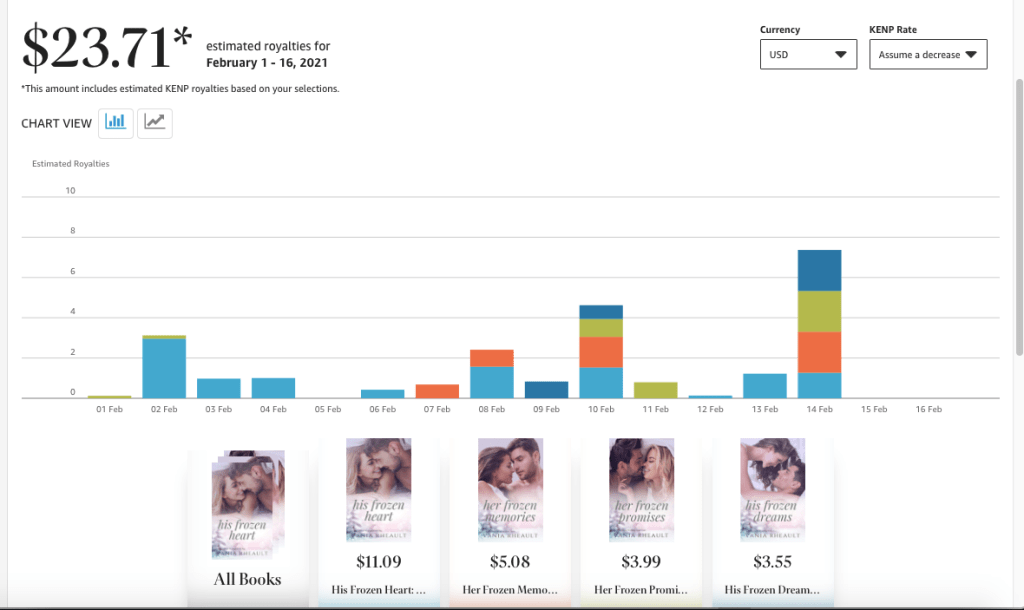
For Amazon ads check in, I’ve spent under 8 dollars this month, and I’ve grossed in royalties almost 50. (Net, around $42.00). I’ll have to think about what I want to do with these books. I still get a lot of my royalties from KU but if I’m not going to write in 3rd person past anymore (or not anytime soon) I may put them wide. I’m not sure. I don’t feel like I have the energy to market them wide and I may just leave them in KU. I don’t know. It’s the age old question of what’s best for your business and leaving all your eggs in one basket vs. multiple streams of income. It’s a tough choice. At least this month I’m in the black, and it’s still nice to see that people are reading all four of the Rocky Point Wedding books. That read through is always nice, and the validation you wrote a strong series can keep you motivated to write more. Soon it will be the one year anniversary of book one and I think it will be time to make up a boxed set. Luckily Velllum is good with that, and it won’t take me long at all.

Read-through for all the books in the series is small, but I’m grateful readers are reading from beginning to end.

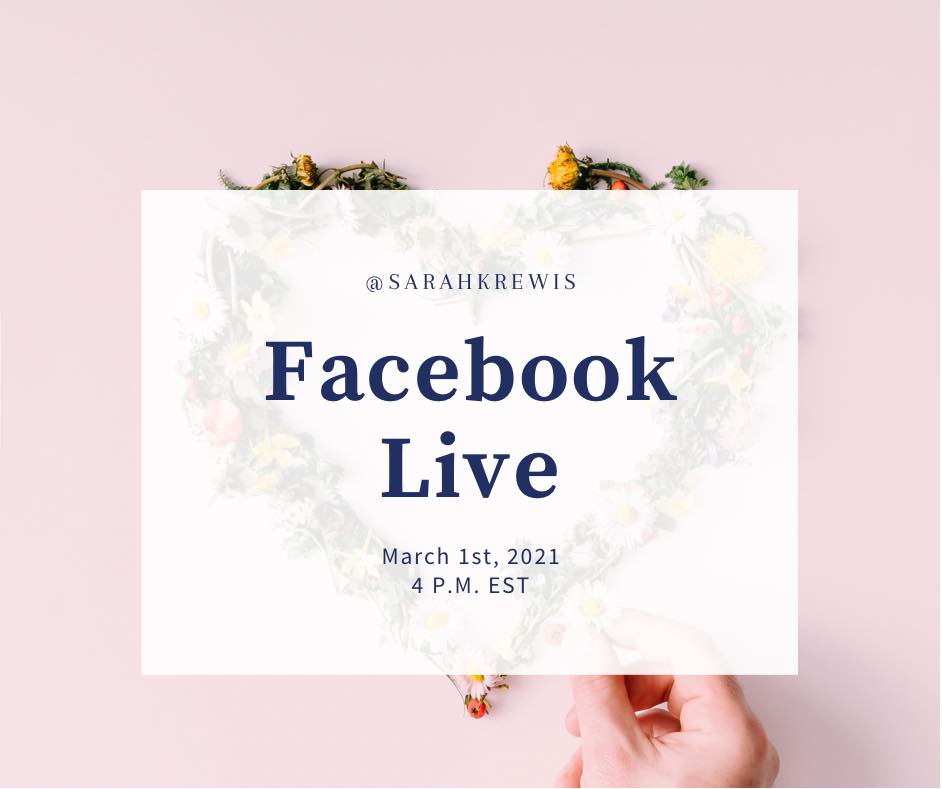
My friend and fellow author Sarah Krewis is planning a Facebook live on her author page on the first of March. She’s giving away a paperback copy of my book, Wherever He Goes. Follow her page here and mark on your calendar to join in! Thanks, Sarah!

taken from Sarah’s FB author page

I guess that’s all the news I have for this week. I’ll be drifting a little bit as I plot out my reader magnet. I always feel hazy when I’m not actively writing–but since I don’t have a team and prefer to stay hands on with most aspects of the publishing and marketing side of things, there will always be times between books when I’m doing admin and production stuff. I enjoy it all, but I do get antsy when I’m not writing.

Have a good week everyone, and thanks for reading!


February goals and what I’m doing this month.

I just wanted to say hello to everyone and give you all a quick heads up with what I’m doing this month. I will definitely finish the second book in my series by my soft deadline of Valentine’s Day. I’m at 66k right now and while I aim for 90k with these first person books, I’m at the point in the story where it will end how it will end. I have the rest of the book planned out and it shouldn’t take me long to finish it up.

After I finish, I’m going to learn MailerLite through their Academy. I’ve said enough about it on the blog, so I’m finally going to get that up and going, and while I do that I’m going to write a reader magnet to give away. That definitely won’t be a 90k novel, but it will be longer than a novella, complete and a standalone, and in the first person present/billionaire subgenre that I have decided to write in for the foreseeable future. I’m also taking Suzy K Quinn’s How to Write a Bestseller through Mark Dawson’s SPF University, and I’m going to write this reader magnet using the things I learn in her classes.

So I do have a few things coming this month, some of the “I don’t wanna” variety than really looking forward to doing them. The reader magnet will be fun, and I invite anyone to slap me if I even THINK about writing it to sell. I need something to giveaway. That’s a given. And the book before the one I’m writing now was supposed to be that magnet. It turned into a six-book series instead. Not good. There are authors who write a magnet to give away for newsletter subscribers and sell it too, but I’ve heard you can grab more emails if you are exclusively giving it away. On the other hand, all you grab then is the freebie seekers. On the other hand, I plan to put my books into KU and a lot of readers do feel that reading with KU is free, so I guess I’ll just have to take my chances and see what I get.

All I know for sure is:

  1. I need a newsletter.
  2. I need a reader magnet.
  3. Nurturing my list will be my main priority next to writing books.

2021 is the year to learn from my . . . I wouldn’t call the last four years of publishing a mistake, but I haven’t done things correctly, and the time to start that is now.

Also this month I’ve been dealing with a little anxiety. I don’t know where it’s coming from–other than the fact I’ve been trying to work too many hours at my job and still write as much as I always have. Due to some financial things going on, I had to go from part- to full-time last November. I’m fortunate in that I have been able to cut back my work hours just a little bit, and I hope that helps. I also have been sitting on a chair that is not made for sitting for so long and needless to say, it’s made my, ah, bottom a little sore. I think my anxiety latched on to that too, and I’ve been to the clinic a couple times for an ailment I simply don’t have. I need to stand up more during my working hours, that’s about it–and probably find a better chair to sit on.

Anyway, so I’ve decided to try a little counseling, and I made a tele-visit appointment with a counselor for the end of the month. I have a lot to talk through–working from home has been an adjustment–and a few other things. I don’t think one session is going to help me, but it’s a start in the right direction. I also need to take my health more seriously–I need to schedule a checkup soon for my girlie bits. I’m not a spring chicken any more, and my mom passed away when she was only ten years older than I am now. It’s not a pleasant feeling thinking about that. I’m going to try to be more proactive about my health in the coming months if it’s going to trigger my anxiety. I also try to do things with my sister and I walk with a friend every now and then (we wear masks) so I’m not completely cut off from the world because I’m working from home.

The main thing I need to remember is writing is fun, and while I still need to think of my writing as a business, I’m not going to want to do it for the long haul if I can’t enjoy it, too. I need to take a deep breath. Things will be okay.

How is your 2021 going? Let me know!


Learning Craft + Feedback

On Monday I had guest author Sarah Krewis on my blog and she talked a little bit about the importance of learning craft so you can put out the best book you can when it is time to publish. She mentioned the Centre of Excellence and the writing modules they offered. In a private message I asked her if an instructor gave out critique and she said not in a way that I would probably want, which led to the topic of feedback.

You can learn the craft all you want, read all the books, take all the online courses you can afford, but at some point you’re going to need feedback on your work. We don’t like to ask for feedback because it hurts when we hear that our writing isn’t as perfect as we want it to be or thought it was. But you have to keep an open mind when people are reading your work and be receptive to the idea that your work needs, well, work.

If you want to see a cute little Venn diagram, an author’s process should probably look like this:

This isn’t the best, spacing it out was a pain, but you get the idea. Feedback and reading are just as important as the writing part of the craft. I know authors who read read read and prefer to hide from their own writing by reading other authors instead. I know writers who write write write but don’t ask for one ounce of feedback. Then there are others who thrive on feedback and implement every single little change, but then that leaves no room for moving on to other projects because they’re looking for perfection they probably aren’t going to find.

I’m not perfect–I don’t read as much as I should, but I am open to feedback and I hired my first professional beta reader this month.

Where you do find feedback? Before the pandemic, looking locally was easy. A call to your public library probably would have hooked you up with some local writers and maybe a NaNoWriMo group that met up at a coffee shop on Thursdays. But since everything has moved online and to Zoom meetings, it might be a little harder for you to find something in person. That might not be a bad thing for us introverts, but putting yourself out there is the price we pay when we said we wanted to be an author.

If you want a professional opinion, hiring a paid beta reader may be the way to go. They will give you more than “It was great!” They dig into story and characters. I’m using Mary Dunbar, and you can find her website here. She doesn’t list beta reading prices because she said she’s just been thinking about adding it to her list of services. Contact her through her website and ask if there is way she can help you with what you need. She’s an editor, too, and she critiques queries. I’ll be blogging about my experience with her in later blog posts. Another paid beta reader that I may use in the future is Kimberly Hunt from Revision Division. I’ve gotten to know her on Facebook and she’s gotten positive reviews. You can find her website here.

But if you’re a newbie writer, you may not be ready for paid services, and that’s okay. That’s where networking and forming relationships with your fellow authors comes in. It’s really important that your beta readers read and write in the genre you’ve written in. That way they can identify the tropes and tell you if you’ve hit the mark or if you’re too far off the path to keep your readers happy. There are a lot of FB groups that you can join and once you get to know a few people you can put it out there and say that you’ll beta read in return. As the diagram above shows, beta reading for someone else can be just as valuable as the the feedback you’ll receive.

What are some tips when it comes to finding and accepting feedback?

  • Know what you want. A beta reader reads your book after it’s finished. Some will point out typos, grammatical errors, etc, but you may not be in a place for that and just want general feedback. Let your beta reader know you want overall feedback like plot holes and character arc opinions and advice. An alpha reader reads as you write it, say chapter by chapter. They make sure you’re steering your ship in the right direction and can catch inconsistencies as you go along ensuring by the end of the book you don’t have a huge plot hole making you scrap half the book. It’s up to you and what your skill level is at and what you feel you need.
  • Remember you don’t have to take everything to heart. If you already know your plot, you don’t have to accept advice that’s different, unless you like it and think it will make your book better. We all have ideas and you can give six writers a writing prompt and come back with six different stories. It’s always going to be your book, but if your beta spots a plot hole and you choose not to fix it, that’s on you.
  • Don’t have too many opinions. Too many cooks spoil the broth and this is true for your book. Find one, two, maybe three betas in your genre that you trust that you know are good writers and listen to what they have to say. You don’t want to be overwhelmed with opinions. On the other hand, if they all have the same problem with the same thing, then you know that’s something you have to pay attention to. I’ve seen some authors confuse beta readers with ARC reviewers. While your beta readers may leave a review down the line, beta readers are not readers who receive an advanced copy of your book solely to leave a review. Two different readers.
  • If the relationship is not working, don’t force the issue. For whatever reason, you may not mesh with your beta reader. That’s fine. I wrote a blog post a long time ago about what to do if your business relationship with a friend goes south. You can try to be amicable about it, but hurt feelings comes with the territory. You never want to burn bridges in this industry because while it seems large, thousands and thousands of authors who publish every day, this is really a small industry and we all know each other. Word gets around and you don’t want to be that person who is known for not getting along with her peers. If the beta is too heavy handed or is too cruel to work with, simply say that you’re going to choose a different route and thank her for her time. An egift card for a coffee shop or 25 dollars to Amazon might ease some ruffled feathers. But be sure that when you beta read for someone that you aren’t the one being heavy handed. We all need kindness when giving our work to other people. It’s fear that keeps us from seeking out feedback in the first place.
  • Keep an open mind. Don’t waste someone else’s time. If you’re not ready to hear criticism, wait until you are. Betas, paid or for free, are giving you their time. Don’t waste it by being in a headspace where you aren’t receptive to their feedback.

If you’re new and don’t know where to look, try Googling writing critique groups. This article by thewritelife.com has a list and you can look at it here.

The Reedsy blog, a blog that I’ve referred to in the past that I trust, also has a list and you can find it here.

In short, writer eduction, feedback, and reading go hand in hand. As Sarah said in her guest blog post, there is no excuse not to keep learning, but you also have to know if you’re applying what you’ve learned correctly otherwise you could actually be unintentionally reinforcing bad habits that can take you years to break.

Good luck!

Where do you find feedback? Let me know!


Writerly things I’m enjoying right now!

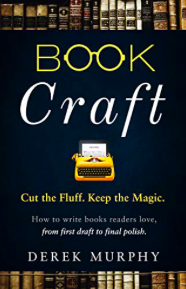
Happy New Year and welcome to my first blog post of 2021. I thought I would take this blog post as an opportunity to tell you about a few things that I’m enjoying this month! I know money is tight, and I do like to recommend low cost or no cost items on this blog. Read to the bottom to enter into a giveaway for CreativIndie, Derek Murphy’s new book, Craft Book, a book on, well, you guessed it, craft. It’s one of my favorite things this month.

Let’s get started!

Bryan Cohen’s Amazon Ad Profit Challenge
If you’ve read my blog at all, you’ll know that I am a fan of this challenge. Bryan has taught me what I need to get started with ads, and if I pay attention to ad spend there are very few months where I lose money. It take a little time and patience–comparing ad spend to royalties and pausing ads that are spending more than they are bringing in, but I’m just at the beginning of this journey and what Bryan teaches you is free. While it is a tactic to bring in students to his ad school, he DOES teach you enough to get started. I’m well aware of the webinars and infomercials that are full of “Information” but don’t tell you a damned thing. Bryan’s ad challenge isn’t like that. In the challenge he’ll teach you how to:

*contact KDP and add categories to your book and ebook to optimize the category ad placement in the ad dashboard
*ad a subtitle to your ebook to highlight subgenre or trope to your potential reader.
*teach you to write easy ad copy for the kinds of ads where you can add a hook
*find relevant keywords for your ads
*find a workaround if you published via a different platform than KDP and still want to run ads
*what to bid and what your daily budget should be to be profitable with ads
*teach you what conversion means. If you have plenty of clicks and no sales, something is wrong. He’ll help you puzzle out why your book isn’t selling.

The group also offers a ton of support. His successful Amazon Ad School students help him moderate the FB group page and answers all the questions! They also moderate his FB live segments. There is plenty of support if you missed something or need clarification.

Some information is the same, some is different as between each challenge, Amazon tweaks the ad dashboard. I participate in the background to glean new information, but this will be my 5th ad challenge, and I don’t think I can do anything more with the information he’s given me except 1) join his ad school and/or 2) publish more books.

If you’re interested in his next challenge, it starts January 11th, and you can click here for the signup website.*

*This is not an affiliate link. I don’t get anything for recommending this challenge to you.


The 2021 Author’s Planner
I’m not much of a planner, but when Craig Martelle from 20booksto50k mentions something, it’s worth taking a look. He posted about this author’s planner, and I went ahead and bought a copy. His link is for Lulu, and the book is spiral bound. That is great for not ruining a book’s spine if you need full access to write on the page. Amazon also offers one with a perfect-bound spine, meaning as with KDP it’s glued together. That’s not such a big deal if you need to save a little money and you don’t mind cracking a spine to have access to the whole page. I’m pretty hard on my books and cracking a spine never has bothered me. (Don’t look at the covers of books I’ve taken into the bathtub!)

Taken from the Amazon Product page

The book looks fun and helps you stay on track with writing, publishing, and your newsletter. I’m excited because I have a lot going on in 2021, with new releases, and new “pen name” and the start up of a new newsletter. It’s difficult for me to pivot this way, but I’m going to use what I learned in the last four years to really make a mark with my books. Having a plan will go a long way to keeping me accountable!

Here is the link for the Amazon perfect bound edition.*

Here is the link Craig posted for the Lulu spiral bound edition.*

Let me know if you buy it and what you think.

*These are not affiliate links. I don’t get anything for recommending this book to you.


Five-Minute Focus by Craig Martelle
Speaking of Craig Martelle, what I’m really enjoying these days are his 5 minute focus videos on YouTube. He takes 5-6 minutes to talk about something like hooks, blurbs, covers, motivation, whatever and he’s just a lot of fun to listen to. He’s making a lot of money with his books, and he has a right to be excited, but no matter where you are in your author journey you have a lot to be excited about too, and his enthusiasm is infectious.

Here’s a taste of what I’m talking about. Listen to them all at once, or one a day. He seems to record them regularly. I also like the talks between him and Michael Anderle. If you want to listen to two men talk successful indie publishing with a huge dose of gratitude for what they have, these are your men.


A Book on Craft
Last, but not least, is Derek Murphy’s book Book Craft: How to write books readers love, from first draft to final polish. I’m only fifteen percent into it, but I’m really enjoying it so far. It’s not stuffy like some nonfiction books, and I like his voice and his stories. Just a warning though, if you don’t like books that tell you to write to market, you may not enjoy this one. Derek is all about helping you write a novel and while he wants you to write your passion project, he also wants to guide that project into a book that readers will want to read.

Me reading this book is like listening to a preacher while I’m standing in the choir, but we all need to be reminded now and then that after our book is written and published, it’s up to the readers to decide if you’ve written what they are going to enjoy.

I’ve been in this business long enough (and have learned the lessons) that you can’t make it if you don’t write what readers what to read and package it in a pleasing manner. I’ve seen authors publish books in the double digits and barely sell any every month for the simple fact their covers are bad or the look inside is boring because they started their story in the wrong place.

While it’s not fair to leave a glowing review of a book when I’ve only finished 15%, I have a feeling I’m going to enjoy the whole thing, and I think you will too!

Here are the cover and the blurb:

Image and blurb taken from Amazon.

Everybody wants to write a book, but most authors fall short.

You have a gift, but it’s not enough. Deep magic isn’t a spontaneous explosion of creative energy. That burns too hot. It’s unstable and unpredictable. Real power comes from deliberation, skill and craft. But you need a guide to unlock a writing practice that ignites your true potential. This is it.

You have been told that writing is a type of magic, that all craft-based strategies are blasphemy. But smart authors recognize that even if writing is an art, it’s also a craft to be mastered. It’s time to peer beyond the veil, and unlock your unique brand of powerful book craft.

This is not a book, it’s an initiation. You’re here because you love the alchemical process where your creativity and inspiration bleed onto the page. You’ve tasted the power of using letters to communicate ideas and cast spells, bewitching readers and captivating them with the powers of your mind.

You’ve got a taste for it, but you want more. So you’ve sought me out, and here we are. This information took me decades to uncover, and I don’t reveal it lightly. Not every author is ready to hear the valuable lessons I’m about to share with you, but this book isn’t for them. It’s for you.

The truth is, there are things that great books have in common- and even more informative, there are definitely signs of weak writing, which can be easily identified and avoided. 

This book will help you to…

  • Plot your book without stifling your creativity
  • Hit crucial turning points to keep readers engaged
  • Improve pacing & backstory without info-dumps
  • Increase stakes, drama and conflict
  • Double your word count and stay motivated
  • Avoid common amateur mistakes & lazy writing
  • Heighten intrigue & suspense to keep readers invested
  • How to know your book will sell before you write it
  • Why readers stop reading and how to fix it
  • Simple plotting and outlining strategies so you can write faster 
  • Revise and edit your first draft and identify problems fast 
  • Save thousands of dollars on editing and increase book sales

Ready to move from the slush pile to the bookshelf?
Scroll up and improve your writing today!

If this is a book you think you’ll enjoy, leave a comment at the end of this blog post, and on January 11th I’ll choose a winner and send the winner a copy of the ebook.


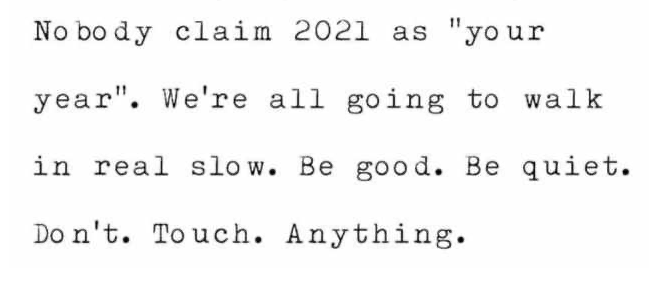
2020 is over and it’s time to kick the dust of your boots. There’s a meme out there that says you can’t claim 2021 as your year, but hell yeah, do it anyway. I have. 2021 is a fresh start to many aspects in my life, and I bet it is for you too! Hopefully these tools can help you succeed! Happy New Year!

What. Ever.

December! The last month of 2020 to get anything done.

There were a few memes/quotes around this year trying to bolster productivity and motivation like this:

Image found on Google search

I would imagine they came from places of good intentions, but really, all they did was make people who weren’t productive more ashamed of themselves. Even in this blog I tried to, maybe not bolster your spirits because I’m a little too blunt for something like that, but I didn’t want you to waste the year away either.

So whether you were able to write a book a month, or you’ve barely been existing, there’s only one more month left of 2020, and you have the chance to make the most of the last four weeks of the year.

What do I have planned for the next four weeks? I’m not calling it quits quite yet, and I have a book to finish up. I’m at 63,000 words, and I would love to write another 20k in the coming two weeks before Christmas. One of my big 2020 goals was to learn a newsletter aggregator, and I even went as far as to set up an email address for this website and to sign up to MailerLite. I haven’t watched any of the tutorials on how to use that product yet, and I do not have a newsletter sign up link yet. I still have four weeks to accomplish this, and I need to so I can put the link the back of this WIP when I publish it. I guess I’m balking because then I have to learn how to use Bookfunnel and StoryOrigin, and while I miss going to school, studying up on those platforms is not something I’m looking forward to. On the other hand, once I learn them I won’t have to do it again.

On Black Friday, Mark Dawson bundled three of his courses and I purchased them, including the one by Suzy K. Quinn on how to write a bestseller that I’d been drooling over for a little while. I don’t have a timeframe on when I want to get those classes done, but I have started Suzy’s course, and it will be very interesting as well. I like studying what goes into a bestseller–what makes books popular. I’m taking almost a scientific outlook to that course, picking apart the elements of a bestseller. Always keep learning. You never know what will help you later.

I’ll keep up writing this blog through the month of December (I’ve already seen some 2020 recaps, but I’m not there yet). I rarely go on Twitter after I announced my break, and I don’t miss it. I miss a couple of friends on there and in 2021 I may start a new and more intimate account. I’ll lose big followers like Jane Friedman, Lindsay Buroker, Mark Leslie Lefebvre, and Robin Cutler among others whom I have gotten to know over the past five years. Or I may just leave it alone as Twitter wasn’t giving me anything constructive anyway.

I did try to stay motivated during 2020, but like everyone else, I went through some rough patches. Not that my life changed all that much. I’m an essential worker, which means I never had to worry about my job or where rent was coming from. My only change there has been being able to work from home, an option that hadn’t ever been available to us before. I’m surprised by how much I like it, but it could have something to do with the cat company on my desk.

This was my favorite meme to come out of quarantine.

My sister and I used to have Tuesday movie night, but we had to change it up and we watched the Marvel Universe movies in order because I had never seen them before. That turned into a regular Sunday thing and it kept us occupied for a few months.

I’m decorated for Christmas and my cat loves to sleep under the tree:

This post does sound like a recap after all, but I’ll go into all my highs and lows at the end of the month.

There are four weeks of 2020 left. I’m going to make them count, and I hope you do too!


eBookSoda Promotion. Worth Your Money?

Image taken from website

Marketing your book feels harder than actually writing the silly thing, and we’re all looking for inexpensive but effective ways to promote our books. I tried eBookSoda last week, hoping to promote His Frozen Heart because of the holiday season. Amazon is turning my ads down now because of their “suggestive pose” and I’m not going to swap out covers just to appease the Zon. I have to keep reader expectations in mind, and them showing a little skin clues readers in this is going to be a steamy read. Amazon tightening up their creative guidelines has more than just me in a pinch, and we’re all searching for ways to replace the ad platform.

Anyway, so while listening to a podcast, the interviewee, Sara Rosett, reminded me of the promotional site and I recalled they weren’t that expensive. For $29.00 you can buy a spot in their reader newsletter and get your book in front of new readers. Similar to eReader News Today, or Free- and BargainBooksy, this is a one-time fee for a one-time promotion.

Maybe in the case of promotions the saying, “You get what you pay for,” is accurate. eBookSoda didn’t do much for me.

Besides lack of sales, the biggest problem I had is they didn’t proofread my ad. This is totally my fault and take responsibility. I should have been more careful with my ad when I created it, but they didn’t proofread it, either, and this is the ad that showed up in the newsletter:

I know the title of the book is my fault–I’ve done this in the past, especially when typing quickly creating ads in the Amazon Ads platform. But I was saddened to see that they didn’t fix it when creating the newsletter. This is a good lesson to proof your own work, but if you expect eBookSoda to also proofread for you, don’t count on it.

As far as sales go, I only sold three books on the day it came out, and nothing afterward. Usually I get a good bump in KU reads when I do a promo, but I didn’t get that either.

You can see from the photos that on the day of the promo, I made $1.28, and the next day $1.41. I didn’t get a bump in KU reads, and those royalties are from a book set at $.99. Overall, for the month of November, I’ve made $12.33 for the first in my series, which definitely is not something to brag about. I don’t have any Amazon ads going right now, mainly because the ones I’ve submitted have been rejected by the AMS team. I was hoping turning to paid promos instead of ads would bolster sales, but it did not.

One of the few pros to the promo site is that there were only two other books with mine in the newsletter sent out that day. When you purchase a FreeBooksy or BargainBooksy through Written Word Media, your book is grouped with several, and it’s up to your book cover and ad copy to really hook a reader into clicking because there is much more to choose from.

I don’t know if eBookSoda’s claims are true–that they can reach 26,000 readers–but I didn’t go for the extras you can pay for with your promo: Twitter and Facebook. They ask if your cover is explicit to not choose the Facebook promo option, and I didn’t because I assumed they wouldn’t like my cover and didn’t want to give eBookSoda a hard time. Possibly if I had been able to choose the Twitter and Facebook ad-ons ($9.00/each) I could have had a more successful promo, or I could have spent another $18.00 on nothing.

At any rate, I won’t be trying eBookSoda again, and I will save my dollars for other promo sites even if they may be a little more expensive.


As for my Amazon ads, I’m up $30.00 total for the month, but I have paused a few of my ads because they are spending more than they are making. Mostly I’ve been writing my next book, and for now I’m going to give up on pushing these books for the holiday season. Since I’m veering off in a new direction, I’m not sure how much time and money I want to invest in my 3rd person past novels anyway. I’m getting really bummed out Amazon is giving me a hard time with my covers, and I’m thinking about going wide with them and just kind of letting them go. I’m not giving up on them, exactly, but I may have found everyone in KU I’m going to find and perhaps wide now would be a better fit. I do remember I had some kind of weird anxiety with my books on other platforms, and I’m not sure what brought that on but it’s worth remembering. There’s something comforting about having all my books just in one place, but having all your eggs in one basket can also be anxiety-inducing for others.

There’s no one answer, unfortunately, and I don’t have a clear path for what I want to do in 2021.

When I try another promo site, I will let you know! Until then, have a wonderful conclusion to 2020, and I will talk to you again soon!

Until next time!


Catching up with what I’m doing and Bits and Pieces of Publishing News.

Lately my blog posts have been a hodgepodge of little things to make up a whole post. It’s tough when you don’t have a lot going on, and sometimes I feel like my blog posts are the blind leading the blind. I don’t have much to offer in way of advice, particularly because I haven’t found anything that is working for me sales-wise.

Anyway, like everyone else, I’m glad the election is over, though I”m sure we’re far from finding peace. Hopefully that won’t deter readers from reading like it has over the past few weeks. I can’t tell you the number of authors who have complained about sinking sales. It is what it is. I’m in the hole with my ads this month and I paused all of them and created a few new ones to target holiday romance for my series. What’s really nice is that Amazon now lets you run ads to your series page which allows a reader to pick up all the books with one click.

We’ll see how that goes. I haven’t done the math to look at read-through for all my books, but I can do that now, out of curiosity. The last book was published in May of this year, so I only have five month’s of data too interpret. Using the read-through instructions and formula by Malorie Cooper on Dave Chesson’s Kindlepreneur website, read-through is dividing the copies of the second book sold by the copies of the first book sold. You have to do a little math if you’re in KU.

Remember, the number of KU pages read divided by the number of KENPC pages in your book will tell you how many books those page reads equal to.

Doing the math, I have sold 214 of the first book in my series between June 1st 2020 and October 31st. That total includes both sales and KU pages read.

I have sold 97 books (together with sales and KU pages read) of book two.

That’s a read-through of 40%. 40% of my readers who read book one went on to read book two.

A profitable series will have a strong read-through for all the books, and we can calculate read-through of book two to three doing the same math:

Book two’s sales and KU page reads was 97 books. Book three has a total of 76 books sold. (Together with sales and KU reads.) That makes read-through (76/97=) 78%

And read-through from book 3 to book 4 using all the same formulas: 88% read-through. Meaning 88% of people who read book three will finish the series and read book four.

According to Mal Cooper, my 40% read-through from book one to book two could indicate a problem. I already know from reviews that the reception of my male main character is lacklustre at best. As I’ve said in the past, a physically damaged character is neither sexy nor romantic. Besides trying to market the book as a beauty and the beast retelling, there’s not much I can really do. His injuries make the whole book. It’s nothing I can go and change to encourage read-through. My sales from book one to two will just have to be a lesson in the future. It’s also a reminder if you’re going to invest time in a series, you need to hit it out of the park or the other books won’t matter. Your book one won’t be good enough to entice readers to read them.

I will keep an eye on my ads, make sure they stay profitable. With the holiday season approaching, if I can grab a couple sales and come out ahead, it will be worth advertising.


photo taken from their website

In other news, IngramSpark has decided to give ISBNs away if you publish through them, like Kindle Direct Publishing has done all along. The only problem with that is if you publish on Amazon and use their free ISBNs, you can’t turn around and use those on Ingram. Then you take the free ISBNs from Ingram and all of a sudden your book is listed under many numbers, and that doesn’t sound good to me.

I realize buying ISBNs in the States is a big pain, not to mention very costly, but when people say you need to invest in your business, this is what they’re talking about. You need to protect your work. I buy my ISBNs from Bowker and use the same paperback ISBN on both Amazon and Ingram. That way my paperback is listed under one number. The one I paid for that belongs to me. That’s important to me. I also use an ISBN number for each of my ebooks. Some will say that’s a waste of money because Amazon will assign your book to an ASIN number, but then if you’re wide, you can’t use that ASIN number as that belongs in only Amazon’s system. So there again, you have different identifying numbers for every ebook platform you publish on.

There is has been argument in the past that you can’t use the same ISBN number for a .MOBI file and an ePub because they are different formats. Then you have people who say that a digital file is a digital file. When I went wide, I used the same ISBN number for my ebooks across all platforms and nothing bad happened. I can’t imagine this would even be an issue now that Amazon asks you to upload an ePub to their platform instead of a .MOBI file.

You can have Ingram distribute to Amazon, but I’ve heard of people having trouble with their books being available (listed “out of stock” instead) and you don’t have access to your KDP dashboard and you can’t run ads if Ingram supplies your books to KDP. It’s always better to go direct where you can. It might take a little hassle, but then, we went indie to stay in control, didn’t we?


I’m 20k into my new project, about a man tasked to finding a husband for his boss’s daughter in exchange for a portion of the company he helped build. It’s going well, though I feel like no matter how much planning I’ve done with this book, I’m pantsing it. Maybe I’m just tired or maybe I’m still not used to writing in first person present, but it’s coming along, and if I keep up the slightly faster pace than a NaNo participant, I should be done with it by the end of the month. We’ll have to see if that happens. I have a lot coming up in the next couple of weeks, namely a longer work schedule, Thanksgiving, a couple of birthdays and possible jury duty. I write when I can, though, so if not by the end of the month, by the middle of December, for sure. Here’s a sneak peak of a sliver of a scene I wrote the other day. There is potential for spin-off books, but I still have my 6 book series I need to polish to release next year. I’m grateful there is so much to write about.

Man in suit leaning against a grey stone wall. Text:
I meet his eyes. They’re hard, bits of frosted green glass. “We’re beyond that now, don’t you think?”

We aren’t talking about sex, we aren’t talking about love. We’re back to his fucking fifty percent and what he’ll do to get it.

“I—”

“I’ll fulfill my end of Dad’s bargain. Sit back and collect.”

He nods, turns to go.

“Don’t come back, Colt. There’s nothing between us anymore.”

“Don’t fool yourself, Elayna. There never was.”
created with Canva Pro. Photo purchased on depositphotos.com

That’s going to be all for today! I hope you have a productive week! Good luck to those participating in NaNo!

Tuesday Thoughts, Large Print, and Getting Rid of Twitter

Hi, everyone! I know I usually post on Mondays, but to tell you the truth, I’ve been struggling with finding things to blog about lately. I go through that sometimes. I feel like anything I have to say has already been said a million times by someone else, and especially when it comes to writing and publishing, I don’t have much new to share.

I did decide to take a Twitter break, and if you follow me, you can either friend me on FB, or like my FB author page and we can touch base that way. I just couldn’t take the negativity anymore, and it was bringing out my own negativity toward other people. Twitter as a whole is very emotional, and I just can’t handle how sensitive (and insensitive) people can be and when they lash out because of it. I’m not a fragile flower, but geez, there are only so many times I can be “put in my place” without feeling it. To be perfectly honest, I don’t feel like a whole lot of people are writing over there anyway, and it’s not such a great place to find supportive writers who want you to succeed. Last week, I made a graphic and congratulated an author on her release, and she never bothered to retweet it. I think that was the start of me being so discouraged I just wanted to leave. If you can’t support me supporting you, then why are you on there?

twitter logo bird with a red circle through it. no more twitter

I didn’t delete my profile or deactivate my account, but I did pin a “see you next year” tweet to my profile and I deleted the app off my phone. I logged out on my laptop to remind myself when I go on there just to go on there that I’m trying to break the habit. I’m sure it’s one of those things where I’ll go through withdrawal for a few days and after it’s over I’ll feel better.


I blogged about doing large print for The Years Between Us, and I got the proof in the mail the other day. It looks great! I approved the proof and I didn’t have any problems with KDP flagging it as duplicate content. I may do some other books as time allows, though Amazon has stopped putting Large Print as a buying option on the book’s product page. So even though I know there are visually impaired people who would appreciate a Large Print book, I have to weigh time versus return on investment. In the scheme of things, doing the Large Print didn’t take very long, so I could do most of my backlist in the next year or so if I did one per month. We’ll see how it goes. I buy all my own ISBNs, and I have to keep in mind that expense as well. With the way Ingram has been glitching lately and not accepting Vellum files, this book is only available on Amazon, and I didn’t check the box for expanded distribution. I’m impressed that I could price it at 14.99 and still make a couple dollars. In expanded distribuion, I would have made fifty-six cents.


I’m still editing my series, and I suppose that’s going to be something you’ll hear from me for the next little while. I get discouraged when I think about needing to figure out newsletter stuff. I’ve looked around StoryOrigin, and I don’t think I’m going to be using it for right now. I feel like authors forget that cultivating a newsletter list is more than just getting people to sign up for it. You’re supposed to be collecting emails from readers who are going to be fans of your work and support you. I may get the newsletter stuff figured out so I can encourage them to sign up in the backs of my books and aim for as many organic signups as possible. I don’t want to lure readers with a free book to sign up. I know that’s the thing to do, but freebie seekers will cost money eventually because you’ll pay for them to be on your list but they won’t buy when you send out email blasts about a new release.

You guys, I know the rules, but I’m tired of playing this game. I just wanna write and make money doing it. Yep.

Well, I don’t have much else. I did Bryan Cohen’s ad profit challenge, but he didn’t offer anything new from what he showed us in his last challenge. I don’t think I’ll be doing any more of those, though I have met some nice people doing them.

I’m always on the look out for new non-fiction to read, but I haven’t been reading much since I’ve started working from home. It’s a lot easier to get words down now that I am, and I’m reading less. Which is probably why I’m all dried up when it comes to blogging. That said, I’m still listening to podcasts, and the Six Figure Authors podcast has Sara Rosett on this week. She wrote a non-fiction book about writing a series. Since that is one thing I’ve managed to make myself bend for (I prefer standalones) I figure anything that could make the process more tolerable (and profitable!) I need to look into. I ordered How to Write a Series, and I will tell you how I like it. I didn’t realize there is also a workbook that goes with it until I accidentally clicked on it trying to grab the link for you all. Check them out!


If you want to listen to her interview on the podcast, you can find it here:

Thanks for reading!