My Writing Plans & Goals for 2019

hello 2019

Lots of people feel like 2018 sucker punched them right in the gut. But to be honest, I think a lot of people felt like that about 2017, too. Each year may be better in some ways, worse in others, but it’s fair to say that each year brings about new challenges. Sometimes we can rise to the occasion and kick ass, and sometimes we can’t.

I got a lot done in 2018. I released two books I’m proud of–Wherever He Goes and All of Nothing. Each book brings me closer to improving my craft and realizing my goals of being a career writer.

I went through a divorce and came out, for the post part, unscathed, due to my kids, the support of my sister, and the love and a support of a special man in my life. We’ve had our ups and downs, too, and I hope in 2019 we have more ups than we do downs, but time will tell.

As far as my writing goals for 2019, it’s something that I talk a lot about on this blog. Write what you want, but don’t be disappointed if it doesn’t sell. So I’m going to follow my own advice. While my stand alones are doing okay (for the lack of marketing I do for them) there’s lots of evidence out there that series sell. I’ve seen this myself in read-through for my trilogy (at least when I boost up the first book with a promo).

That being said, it’s time to write another series. I’m going to set aside 2019 and write four books in my Bridesmaid Quartet. That subtitle may change–I may change it to The Wedding Party, or something else entirely as the wedding that brings this group of friends together will remain in the background and is only a catalyst for the things that happen. I’m even tinkering with making the Bride a matchmaker of sorts. These four books are in the planning stages, as you can tell, while I edit The Years Between Us. I’m going to edit my May/December romance, send it out to betas (if you want to read it, send me an email or DM on Twitter!) and more than likely put it on an extended preorder. I released All of Nothing on October 16, and I need to sit on The Years Between Us while I write my series. I won’t wait for a long time–I’m thinking maybe an April release–but I don’t want to publish it as soon as it’s done because then I won’t have anything for quite a while.

To make up for that time where I’m not publishing anything, I’m going to be doing a lot more blogging and maybe some Instagram posts in regards to my series’ progress.  I’ll be doing aesthetics, sharing more snippets than I have in the past. I’ll be releasing my character sheets for my characters. In short, I’ll be blogging about what goes into writing a four book series, and all the headaches that go into tackling 200,000-280,000 words.

Right from the start this presented a challenge because I already wrote about a group of friends with my novellas, Summer Secrets. Those were erotica, but still. It’s easy for a writer to write the same thing over and over again, so I need to be careful to make these different. Comparing my sexy novellas to this series will always be in the back of my mind.

plans and goals for the new year

Other things that will be happening in 2019:

I’ll be getting carpal and cubital tunnel surgery done on my left arm in January. The 10th to be exact. Progress on my series will only go as quickly as I can recuperate. I’ve heard from several people that it’s a piece of cake, and even my doctor said I’ll be back to everyday activities after two weeks. I’ll then be scheduling my surgery for my right arm.

If surgeries and recovery go according to plan, I’ll be attending the Sell More Books Show Summit in Chicago in May. I cannot wait to take a short vacation, meet some other authors, and learn how to sell more books!

I’ll be moving my list wide and paperbacks to Ingram Spark extended distribution. I blogged about that already, but since my books don’t drop entirely from Select until February, dispersing them wide and doing the covers to meet IS guidelines will be a project that will take a few months. I think I’ll be doing a lot of that during recovery as I’m hoping that tweaking my covers to fit the IngramSpark cover templates won’t be too complicated.

Learning a screen-recording software so I can record some barebones tutorials on how to make book covers in Canva. I scouted around YouTube a few months ago to see if making a full cover (back, spine, and front) for a paperback was even possible using that particular software. I didn’t find anything that had all the steps a newbie writer would need to successfully make a cover, and for it to actually come out looking nice.

Unfortunately, this isn’t going to be one of those things that is on the top of my list. First off, because I’m not sure how deep I really want to go into the non-fiction sector. There are some full-time writers who split their time between fiction and non-fiction, like Joanna Penn. I still have a day job, and if I have a few hours, I’d rather write my fiction books. But because I didn’t find anything about this topic, I think it would be a real help to the indie community if I could record a couple how-to videos. Especially since I’ve done it twice now and have the paperbacks to prove it can work. But I would need to find/buy software and learn how to use it. Then I would need to take the time to map out the videos and record them. I don’t know how to edit anything, either. So. Plus I’ve been tinkering around with writing an self-publishing self-editing book, and I don’t want to put my fingers into too many pies.

Mostly though,  I abide by the old, “Should you be writing, instead of . . . ?” question when thinking about doing other things, and the answer is almost usually “Yes.” It’s what I enjoy the most and what I hope to build my career on–my fiction books.

Because, after all, who doesn’t love a happy ending?

Happy New Year, everyone, and I hope 2019 goes very well for you!

the end

Author Interview with CJ Douglass

cj douglass author pictureI met CJ Douglass, erotica writer extraordinaire, on Twitter, and I was lucky enough for her to agree to an interview. We chat about writing erotica, the bad rep indie erotica has in the publishing community, and her real thoughts on Faleena Hopkins!
Make a cup of coffee, grab a seat, and lean in!

Let’s start!


pink panties1. For the most part, you write short fiction (novelettes, novellas). Do you think short work is easier or harder to sell? 
In my line of work (Erotica) the shorter the better! Which is what makes my recent fondness for only novellas somewhat unfortunate…

For pure smut, people seem to want to read something hot and short. Get a quick hit of the sexy and get out. I myself, though, like a little more story in there most of the time, and so my word counts have slowly been increasing. As my sales resultantly decrease. For less NSFW tales, however, longer works definitely sell better.

pink panties2. Your genre of choice is erotica. Do you find it hard to market? For example, Amazon loves to bury my erotica novellas in search results. How do you combat that? 
Amazon doesn’t let you advertise Erotica on their platform, so there the best you can hope for is to optimize your search results and pray.

There are tools for aiding in this (which I have not yet availed myself of, but plan to) but otherwise my main outreach is on Twitter. Not for advertising, exactly. I post promos, sure, but not that often. I like to put myself out there, let people get to know me – and one day perhaps those folks will check out one of my stories because of this relationship. Then another. Maybe even tell a friend!

Blogging is a tool many use – and I’m sure it’s helpful, but I just don’t have any writing energy left over for it! I do have a few free stories on my website that people can read to get a taste of what I have to offer in my paid-for work. Mostly though, yeah. Get my keywords right, and have as good a cover as I can create.

pink panties3. Indies have to push against the idea our work in inferior. Writers who publish poorly written erotica enforces this idea (and OMG, you know there’s some out there). How do you push back against this misconception? (For example, do you read craft books, have an English degree, hire an editor.) 

I don’t have money for an editor (my stories sometimes don’t make back the handful of dollars I spend on a cover image) but for anything novella-length or above I use beta readers, for sure.

I’ve spent my whole life reading and writing (I literally started reading novels at the age of four) so I have a sense of what the language should sound like. I took creative writing in high school (though my college classes were more science-based) and yes, I’ve read my share of craft books (and internet articles).

Odd as it may sound, screenplay craft really has helped me hone my skills. It doesn’t help with the prose, (that is down to my own dedication and extensive rereading and revision) but it does aid in the creation of the story itself. Indie books (not just Erotica, but all genres) tend to suffer from a lack of editing of the concepts and basic storycraft – even if it has been line-edited by a professional.

Making sure your plot and story (two different concepts, incidentally) build and flow well is of vital importance – and getting it right immediately lifts your work above the crowd (in my opinion).

Screenplays, being condensed stories, are good training in this particular art.

pink panties4. Will you ever write longer work? Perhaps a full-length novel? 

Funny you should bring that up! I’m getting a draft of my novel ready for beta readers as we speak. It’s an epic, post-apocalyptic tale – but a very heightened one, that should be fun and empowering as well as dark and depressing. I’m really excited about this book, as it’s a concept I actually came up with when I was thirteen or fourteen, and have only recently dug back out and developed properly.

pink panties5. How did you become a part of Writer Twitter? Do you find it beneficial in sales? How do you like the writing community in terms of support?

I resisted Twitter for a long time, actually. It seemed pointless to me. How wrong could I have been? I have met some of my best friends there, and the support from my peers has been priceless.

You also get a chance to connect with readers (both your own and others’) to share in the joy and to see what people like.

As for sales? It has a certain impact, for sure. I’d venture to say that a good chunk of my meager sales came from letting people know about the stories on that platform. I doubt Twitter is useful as a large-scale marketing tool for books, however. It’s more for generally making people aware of your presence than specifically selling your work.

pink panties6. You told me in a couple of Tweets you design your own covers. Can you take us through the process? Where do you find your inspiration, photos, etc. 

The process, generally, is me hopelessly moving images around in my template until something looks half-way decent! Usually, I’ll have an idea in my head – and then can’t find any images to fit that general concept. I then settle for something which is not at all like that first notion, but which suits the story anyway.

When I am planning ahead, I browse for photos (either free ones on places like Pixabay, or cheap ones at 123rf.com) first and allow them to inspire me for a good cover idea. This way, I’m not fighting a preconception, but can evolve a cover idea based on the available
images.

If I had any design training, I could tell you why something looks right in a certain place, and more easily find that balance. As it is, I haphazardly arrange elements until they “feel” right to me. I also involve my Twitter followers in the process sometimes, too!

pink panties7. You have a book titled The Cocky Author. Is this a hat tip (or perhaps a sneer) to Faleena Hopkins? Can you share your thoughts on how all that went down? 

Cocky Romance Author was the quickest I’ve ever written a story.

When Faleena Hopkins’ now-notorious copyright scandal came to light, I immediately wanted to thumb my nose at her for it – despite not generally being a Romance author. (I have since written some stories that might be classifiable under that banner, however.)
I knew if I was going to do it, I’d have to do it quickly. This wasn’t about creating a work of art; I was making a statement.

So the next day, I typed up the 9,000 word story (it was supposed to be shorter, but I found myself unable to write something without a good underlying character arc) and cleaned it up a little to post that evening. I wasn’t the first to get out a protest “cocky” story, I don’t think, but I was right up there. I made the story as cheap as Amazon would allow me to (99c) because it was not about profit, but about activism and generally making noise about this divisive issue.

It should be obvious to anyone that a common descriptive word cannot be copyrighted in this way – but it did not stop Miss Hopkins or those following in her footsteps from doing precisely that.

Thank goodness these spurious claims keep getting shut down – eventually.

pink panties8. You run your website through Wix. How has your experience been? 

Wix is a generally decent site builder, I think. Better than some I have used. I only have a free one for the moment, though I think paying for it would allow the site to be found in search engines. Hard to justify the expense for now, though. What it needs right now is an overhaul! I’m still using the very first template I threw together, and really have to get it redone. Whenever I can find the time…

I love being able to host a place that gathers together not only links to my books (Amazon does that already!) but lets me include free stories that give potential readers a place to sample my work in tales that are complete – not mere snippets of a longer story.
Whether it helps my sales or not I can’t say, but theoretically it ought to be useful for curious readers!

Thank you CJ! It sounds like you have a lot going on right now! Thanks for taking the time to answer my questions and explain a little bit about your writer’s life. 🙂

You can find CJ on Twitter, Amazon, and Goodreads! Check out her author website for the free goodies, and as always, don’t forget to sign up for the giveaway! It will run for a little bit, so don’t forget to tell your friends.

Thanks for joining us, and check back when I talk about shopping in your local indie bookstore, and how my Freebooksy promo did for All of Nothing!

Until next time!


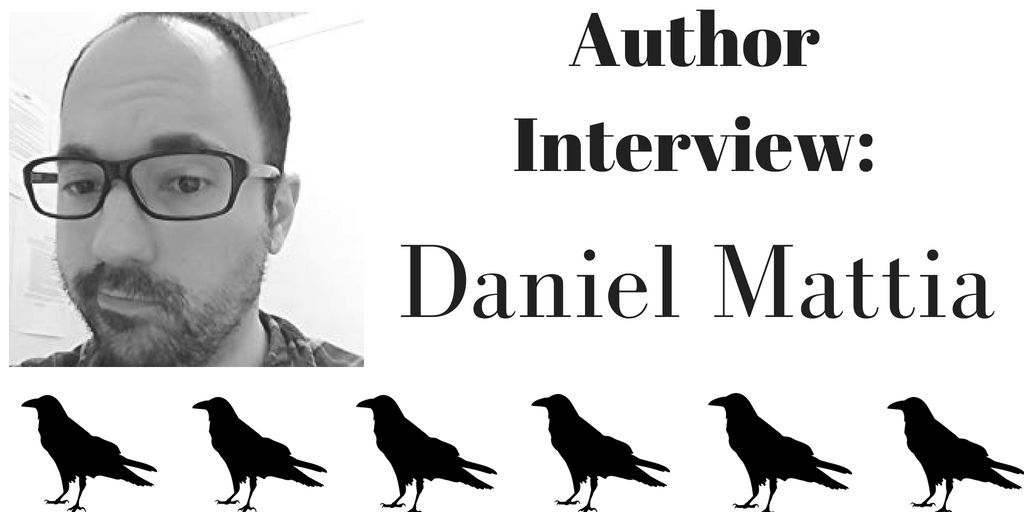
Author Interview with Daniel Mattia, Author of Debut Novella In Crows’ Claws

author interview daniel mattia


Dan and I chit-chat on Twitter a little bit, and I asked if I could interview him, and he was amazing and said yes! Dan published his debut novella, In Crows’ Claws on July 7th of 2018. Writing and publishing is hard work, and everyone has a different experience when it comes to publishing. Listen in to see how he fared in the big bad world of indie-publishing!


crowHow long have you been writing? How long did it take you to write
In Crows’ Claws?

I’ve written almost all of my life. I’m 28 now, and remember writing short stories and tales all throughout my childhood. I continued writing throughout my early teens, then stopped for a few years until about 2010.

During that time, I was at the tail-end of a severe bout of depression and found solace in my writing. It was during this time that I started crafting the fantasy setting of Fyrndell, the world in which In Crows’ Claws is based. I wrote quite a few short stories during this time, all of which have helped me to further flesh out and build upon this setting, but In Crows’ Claws is the first I’ve published.

I wrote the first version of In Crows’ Claws in 2010 or 2011 as a weekly web serial. It was a way to ensure I wrote on a consistent basis and the accountability of publishing a new chapter on a set schedule held me to that promise (for the most part).

The original serialized version took about three or four months to write and was fairly raw. That’s not to say it wasn’t written well-enough for publication, but it certainly didn’t meet my current standards.

crowWhat surprised you most about the writing process of this novella?

The emotions I had to invoke in order to represent the mindset of certain characters. I generally write without much personal emotion; I think there needs to be a sort of cold logic when you’re going through the actual craft of writing. I’m not writing how I feel, but how my characters feel, so it’s important for me, as the author, to be as emotionless as possible.

But as I wrote – particularly in the cases of Ahri and Nextiarc, two of the main characters in In Crows’ Claws – I discovered myself feeling how they felt in some of their specific chapters. Ahri, especially, starts off as an excited and optimistic young man who quickly finds out that the world of Fyrndell is a cold, dark place and the “truths” he felt he knew aren’t entirely accurate. The second-to-last chapter, especially, makes me tear up every time I read it – and, again, I’m not someone who has that happen often.

The chapters written from Nextiarc’s point-of-view surprised me even more. They were actually the most difficult to write because, in order to write from the POV of a literal monster who not only enjoys killing but venerates the very act, I had to adopt a rather dark and violent mindset. I had to write his POV chapters in short bursts because writing in his mindset for long actually frightened me.

crowWhy did you decide to publish?

To prove to myself that I could. I have so many stories I want to tell, particularly in the world of Fyrndell, but I’m someone who often has a self-defeatist attitude and can easily give up before I even try. Forcing myself to publish a finished work (along with the encouragement of some close friends) was what I needed to do first before I could even think of repeating the process.

crowWhat was the biggest obstacle when publishing your novella? What did you do to overcome that obstacle?

Formatting. My workflow, and the software used, is atypical from the workflow used by many other Kindle authors. I had to adapt and figure something out for myself despite there not being much information available for how to do it. Luckily, I discovered the Kindle Create software, which helped me to format and publish the Kindle version without much pain – after, of course, I had converted the book to the proper file format.

crowWhat do you mean by workflow?

In this context, workflow basically means process. Like you were witness to on Twitter during my editing/formatting phase, I didn’t write the novella in Word so exporting from the software I used (yWriter, something akin to Scrivener) meant much of the formatting advice I found online needed some tweaking to apply to my situation. On top of that, I completed the last editing phase in Kindle Create instead of the actual doc, which was a stupid idea, since it meant the final editing copy was locked to a proprietary format and couldn’t be easily converted to a friendlier format, ie. a .doc or .pdf.

crowWith publishing your debut novella, what is one piece of advice you would pass on to a writer who is thinking about publishing for the first time?

Don’t underestimate the value of editing. No matter how much or how little editing your work needs, it will always be better after you’ve put some solid editing time into it. I’d recommend hiring an editor to do it for you, but there’s no excuse for not editing yourself if you can’t afford an editor. Do at least three editing passes in which you read every word and every line.

crowWhat is next for you writing- and publishing-wise?

In Crows’ Claws is sort of the spiritual precursor to what readers can expect from the next Tales of Fyrndell book. My next work will be a novel in the same setting that takes place in a distant kingdom under siege from an invading neighbor, eventually introducing readers to a cold war that’s heating up quickly.

crowWhat will you do differently the next time around?

I’ve already identified where in my workflow I need to make changes to make the formatting process easier and more simple. The next release will come out in both Kindle and paperback format and will (fingers crossed!) not be such a pain to format and release into the world!

Thanks for the interview, Dan! It sounds like we have some spectacular stuff to look forward to!


yWriter is a free writing program similar to Scrivener. If you have been thinking about Scrivner, but don’t want to pay, try yWriter. You can find it here.

Editing and formatting your books for publication can be kind of tricky. Dan isn’t the first author to . . . put it informally . . . mess up. Even after the books I’ve published, I still find shortcuts and different ways of doing things every time.

Formatting your Word file for conversion to download to KDP (Kindle) doesn’t take that long at all. I blogged the instructions here.

If you’re interested in reading In Crows’ Claws you can find it here.


In Crows’ Claws Description

“This desert is the domain of death.”in crows claws cover for blog

The world of Fyrndell is a place of ancient powers, myriad races, and untold secrets. It is a world where gods may or may not exist, where heroes are few and far between, and where technology progresses at a haphazard pace.

IN CROWS’ CLAWS tells the story of two opposing armies as they race across the continent to a recently-unearthed desert tomb believed to be the final resting place of the goddess Konia. Read the letters sent home from Ahri Vestesson, crowkeeper for the Order of the Orthodox Knights of Fyrndell’s Crusade Army, as he wrestles with matters of faith and purpose while longing to return home to his betrothed. The letters of Marshal Taves Khest, veteran general of the Imperial Expedition Force of the Mhedorian Empire, will demonstrate his duty and ability while he leads his army to and through the desert to claim the glory of capturing the Tomb of Konia in the name of his empress.

But the desert holds many secrets and even more dangers still, for both armies will encounter a brutish and violent warband sworn to the service of Tavradyss, God-Prince of Conflict, and led by the even more vicious Nextiarc.

IN CROWS’ CLAWS is a tale full of action, ambiguous divinity, and heartbreak as three armies converge on the Tomb of Konia, desperate to lay claim to its hidden secrets…


Check Dan on these awesome platforms and thanks for reading!

crowAmazon   crow  Goodreads  crow  Twitter  crow  Facebook crow

Whine a Little . . . Over There

There’s been lots of whining on Twitter lately. More specifically, authors whining about not seeing books sales. Even more specifically, authors not seeing their books sell.

Maybe it’s because we’re in the dog days of summer, or people aren’t looking forward to school starting, or the crap we’re all going to have to deal with when THE HOLIDAYS start in full-swing October first.Dog Days of Summer

But whatever it is, it needs to stop. Because YOU, and nobody else but you, can make sales happen for your book.

Mostly, this is on Twitter. I can say it louder for the people in the back. TWITTER ISN’T FOR SELLING BOOKS. If you’re a member of Writer Twitter, you’re a member of WRITER Twitter. There’s a reason why it’s called that. Because we’re writers. Join READER Twitter. It’s gotta be there somewhere. Maybe #amreading is wedged between #IhateTrump and #turtlesareweird. If you’re convinced Twitter is the only way to sell books, or it’s the only way you want to try, break into the #amreading crowd. Or try. I’ll leave a light on for ya.

But if you want to take stab at moving books instead of whining about it, explore these ideas. First though, you need to take a look at your book.

  • Cover needs to be decent. Needs to depict the genre, needs to fit in, but stand out (in a good way.) Join an FB cover group and get some critiques. Taking a second look at your cover and if it’s not up to snuff, fix it. It’s killing your sales before they start.
    Books to consider:

    Cover Design and YOU!: Dos, Don’ts, and Choices
    Why Does My Book Not Sell? 20 Simple Fixes (Writer’s Craft)

  • Make your blurb awesome! This is easier said than done. Bryan Cohen is great at this. He teaches webinars and he runs a business doing this. And he makes very good money doing it. But he shares his knowledge, so don’t just moan you don’t know how to do it. Read about it. You’re a writer. Research. Here’s his book. He breaks it down so you can do it, too. With his guidance, I write my blurbs in half an hour. Here’s a Book Description Critique with Bryan Cohen hosted by Reedsy. Watch it.
  • Make sure you have a decent title. No one told me this before I published, and now my very first book has a stupid title I can’t change because I don’t want to waste the money I spent on my ISBN number. If you don’t have any reviews and didn’t purchase your ISBN number, you can change your title. Changing your title and ISBN number will lose you reviews so if you only have one from your best friend Angie, she’ll probably post it again if you republish with a better title.
    Grab some ideas from Dave Chesson; he’s got some good ones.
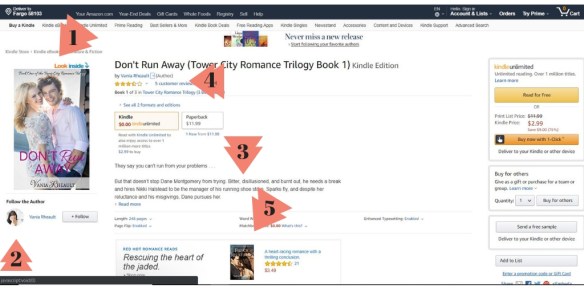
  • Make sure your “look insides” (first sample pages) are decent. This can make or break you if all the other parts about your book are spot on. If you don’t have a solid POV, if you have typos, if your formatting is messed up, the best cover in the world won’t save you. Try to get your hook within the first few pages of your book so it’s included in the look inside. Turn that browser into a buyer!

Now that we covered that and your book is up to par, you’ll need to ask yourself what you’re doing to help your book sell. Tweeting every day isn’t going to help. So what can you do to spike sales?

  • Are you spending any money?  You have to spend money to make money. I’m not kidding. Lots of people are like, “I don’t have any money to put toward selling my book.” Then you’re not going to sell your books. No business has ever opened that didn’t need seed money. Investors. Start-up money. You buy stock for your shelves, you fork over for rental space. You pay for wages for your employees before you’ve even sold one thing. Your book isn’t any different. Nobody ever went into business for themselves because they needed money yesterday. Starting a business is a lifelong endeavor. What can you put your money toward?

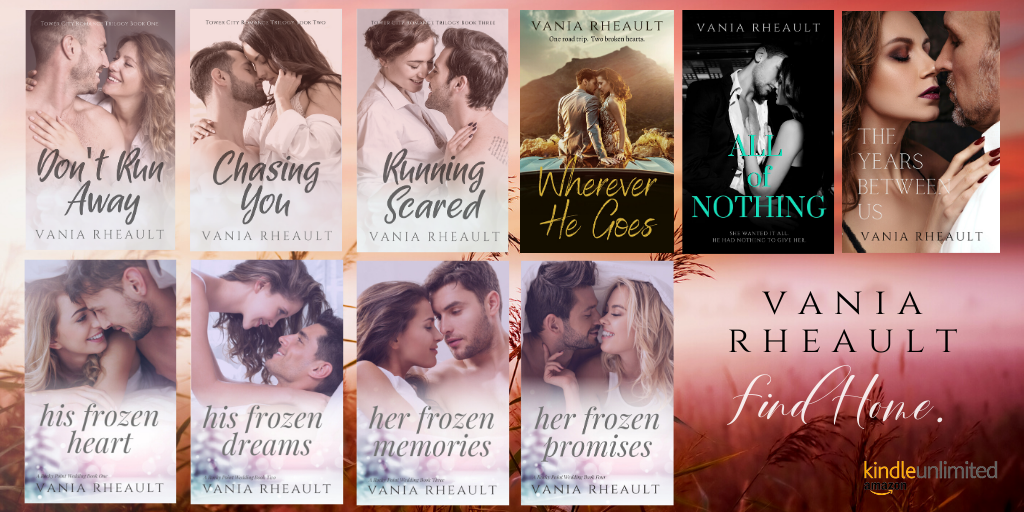
    *Pay for promos. I spent 80 dollars to give away 4,000 copies of Don’t Run Away in a free book promo for FreeBooksy. It got me some reviews, and lots of KU reads for the whole trilogy. I made my money back and then some.

    *Pay for giveaways. Goodreads did away with their free giveaways but because you have to pay, the market for giveaways isn’t so saturated. People have debated as to whether or not it’s a good thing, but I think it is. I haven’t tried them yet, but in the spirit of trying one new thing with each new release, I’ll be trying it when I publish All of Nothing this fall. Read about them here.

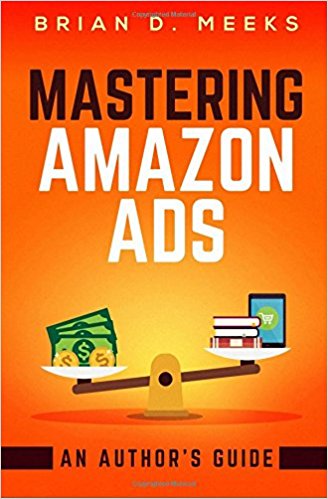
    *Pay for ads on Amazon. This isn’t as scary as it sounds. I’ve been blogging about my experience. It won’t break the bank to give it a try, but it’s important to do it correctly. Brian Meeks has a wonderful book about it. Amazon changed the platform a bit, so his instructions are already outdated even though his book is only a year old. But his advice is still as good as gold, and just as valuable.

    *Pay for ads on Facebook. These are trickier than Amazon ads. At least, I’ve read that they are. I haven’t tried Facebook ads, and if you don’t have the money to spare, I would suggest going with Amazon ads first. I’ve spent under five dollars experimenting with Amazon Ads. But if you want to try FB ads, again, do it correctly. Michael Cooper has a super great book about it. It’s important to try ads correctly, otherwise you’ll blow through money, claim they don’t work, and you may write off a great way to let people know about your books!

    *Pay for a blog tour. I used to hear a lot about these two years ago when I joined Twitter, but not so much anymore. You don’t have to pay someone to set up a blog tour, but if you pay a legit person they’ll know the best blogs to submit your book to. I’ve never tried one of these. They’re time-consuming. Either you have to fill out an interview sheet or compose a guest post for that blog. If you’re doing a full tour, that could consist of anywhere between 5 to 20 or even more blog sites. That’s a lot of guest blogging and interviews when maybe you should be writing your next book.

    *Reviews. If you do this in a legitimate fashion, this can be a coup for you. I have not tried it because the service I wanted to try distributes the books to readers through BookFunnel and that goes against KDP Select’s terms of service. I pulled Wherever He Goes out of Select to try this review service, and it comes out September 3rd. It wasn’t doing well in KU anyway, so I didn’t see the harm in trying. I’m going to try Happy Book Reviews. I’ve heard good things and so-so things about results. But if you have a good book with a good blurb and good cover, and the plot/genre isn’t too weird, you may get good results. Give it a shot.

  • Are you writing more books? The best marketing you can do is release new books. Lots of debate on quality versus quantity, but if you just can’t scrape up the cash to put toward your book’s promo, at least writing and releasing is free. *As free as you can get without spending money on cover, editing, etc. I’ve heard you drop off the Amazon algorithms after three months, so you want to release something every three months. Try releasing tie-in novellas. Or just dig in your heels and write the next book. I see lots of people trying to build careers on one book, and that only works if you write a non-fiction book and your career is already based on that book. Readers expect more from you. Keep them happy.
  • Offer to guest blog on other people’s websites in your genre. Ask “up.” Someone in your genre who has more followers than you. Someone whose website gets a bit more traction than yours. This is where your tweeting should come in handy–you’ve made connections, don’t be afraid to ask. Most people would love to host a guest blogger. It frees up their schedule for the week. But make sure your book is up to snuff or they’ll turn you down. And be prepared to giveaway a book. That seems counterproductive to sales, but lots of bloggers want to reward their readers for showing up.
  • Think local. Ask your town’s newspaper’s lifestyle section to do an article on you. If you have local small magazines, ask them to do a profile. Ask your indie bookstore if you can do a signing, or if they’ll sell your book. Heck, maybe get together with a couple of indies in your area and ask Barnes and Noble if they’re willing to do an Indie Night. Asking is hard. We’re introverts at heart, but even if the answer is no, at least you can say you tried.
  • Take a hard look at your book. Besides the cover, the editing, the blurb, the title, ask yourself, is this something someone would want to read? Especially if this is your first book. Indies like to experiment when they’re starting out. We’re finding our niche; we’re finding our passion. Experimenting with your hamster detective series is cool, but can you get sales? Maybe not. So take a hard look at your book before you throw money at it. It may not do any good. And that’s the sad truth. If you can be honest with yourself and say yes, my book has readers, all I have to do is fine them, then good luck!

Whining about lack of sales isn’t going to help you sell books. After a while it becomes annoying, and you end up tarnishing your reputation. If your first book isn’t working, then move on. Write something else. Write something better. We get better at our craft with every book we write.

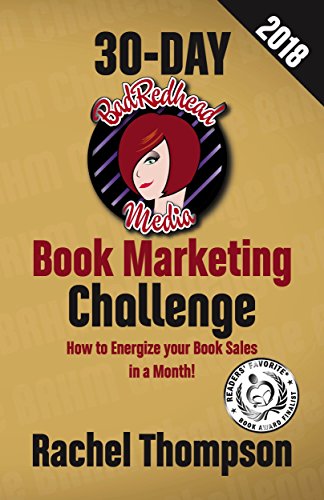
book marketing challengeRachel Thompson says we don’t get traction with our careers until we have at least 6-10 books under our belts. As the self-publishing industry gets more competitive, that number may get higher. If you’d like to read her awesome book about marketing, you can look for it here.

Book sales are subjective. What works for you may not work for someone else.

The best advice I can give you is write well, and publish often. Stay consistent. Build your brand on a genre you love to write.

Sales take time.

Have patience, and good luck!


buy image for blog


My BargainBooksy Ad from last month. How did it do?

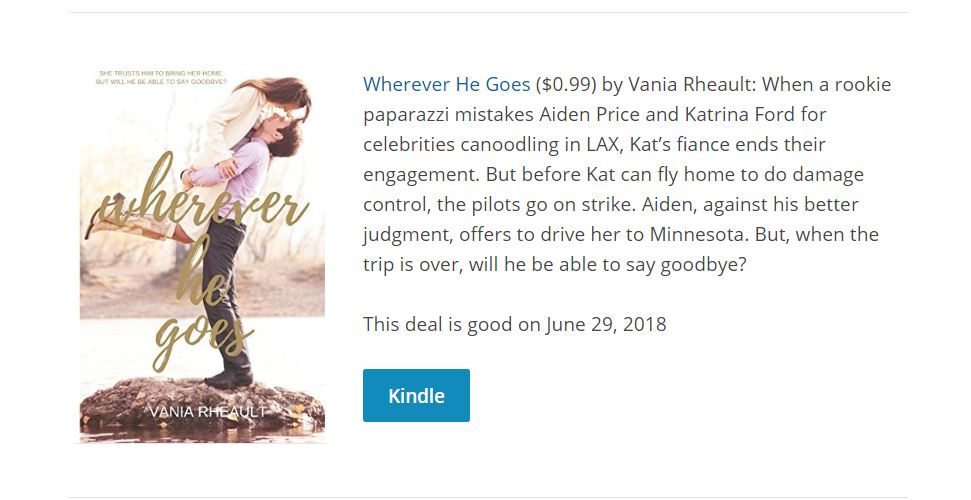
Well, apparently, not very well since I forgot to post the update. This time, this ad was a paid ad (meaning, my book wasn’t free), and I set the price of Wherever He Goes to .99. I thought, a dollar for a book, that’s pretty good, right? Heck, I spent three months working on it, I figured a dollar was a good price.

The problem is, with doing these ads, you just WON’T KNOW why your book doesn’t sell. It could be the cover, it could be your copy. It could just be that no one wants to pay. You never know.

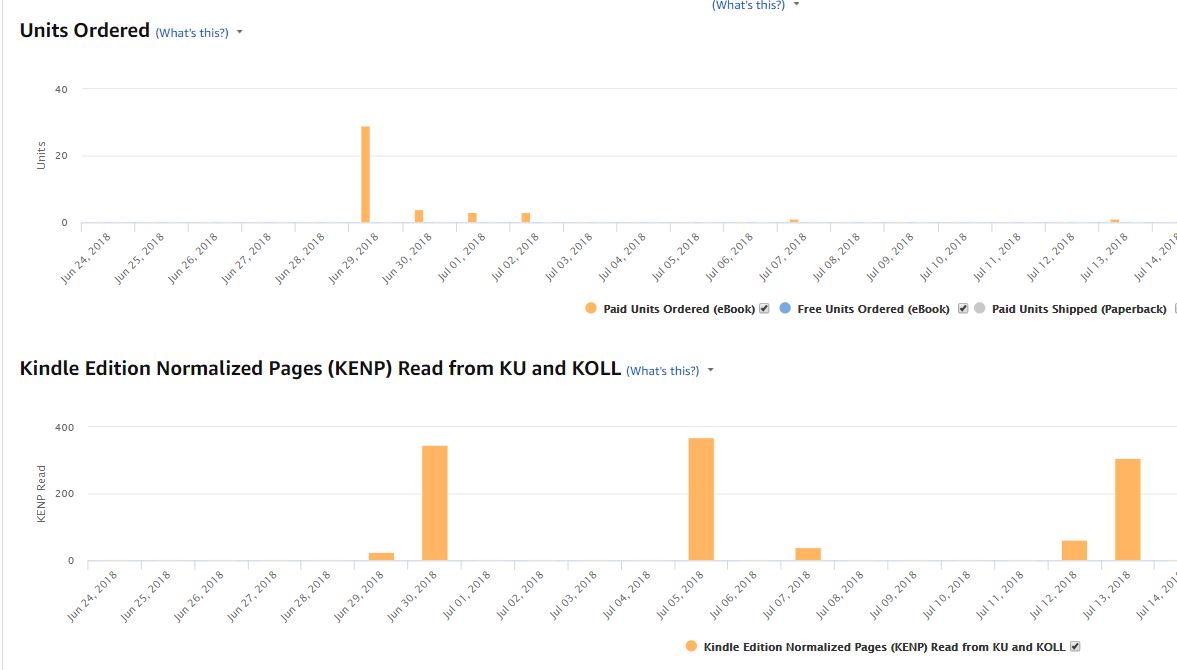
So, in total, I sold 40 books on the day the newsletter came out and a couple days afterward. That is nothing compared to the 4,000 books I gave away during my Freebooksy ad I did back in February. You can read about that here.

june sales for bargainbooksy ad

As far as KU page reads are concerned, you can see that the newsletter created a bit of a spike, but nothing to write home about. And this is only for Wherever He Goes. My trilogy is still getting a few page reads, but I wanted to see what my ad would do for Wherever He Goes, and unfortunately, for 80 dollars, not much.

Here is what my ad looked like in the newsletter:

bargain booksy ad

Would I do this again? I haven’t made back what I spent on the ad, so it will be a while before I try something like that again.

What I need to focus on is getting reviews, but for using any legit reviewing services, I need to pull my book out of Select because the one review service I contacted distributes the books through Bookfunnel. Amazon considers Bookfunnel as a distribution platform and will yank you out of Select if they catch you using it.

For my next book, I’m going to place my book with a review service first, before putting into Select and see what happens. Hopefully, if I get some decent reviews that way, readers will give all my books a chance.

And I think if I ever do another promo with Written Word Media (Freebooksy/Bargainbooksy) I’ll do the free one, since I kind of feel like I got more bang for my buck. At least, it sounds better to say I gave away 4,000 copies than say I sold 40. It would be great if any of that had turned into reviews, but so far nothing significant on that end, either.

But, that is my experience with Bargainbooksy, and if you’ve tried them, and have gotten better results, let me know!

Thanks for reading!

Blog book promo for the end of blog posts


What do You do with Promo Photos? And Better Yet, WHERE DO THEY COME FROM?

We all see these cute photos of people’s books, you know? If you don’t know, you’re not on Twitter much, or you haven’t liked many Facebook author pages. Let me give you some examples. Hold on while I dredge some up.

wherever he goes promo composite

This is mine for my latest book I put out in June. That looks pretty cool, right? Or how about Aila’s, when she did her cover reveal for her new Women’s Fiction, Alabama Rain:

alia's cover reveal

Hers is pretty fancy; those books stacked on that nice shelf. And I love her cover. I am so excited to read this book. She made an awesome trailer, too, and you can watch it here. Anyway, I can make something similar with mine (but not the same because her skill set and my skill set vary greatly):

whereverhegoespromowithsunflower

The best part about the 3D mockup maker I use is that you can download a PNG without any background, which makes it very easy to place your book onto a different background, and you can make a super cute promo like this:

aila's promo

But what the heck are you going to do with it?

Aila says she puts hers at the end of her blog posts, making the photo clickable and driving traffic to her Amazon page. That’s not a bad idea. But she blogs–a lot. And consistently. Who can say they do that? Not me. But you should totally check out her blog. She writes very informative posts about the indie publishing industry, and she knows a lot of writing resources she generously shares.

I mean, you want photos out there. Someone might Pin It, or Retweet it, if it’s cute. I found this one somewhere and saved it for reference because I’m terrible at design:

book promo idea

Text is good, you know? A tagline, a teaser.

I made this messing around in Canva, trying to practice, develop my eye:

He's her boss, but he's got his eye on her. She doesn't know what she wants.He has demons to spare.And she has an ex that just won't quit.

Canva is good for stuff like that. It makes placing photos in composites a lot easier if you don’t know your way around GIMP or Photoshop. I made this in Canva using my Kindle cover for the first book in my trilogy:

Don't Run Away Promo

Of course, you need to make sure the photos you are using, like the sunflower on the shelf, and this work photo, are okay for commercial use since you’re trying to sell your books. At least, I’m going to assume you are.

But the problem is, there’s a ton of this stuff out there, and it’s annoying. You can Tweet it all the time but people will unfollow you. You can’t post it on Instagram all the time, because then you’re pegged a self-promoter and no one will follow your account.

So, I make promo photos, and then I don’t do anything with them.

But part of this blog post was to tell you where you can do this stuff, so take a look at the programs I’ve used:

FREE ONLINE BOOK MOCKUP MAKER
Derek Murphy runs this site, and he’s got a lot of great information about making covers yourself. He has a YouTube channel, and it’s worth checking out. I used this to make the first picture in this blog post, and I’ve done it for my friends, just to see how it looks with other covers:

stealing home promo

wolves of dynamoThis is a free site, though the positions of the books are somewhat limited. But it’s free and the program places the covers for you, so you take what you can get, right? If you want to place the books anywhere else, like a shelf, you need to use a program to place them onto a different background. I use GIMP to keep my hand in (I’ve spent a lot of time figuring out the very small percentage of what I do know); it’s a free version of Photoshop. But you can use Canva, too, which is a lot easier to figure out.

shelf with sailboatandbook
I bought the shelf photo from canstockphoto.com. Wolves of Dynamo is a fantasy YA geared for both boys and girls, so I didn’t want to put with anything too girlie, or something that wouldn’t fit the genre. (I showed it to the author, and Gareth gave me a tough time. LOL)

Anyway, so give the mockup maker a try. Use pixabay.com and find workstation photos. All their photos are free for commercial use. Placing your book’s cover onto a Kindle mockup is easy using Canva. Just like any software, it may take a little bit to get used to, but that’s part of the fun of making these, right?

Because it’s not like you can shove them in people’s faces all day long–people will get bored with you, fast.

This is the quick mockup I made of David’s book:

shelf with lampstealinghome

If you make a lot of these, you probably want to experiment with different ways your book looks. Stacks, like Aila’s above, or just one, or all your mockups will start to look the same.

If you do the stacks, you’ll need to have a picture of your spine and better skills because the 3D maker I linked you to doesn’t have a stacks option. I haven’t bothered with that, just because there’s only so much time I want to take messing around. And it takes a lot of time to make these things if you don’t know the software; it takes a bit of practice.

It can be a nice break though, from writing, to mess around with this kind of thing.

Aila used a different website to find her mockups, and she put a lot of work into those, but she knows Photoshop really well, and she makes her own book covers, too. I think she does a fantastic job!

Also, you can get a lot of ideas just Googling book cover mockups. On Twitter, I’ve seen people advertising to do this for you but they charge a bit. If you don’t want to do it yourself, you can hire someone from Fiverr. Sometimes if you hire a cover designer, they’ll make a couple of these for you, too. But again, it’s like, what are you really going to do with them? You know? If you like design and want to put the time in, practice so you can get to know the software for other things like, maybe eventually you’ll want to make your own covers. Then you don’t have to bother your cover designer or ask their permission every time you want to create a mockup.

I’ve given you some ideas on the book cover mockups for promos, and where you can go to make them. But don’t be wasting your time messing around with these when you should be writing. It’s fun to learn how to do these, but if you don’t have a book to market, it’s all pretty pointless, anyway.

Have fun, and good luck!

Vanias Books Promo


The Scary World of Amazon Marketing Services

Writers need to get their books out there. Twitter doesn’t sell books. Neither does Facebook–at least not on your personal profile. There are only so many copies Aunt Edna wants. And she’s not going to pay your bills. (If she is, that’s no one’s business but yours.)

So what is an author to do? Well, you can write more books. You should be anyway. What else? Instagram the shit out of your life hoping to draw some attention to your fabulous #writerslife.

What else?

Pay for promos, maybe. I’m assuming I’m still getting some KU page reads from a Freebooksy promo I did a few months ago. (To read about that, click here.)

I’ve come to the conclusion after a few years on Twitter, the only way to find readers is to write books and tell people (who aren’t on Twitter) about them (you know, actual readers). I’ve decided to dip my toes into the world of Amazon ads.

amazon adsNow, lots of people have told me that they don’t work. I bought Brian Meeks’ book, and he tells me they do. But you gotta be smart, and you gotta be patient, and you gotta test. Test and Test. And Test.
Oh, by the way, you have to have a decent book, good cover, good blurb. Because if you don’t have a quality book, no amount of advertising will sell your POS. (Sometimes people forget about that part.)

So, I’ve been running ads for a couple of weeks. Brian says this isn’t hardly any time at all, and I agree. Buying and running ads on Amazon isn’t the magic trick to selling books and getting famous. You need to have patience, and you need to know what you’re doing.

At first, I bid low (like Brian advised–he walks you through the entire process), and piecing together information from other sources, I realized this was way too low. I write contemporary romance, and it’s a highly competitive market.

The thing with Amazon ads is you need to bid high enough that Amazon will show your ads, but not so high that if someone clicks on your ad but doesn’t buy, you don’t go broke paying for clicks that don’t turn into sales.

It’s called a sweet spot, and from what I can tell, few people have the patience to get there. Or they are too scared they are going to waste a lot of money trying.

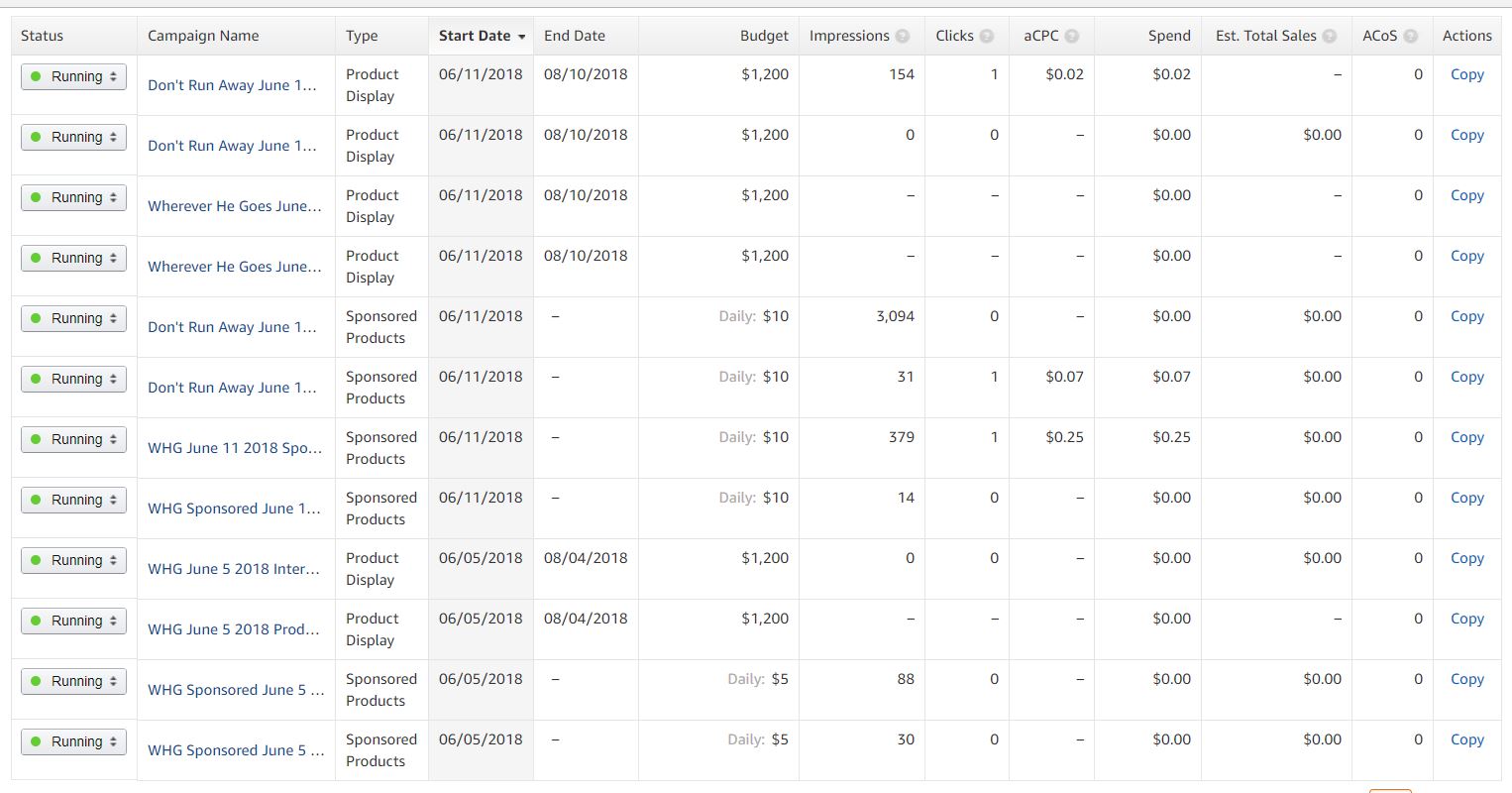
I’ve been running ads for 13 days, and this is what I have so far:

ams ads so far june 18

Remember, 13 days isn’t hardly any time at all. But for anyone scared to run ads, take a look: I have 12 ads running right now, and I’ve spent 35 cents. Not dollars, cents. None of the ads are doing particularly well, and I assume it’s because I’ve bid too low. The ad for Don’t Run Away that has over 3,000 impressions, hasn’t cost me anything. But those impressions could have given me a few page reads in KU if someone saw the ad, but didn’t click and just decided to try the book in KU anyway. Where and when someone decides to read your book if it’s enrolled in KU will always be a mystery.

Here are my KU page reads for DRA. I took this screenshot on June 18th. The same day I took the screenshot of my ad dashboard.

sales and ku reads for dra

Nope, I don’t have any sales yet. But I haven’t gone broke trying, either.

So anyone who is wanting to try this but is afraid of losing money can err on the side of caution, figure a few things out, and go from there.

I’m surprised that DRA is getting impressions, as the second set of ads I did for Wherever He Goes is a higher cost per click (which you would think would buy me more exposure), and I think the cover for WHG is better than DRA. But maybe the blurb is better written, or the characters resonate better with readers.

So where do I go from here? I plan to bid a bit more for WHG, and see if I can’t get some impressions, at least. Maybe I could even do another set of ads for DRA at a higher bid, and see if that doesn’t ramp up my impressions even more and hope those turn into clicks. Or I could do nothing, and wait to see what happens, because 13 days of ads is hardly any time at all.

But I’ll keep an eye on it. I just wanted to let you know a high daily limit doesn’t have to scare you.

And if you take anything away from this it’s this: if your ads are successful, and you are getting a ton of clicks but they aren’t turning into sales–you need to look at your book. You need to look at your cover. Your Look Inside pages. Your blurb. Don’t pay for ads for a crappy book. Make it better.

I’ll keep you posted!

Beach Reads Giveaway Coming Soon!

Super fun beach reads giveaway!


Even though I said I wouldn’t do many giveaways anymore, it’s SUMMER and that means an opportunity to do a beach reads giveaway!

Let’s break out the beach towels, hit the beach, or the pool, or even the backyard and the sprinkler, and pull out those books while you bake out your brains and try to banish those hold-over winter blues!

I’m in the process of putting together a fabulous giveaway. Need a beach towel–I’ve got you covered. Hypo-allergenic sunscreen? Check! Pool-safe beverage container? Check! Cooler? Check! And most importantly, books.

domenico-daniele-411075-unsplash

Did someone say SHARK????

Lots and lots of books!

I’ve got my fellow author friends sending me books–all the books! And that means an awesome assortment for you to try your luck at winning.

Mystery/thriller, Women’s Fiction, Romantic Tragedy, and Contemporary Romance are just a few of the genres that will be included in the giveaway!

I’ll post a link soon, so keep an eye out for more information!

Until then, enjoy the weather, and keep reading!


Photos by Unsplash


What People Don’t Tell You About Blogging

What people don't tell you about blogging.


When you first start out writing, or want to be writing, or want to be publishing, or whatever it is you want to do to sell books, poems, short stories, non-fiction, people tell you to blog as part of your platform. And that’s all fine and good. Blogging is fun, you’ll build an audience, a fan base, and your content will sell like hotcakes because they like your free stuff.

But then the questions start popping up. Where do I set up my blog? What do I blog about? How many times do I have to blog, per week, per month, per year? Where do bloggers get those awesome graphics? Are they expensive, do you have to make them yourself? How much are the pictures?

In my last blog post, I wrote about my lack of time, and I said I would give up blogging to write. Blogging is writing, but I don’t see it being a huge moneymaker some blogs can be. I don’t do affiliate links, I don’t support advertising on my website. Partly because I’m not popular enough to make any money from it, and partly because I don’t want to be known for my blog. I want to be known for my books.

But if you haven’t blogged yet, or need some tips to get your blog on track, here are a few that I’ve picked up, and a few that I’ve read about. Maybe you can turn your blog into something amazing!


Figure out who you want to blog for.

I blog for indie writers. I blog about non-fiction books I’ve read and liked, editing tips, publishing tips, formatting tips, making-your-cover tips. If it has to do with indie-publishing and writing, I’ve probably at some point blogged about it. And so have countless others. While we’re humans with different experiences, thoughts, and feelings, you’ll be hard-pressed to find something in this area no one has written about yet.

What people don't tell you about blogging. (1)

That said, I wish I would have started blogging for readers. I would have blogged for my fans, my people who love my books. The problem is, when I started blogging, I didn’t have a book out yet. Was that detrimental to writing for my readers? Not really. I mean, your readers will want to know where your ideas come from, maybe how long it takes you to write your book. They like the cover reveals. And maybe if you’re prolific, you have a lot to write about. The problem with blogging for your readers, however, is that all that you’re blogging about should go into your newsletter. There is only so much content to go around, you know? At any rate, it doesn’t matter who you write to, as long as you make the choice and know what you’re getting into.


Decide what you want to blog about.

I’ve read that when you blog, you need to choose 3-5 topics and write about only those. Always. Your readers follow your blog for a reason. If you write about publishing tips and news, then your readers want that. Not your thoughts on Trump, or the rogue blog post about how sick your kid is. While I’ve been accused of not being personal enough, do people really care that I had a crappy day and didn’t get my words in? Maybe if I can turn it into a post about productivity even when you’re not feeling well. But no one cares if I have a cold and I watched six episodes of Castle while I ate a gallon of ice cream. Begin as you wish to continue. If you want a lifestyle blog, then find an audience for that kind of a blog. I know for me, (and I know everyone will like different things) if you get to personal one too many times, I won’t read your blog anymore. Not when I follow your blog for tips on publishing, your own experiences, what you found out, if you stumbled upon any shortcuts. I started your blog because I was interested in that. I don’t have enough time in my schedule to care if you had to take your dog to the vet. Sounds harsh, but I don’t care. I read blogs to further my own career. Write your blog assuming that of your readers as well.

What people don't tell you about blogging. (2)

***A quick word about turning your blog into an indie book review site: if you decide to do this, and you decide to be honest in those reviews. Be prepared for backlash. Posting a negative review of a peer’s book is never a good idea, and rarely can you find an indie book where you will have nothing bad to say about it. A good rule of thumb would be to have a policy such as, if a book would have gotten less than three stars, then don’t review it. It’s a personal choice that can come with big repercussions if you upset one too many people. On the other hand, if you only give out 5-star reviews and you’re reviewing crappy books, your credibility will tank. Fast. Trust is hard earned. Don’t lose it. You may never get it back.


Find a spot. 

I use WordPress because I like being part of the network. I don’t self-host, I let WordPress host my site because I don’t care about all the little extras you get with your website when you do that. I pay for my website address, and I pay for, I think, the business package so I can use some plugins. But if you don’t want WordPress, you can do Blogger, or Squarespace. My friend Aila did a great blog piece on Wix. WordPress was easy to set up, so I’ll recommend that. Plus the free templates WordPress make it easy to switch up your look when your site gets stale. As you add content (write books) it’s easy to add to your website. WordPress has been able to give me what I need, but it doesn’t matter where you blog. Just get an address and start producing content. Then tell everyone on social media about it.


Decide on consistency. 

The reason your blogging is to get your name out there, build your writer’s platform, attach a person to your brand. The more you blog, and the more people who read you, the easier it is to find you. When you Google “Self-Publishing Help” Joanna Penn’s name comes close to, if not to the very, top. Eventually, you want to get up there. Self-publishing help, top fantasy writer, the most popular romance writer. Whatever people search for, you want to be close to the top. This can take years and years and years–I think Joanna’s been blogging since 2008. She has every right to be at the top. But you want to at least stand a chance of being found in a search. That means blogging good content, consistently. This is easier said than done. I’ve heard advice to blog as much as you can when you’re first starting out. Every day if possible. Then when you start to have a following, you can ease back. I try for twice a week, but lately, I’m lucky if I can do twice a month. Even if you blog four times a month, always post on the same day so your readers will get to know your schedule and know when to look for new content. Do I do this? No. Should I? Yes. Do my blogging friends do this? Yes.

What people don't tell you about blogging. (3)


Where the hell do you get all those cute graphics?

Probably the best place for graphics is Canva.  Canva is cool. Just choose the size of the graphic you want, slap some text on a photo and there you go. Awesome. Canva has some great photos free to use, and I also use Unsplash, Pexels, and Pixabay. You may not be using the photos for anything, but I still try to make sure the photos I use are free for commercial use. It just takes the headache out of it, you know? If you want to see how I used Canva to pretty up some blog posts, look at my interview with KT Daxon. I made those quote graphics in Canva using quotes from her book. Also, see my interview with Aila Stephens. I made those graphics with the cute pictures of macarons and looked up the quotes to slap on them. This leads me to my final point:


Figure out how long you want to spend doing this.

I can’t concentrate on anything for too long. I’ve been going back and forth between Facebook and Twitter. But being distracted didn’t do me any favors, and I’ve already put two (okay, three because I went to the kitchen for a snack) hours into this blog post. And I haven’t prettied it up with graphics yet. You need to, because studies have shown, (no, I’m not making this up, but I’m not going to dig for it for you, either) that people consume content better when it’s accompanied by photos. You want to break up long-ass paragraphs of text anyway, so might as well add some pretty stuff to it. A lot of my blog posts come off as book reports, or just reports, heavily researched and referenced. There’s not often I don’t add a few links to someone else’s blog post. That’s a boon for you because you add valuable content to your blog, and it’s great for the other blogs because you are driving traffic to their sites as well. The blogging community is much like the writing community. To get any traction, you have to read others’ blogs, comment, and share. Once you start to get going in that, you’ll have others do the same for you.

What people don't tell you about blogging. (4)


Blogging can be fun, but it can be a drain. It can be discouraging when you feel like no one is listening to you. I’ve been at this for a while, and I still don’t feel like I reach many people. If you only have so many hours in the day, you’re better off writing your books. Chances are good if you start a blog in hopes for a book deal, it’s not going to happen. Blog because you want to, because you want to help others, because you want to share your writing journey. Blog because you want to be included in the writing community.

I’m going to bed now.

Until next time!

Important Reasons Authors Need to Think About Blogging by guest @kikimojo

3 Reasons Why You Should Be Blogging

Why You Should Start a Blog (Even If You’re Not a Writer)

Deciding What’s Really Worth It

Because of some personal circumstances, I went back to full-time work a couple weeks ago. To say that I have not adjusted well is an understatement. I don’t want to sound whiney, like a little kid being made to do something she doesn’t want to do, but it’s definitely a rude awakening when all of a sudden all the writing time I’ve enjoyed is gone.

I know most, if not all, my adult writer friends also have some kind of full-time job, and many of those also add small children to the mix. There, at least, I am fortunate. My son is 18 and will be graduating from high school soon. My daughter is 12 and as soon as she comes home from school, she runs and hides, all her energy gone from putting up with her peers all day long. But that doesn’t mean I don’t have laundry to do, dinner to make. By the time I have a free moment, I am spent. Not maybe physically, but emotionally, all I want to is mindlessly scroll Twitter until it’s time for bed.

So, lately, I’ve been exploring what I can give up, and what I want to keep, in order to have the time and energy to keep writing.

office-620822_1920And it’s more than that, too. I consider myself an indie writer, publisher, marketer of those books. That means staying on top of publishing trends, practicing writing, reading about craft. I just finished Stephen King’s On Writing. There is always something to do when you are an indie writer: build your platform, market your books, run ads.

What do I do on a daily, weekly, monthly basis? Let’s explore:

Daily:

  1. There isn’t anything that I do absolutely every day, except be on Twitter/Facebook (and I can’t even claim I post regularly on my FB author page, either!). I enjoy it, and I follow influencers, top people in the publishing industry. Agents, editors, other writers. It’s easy to write this off as a time waster, but if you follow the right people and use it for more than watching weird gifs, it can be a great networking tool. I’m fortunate to have the account I do, and for that reason alone, I like to try to keep up with it. I have a lot of friends and support on there. Sometimes I do fall behind, and for that, I apologize.
  2. I should add writing to this, but for the most part, I can’t. Sometimes I am physically unable to write. Lack of time or whatever, sometimes I just can’t. It doesn’t help that right now I am formatting and creating my cover for my current novel. Any free time I have is going to that just to get it done. I’m tired of looking at it, and I would love to start a new book.


Weekly:

  1. Listen to podcasts. I try to keep up with these as they come out. To give myself a podcasts-2633018_1920two-fer, I try to go for walks as I listen, to get my exercise in. There are two that I absolutely love: The Sell More Books Show and Print Run Podcast. The Sell More Books Show talks about indie news, and I keep up on a lot of things going on in the indie-publishing world. Print Run is run by an agent and editor out of Minneapolis, and they talk about the traditional publishing industry. They’ve opened my eyes to a lot of things, and to their credit, they are candid about their jobs. Others that I try to listen to:
    a) The Science Fiction and Fantasy Podcast. I don’t write fantasy, but a lot of the guests on there talk about their marketing strategies that can work for everyone.
    b) The Creative Penn. Joanna runs a great podcast and keeps you updated on everything from indie news, craft, author interviews and more. At this point, she’s a staple of the indie writing community.
  2. Write. Finally, I can put this on the list. I would go nuts if I couldn’t write. Even when I have to write longhand at work, it’s better than nothing. When I was working part-time, I could write 5,000-10,000 words a week. Especially if the story was going well. Now, well. I haven’t been working long enough to fall into a routine to see how far I can push my limits. And now with summer coming, I just don’t know. All I can do is my best, and so far, I feel like I am failing miserably.
  3. Read craft books/editing books. Being I can read at work if it’s slow, (no internet/computer/device access though, that’s why I buy my books in paperback) I can read a lot. I read Stephen King’s book in two days. I read lots of books, which is a major boon for me. It’s harder to write at work on certain days since a) I can only writing longhand and 2) if it’s busy, I lose track of what I’m doing and my writing becomes choppy. It depends on the day, and what calls I’m scheduled to take. Weekends are better for writing.


Monthly: 

  1. Blog. My blogging schedule leaves a lot to be desired. Some of my most dedicated arms-3404941_1920friends will crank out two blog posts a week. I can’t do that. Not only do I not have time, Good Lord, where do they find the content? I’ve added book reviews to my blog schedule (of craft and other non-fiction books) just to add some filler. But contrary to what others say about how important blogging is to your platform, this is the one that I let slip first.
  2. Helping others. Sometimes I’ll edit for free for someone just because I know how hard it is to find help at a reasonable rate. While I limited that to once maybe every three months, or when I come across someone who really needs the help and have nowhere else to turn, I fear I may not be able to do any of that anymore. Which saddens me, because I really enjoyed it.
  3. Author interviews. I don’t do this often, but this falls into blogging, and while it might be easy to email questions, formatting the answers into an enjoyable blog post (see my lovely interview with Aila Stephens) can take a lot of time.
  4. Spend some time on Goodreads. I try to add all the books I’ve read to my shelves, and give a star review, even if I can’t write a quick review on there. Sometimes I’ll try to copy and paste the review I write for my blog into the review on Goodreads, like I did for The Continent.


So, obviously, as an indie writer, you need to make time to write. If you’re not writing, you’re not doing much of anything. But if you are writing and publishing, it’s hard to figure out what you can drop since you’re running two or three businesses single-handedly while working a job and raising a family.

business-3385079_1920What could I drop? Blogging, probably. I blog for indie writers, and well, indie writers don’t read indie books. That is not where my audience is, and it was one of my mistakes when starting up my blog. I could give up Twitter, but it’s my main source of writerly companionship. Sometimes I don’t walk as much as I want to, and that’s sad, because MN weather is really nice right now, and I don’t want my podcasts to pile up (when I don’t walk, I listen to podcasts to make the chores and errands go a little bit faster).

This probably isn’t a good time to figure out a writing schedule since I’ve only been working full-time for three weeks, and in that time I’ve been editing Wherever He Goes and have moved on to formatting and creating the cover. I’ll have a more accurate depiction of how I can figure out a writing schedule when I start my next book.

All in all, I’ll just have to try to find some balance like everyone else I know. Pull up my big girl panties, and write when I don’t feel like it. Walk when I’d rather take a nap. Be careful not to burn out.

Lots of people seem to have a handle on it, and lots of people seem like they don’t, too. I’ll just have to look at this as a speedbump in my writing career. It’s not easy to think that way, since I write romance, and romance is notorious for the pressure. It’s not unheard of for a romance writer to publish anywhere from 5-10 books a year. I’ll never get to that point. Even if I didn’t have to work, at all. I’d never make it.

So, I’ll echo the advice I hear over and over, and something I have even told others: Find a balance. Do the best you can. Work with what you have.

It’s all you can do.