Genre-hopping: Why writers do it and should they?

Writers need to genre-hop. We need to explore what we like to write and how we want to write it.

I genre-hopped. I stayed within romance, but I explored romantic fantasy and erotica. I explored enough that I knew I didn’t want to write them anymore–and that is the whole point of genre-hopping. I settled into contemporary romance, and that’s where I’ll stay.

But say you want to build your writing career, actually make some money selling your books. It’s important to your customers they know what they are getting when they think of your name. Like what Stephen King is to horror, or what Danielle Steele is to romance, you want to build your brand on your name and be consistent with what you’re selling.
cardboard-box-155480_1280

Do readers really know what they are getting when they buy one of your books?

I remember clicking on a romance author on Amazon. I can’t remember her name, and I wouldn’t call her out anyway, but she had several books published. When I went through them, though, some were written in first-person, some in third. Some in present tense, some in past. Maybe you like her third person past books, but when she releases a new book or if you try to read through her backlist, you may not always like what you buy. Maybe then you don’t read it, or you slog through it because you spent money on it and you don’t want it to go to waste.

Is this how you want your readers to feel about your work?

I started thinking about this because I wondered how the big names do it. How did Stephenie Meyer go from the Twilight series to The Host to The Chemist? Was it seamless for her because adults read Twilight, so her adult fiction wasn’t a departure from her original work? Or did she lose millions of readers because the teenagers enamored by Edward and Bella had no use for her adult fiction?

Is genre-hopping like jumping from a cliff--career suicide_

Photo by nour c on Unsplash

I think about Nora Roberts, too. She writes under a pen name as well, but under Nora Roberts, she writes contemporary romance with maybe a bit of paranormal or magic thrown in. She’s well known for her trilogies, and she has many contemporary standalones to her credit. But her newest release under her name is a post-apocalyptic called Year One. Does Nora have a big enough audience that they will read whatever she writes, or will she lose readers who are not interested in a new genre? Would she have been better off releasing this new book, which is the first in a trilogy, under a new pen name? I guess until reviews and sales numbers come in (there are a few 1-star reviews that indicate that some readers aren’t happy she took a detour), we won’t know. I admire her for spreading her writing wings and trying something new, and by now, maybe she doesn’t care if her career takes a ding because she took a chance.

No matter how much I preach you have to write with your reader in mind, you still have to like what you’re writing.

There are other reasons for genre-hopping, but you have to decide if it’s right for your brand:

1. Maybe the genre you write in is dead or not selling. Trends come and go, and if you can quickly write a book and publish it, perhaps you can ride the high of the next new thing.

2. You’ve depleted your ideas. Maybe you have no choice because if you didn’t genre-hop, you wouldn’t be able to write anymore.

3. Maybe a complete plot fell into your head, and you don’t want to waste the idea.

4. You have an opportunity to collaborate with an up-and-coming author in a different genre, and you are excited by the chance of exposure.

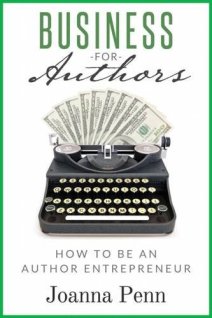
One of the problems I see indies having is they aren’t thinking about their books as abusiness for authors business. Joanna Penn, on a podcast I listened to a while back, said her Business for Authors book is her poorest selling book and she can’t understand why. I know why–because indies don’t like to think of their books as a business (yet they are quick to pout when their books don’t sell).
Think of this analogy: Say you have a favorite chocolate store; you go there all the time. You know the owner, you love the chocolate. But one day you take the time to drive there, and they don’t sell chocolate anymore. The store is full of baseball cards. You get disgusted, not to mention confused AF, and leave.

Do you go back? Maybe once to see if they started selling chocolate again, but when you find out that they haven’t, you won’t go back.

Or maybe you want your books to be like a flea market. Something for everyone. Or will you end up with nothing for no one? You never know what you’ll find at a flea market.

I used to be super against genre-hopping, and for my brand, I still am. I want to be known for contemporary romance written in the third person. When I use the pre-order feature, I want my readers to get excited that I have a new book being released because they’ll know exactly what kind of book it will be.

I don’t want my readers to look at my pre-order like it’s a white elephant sale.

If you decide to genre-hop and publish under your name, you’ll have to market it differently, and you’ll have to be prepared for readers to be unhappy if they inadvertently read something they didn’t mean to. Take this comment from this blog post:
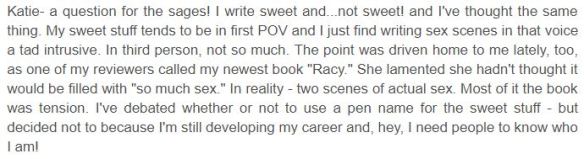
blog comment

Her reluctance to use a pen name is costing her reviews. Well, one, but maybe more in the future. Where do you cross the line between knowing you need a pen name, or not to genre hop, and when to keep going? You would think that readers would be able to tell between racy and sweet by looking at the covers, reading the blurbs. But on the same token, don’t you want everyone who likes you to read everything you ever write?

Unfortunately, I paid for the ISBN numbers for the genre-hopping books I published. Maybe one day I’ll yank them because as my backlist grows, they will not fit into my library. It’s the price I’ll have to pay for not thinking ahead, or for experimenting and actually publishing them.

Maybe you won’t care, and that’s okay. We all do what we need to do to achieve our goals.

analytics-2697949_1920

Where do you want your book business to go?

So think where you want to be in five years, in ten. How will your genre-hopping fit into your plans?

It’s never too early to plan–or do damage control.

Do you have thoughts on genre-hopping and pen names? Let me know!

Other articles about genre-hopping:

Genre Glue

Thinking About Writing in Multiple Genres? Here’s What You Need to Know

The Pros and Cons of Switching Genres — Guest: Summerita Rhayne
Happy writing Vania Margene

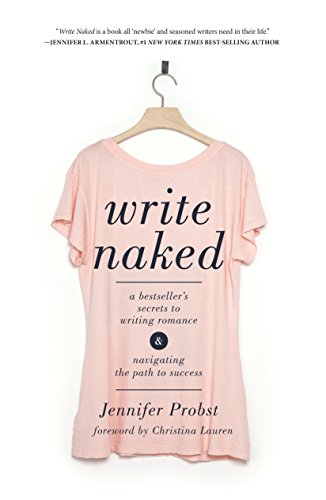
Write Naked: A Bestseller’s Secrets to Writing Romance & Navigating the Path to Success by Jennifer Probst–A book review

Every writer could use a guidebook, a map, perhaps a mentor who can say, “If it were me I do this.”

I read Write Naked: A Bestseller’s Secrets to Writing Romance & Navigating the Path to Success last year, but as a series of book reviews I’m starting for my blog, I pulled it out again and reread some of my favorite chapters.write naked

In Write Naked, Jennifer Probst takes you through from the beginning of her career, when she didn’t think she would make it, to present time, when indeed she has made it, evidence being she’s able to add best-selling author after her name.

It’s gratifying to know that even a best-selling author has fears, flaws, and has made mistakes, but being she has made it to the other side, she also gives us tips and tricks to overcome our fears and if you really want this thing called a writing career, what to do to achieve it.

Some of my favorite chapters include:

Chapter 4
Green With Envy
Jennifer acknowledges that yes, writing is a community, but that community is steeped in jealousy, cruelty, and fear. I see it on Twitter. I read it in a poor book review by another author, sometimes even a malicious review. I see it in the passive-aggressive interactions between me and my other writer friends. Pretty soon you don’t know whom to trust, who really is happy for you and your success. Jennifer writes a chapter on this–a very honest and forthcoming chapter. She says on page 34 of the paperback  . . .  “jealousy . . .  is an endless vicious cycle.” Don’t let it consume you; there will always be someone doing better than you, and you will always be doing better than someone else.

Chapter 5
The Write Path
1. You’ll make mistakes. Costly mistakes.
2. Overnight success is never overnight.
3. Once you reach the top, there is nowhere to go but down.

This may seem like a downer of a chapter, and perhaps it is. Jennifer reminds you that a writer’s journey is tough. There is a reason why writing is compared to running a marathon or climbing a mountain. Your journey takes a ton of preparation–years of writing, years of learning the craft, refining your work. It takes many books. One foot in front of the other for years. Then what do you do when you reach the top of the mountain? When you bury a flagpole in the summit and can call yourself a success? You climb down and do it all over again.

Chapter 8
Trademarks of Bestselling Authors
There are no shortcuts. Sit down, do the work. But what is the work? Jennifer, along with other romance authors, gives you an idea of what it takes to get where they are. This chapter includes writing advice, networking tips, and thinking about writing as a career, not a hobby.

Chapter 12
The Indie Revolution
Jennifer did publish as an indie author, and she gives her readers a few tips on how to publish a good book. You may not like what she has to say, but all of her advice has merit. Probably the biggest takeaway from this chapter is indies need to remember they are writing for readers. You want and need them to like your books. Publish accordingly.

Toward the end of the book, say the last third or fourth, Jennifer goes into what makes a romance book an addicting read. Snappy first lines, lovable characters. Setting up and delivering on a hook, keeping up the sexual tension, keeping your middle from sagging. She touches very briefly on all these and more, so if you think you have any of these issues in your own writing, find other craft books to study with, because these chapters tell you what I know many don’t want to hear – write a good book and keep reader expectations in mind as you write. As with any genre, there are tropes and rules you must follow, or all you’ll do is make your reader mad, and that could result in a bad review.

Jennifer’s last chapter is Happy Endings. She coaches you on how to end your book on the best note possible. But finishing one book isn’t the end! There will always be another book to write, another mountain to climb, another race to run.

Jennifer-Probst-2-1Jennifer won her gold medal, and she tries for another every time she sits down to write.
I recommend reading this book in its entirety, and I pull it out every now and again for a pick-me-up or a reality check.

You can find it on Amazon here.

Thanks for reading! Do you have any books from authors you like to read that give you tips or a much-needed reality check? Let me know!


Happy writing Vania Margene


Toxic People–How Do We Get Them Out of Our Lives?

Humans are creatures of habit. We like to park in the same parking spot every day, be it at work, school, the shopping mall. We buy the same seat locations for movies. We use the same person at the salon.

It’s the same thing for the people we interact with. We all have that friend from elementary school, we brag we’ve been married for 10+ years, we’re still in touch with college professors, even though you’ve been graduated for twenty years. We latch on to people, and we can’t let go.

But what if that person we meet at our coffee klatch, or writing group, or your daughter’s best friend’s mother, what if that person you thought to be a good friend . . . isn’t?

You know the one I’m talking about, even if you don’t want to admit it. That friend who never has anything nice to say about your work. That friend who can’t compliment you unless it compliments her. That friend who can’t do anything nice for anyone unless she benefits from it as well, in some way. That person who promised you she would do something and never does, though she’s full of apologies.

That kind of behavior can sneak up on you, and maybe it takes years. And maybe that person is so fully ensconced in your life that booting them to the curb seems . . . maybe a little too dramatic. I mean, after all, it’s not really harmful they treat you that way. Is it? If they hurt your feelings, that’s not on them, it’s on you for being too sensitive. Because she did do that one thing for you a few months back, though it was a couple weeks too late, and you didn’t need it by then, but she made the effort, right?

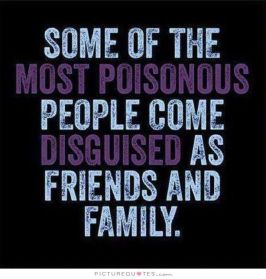
Friendship-quotes-Bad-Friend-Quotes-Picture-Quotes
http://pinit.top/quotes/friendship-quotes-bad-friend-quotes-picture-quotes-3/

Maybe you’re part of a group, and others can’t see her for what she is, and if you extricate yourself from the group, you won’t just be rid of her, but you’ll lose a couple of good friends.

And maybe, this is what will always be in the back of your mind, WHAT IF SHE TREATS OTHERS BETTER THAN SHE TREATS YOU.  That this isn’t just her personality, but something personal she thinks and feels toward you? She kicks you, and you come back for more because that one thing was a fluke, and she’ll never do it again. Only, she does. But they are small things, a back-handed compliment, a comment that doesn’t quite sit well with you, but maybe you’re touchy because you’ve had a bad day, and you keep brushing them off.

The thing is, you’re not imagining this stuff. It’s how that person is really treating you. Once you can face it, once you can fully understand that it is HER and not YOU, you need to figure out what to do about it. This “friendship” has probably been years in the making, and you just realized after one too many pretty insults that you can’t take it anymore. But she’s a major stakeholder in your life now. You talk all the time. Your kids have playdates. Maybe your husband is best friends with yours. These are real-life examples, but I’ve been burned by people I’ve met online. Sometimes dumping someone in real-life is easier than online. You stop answering texts, you stop going on double dates. If it’s your daughter’s best friend’s mother, think of it as a favor to your daughter. How is your daughter’s friend going to grow up with a catty woman like that for a mom?

No, online is a bit different because I’m swimming in an aquarium of writers (sometimes there are sharks in there!), where everyone knows everyone else, and cutting someone out of your life means not knowing what they are doing anymore. Professionally. You don’t want to miss what they are going to do next, what kind of contacts they make. Because not only could something they know help you, it could elevate your career to the next level. And this isn’t a joke. Networking is important. It’s important in any career–it’s why all industries have conferences, retreats, etc. So this isn’t in your head, and it’s okay to have FEAR OF MISSING OUT when you think of cutting someone out of your life.

But honestly, how much of a career will you have if you are not taking care of your mental health? Being a writer is hard enough as it is without having to suit up in armor every time you jump online.

Here are a couple tips to help you sweep out that pesky person who just cannot be nice.

  1. Shake things up in your real life first. Park in a different parking spot at work. Take the kids to school using a different route. Try a new restaurant. Doing small things like this can alter your brain’s neuropathways, and you can teach yourself that change isn’t bad. Especially change you instigate yourself. Studies show that you can handle change better when you start it. I’m not saying dump her before she can dump you, but disentangling yourself from that kind of friendship may be easier on you if you do it, rather than if she does it a few months or years down the road. Other ideas: Take your evening walk in the morning. Walk it backward. Not backward backward, you could hurt yourself! But from finish to start. If you take road trips with your sister and always head east, go west. This is good for your writer’s brain. You’ll discover more, engage more with your surroundings.
  2. If you truly do fear for your professional career, take matters into your own hands. Book a writer’s conference, follow a few more influencers and leaders in the writing community, add another publishing podcast to your playlist. If you can fill the hole not talking to your “friend” anymore will create, it won’t be so hard to say goodbye.
  3. Make new friends. Twitter has a gazillion users, start talking to some of them! Start a book club on Facebook, or start an online writer’s group that will share promo sites, inexpensive cover designers, editors that will swap work with you. Whatever you think you are going to miss from your friend, there are others who know just as much or more than she does.
  4. You do have people in your life that mean more to you than she does, so cultivate those relationships. Maybe you haven’t spoken to your old walking buddy in some time, or that coworker you used to like to hang out in the breakroom with, but she got a new job and you haven’t spoken with her since she left.

Fear of missing out is a real thing, but it’s still just in your head. It comes from being chosen last during gym class at school, or your friends ganging up on your on the playground. It comes from people flocking around a writer who just got an agent, and you feel left out in the cold. No one wants to be excluded. But the fact is, no one puts all their problems online–you only know the shiny parts, what they choose to display. Insecurity, jealousy, and fear are probably three of the main reasons your “friend” treats you the way she does. That’s not an excuse but a reason. Maybe she has a serious case of writer’s block, and she hasn’t written for months, or maybe sales weren’t what she thought they’d be during release week, and she’s jealous of your KU page reads. It could be anything. But the fact is, you don’t have to put up with it.

You don’t need to burn bridges or start tweeting or posting derogatory things about her. Or tweeting subliminal tweets about how good friends should behave. You don’t even need to unfollow (on Twitter) or block. Facebook makes it easy to stay friends with someone but not see their posts anymore. Unlike her author page. You can be a grownup about it; just stop engaging. Because you and she are both part of a community, and there’s no point in slinging mud. Be civil. Chances are she may not notice. Chances are she has a lot of friends and a few weeks of distancing yourself may just do the trick because she’s friends with a lot of different people.

Probably the biggest piece of advice I have for you is this: social media is good for networking, for getting to know people, for learning the tools of your craft and business, but overall, social media doesn’t sell books. If you’re in it to sell books, you need to write more and find ads and promo sites that work for you. Networking can help you do that, but that’s all it has to offer. Social media can be a support or a distraction, but it won’t skyrocket you to bestseller status. Only you can do that, in front of your laptop–writing.

Do you have other tips to help ignore or get rid of toxic people in your life? Let me know!


Happy writing Vania Margene


My Next Few Weeks

Vania's AprilMay Plans

Last week I finished Wherever He Goes. At 77,863 words, it’s one of the longest books I’ve written, and I’m very proud of how the story came out.

What does this mean for the next couple months in terms of my writing schedule?

Take a look:

Plot out my next book.
I left a few threads open while I wrote Wherever He Goes, and I need to decide if I want to close them up or write a companion to the book. The companion would be about Aiden’s brother Dylan. I foreshadowed a few things about him, but his story isn’t fully developed in my head yet, so I need to think, do I want to leave the threads loose in case his story comes to me, or tie them off and move on? I’m hoping a solution will come to me while I edit. For now, I have another book I need to plot out that has nothing to do with Wherever He Goes. I want to get most of the bones of that book written down before I forget any of it.

I start edits on Wherever He Goes on April 2nd. My editing process is long and contains many steps, mostly because I edit myself, but mostly because even if I did pass my book on to an editor, I would give them as clean a version as I could. My editing process includes:
Initial read-through. This is where I fix blatant typos and plot holes I noted while writing that I didn’t go back and fix. I’ll fix character discrepancies and repetition. I’ll fix my characters’ overall arcs. As I get to know them, my writing loosens up, so I’ll even out the flow of the story. All this is easier on the screen.
Print it out. I need this step because this is where I put my chapters in (I write without breaking up my book) and make sure the plot makes sense. I have an easier time with this when I can “see” the book laid out in front of me. Often this is when I beef up scenes or take out parts that don’t need to be there.
I listen to my manuscript. I have Word read my book to me. This is where I do line edits, and I pay special attention to dialogue and syntax. One day I’ll do audio for my books, so I pay special attention to this step. This step gets rid of wordiness, and it takes about four to five days to listen to it all.
I proof the proof. You can see a lot of typos and long paragraph blocks that need to be broken up when you read the proof you order from CreateSpace or wherever you publish through. You can find repetition, errors, and there have been times I’ve caught huge consistency issues. Always read your proof as a reader would. Take your time, sip on some coffee, tea, or other beverage (keep it non-alcoholic so you have a clear head). This step takes me about three days. I take my time because this is the last step, and the last time my eyes will be on it.

After I edit, I’ll put in the changes and order another proof to make sure my formatting stays perfect.

I don’t have a pre-order set up for Wherever He Goes, no blog tour set up or anything. I did a successful Freebooksy for my first book in my trilogy, so I know I have readers out there. I’ll do a soft release for this book because I hope I’ll already be a few thousand words into my new book.

I’ll still continue to blog. Lately, I’ve been doing more book reviews on the non-fiction I’ve been reading. I have a lot of time at work and I’ve accumulated a pile of books that could be useful to other indie authors. Plus, it’s content, and I’m horrible at blogging consistently.

I’m going to basically stop doing Twitter giveaways. They are useless. There is too much free stuff out there and they are a waste of money. No offense to the people still doing them–I wish you well. This includes doing a Goodreads giveaway. Until I can know for sure you get the bang for the buck, a promo site like Bargainbooksy may make more sense. And cents.

Summer is a time when things slow down, and people take vacations, do things with their families. I still would like to try to write 1,000 words a day and publish another book by the end of the summer. Trying to stick to a three-book a year schedule may be tough because I have to have a whole book in my head before I start writing. I have bits and pieces of plots bouncing around in my brain, but nothing fully realized yet. So I have this next book to plot out, then I hope something comes to me.

Vania's AprilMay Plans (1)

That’s what I’ll be doing for the next little while. I’m excited to release Wherever He Goes. I have the cover tentatively worked out, and you can see it on my Facebook Author Page.

I don’t have any writing conferences to attend this year–a few things take precedence like my son’s high school graduation. I also have a few things going on I don’t have the liberty to discuss, but I’m going to guess will be very time-consuming.

I also need a couple days to make box sets of Summer Secrets and my Tower City Romance Trilogy. It will be a pain in the butt, but worth it!

I’ll be busy between now and Fall, but I’m looking forward to the challenges!

What are your plans for the next little while?

Happy writing Vania Margene


images created with http://www.canva.com

Author Interview–Aila Stephens

Everyone loves to hear how a launch goes. Was it successful? How many books did they sell their first day? Their first week? How many page reads did they have if they were enrolled in Kindle Unlimited?

Book launches are exciting.
◊Cover reveal!
◊Excerpts!
◊Author interviews!
◊Blog tours!

But what about after? There is always going to be someone else who releases a book and our attention will be jerked away by a shiny new cover.

What happens after the launch? What happens months after the first week of sales? How does an author keep the momentum going?

I spoke with author Aila Stephens to find out. Listen in—maybe she’ll tell us all her secrets.

astericks

You launched Sex, Love, and Formalities, the companion to Sex, Love, and Technicalities in November of 2017. How did that launch go for you? Can you give us a quick rundown of what you did to prepare? You hosted a giveaway, as well, correct?

Sure! I drank a lot of coffee. I panicked a little…no, no. I mean, yes, I did those things, but really, I talked Formalities up on social media a little more than I did when I launched its’ predecessor. I had much better-looking bookmarks printed up, and I spent a little more time and money on the book trailer than I did for the first one. I love having a book trailer for my books. It’s mostly a total vanity thing, but they’re still fairly rare in the indie community. Giveaways are pretty hit or miss, I don’t think that’s a secret, but I look at them as a necessary evil.

I did have a giveaway. It’s no secret that giveaways are pretty hit or miss, and there’s never any rhyme or reason to how many participants you get, but this one had decent participation. I gave away two signed copies of my books along with coffee and tea, a mug, and even a nice shawl to throw over the shoulders as it was quickly turning wintertime.

That was a great giveaway! I was bummed I couldn’t enter. You also did a free book promo for book one during the launch of book two using some of your free days allowed to you in the KDP Select program. Can you explain how you promoted that, if you did? If I remember correctly, your stats for that free book were rather impressive.

I promoted using Twitter and my Facebook author page.

I am going to strangle myself for this, but I cannot for the life of me remember exactly how many free copies of Technicalities were downloaded during those days, but it was several hundred—maybe even closing in on a thousand. I’d tell you concretely, but apparently, Amazon won’t let me go back that far. Whatever it was, the top ranking I got on Amazon that day was #14, for Women’s Fictions > Crime, and I believe it was #20 for Women’s Fiction > Romance.

That’s fantastic! Did your free promotion for book one bolster sales for book two?

In the weeks following that free promotion, I did have several thousand “normalized pages” of Formalities being read on Kindle Unlimited, which was very nice.

…If only all those free books and KU pages led to reviews, right?

It’s hard to tell if the sales of Formalities since then have been directly related to that free promotion, though I suspect most are.

Did you find it easier to launch book two since it was a sequel?

I did. I had so many—so very many—mistakes I learned from with Technicalities. I think that’s kind of a great thing though, learning from one’s own mistakes. I made a few with Formalities which I hope to avoid with the next book, and I’m sure I’ll make some with it that I’ll try and avoid with the one after that…and so on and so forth.

What are you doing, four months after your launch, to keep sales going? And are your methods working?

Still drinking coffee, still panicking. Ha! No. It’s not in my nature to go for the hard-sell. I do share pictures of my covers from time to time on Instagram, though it’s fruitless. What I think has helped me the most to see continued sells and KU reads has been my blog. I didn’t have the best track record of consistently blogging, but after my launch, I decided to make blogging my second priority to writing more books. I blog every Monday and every other Thursday. I’m still trying to wean myself from blogging just to other writers and figuring out how the heck you blog for readers, but I digress.

At the end of every blog post I include a small, hopefully unobtrusive, advertisement I made for my books and I link it to them on Amazon. I have noticed that I usually sell something on Tuesdays and/or Fridays, and my KU pages have remained rather steady.

This is a comfortable way for me to garner attention to my books without me feeling like a spam-artist.

Again…if only those translated to reviews.

What have you learned from either of your books to help you launch and maintain momentum for your next book?

I want to give a little more time between finishing the book and launching the book. With this next one I want to seek out ARC reviewers on YouTube (which, honestly, excites me and kills me a little on the inside), and I also want to spread out smaller, but still impressive, giveaways. I am still researching some launch tactics, but these are the main ones I intend to employ this go-round.

Do you have any tips for those who are seeing declining sales after their launch?

I would ask them what they’re doing to keep putting it in front of people. Like I said, there isn’t a soul out there who can say I’ve sent them an auto-DM going, BUY MY BOOK!! But I endeavor to have a quality blog I drive traffic to several times a month, in the hopes that by the time someone gets to the bottom, they’re intrigued enough to take a look at my books.

You can’t publish a book and then expect people to find it without a little elbow grease.

Have you ruled out paying for ads or promotions?

Not at all! I just don’t want to do it for two books. Once my next book comes out, I’ll shell out a little money for advertising and see what comes of it. Three is by no means the magic number, but I will chalk it up to research, too. I can’t afford to be anything except financially prudent with this, but I’m excited to see what happens with it.

I’ve read the best advertisement to promote your work is to write another book. Do you believe this is true?

Absolutely. I wish I had the ability to write full-time so I could crank them out faster. I think in today’s world, we’re all so accustomed to instant-satisfaction that we don’t want to fall in love with a book or an author if they’re not producing anything else. It’d be like watching The Paradise on Netflix and falling in love with it only to learn they shucked it after two seasons. We binge-watch in this day and age, and readers binge-read. This is why there is so much advice out there saying book series are the moneymakers.

…says the girl writing a standalone book right now.

Think of Harper Lee. To Kill A Mockingbird is a priceless piece of American literature, but for the longest time—fifty-five years!—there was only one published out there by Ms. Lee. I don’t know how well that sort of publishing schedule would work in this day and age. 😉

I guess the secret is to write such a thought-provoking, moving book, that your book is mandatory reading in all schools! Thanks, Aila, for taking the time to chat with me!

Vania, thank you so much for sitting down with me again for such a lovely interview! I am always honored and humbled that someone of your talent and expertise has time for little ol’ me.

And to all of your amazing readers, thank you so much for taking the time to get to know me!

Love ya, mean it!  -Aila

Aila always makes me blush. I hope you enjoyed her interview and maybe learned a little something about how to keep the momentum after your launch from drifting away. Help keep her momentum up by downloading free copies of her books here (March 27 and 28) and give her Amazon profile a follow while you’re there. 🙂

Aila is leaving her mark all over the interwebs, and you can follow her Instagram account, Tweet with her on Twitter, like her Facebook author page, and definitely give her blog a peek. She’s in the middle of a wonderful writers’ resources series you don’t want to miss!

Thanks for reading!


Quotes taken from the websites in the photo captions, and photos taken from http://www.pixabay.com and http://www.unsplash.com. Graphics created with these photos in http://www.canva.com.

Results of my ad with Freebooksy

I figured with a few books out now, I should do a little marketing. I’ve been against it, claiming I needed a backlist before I started putting money into my career, but I thought since my trilogy was done, I could do a little promotion.

I’ve heard about various book marketing websites where you pay for exposure, and that’s what Freebooksy is. Essentially, you’re paying to advertise your book in their newsletter for one day. There are other promotions run by the people of Freebooksy if you don’t want to to go free with your book, but I did because 1) it didn’t bother me to give my book away and 2) I was hoping for a little read-through since the other two books were available.

My trilogy is enrolled in KDP Select, and I had never used any of my free days for any of my books before, so I went ahead and chose five days for my book to be free, then I went on Freebooksy and chose a day that I wanted my book in their newsletter. In the future, if I do this again, I’ll plan ahead to give myself time to promote the promotion.

A rep reached out to me, and she was very nice, but she wanted to put my book in the sweet category romance newsletter. I replied that it didn’t belong there as the book had four open door sex scenes. I’m not sure why she wanted to do that, unless she mistook my cover. Nikki and Dane do look cute together, but I didn’t choose to put a steamy couple on the cover because there is a fine line between contemporary romance with sex, and erotica. I didn’t want anyone mistaking my trilogy for erotica. I’ve written erotica, had my “taste” so to speak, and I’m more comfortable writing contemporary romance.

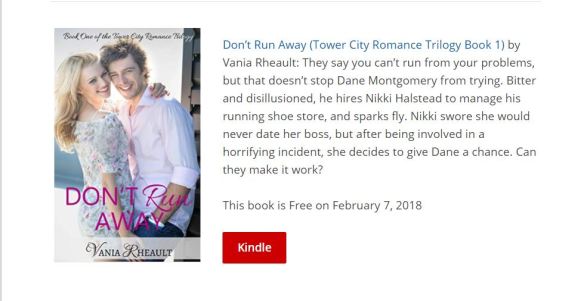
Anyway, this is what the ad looked like that went into their newsletter:

freebooksyad

You’re the one who writes the blurb, and I was afraid I didn’t spend enough time on it. You only get so many characters, and it’s difficult to try to convey what the book is about and still make it interesting in that short space.

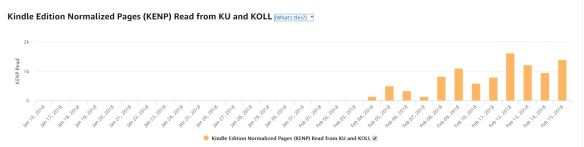
My book was free from February 6th to the 10th. I started getting downloads even before my book went out in the newsletter. In total, while my book was free, I gave away 4,458. Between February 6th and today, February 15th, I have sold fifteen of Book 2 and six of Book 3, so you can see there was a small amount of buy-through (not necessarily read-through), and I lowered the prices of those books to .99 to go with the free promotion. Also, my page reads for Kindle Unlimited for all my titles went up from 0 to this:

page reads for KU

It’s not the best, of course, since even all those lines only represent $25.00 in sales. If you do the math, that’s a horrible ROI, at least, on paper.

Return on investment comes in many different forms, monetary being only one of them. I’m hoping now that I’ve given away so many books, people will remember my name, I’ll begin to foster some lifelong readers for future books.

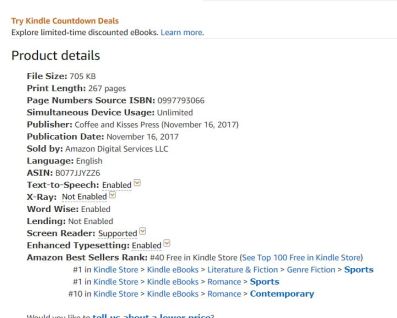
My sales ranking did go up for a little bit, and I can give you a snapshot of those, though I didn’t take a picture every time my book moved up in ranks. And as everyone congratulated me, going up in rank in *free* books looks nice, but it’s not the same as going up in the paid lists.

awesome stats!3

These are the best stats the book got. I don’t know if it did much more than earn me a few bragging rights, but there it is.

Amazon did a nice thing, too and put my books together in an ad on my Author page.

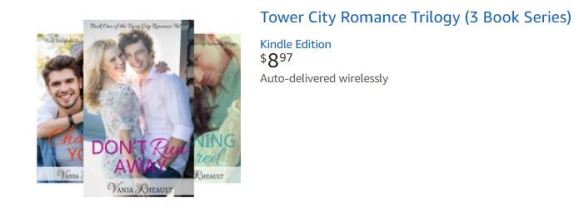
tower city box set

You can’t buy them that way–I haven’t created the box set yet, and that is on my to-do list after I figure out my stupid cover for book three. (Yeah, still wrestling with it to get it exactly how I want it in paperback.)

If you were to ask me the best part about this whole promotion thing, I would have to say that it’s that people are starting to read my work. We all want people to read our stuff, but when they actually do, it’s nerve-wracking. So far I’ve been getting decent reviews. They’ve been saying my editing is solid, and there hasn’t been a complaint about formatting, which is a relief since I do all my own formatting myself.

criticism-3083100_1920

Overall, I would say the experience was a positive one.

If I were to give any advice to someone doing this I would say:

  1. Have more than one book out. I did prove that if you spend money advertising one book, you’re really advertising your whole backlist. Not many people bought books 2 and 3 who downloaded book 1, but it was enough I was happy they were available.
  2. Having a good cover is no joke. It doesn’t seem like a big deal when no one is looking at your books, but the minute you realize people are going to be choosing your book among a selection, suddenly you’re hoping it’s good enough. Be sure it is.
  3. Have a decent blurb. I shortened mine from what I wrote for Amazon, and I worried I didn’t spend enough time on it. Had I spent more time on it, maybe I could have gotten even more downloads.
  4. Have people willing to spread the word. I don’t know how many downloads came from my Twitter followers, or my followers willing to tweet about it. I don’t know how many downloads came from the people who liked my FB Author Page. I was also naughty and told everyone on my personal FB page that my book was free, and I know it’s against TOS to do that. I only did it once, on the day the newsletter went out. And I was lucky a few people shared that post.

I won’t be doing this again anytime soon, but it was fun to try something new and to get my feet wet. A little snowflake can cause an avalanche, and I’m hoping this is true in my case. But now that my trilogy is over and done, I need to relegate it to my backlist and move forward. I’m 31,000 words into a new WIP, and I can’t wait to share with you!

Happy writing Vania Margene

Competitiveness. Let’s Not Talk About It

The other day, I got into a little spat with a couple people in a Facebook writer’s group. Someone announced that they had just published their book. There were a lot of congratulations, but there was one woman who felt the need to edit this person’s post. Yes, there was a typo in it. But it was clear this person hit the comma on their phone instead of the spacebar. No harm done, right?

The fact that she called him out on it wasn’t really what bugged me–it was the fact that her own post had a typo in it. All this poor guy did was post he’d published a book. That’s all. So why the need to attack him? I usually let this stuff go, but the fact she did it with a typo herself made me jump in.

typos_LI (2)

But like all good catfights, it didn’t end there:

i'm going to hell_LI

Did you notice that the person corrected her typo? I wanted to tell her that correcting her typo didn’t make her comment any less bitchy.  The person correcting my comment was someone different, but I like to think I got the upper hand there, too. Know your grammar before you begin correcting people, or you’ll just look like a fool, and yes, it is damaging to your online presence.

I’m trying to figure out why people need to be so callous. It came to me in the shower (where all good ideas do).

We jump on each other because we’re insecure and jealous. These people probably haven’t published anything, and they felt threatened by this person’s announcement.

Does that make it okay? No of course not, but I think it does point out something no one likes to talk about: competition.

Writers support each other, that’s a given. When we’re writing.

But what about when we’re trying to sell our books, novellas, shorts? What about when we try to market our blog posts?

There are only so many publishers/agents/bookshelf space to go around. Whether we like it or not, we are competing for prime real estate.

So when we feel like people are “ahead of us” in some way, be it a new marketing trick, or what????!!!!!! . . . they just put out another book? It can feel disheartening, and it can make some people, not very nice frustrated.

But you know what? It’s okay to have those feelings. We all feel them. Yes, I support all my writer friends; yes, I want their books to sell.

But.

I want my books to sell, too.

Maybe, maybe you can even admit, you want your books to sell more than you want their books to sell.

You can admit that–in a dark little corner of your soul. It’s okay. It’s natural that if someone is choosing between your book and someone else’s you want that person to choose yours.

But it’s what you do with those feelings that matter.

Don’t: attack people online; in the end, it only makes you look bad
Don’t: not write because you feel it’s hopeless
Don’t: stop supporting your friends because they make you feel inferior with their progress or sales

Do: turn those feelings into productivity and work harder
Do: trudge through those feelings and support your friends anyway (Jennifer Probst has a wonderful section on this in her book Write Naked which you can find here.)
Do: keep those feelings to yourself, or confide in someone you trust who won’t turn on you or blab behind your back.

The guy who was put down in that thread PM’d me to thank me for sticking up for him. I have been known to stick my nose in a few places where it doesn’t belong because I’ve been on social media long enough I don’t give a f*ck what people think of me. If I see nastiness, for the most part, I’ll call you out. There’s no need for it. We all have one goal: for people to read our work. Being nasty online is counterproductive to that. You can bet I’ll remember those two women, and if they ever publish anything I’ll look the other way.

Speaking of memory, I remember Rebecca Thorne posted a little something about this during her experience at the Dallas Writer’s Conference in 2016. Must have stuck with me to remember a blog post from over a year ago, and you can read it here.

After I defended my use of and at the beginning of a sentence, I left that group. I don’t need that kind of negativity in my life–and I certainly don’t need to waste my valuable time defending idiots who just won’t get it anyway.

You can be supportive and still want to do well for yourself.

And for those other two, karma’s a bitch, baby.

karma


Let me know what you think!

Vania Blog Signature

PitchWars: Should You Enter?

PitchWars is an annual writing contest where writers all over the world compete for the chance to be mentored by traditionally published authors. If you have a completed novel, you can enter. While mentors comb through entries, everyone involved in the contest spends about a month on Twitter making friends, talking about writing, and sharing their favorite GIFs.

Once picks are announced, mentors and mentees work together for two months on the mentee’s novel. After that, there’s an agent round where roughly fifty agents will read the entries and make requests for manuscripts that spark their interest.

Photo 1

Right? It’s an amazing opportunity to network and get your foot in the door with traditional publishing. The question is, should you enter?

Yes, I think every unpublished writer who wants to go traditional should try it once. I entered this past August and didn’t get a spot, but thought it was a very valuable experience. However, please save yourself some heartache and assume you will not win a spot. Getting into PitchWars is no easier than getting an agent from cold querying.

So why should you bother? As with everything in this bizarre universe of ours, it has its pluses and minuses.

Disadvantages

Seriously, the Odds Are Not in Your Favor

Ignoring duplicate entries, over 2800 people entered PitchWars in 2017. There were 180 spots. That’s a 0.6% acceptance rate. For context, Yale Fucking Law School has a 9.7% acceptance rate.

But let’s say you’re lucky enough to get in. As of July, PitchWars has almost 250 success stories. This means ~250 people have gotten agents out of the 385 mentees selected between 2013 and 2016. Don’t get me wrong, a 65% chance of getting an agent is HUGE, especially compared to the 1% cold query success rate rumor I keep hearing about. But it’s far from a guarantee.

Am I trying to shit on PitchWars? Absolutely not. But you need to go into this with wide-open eyes. You should have faith in yourself as a writer and your journey; your book will find a home (whether it’s with trad pub, self-pub, or small press). But it probably won’t be through PitchWars. PW is not a golden shortcut ticket to unlock the Gates of Traditional Publishing.

The Secret to Getting Picked Is a Goddamn Mystery

Photo 2

In addition to the numbers working against you, there is no real way to know why your manuscript does or doesn’t get picked. Some mentors give feedback, but most do not. Your book has to fit into a specific and subjective set of standards, which include…

  1. It has to be good. Good voice, solid plot, interesting characters, quality writing, etc. are essential.
  1. But it can’t be too good. *facepalm* I know. But if you’re going to work with a mentor for two months, they need to have a vision for what they can do to help you improve the book. Contest rules say to submit a “complete and polished” manuscript, but I would read this more as “complete and copyedited.” Your lump of clay needs to be good, but it still needs to be a lump of clay.
  1. It has to mesh with the mentor’s tastes. Before you submit your application, mentors will post wish lists about what kinds of stories they’re looking for, which is helpful, but look at their backlist too. Does anything about their work resonate with you? Their voice? Their subgenre? The tropes they use?
  1. But it can’t be too similar to the mentor’s body of work. If the mentor has a series about a talking squirrel who solves mysteries with a cynical school janitor, they probably won’t feel comfortable working with you on a book about a talking chipmunk who solves mysteries with a grumpy hotel maid.
  1. It has to be marketable. Mentors are more lenient about this than agents are, but it still has to be clear where your book will fit in the market.
  1. The mentor has to believe you can work together. Mentorship isn’t just about quality and marketability. It’s an interpersonal issue, too. Some mentors will stalk you on Twitter to see if you’ll be a good fit.
  1. Weird miscellaneous factors can decide your fate. Maybe your protagonist has the same name as their favorite niece. Maybe your book takes place in their hometown—which they HATE. As they always say, this business is subjective. Considering some mentors have hundreds of entries to wade through, it could be literally anything that puts your book in the “Yes” pile.

Not surprisingly, aside from #2, the reasons a mentor will accept or reject your work are similar to why an agent will or won’t request more pages. Once again, PW is not simpler or easier than cold querying an agent.

Social Media Is Hell

What makes PW such an event is the social media component of it on Twitter, but to be honest, I have conflicting feelings about that aspect. In the weeks leading up to the submission window opening, there are all kinds of Twitter games, encouraging you to get to know mentors and other PW hopefuls. Once the submission window closes, the Twitter party continues for another month…but it gets more intense.

The entire purpose of the PW Twitter community is for everyone to get worked into a literal frenzy. They want you to be excited and proud of your work, which is a nice thought, but it also sets up unrealistic expectations. Many mentors post teasers about entries they’re enjoying— there’s an entire hashtag for them. There are also endless posts telling you to stay positive because there’s always a chance you could win a spot. It was an exhausting rollercoaster.

At least with agents, you know to pray for the best but expect the worst. Cold querying is beautiful in its simplicity. I send out my package, note the expected response dates in a spreadsheet, and walk away. If I follow agents I’ve subbed to on social media, I don’t have to worry their posts will be hints about submissions they’re reading. Some agents do #tenqueries, but those posts include specific reasons for passing on or requesting more pages of a project. They don’t post cryptic messages about something they might pick.

So if you do enter PW, protect your space. Like all social media, PW Twitter can become too much. Don’t be afraid to block hashtags, mute certain accounts, or take a break.

Advantages – Why You Should Enter Anyway


Photo 3

I know, I raised a lot of issues with the contest, but I still think it’s worthwhile to enter at least once. Whether you’re new to the querying trenches or are a seasoned pro, PW has something to offer.

 If You Do Get Picked, It’s a Great Opportunity

It doesn’t hurt to buy a lottery ticket—just don’t gamble away all your money. Go in with low expectations, but if you do have the fortune of getting selected, the mentorship alone is an amazing opportunity. Not only are you getting free, in-depth help from a professional writer, but you’re also forming a connection with them. I often hear about mentors who still talk to and help their former mentees with their writing. Like with any other industry, you need connections to thrive. Mentorships are invaluable.

As I said earlier, the agent round may or may not yield fruit, but it does boost your chances.

You’ll Make New Friends and Expand Your Twitter Presence

While I wasn’t a fan of certain aspects of the PW hashtag, overall, I did enjoy the sense of camaraderie among entrants and mentors. If you participate in any of the games (e.g., GIF competitions) or interact with the hashtag, you’re bound to connect with other PW hopefuls. Some of these people will become followers, critique partners, and even friends. For some writers, PW has become as much a valued tradition as NaNoWriMo because of the unique community.

PitchWars is also a good excuse to post content and build your brand. Twitter is the most popular social media platform for us writer types, so if you’re looking to network, it’s the place to be. Many unpublished writers are using their growing platforms to build hype around their manuscripts by showing off novel aesthetics, character interviews, and memorable quotes. Taking advantage of the PW hashtag can help you with that.

You’ll Discover New Authors

Since mentors are wading through their slush piles for free, it’s nice to give back by reading their books. There are over a hundred PW mentors, so there is plenty of new content to discover. You might find your next favorite book or a new comp title to use in your query letter.

It’s Good Practice for Rejection

If you haven’t queried agents or publishers before…Welcome! PitchWars is a great way to rip off that first Band-Aid of rejection because there’s going to be tons of it, regardless of how you publish. Agents will reject you, publishers will rebuff you, and readers will scorn you. Get in the practice now with PitchWars. Rejections from faceless agents are way easier to digest after getting rejections from friendly mentors you bonded with.

It’s a Kick in the Pants

Most people don’t enter PitchWars because they simply happened to have a polished manuscript lying around. They prepare. Whether they just found out about PitchWars existed three weeks before the deadline or they’re a third-year PitchWars veteran, PW hopefuls haul ass. If you’re looking for motivation, the contest is a great stimulus for finishing your book and writing a query letter. Even if you don’t get a spot, you’re still way ahead of where you were before.

Photo 4

PitchWars will re-open in August 2018, but you can read this year’s winning entries here: www.pitchwars.org

nadia's logoNadia Diament writes sexy, funny things. You can ask her esoteric questions on Twitter here, check out her blog here, and read her stories here.


Why I Canceled my Twitter Chat

Last night I canceled my chat.

CANCELED

I think there was some surprise, and there was a little disappointment.  But I’ve been running it since April, and while it has been fun and I’ve made a lot of friends, I think I managed to get all that I could out of it.

Let me explain.

There are a lot of chats out there.

There are a gazillion chats on Twitter. You can find a chat on any day of the week, sometimes more than one, sometimes even more than two or three or four.  There are only so many hours in the day, and writers are busy. When they decide to give up some writing time to participate in your chat, they are giving you a gift. But since there are so many chats on Twitter right now, I was finding it hard to compete.  And because there are so many chats on Twitter, it was hard to stay original. Finding topics and themes that weren’t being used by other Twitter chat hosts was impossible. (If you want a complete list of chats and Twitter writing games, look here. Mica does a wonderful job of keeping everything in order.)

I chose the wrong hashtag.

My chat never achieved the elevation of other chats. This isn’t me being whiny, I’m just stating a fact. I had my regulars, my friends who wanted to support me (thank you!), but in all the months I hosted, it never blew up to the epic proportions I wanted. I think this had a large part to do with my hashtag. #SmutChat was a chat for everyone, and I tried to make that clear. But I think lots of people avoided it because they thought we were going to talk about romance or sex, or only the Romance genre, or Erotica. Had I chosen a more generic hashtag, I may have seen more movement. Perhaps if I had chosen to go full-blown smut and only focused chats around that topic, I could have drawn in the romance and erotica writers. I tried to go down the middle of the road, and it didn’t work. That was my mistake.

I was going broke.

At the end of #SmutChat, I gave away a writing resource that tied in with the topic. To me, this was genius; to everyone else . . . no one seemed to care all that much. In actuality, I had to plead with people to enter the giveaways, and there were never more than 6 or 7 people entering the giveaway at the end of every chat. There is so much free stuff on Twitter right now, the giveaway did nothing. I even had one person who won tell me they would get a hold of me when they found an address they were comfortable giving me. I offered the e-book version instead, but they said no. I can only take this to mean the person who won didn’t really want it to begin with, and that book is still sitting on my bookshelf. I didn’t mind spending money on the books and the shipping, but I was beginning to feel underappreciated. That’s no one’s fault but my own, being it was my idea to do the giveaways. I was hoping to set my chat apart from other peoples’ chats, but it didn’t work so well.

I have a publishing schedule I want to keep.

I have three books coming out in the next three months, and I have another book rumbling around in my head that I will write after my trilogy is released. Until they host one, no one can understand how time-consuming a chat is. They are a lot of work. Thinking up the topic, doing the graphics, tweeting about it. And that’s only the prep work. You have actually sit down and do the chat, and sometimes people will answer late, or the next day. As a courteous host, you want to try to touch base with everyone so I would be on the computer one or two hours after chat, and I would also answer tweets the day after. I know this is a counter-argument to the one where I wanted chat to grow even bigger because I would have spent even more time on it. Maybe I would have felt all the time spent on chat would have been worth it then. I’m not belittling the people who did take the time to participate, but sometimes you have to decide if you want to go big or go home. I decided to go home.

Think about what you want to get out of your chat.

What do you want to achieve with a chat? I had chat twice a month, and I would say I spent about 12 hours a month on prepping and the hostessing. What do you want to gain out of giving up that time? Twitter followers? What will you do with your followers once you earn them? Twitter doesn’t sell books, so those followers you gain will do nothing but plump up your numbers. Are you holding a chat to add it to your platform? That was my initial reason. I was doing something tangible that would add to my social media platform. But there again, you’re building your platform to sell books, connect with readers. Putting on a chat doesn’t do that. If you want to just make friends and connect with your followers, then hosting a chat is for you. If you want anything else out of it, think about what else you could do instead. Blog more, put that time into building your website. Write. Having a platform doesn’t do you much good if you’re not writing and/or publishing. Can you get what you want out of a chat by participating in others’ chats? I think with the little bit of free time I’ve recouped from canceling mine, I will participate in a bigger chat where I can still make friends, talk about a topic I love.

In parting, you may think this was just a big whiny blog post about how my Twitter chat didn’t go well for me, and now I’m crying about it. I’m actually blogging about it so anyone who is thinking about starting a chat knows the pitfalls of hostessing/hosting a chat, and what it entails. I appreciate every. single. participant. of my chat, and I have made some wonderful friends during the months I hostessed.  I started chat in April of 2017, and I ended it right before NaNo and the holidays could take people away. I feel I ended it on a positive note, and I’ll still be doing chat, in my own way. I’ll be blogging about the topics I want to talk about, rather than holding a chat. I’m hoping this will drive some traffic to my website, and I’ll encourage comments at the end of my posts. Maybe this won’t work either, but like anything in life, if you don’t take risks, you won’t get anywhere. I took a chance with chat, and I enjoyed it. But you have to know when to cut your losses if something isn’t working. Good luck to those of you who want to start a chat. And I’m not disappearing–I’ll still be on Twitter a lot. I’ll participate in other chats and enjoy the hard work I know goes into one. I’ll let the hostess handle the rest.

Tell me what you think!

Vania Blog Signature

Five Reasons Why I’m Not Marketing My Books Right Now

As always in conversations about self-publishing, the subject of marketing your book comes up. I hosted a Twitter chat last week on Self-Publishing, and people wanted to talk more about marketing than anything else.

blogs-marketing-2646804_1920

I get this. I mean, we all want people to find our books; we write so people can read our work. But when people ask me what my plans are for marketing my books, I have to tell them, I have no immediate plans.

And here’s why.

  1. I don’t have enough content.
    You don’t need a marketing plan if you have no content. (Good grammar for a writer, huh?) Various numbers come up, but I follow @BadRedheadMedia‘s #bookmarketingchat on Twitter, and in one of her tweets, she said your career doesn’t start an upswing unless you have 6 to 10 books published. That seems like an impossibly high number, and when I first started in self-publishing, that number was 3 to 5. But with all the new writers publishing books, it’s harder and harder to make a name for yourself, and I believe that number will get higher as the market floods even more.
  2. I don’t want to throw money at one or two books.
    This kind of goes hand in hand with number one. I do have content, but not enough to warrant paying for any kind of marketing. Even if you were to stumble upon a plan that works and drew people to your book, after you draw those readers in, they’re done. They have no backlist to read through if they like your work. I’m too poor to start over every time I publish a new book. When you spend on an ad to market one book, you’re actually advertising your whole list.
  3. I genre-hopped.
    I wrote a Romantic Fantasy for my first go at publishing. I wrote it expressly to experiment with publishing, to get a feel for the process. On the Corner of 1700 Hamilton is two different novellas of the same story, one told from my male main character’s point of view, and one told from my main female character’s point of view. Summer Secrets is six novellas. The story is about six couples told in chronological order, and I published them together so readers would be forced to read them that way. These are Erotica and not my genre of choice. Since I’ve published those, I’ve settled into Contemporary Romance, full-length novels at that, and I don’t want to spend money on books that are not in my genre. When I market my books, I’ll market books that will be the foundation of my writing career. There is no point in marketing books in a genre I won’t write anymore.
  4. I’m researching how I want to market my book.
    I’m reading books right now on how to run Amazon ads, how to run successful Facebook Ads. I read a book on how to use Goodreads as an author. Marketing takes time and money—I don’t want to try these vendors without knowing what I’m doing. I talk to people who have tried various things and they say they don’t work, but they didn’t take the time to figure out how they work so they don’t waste money. It’s important to know what CPC (cost per click) is, what RT (not retweet, you tweeters) Read-Through means, and how to calculate ROI (Return on Investment, not a weird spelling of your sister’s boyfriend’s name). Knowing this stuff puts you ahead of the game, so you’re not wasting money on tactics that won’t work. Here’s a tip: If a person put together a class, say Mark Dawson and his Facebook Ads class, then that way of advertising is complicated and investing a few hours of your time to learn how it works and maybe learn some insider tips can only help you.
  5. I’m networking.
    Yes, networking is a part of marketing. When you hear that you should start networking a year before your book comes out, that’s not a lie. Some suggest even longer. You need to get to know book bloggers—be a blip on their radar as an acquaintance, even a friend, before you have a book to peddle. There is nothing more irritating than having someone introduce themselves to you for the sole reason to ask something of you. Follow them on Twitter, like their FB page. Wish them a nice day, or a great weekend. Listen to podcasts by successful indie authors, like their FB pages, follow them on Twitter, read their books. Become involved in the indie-publishing community. Everyone knows everyone in this business, and you want everyone to know you. I listen to The Sell More Books Show podcast, and Jim Kukral and Bryan Cohen host. Bryan Cohen wrote a book, How to Write Sizzling Synopsis, which I bought to support him since I love the podcast. It’s a wonderful book, and I’ve written Don’t Run Away’s blurb with his tips. It took me 15 minutes. It was fabulous. One day I was listening to their podcast, and they had a guest, Michael Cooper. Coincidentally, I was reading his book about Facebook Ads, because someone in Brian D. Meeks’ Amazon Ads Facebook Group recommended it. I’m in his group because I read his Amazon Ads book, and he runs a Facebook group for his readers who want help with their ads. Funnily enough, it wasn’t that long ago he did a guest spot on Joanna Penn’s podcast, to talk about his book. Everyone knows everyone. I’m not suggesting you get to know people just to use them. But if you get to know them, even peripherally, (I tweet and blog about their books all the time; well I tweet and blog about any books I like all the time) then maybe one day when you cross paths, they’ll already have heard of you and will be more willing to help you out, by say, inviting you to be a guest on their podcast. Networking, letting relationships grow naturally, organically, takes a lot of time. Start before you’re desperate for publicity.

Those are my five reasons I’m not marketing right now. I’m writing books to have a decent backlist before I throw money at anything. When readers find me, I want them to ask, “Where has she been all my life?” not, “Oh. She only has one book out?” I’m learning how to market, where best to put money so I don’t waste it. As I do that, I’m getting to know the heavy-hitters in the indie publishing world. Even if you’re not so keen on getting to know them, you can at least study what they do in their careers, what makes them successful, so you can duplicate it.

How long will I “prepare” before I actually punch in my credit card number, or submit my book to a blogger?

It depends on how fast I can write.

Check with me next year.

I Googled “How many books does it take for an indie author to start their careers in 2017?” While I didn’t get a straight up answer, the Google spit out some interesting articles that you can read here and here.

Tell me what you think!

Vania Blog Signature