Catching up with what I’m doing and Bits and Pieces of Publishing News.

Lately my blog posts have been a hodgepodge of little things to make up a whole post. It’s tough when you don’t have a lot going on, and sometimes I feel like my blog posts are the blind leading the blind. I don’t have much to offer in way of advice, particularly because I haven’t found anything that is working for me sales-wise.

Anyway, like everyone else, I’m glad the election is over, though I”m sure we’re far from finding peace. Hopefully that won’t deter readers from reading like it has over the past few weeks. I can’t tell you the number of authors who have complained about sinking sales. It is what it is. I’m in the hole with my ads this month and I paused all of them and created a few new ones to target holiday romance for my series. What’s really nice is that Amazon now lets you run ads to your series page which allows a reader to pick up all the books with one click.

We’ll see how that goes. I haven’t done the math to look at read-through for all my books, but I can do that now, out of curiosity. The last book was published in May of this year, so I only have five month’s of data too interpret. Using the read-through instructions and formula by Malorie Cooper on Dave Chesson’s Kindlepreneur website, read-through is dividing the copies of the second book sold by the copies of the first book sold. You have to do a little math if you’re in KU.

Remember, the number of KU pages read divided by the number of KENPC pages in your book will tell you how many books those page reads equal to.

Doing the math, I have sold 214 of the first book in my series between June 1st 2020 and October 31st. That total includes both sales and KU pages read.

I have sold 97 books (together with sales and KU pages read) of book two.

That’s a read-through of 40%. 40% of my readers who read book one went on to read book two.

A profitable series will have a strong read-through for all the books, and we can calculate read-through of book two to three doing the same math:

Book two’s sales and KU page reads was 97 books. Book three has a total of 76 books sold. (Together with sales and KU reads.) That makes read-through (76/97=) 78%

And read-through from book 3 to book 4 using all the same formulas: 88% read-through. Meaning 88% of people who read book three will finish the series and read book four.

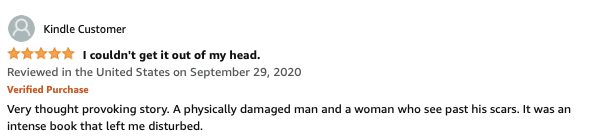
According to Mal Cooper, my 40% read-through from book one to book two could indicate a problem. I already know from reviews that the reception of my male main character is lacklustre at best. As I’ve said in the past, a physically damaged character is neither sexy nor romantic. Besides trying to market the book as a beauty and the beast retelling, there’s not much I can really do. His injuries make the whole book. It’s nothing I can go and change to encourage read-through. My sales from book one to two will just have to be a lesson in the future. It’s also a reminder if you’re going to invest time in a series, you need to hit it out of the park or the other books won’t matter. Your book one won’t be good enough to entice readers to read them.

I will keep an eye on my ads, make sure they stay profitable. With the holiday season approaching, if I can grab a couple sales and come out ahead, it will be worth advertising.


photo taken from their website

In other news, IngramSpark has decided to give ISBNs away if you publish through them, like Kindle Direct Publishing has done all along. The only problem with that is if you publish on Amazon and use their free ISBNs, you can’t turn around and use those on Ingram. Then you take the free ISBNs from Ingram and all of a sudden your book is listed under many numbers, and that doesn’t sound good to me.

I realize buying ISBNs in the States is a big pain, not to mention very costly, but when people say you need to invest in your business, this is what they’re talking about. You need to protect your work. I buy my ISBNs from Bowker and use the same paperback ISBN on both Amazon and Ingram. That way my paperback is listed under one number. The one I paid for that belongs to me. That’s important to me. I also use an ISBN number for each of my ebooks. Some will say that’s a waste of money because Amazon will assign your book to an ASIN number, but then if you’re wide, you can’t use that ASIN number as that belongs in only Amazon’s system. So there again, you have different identifying numbers for every ebook platform you publish on.

There is has been argument in the past that you can’t use the same ISBN number for a .MOBI file and an ePub because they are different formats. Then you have people who say that a digital file is a digital file. When I went wide, I used the same ISBN number for my ebooks across all platforms and nothing bad happened. I can’t imagine this would even be an issue now that Amazon asks you to upload an ePub to their platform instead of a .MOBI file.

You can have Ingram distribute to Amazon, but I’ve heard of people having trouble with their books being available (listed “out of stock” instead) and you don’t have access to your KDP dashboard and you can’t run ads if Ingram supplies your books to KDP. It’s always better to go direct where you can. It might take a little hassle, but then, we went indie to stay in control, didn’t we?


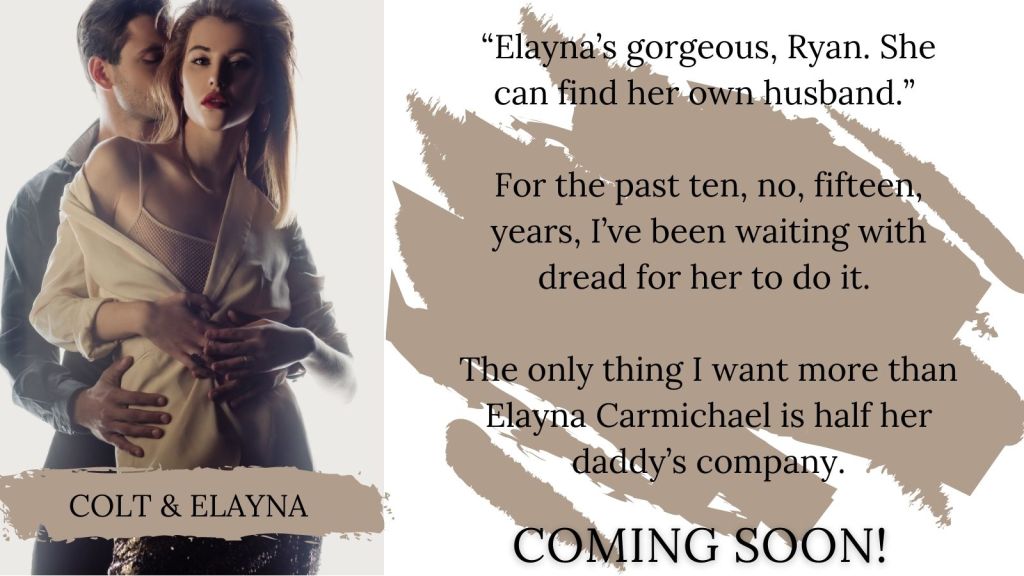
I’m 20k into my new project, about a man tasked to finding a husband for his boss’s daughter in exchange for a portion of the company he helped build. It’s going well, though I feel like no matter how much planning I’ve done with this book, I’m pantsing it. Maybe I’m just tired or maybe I’m still not used to writing in first person present, but it’s coming along, and if I keep up the slightly faster pace than a NaNo participant, I should be done with it by the end of the month. We’ll have to see if that happens. I have a lot coming up in the next couple of weeks, namely a longer work schedule, Thanksgiving, a couple of birthdays and possible jury duty. I write when I can, though, so if not by the end of the month, by the middle of December, for sure. Here’s a sneak peak of a sliver of a scene I wrote the other day. There is potential for spin-off books, but I still have my 6 book series I need to polish to release next year. I’m grateful there is so much to write about.

Man in suit leaning against a grey stone wall. Text:
I meet his eyes. They’re hard, bits of frosted green glass. “We’re beyond that now, don’t you think?”

We aren’t talking about sex, we aren’t talking about love. We’re back to his fucking fifty percent and what he’ll do to get it.

“I—”

“I’ll fulfill my end of Dad’s bargain. Sit back and collect.”

He nods, turns to go.

“Don’t come back, Colt. There’s nothing between us anymore.”

“Don’t fool yourself, Elayna. There never was.”
created with Canva Pro. Photo purchased on depositphotos.com

That’s going to be all for today! I hope you have a productive week! Good luck to those participating in NaNo!

Thursday Musings: Working from home, new processes, and a new book!

Happy Thursday, everyone! We are all on pins and needles waiting for the election results. No matter who you voted for, I hope our president can make 2021 a great year for all of us!


Last week I finished another round of edits for my King’s Crossing Billionaire Series. I wish I could afford to send them off to an editor and wash my hands of them (except for putting in the edits afterward, of course) but I have no idea how a prolific author can afford an editor, even paying for simple proofreading, if the money isn’t coming in yet. I’ve snooped around for pricing, but man. Editors charge a lot. I totally get that, but scraping up the money for project after project, I don’t get how indies can afford it. I mean sure, I understand that eventually you’re going to make money, but if you’re not quite doing that yet, it’s tough to afford editing. Everyone says it’s an investment, and it really is, but you shouldn’t have to choose between putting out a quality book and paying for food. It’s tough. So I’ll be taking a break from those 6 books and come back to them after the New Year with fresh eyes. I”ll listen to them and make more changes and then go ahead and put them out.

Until then, I’ve started a standalone in first person present POV about a man who is tasked to marrying off his boss’s daughter for a share in his boss’s company. He falls in love with her instead, naturally, forfeiting his share of the company for love. Tentatively titled The Contract, it was supposed to be a reader magnet for my newsletter I wanted to get up and going this year. I’m 12,000 words into it already, (I started it Monday of this week) have most of the book outlined, and to be honest, I don’t want to give it away. I think it would be a great first book under my new name for the first person books I’m going to start writing. (I still go back and forth with what that will be. Some derivative of my real name is all I know.) This leaves me in a real jam because I should have my newsletter set up for the back matter of The Contract. I don’t need a reader magnet for organic signups like that, but I should have something which means writing something else in the near future. I just need something simple that will be a novella-length book that I won’t feel bad about giving away. Maybe I can pull something out of a plot generator and take six days to write 30,000 words of…something.


My new project would qualify me to do NaNoWriMo this year, but I’ve never needed the motivation to write quickly. I enjoy the work for what it is, and have enough support on Facebook in some of my groups. I don’t know how long The Contract will turn out to be, but it would be nice if I could hit the 80,000 word mark or so. We’ll see. I always stress about word count–it seems it’s part of my process.

Speaking of processes, starting a new project while working from home is different. When I used to go to work, I only had a notebook and pen, and being I was attached to my call station, I didn’t have any distractions. Working from home is a lot different environment, and sitting with a pad and pen here feels weird. I still need to outline–I’ll never be a good pantser. I need to know where the story is going or I would never be able to write as fast as I do. But not going into work doesn’t give me the downtime that was forced upon me, and I have to actively make time to daydream about my characters, brainstorm plots, and generally imagine the pieces of my book to put them together on paper. It’s definitely a new way of doing things.


I’ve had to pause all my ads because I’m eight dollars in the hole already this month. It would be nice if I could keep my series moving as it’s a winter wedding setting and takes place a couple weeks before Christmas, but this is a bad time of year and I don’t want to pump money into ads if no one is the mood to read. I see lots of that in my FB groups now–how everyone’s ads are dead, no one is buying and is there anything they can do? The answer is no. If there’s no demand, there’s no need for product. If people are worried about the election results, stressing if it’s safe to gather for Thanksgiving, and if the answer is yes, then doing the grocery shopping, Christmas shopping, and whatever else people are busy with this time of year, you can’t make them sit down and read your book. You’re better off forgetting ad maintenance for now and writing something new so you have a new release set up for when all this craziness is over. I know it’s a different story when you depend on your royalties, and I’m not there yet. But spending time tinkering with ads, trying to get them to deliver impressions and clicks is a waste of time.


That’s all I have for you on this Thursday’s author musings. I’m excited to be writing something fresh, and I don’t think it will take me long to get this book done. Hopefully I’m looking at a February release, and then over next spring and summer I can get my 6 book series out. I’m not so down in the dumps as I was a couple of blog posts ago. Life happens, and all you can do is roll with it.

Have a good weekend, and thanks for reading!


Content Marketing, easier said than done.

woman holding coffee cup quote:One of the best ways to sabotage content is to not tie it to your goals. Know why you’re creating content. 

– Ellen Gomes

When we think of content marketing (and really, who doesn’t think about it at least once day) a lot of us probably have no idea what that is. We hear the phrase a lot, especially us authors who have a lot of content to sell and share. At least, we should have a lot of content to sell and share. After all, we’re creators, and we should be creating content on a regular basis.

I had a friend a while ago (we don’t talk anymore–she’s one of those people who have faded off) and she had this problem. She desperately wanted to be part of the writing community. Her debut novel flopped, and her self-esteem took a hit. She was never really the same after that, though she tried. The problem was, and still is, she’s not writing. So you can imagine the difficult time she has trying to fit herself into the writing community when she’s not writing. Or more specifically, she has no content to share on social media. I see her really struggle find her place on Instagram, create her Facebook Author Page, she hasn’t blogged for months, and nothing she has found works. She’ll post, delete her profile, lay low, come back, post, delete her profile, and I feel like I’m on some weird merry-go-round. I can’t imagine how she feels. And lest you think this is me just poking at her for something to blog about, let me be clear, when we were talking, I tried to tell her this. Many many times. You have no content if you’re not writing.

So what is content marketing? Content marketing is sharing content for free, to lead customers into paying for other content. Where does this content come from? See, this is my ex-friend’s problem. If you’re playing the writing and publishing game, I’m assuming you’re creating it. If you’re not, then you have nothing to share. Novels, novellas, short stories, even flash fiction. The best content can be repurposed. Blog a short story for feedback, then sell it. Give away novellas, then box them up and sell them. Take excerpts from your books and make pretty graphics. If you pay for Canva Pro, it now lets you schedule your graphics onto your FB author page and you don’t have to worry about remembering. Blog a first chapter then put the buy link at the bottom and encourage your readers to buy the book to read the rest. Newsletters too, are all about giving your readers something for free and then when you have something to purchase, they will.

What my ex-friend needs to do is stop worrying about social media and start writing.

What else can you post on social media?

*Share books you like. I’m assuming (lots of that going on here) that you write what you love to read. If you think of your FB author page as a community rather than something you have to do, it might help. Share the books you have loved, talk about why you liked them.

*Find a “calendar” of things to post. These are floating around social media–the challenges authors post for 30 days of content. Every day is something new. A selfie and five things no one knows about you. Your favorite writing spot, the pets that keep you company while you write. A favorite quote from a book. This is an example someone posted in an Amazon Ads group I’m in for Instagram. You can grab some of these ideas to help brainstorm. Some of these are more for fellow writers than readers, and you’ll have to be careful you don’t start posting more for your peers than your readers. A lot of us fall into that trap, but the writers I know aren’t the readers who will sustain my lifelong publishing career.

#autumnauthorchallenge daily social media ideas

*And of course, you want to share your works in progress. Talk about your characters, what sparked that idea. Why you’re writing what you’re writing. You can give updates on release dates, ask for reviews, if you have two potential covers for a book, take a vote.

If you’re creating content, actually creating it regularly, you shouldn’t have a problem sharing, even if it’s raw, unedited. Sometimes readers like that content best. They get in on the ground floor of a building and can watch how it’s built, from the basement all the way up to the penthouse.


These are all ideas I need to start doing for myself. Trust me, I only have 128 people liking my FB author page, and for good reason. There’s nothing but tumbleweeds drifting by because I don’t think of my FB author page as a community where readers of romance can come together and chat about books. I feel it’s a time suck, just a place where I have to go to waste time instead of writing. Content marketing doesn’t have to take long, though, and that’s something I need to remember. As long as you are writing regularly, the hard part is already done. Making time to write consistently is difficult for a lot of people because they’ve hit a snag or they’ve lost faith in their abilities. Imposter syndrome can hit hard. I’m not going to say people run out of time, because in 24 hours in a day, if you really want to find time to write, you will. If you have time to watch a television show, you have time to write.

Deleting profiles and putting them back up only to take them down again has a lot of consequences, mainly people will lose faith in your ability to stick it out for the long haul. Every time you delete your profile, you have to start from zero. It’s hard enough doing it the first time. I remember posting my very first blog post and I had zero subscribers. I can’t imagine doing that willingly every couple of months. It also hits your SEO.

woman holding a coffee cup. quote: google only loves you when everyone else loves you first. wendy piersall

Search engines like Google favor websites and content that has been around a long time and that offers current and relevant information to the person using the search bar. Every time you start over, you’re starting you SEO from scratch too, and that’s not a smart thing to do. In a private window, I searched for Chance Carter. A couple years ago I wrote a blog post about the things he’d done to his readers scamming the indie community. If you search for Chance Carter now, my blog post is on the second page of results. He was so popular he still takes up the first page of his own search results, but I find it pretty fascinating that something I wrote about him is still so popular that I get hits on that post every day, and lands me on the second page of Google results. I never would have gotten there if my website didn’t have an online history.

I sincerely hope my ex-friend finds her place. We don’t talk anymore, mainly because like a drowning person struggling in the water, I didn’t want her to take me down with her. These past few months I’ve been trying to make connections with authors who have the same work ethic and visions for their writing careers as I do. Maybe one day she’ll find her path, and I hope she does. It’s hard for me to watch anyone hurting.

She will continue to struggle though, if she’s not creating. Write those books, those novellas and short stories and share them with your readers! Create your content, create your community, and you’ll find content marketing will be a lot easier when you have something, and someone, to share it with.


Sales vs. Borrows: What they mean for your business and other rambling thoughts.

Happy Monday from cold, chilly, and snowy Minnesota!! It’s not so happy for me since I had a hell of a week last week, and not in a good way. Unfortunately, I had a huge personal setback, and in the coming months I’ll be working a lot more hours at my day job. I don’t know what that’s going to mean for my writing. I type for the deaf and hearing impaired, and going from part-time to full-time may slow down my writing some. Not because I won’t have as much time, though that will be a factor, but I just can’t type that much without my arms and hands paying the price. Luckily, I’m in the editing phase of my books, but when it comes to future projects, they won’t be done as quickly.

girl looking over cliff  text: trying to figure out your path feels like a dead end at times.

That’s okay because I’m still trying to find my way in this business, and I’m wondering if I’m really going to make it or if I have the energy to even keep trying. Everyone knows that a book a year is too slow for indie publishing (unless you’re the exception that proves the rule like Jami Albright), and I’ve seen time and again those authors who are able to only release one book a year struggle to find success. On the other hand, for the past three years I’ve been burning the candle at both ends, and all that has gotten me is a big case of burnout. Don’t get me wrong, I’ve enjoyed writing this series, and I can’t wait to publish them. But I’ve never made it a secret that I hate all the stupid crap authors have to do to find readers–newsletters, giveaways, author promotions, things like that, that take time to learn and author promotions are only as good as the authors and their books. It doesn’t help your career at all to join with an author who isn’t writing quality books. And because I haven’t declared a niche, it’s difficult to partner with authors who write what I do. I’m a loner in life, and I guess I’m a loner in this business, too.

Maybe, in a small way, it will be a relief to give myself permission to slow down. I could start reading again without guilt. I could watch Netflix without feeling like I should be writing. I’ve always scoffed at people who have hobbies other than spending all their time writing, like baking. I always thought if you weren’t putting in 20 hours a week writing that you weren’t taking it seriously, and I admit, I had a lot of scorn for people who let their personal problems get in the way of their writing schedules. I mean, I wrote books through a divorce, through carpal tunnel surgery, through my precious cat’s bladder surgery, through my son’s surgery on his back in February of this year. (And he’s still healing.) None of that stopped me. I love to write, didn’t let anything get in the way of the career I was trying to build. I won’t say it’s for nothing, because I have a decent backlist and it didn’t take me long to write and publish them. But if you factor in ad spend, I only earn pennies a day, and I’m at the point where I’m wondering if it’s really worth it. Publishing is like the lottery, you can’t win if you don’t play, but cutting down my word count to a few thousand a week sounds pretty good right about now. Yeah, I’m writing this crying my eyes out. You don’t have to tell me I need to find balance, but in a world where there are 8,000 titles published every month, it’s a bit difficult to find anything meaningful in what I’ve chosen to do with my free time. Maybe the next book I write will go on wattpad. More people will likely read it if it’s free.


Anyway, I should start a weekly “Crazy Crap I read in a FB Writing Group” segment to the blog. To make matters worse, I just joined another group, this one is called Publishing with IngramSpark, and I already hate all the stupid questions they ask that they could find the answers to if they took a minute to Google instead of asking someone to waste their time. That’s not what I wanted to bitch about however.

[Insert grin here.]

Last week there was a woman who posted that she took her book out of KU ten days after enrolling in KDP Select. Everyone told her that wasn’t enough time to make a decision like that, and I told her that a wide audience and a KU audience were different and you need time to cultivate both of them. Hopping back and forth isn’t the answer. She said her reason for going back to wide is she preferred having sales over KU borrows. Now, she wasn’t getting any borrows–if you’re not doing ads KU subscribers aren’t going to know your book even exists. So her sales dried up and weren’t replaced with KU reads. That’s common switching from wide to KU.

But it made me wonder: would you prefer a sale or a borrow? A sale gives you the royalty and the sales rank boost, a borrow will only boost your sales rank–you don’t get paid unless the customer starts reading, and even then you may only get partial royalties if they don’t finish. That’s information Amazon doesn’t share with us. It would be nice to know if out of 330 pages read, if that was one person who enjoyed the book, or several people who borrowed and couldn’t get past the first chapter then returned it unfinished.

An author who may not be confident in their book may not like being in KU. Is it safe to say only the “really good” books thrive in KU? The ones that are well-written and have a fantastic story that make the reader read until the very end? You can only reap the benefits of KU if your book is good enough for a reader to make it to the end. And forget it if you’ve written a series without a strong first book. No one will read the others, and the books will sit in KU without reads or sales. I looked up her books, and she had one book, and one on preorder. She’s searching for the brass ring, but she’s not going to find it with so few books and jumping around from platform to platform. I wish her all the best.


Being that this will be my last blog post of the month, and that November is one of the craziest months of the year for me (my daughter has a birthday, Thanksgiving, and my birthday not to mention any Christmas shopping I want to do happens in November because I refuse to go into a store in December) my blog posts for the rest of the year may be a little spotty. I’ll share my stats now, and then maybe do a year-end recap toward the end of December. And no, I’m not doing NaNo this year. I never do it. I’m never in a good place in my publishing schedule to do it, and I won’t set anything aside to work on something new. This is probably the only time my tunnel vision has helped me. I don’t like working on multiple projects–I won’t get anything done that way.
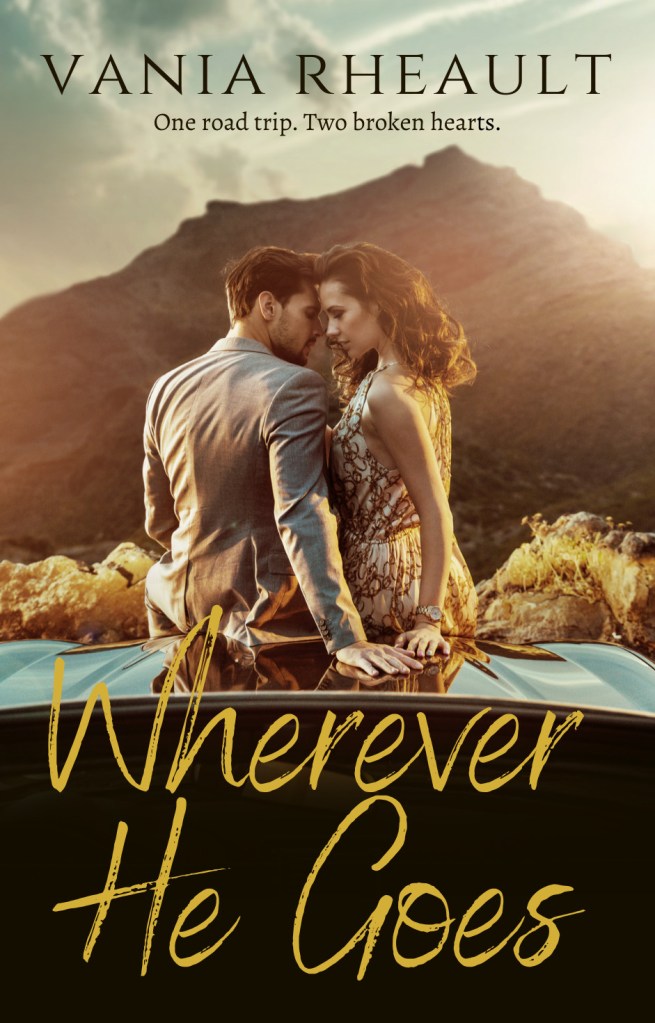
Anyway, so my ad spend, while not as fabulous as it was in August (still waiting for those royalties to dump into my account) I spent $48.36 as of this writing, the 25th of October. I’ll probably spend $50.00 maybe a little more, by the end of the month. This is over ten ads. I had to stop the ads for Wherever He Goes. I lost eight dollars before I paused them. I don’t know what’s wrong with that book, but I’m never going to make it move. Maybe it’s still the cover, maybe I can’t make the blurb work, but I’m tired of trying. I love the story, but it’s not going anywhere.

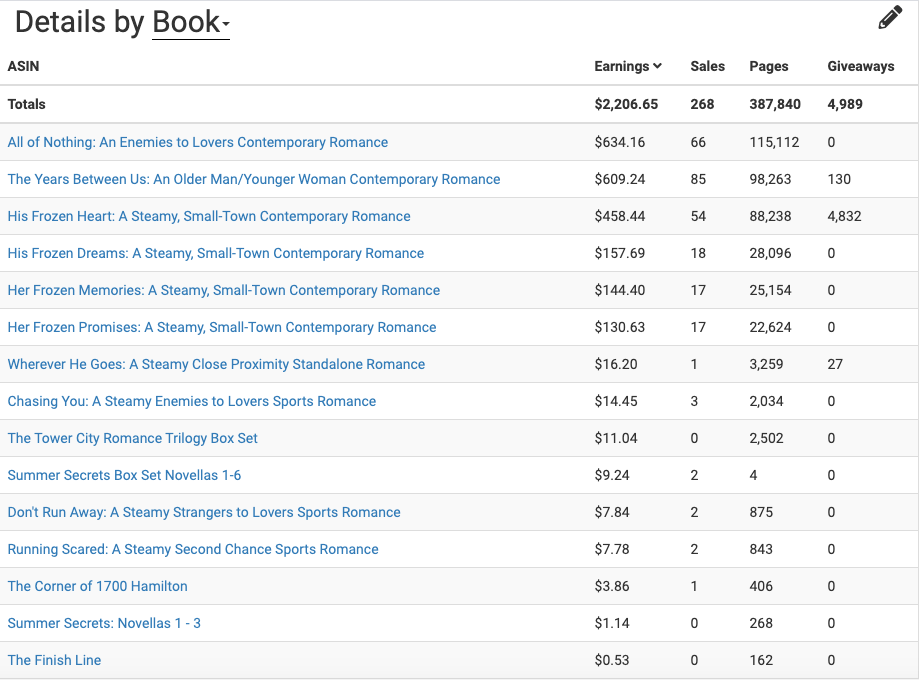
For sales, I’ve made $116.99. I’ll probably make it up to $120, maybe $125 by the end of the month.

After ad spend I’ll make about $75.00 in royalties. It’s not terrible, and my next books won’t be in third person past, so it is what it is. That goes back to the burnout thing and wondering where my writing career is going. Success is a great motivator, and if you don’t have any, it’s tough to keep going.


If you’re wondering how I’m doing without Twitter, I’m doing pretty great, actually. I don’t miss it as much as I thought I would. I’ve only popped on once to follow back and someone messaged me to ask for support during a virtual author interview over on FB. If I tweet anything new, I can do it from the platform I’m on, like the WordPress reader or the Bookbub blog, and that helps too. Maybe I’ll go back, maybe I won’t. For right now I don’t see the value in it. Hopefully, that will change.

Have a wonderful finish to October, and don’t forget to vote! Do it for my birthday (November 28th)–that would be the best birthday present a girl could ask for.

Until next time!

Tuesday Thoughts, Large Print, and Getting Rid of Twitter

Hi, everyone! I know I usually post on Mondays, but to tell you the truth, I’ve been struggling with finding things to blog about lately. I go through that sometimes. I feel like anything I have to say has already been said a million times by someone else, and especially when it comes to writing and publishing, I don’t have much new to share.

I did decide to take a Twitter break, and if you follow me, you can either friend me on FB, or like my FB author page and we can touch base that way. I just couldn’t take the negativity anymore, and it was bringing out my own negativity toward other people. Twitter as a whole is very emotional, and I just can’t handle how sensitive (and insensitive) people can be and when they lash out because of it. I’m not a fragile flower, but geez, there are only so many times I can be “put in my place” without feeling it. To be perfectly honest, I don’t feel like a whole lot of people are writing over there anyway, and it’s not such a great place to find supportive writers who want you to succeed. Last week, I made a graphic and congratulated an author on her release, and she never bothered to retweet it. I think that was the start of me being so discouraged I just wanted to leave. If you can’t support me supporting you, then why are you on there?

twitter logo bird with a red circle through it. no more twitter

I didn’t delete my profile or deactivate my account, but I did pin a “see you next year” tweet to my profile and I deleted the app off my phone. I logged out on my laptop to remind myself when I go on there just to go on there that I’m trying to break the habit. I’m sure it’s one of those things where I’ll go through withdrawal for a few days and after it’s over I’ll feel better.


I blogged about doing large print for The Years Between Us, and I got the proof in the mail the other day. It looks great! I approved the proof and I didn’t have any problems with KDP flagging it as duplicate content. I may do some other books as time allows, though Amazon has stopped putting Large Print as a buying option on the book’s product page. So even though I know there are visually impaired people who would appreciate a Large Print book, I have to weigh time versus return on investment. In the scheme of things, doing the Large Print didn’t take very long, so I could do most of my backlist in the next year or so if I did one per month. We’ll see how it goes. I buy all my own ISBNs, and I have to keep in mind that expense as well. With the way Ingram has been glitching lately and not accepting Vellum files, this book is only available on Amazon, and I didn’t check the box for expanded distribution. I’m impressed that I could price it at 14.99 and still make a couple dollars. In expanded distribuion, I would have made fifty-six cents.


I’m still editing my series, and I suppose that’s going to be something you’ll hear from me for the next little while. I get discouraged when I think about needing to figure out newsletter stuff. I’ve looked around StoryOrigin, and I don’t think I’m going to be using it for right now. I feel like authors forget that cultivating a newsletter list is more than just getting people to sign up for it. You’re supposed to be collecting emails from readers who are going to be fans of your work and support you. I may get the newsletter stuff figured out so I can encourage them to sign up in the backs of my books and aim for as many organic signups as possible. I don’t want to lure readers with a free book to sign up. I know that’s the thing to do, but freebie seekers will cost money eventually because you’ll pay for them to be on your list but they won’t buy when you send out email blasts about a new release.

You guys, I know the rules, but I’m tired of playing this game. I just wanna write and make money doing it. Yep.

Well, I don’t have much else. I did Bryan Cohen’s ad profit challenge, but he didn’t offer anything new from what he showed us in his last challenge. I don’t think I’ll be doing any more of those, though I have met some nice people doing them.

I’m always on the look out for new non-fiction to read, but I haven’t been reading much since I’ve started working from home. It’s a lot easier to get words down now that I am, and I’m reading less. Which is probably why I’m all dried up when it comes to blogging. That said, I’m still listening to podcasts, and the Six Figure Authors podcast has Sara Rosett on this week. She wrote a non-fiction book about writing a series. Since that is one thing I’ve managed to make myself bend for (I prefer standalones) I figure anything that could make the process more tolerable (and profitable!) I need to look into. I ordered How to Write a Series, and I will tell you how I like it. I didn’t realize there is also a workbook that goes with it until I accidentally clicked on it trying to grab the link for you all. Check them out!


If you want to listen to her interview on the podcast, you can find it here:

Thanks for reading!

Author Musings and what I’m working on now.

a woman looking through binoculars. text says looking forward to the weekend

I’m sorry I didn’t post on Monday! There hasn’t been a lot going on and I didn’t have any updates. I finished the last book in my series, and I’ve already read through it, fixing typos and deleting repetition. Since then I’ve started at the beginning, and I’m in the middle of my second editing pass of book one. I can tell I was still getting to know my characters and getting used to writing in first person present. Hopefully I won’t have to do this much editing for the other books. As I said in a different blog post, I’m not going to edit the hell out of these. I want to clean them up, but I don’t want my writing to sound cardboard, either. It’s a balancing act, for sure.

Just to see how easy it is to make a Large Print version of my books, I did The Years Between Us, and I ordered a proof that should be here Saturday. Vellum has a crazy easy way to change your file into large print (just check the box!) and adjusting the spine to my cover in Canva was pretty easy too. The only thing I’m worried about now is that someone in one of the FB groups I’m in said Amazon blocked her Large Print book because the content was too similar to another book she published. Of course it’s similar, its the same one! While there are a lot of authors who have successfully published large print versions of their books, I’m worried now that when I look over my proof and approve it, Amazon’s quality content team will reject it. I buy my own ISBNs from Bowker, and this person uses the free ISBNs from KDP print, so I’m hoping that my own ISBN will help. She’s appealing their decision to block her book, and I hope I don’t have to go through the same process. It’s tough because I’ve heard that Amazon is just swamped and to get any real help can take days if not weeks.

I’m doing Bryan Cohen’s Amazon Ad Profit Challenge, though right now he’s going over information that I’ve heard many times before in his other challenges. He always puts new information into every challenge, so it’s worth it to take the time to watch all his videos, even if they feel repetitious. His FB group is very busy (with 11k members!) and I scroll through it a lot more than I should. It’s interesting to see how freaked out people get about putting up an ad and then not seeing impressions or getting any clicks. If you’re doing the challenge, or even if you’re not and you’re not seeing any activity on your ads dashboard, you have to remember a couple things:

  1. Ads sometimes never turn on. Your dashboard may say they are delivering, but they never do deliver impressions or clicks. You can turn them off if you want, but there’s no harm in keeping them going. They aren’t costing you money, and you never know if one day they’ll start to deliver.
  2. Make sure if you’re running category ads or automatic placement ads your categories are relevant to your book. What people don’t understand is Amazon won’t show your ad no matter how much you bid if they don’t find your book relevant to the audience you’ve chosen. You can add new categories to your book (besides the two that you chose when you published) by emailing KDP or Author Central and asking. This also means if your book is a new release and you don’t have any also-boughts associated with your book yet, it may take a while for Amazon to understand what kind of book you’re selling.
  3. Sales have dropped for everyone. People are dismissing the election, COVID, and the holidays that are coming up. You know, people only read when they feel like reading. Run all the ads you want, but if people are busy, stressed out, or have other books in their TBR piles, your sales are going to slow down (I’m looking at you, Sept 2020 book-dump).
  4. Your book isn’t the best out there. As I’ve said in the past, 2,000 books are published every month since COVID has come along and obliterated life as we know it. You may think your book is special and that people can’t wait to get their hands on it, but come on. You have to be realistic. You’re fighting against a tsunami of books, a handful of ads isn’t going to cut through all that noise. Be patient, create more ads, make sure your metadata is relevant to your book, and try to get some reviews.

I can sound a little callous, but all I can do is shake my head at the frenzied posts people write after they’ve created an ad. We all want our books to sell, but sometimes we forget that we are selling books, and the most important thing is the story. There was even one person who started the challenge, and then she was like, “Do you have to have a book published to do this?” Ummm. Yes? Otherwise what you running ads to?

I can understand being excited to market your books, but you gotta keep in mind you have to have a product people want to buy or your marketing efforts will be for nothing.

I really don’t have much else. I try not to get too involved with the FB groups. I’m slowly realizing that a lot of people ask for advice, but they are not in the mindset to take that advice. They’re going to go their own way no matter what you, or anyone else, tells them. They already have it in their head that they’re going to do what they are going to do, and that’s it. You can point out their cover isn’t good, or won’t fit in with the genre, you can tell them the blurb they spent hours working on still isn’t good enough, you can tell them anything, but if they aren’t ready to accept what you’re telling them, it’s a dead end and a waste of time for you. It goes against my nature to give up on people because I’m a helper, but I’ve wasted a lot of time in the past helping people who didn’t really want it, and the only loser in those scenarios was me. People definitely need to learn from their own mistakes, and that might mean losing out on sales and wasting money on ads because they were too attached to their cover to change it. Not my circus, not my monkeys.


The weeks are flying by, and I didn’t have anything to write about last Monday, and I have no idea if I’ll have anything to share this Monday. I think a lot of people now are just trying to get through the election and the end of the year. If you have a question or want my thoughts on anything, give me a comment and I’ll blog about it. I’ll do what I can to help!


If you’re curious about Bryan’s ad challenge, you can still sign up. He keeps the videos up for a few days after the challenge, and you’ll have plenty of time to start from the beginning. Look here for his first video: https://www.bestpageforward.net/oct-2020-challenge-prep-work/?fbclid=IwAR0Heh32rbee0G8FYemPAPCSQnyqVBKFiOkiIB-3E_5hz3IFjBjtzHb1wVA

Until next time!


Thursday (and Friday!) Musings and Where I’m at Right Now

Let passion be your muse. 
Let her guide and teach you to trust your instincts.

Sarah Ban Breathnach

I was supposed to post this yesterday, but my muse wouldn’t let me go. After writing 5,000 words, going to the grocery store, making dinner, and helping my daughter with a cooking class project (not to mention working my normal shift), I was wiped. Luckily my thoughts (even though I’m a Sagittarius and we’re famous for contradicting ourselves) haven’t changed from yesterday to today.

I hope you all have a wonderful and productive weekend and thanks for reading!


A couple weeks ago I tried to put up more ads for His Frozen Heart thinking that if I could nudge that first in series along, I could get some more read-through. But it seems like nothing I do for ads for that book will take off. I upped my bids a little, but still nothing. And to make matters worse, whoever looked at one of my ads decided the cover was too racy and emailed me saying the cover goes against Amazon’s creative guidelines and blocked the ad. That’s ridiculous because I’ve been running ads for that book for months, and this is the first time the cover has been rejected. It doesn’t matter–I can’t get any of my ads for that book to “turn on” anyway, and I get very few impressions and zero clicks. I’ve done everything right for that book/series–I used the right keywords when I published, I emailed Amazon and asked to be put in more categories, so my categories are set. I just have no idea what I can do to make any of my ads for that book take off. It’s not the cover–I can’t get Amazon to even show my ad, so it’s not like I’m wasting money on clicks and not getting any sales. I can work with that. I’m at a loss, but I’ll keep experimenting and submitting new ads.

Amazon can’t get too picky with romance covers, or romance authors will stop using Amazon Advertising. The amount of skin on a cover tells readers how much steam to expect in the story, and if we all start clothing our couples to meet Amazon’s guidelines, we’ll start making our readers very unhappy. Amazon better ease up on their restrictions, or more authors will start using FB and BookBub ads.

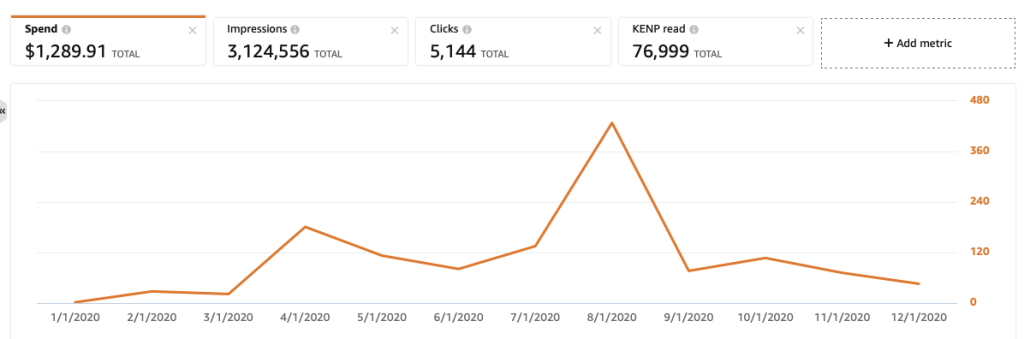
As far as ads go, I didn’t do too terribly in September, but I did shut my ads off for a couple of weeks, and you can tell when I did it:

I had a pretty significant decrease toward the end of the month, but I came out ahead, which is all that matters to me right now. I’m still waiting to be reimbursed for my August spend–$400.00 roughly, with my August royalties–$500 roughly, so I’m not out that money. Here’s my September ad spend:

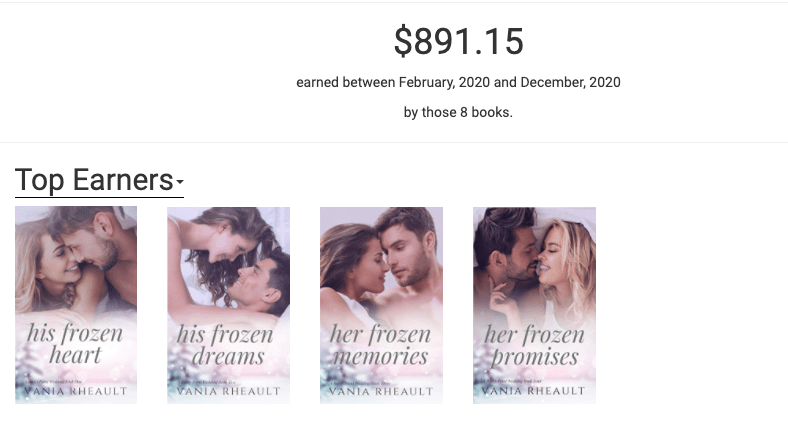
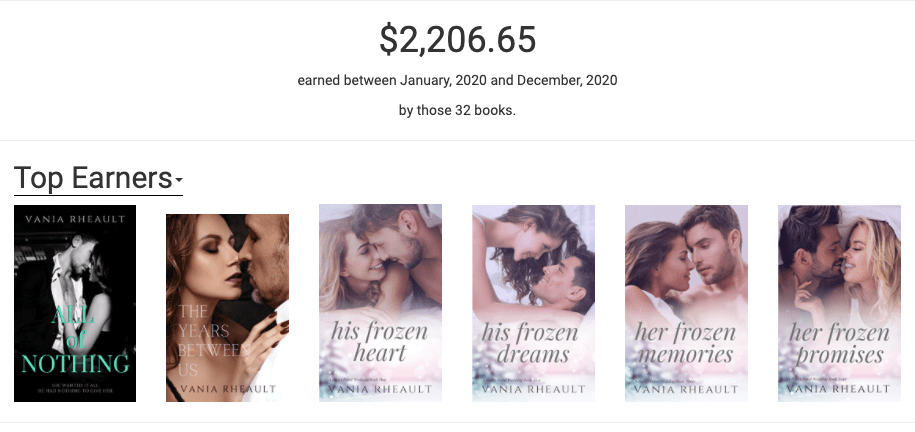
At the end of the month I turned on my two auto placement ads for The Years Between Us and All of Nothing and started getting sales again. It’s crazy how you can measure sales with ads. Ads can work, I just wish I could get a couple good ads going for His Frozen Heart. Since my July Freebooksy, my read-through is only so-so. Here are my royalties for September:

Read-through drops off a little more than I’d like, but readers getting through all four is pretty exciting for me considering when I released book one, I didn’t get very good reviews at all.

All I can do is keep plugging away and see what happens.


As far as an update for the series I’m writing now, I’m 86k into the last book. I’ve been working on this series for eight months, and it will be bittersweet to finish them. I will still have plenty of editing to do, but it will be sad to say goodbye to these couples, even if I am excited to write something new. I have an idea for an novella/shorter novel that I want to use as a reader magnet and in the coming months I’m going to learn how to use StoryOrigin for promos and I’m going to figure out how to use my MailerLite account and finally get my newsletter up and going.


One of the things that has bothered me in the past couple of days is authors who don’t want to do the work. I’ve run into two examples where authors don’t want to bother to learn. One was asking book cover techniques to update her books, and when a couple of us replied, all she said was, “I”m going to go the Fiverr route.” This ticked me off for two reasons: One, if you’re going to ask for advice, realize that you are asking someone to give you their time. Maybe it only takes a couple minutes for someone to type out a response, but still, people are taking time out of their day and writing schedules to answer your question, and two, if you don’t want to learn how to do it yourself, then why bother to ask? I get not everyone wants to put time into learning how to do book covers, and I even admit that my sales might be better if I had professional covers on my books. But we all know it’s a chicken and an egg conundrum, just like with most things that are indie. You can’t sell books without a good cover, but you can’t afford a good cover until you’ve sold some books. Unless you have seed money to invest in your business before you start out, most indies can only afford the bare minimum, and some need to choose between editing and covers. So fine, hire someone on Fiverr. I hope you choose someone reputable, because that place is just a haven for scammers, and make sure you ask your artist where they got the stock photos and fonts from. Protect yourself because if they use elements that aren’t theirs to use, it won’t be on them, it will be on you for publishing.

Another example that made me mad was a poster asking about StoryOrigin. I signed up because the creator said at some point he was going to make his site pay to play, so sign up to be grandfathered into the site whenever that happens. I haven’t used the features on there yet because I don’t have a newsletter, which is primarily what the site is good for–joining newsletter promotions and giving away a reader magnet. The site is a bit overwhelming, which is where the poster was stonewalled. But the thing is, StoryOrigin, just like most websites with lots of features, has tutorials. All you need is to sit down and take a bit of time to learn. When I pointed this out, all she said was, “I know, but I think I’ll hire that out.” Meaning, she’d rather hire a virtual assistant than take the time to learn how the website works.

[The Six Figure Authors podcast interviewed Evan Gow, the creator of StoryOrigin, and you can listen to it here if you’re interested.]

Again, this ticked me off because why post about it if you already know the route you’re going to take, and why wouldn’t you want to learn how to work that website? It can only benefit you years down the road, and you’ll get to know the authors in your genre who use the site regularly. It’s a win-win situation for you to do the work yourself.


I understand the frustration at being an indie these days, and I know a couple authors who don’t want to jump through the hoops and have, actually, dropped out of the writing community. I was one of those authors for a long time (though I never dropped out, just stubbornly writing away and not doing anything else), thinking that if I have to more than write and publish books, I didn’t want to bother. But in the end you have to decide if you want to play the game, and how much your sales and potential writing career mean to you.

Saving time is always a bonus, and if you can afford to buy some premades for book covers, or hire someone with a good reputation on Fiverr, then you should do that. I lean that way all the time, even going so far as to look up premades, but I always end up balking. My real life expenses like groceries, car payment, rent, and electricity bill will always have to take precedence over what I want to do with my writing career, such as it is.

That sucks, because I’m not the only one in this situation. Would my books sell better if they were professionally edited, had professional covers, there’s no doubt that they would. But how long would it take to recoup my losses? Especially since you don’t know if what you’re writing is going to sell in the first place. You want to put out a professional product, but if you’re not willing to do the product research to see if your book is going to have readers, everything you do after could be a big waste of time and money. Even my books under the Contemporary Romance umbrella haven’t hit the mark because I haven’t focused on one area. It took me three years to realize that sub-genre-hopping wasn’t going to make me the career Nora Roberts has. Publishing is a different time now. So I’m going to shift my focus and see if I can make headway writing something else, but that I still enjoy.

Anyway, as I edit my series and learn all the things I should have learned three years ago, I’ll take you with me. It’s always fun making mistakes and hopefully if you follow along, you won’t make mine!


I’ll end this blog post with a concept for the covers I’m thinking about for the first three books in my series. It’s a rough draft of the cover for book one. The couple isn’t finalized (hence the watermarks), and I’m going to look at adding a logo for the series and also I need to fit in the series name. I’m trying to go with what’s popular right now (though that could change by the time the books are edited and ready for publication), and the covers I like on the premade sites I can’t afford.

I’ll write other blog posts about my editing, covers, and formatting journey, and feel free to let me know what you think!

Until next time!


Let’s Play a Game! It’s called, “Why isn’t my book selling?”

You can make fun of me, but I’m a part of about 40 groups on Facebook. They aren’t all about writing. Some are book promotion (bad covers), marketing (why is Facebook doing this to me?!), something about Romance (how much man-chest is too much on a cover?) general publishing (Amazon sucks!), and a little bit of everything else thrown in for good measure. (I especially like my book cover groups, and 20booksto50k never fails to amuse me).

But if you’re in them long enough, there is a common theme, and that is, I’m doing my best, why isn’t my book selling?

A lot of times that’s evident, and I’ve blogged plenty on good book covers, blurbs, optimizing your product page, and making sure your keywords and categories are correct.

But there are a couple reasons why your book doesn’t sell, and it has nothing and everything to do with all those things.

  1. You think your launch has to go as smoothly as a traditional book launch or your book will bomb. I’ve seen a lot of people talking about book launches, and while we want a good one, when you’re an indie, a book launch isn’t as important as when you’re a traditionally published author. Traditionally published books get a window of about 30 days give or take after release for it to take off–if it doesn’t, it gets moved off a prime table, possibly returned, and generally forgotten about (and that author may never get another book deal). Not so with an indie book. Yes, you can put money into your promos, beg your street team to leave reviews, but hey, guess what? You’re in control of your book and you can buy ads, purchase promos, and generally promote your book forever. My best-selling book will have its two-year book birthday on October 17th.
  2. You have no comp authors. In the words of Jane Friedman, “You don’t want to be alone.” Being alone will not make you stand out, it will make it difficult AF to fit in. If your book is so odd that you don’t have comp authors, you have no shelf to fit on, virtual or otherwise. That means you have no built-in audience, that means you have no authors to mine for keywords for ads. You wrote what you wanted to write, but now what?
  3. You don’t care about what’s going on in the industry. You’re an indie author and don’t keep up with what’s going on in the publishing industry? You want to go to a doctor who doesn’t care about the next big thing in medicine? You’re crazy. Publishing is what you chose to do, so if you’re not keeping an eye on trends, if you don’t care what COVID is doing to the printers and why Amazon can’t ship your book in fewer than 4 weeks’ time, that’s your own fault. Yes, it’s a bit time-consuming to listen to podcasts, read books on the subject of publishing/Amazon, and keep up with current blog posts from heavy-hitters in the field, but if you are not aware of the world around you, I definitely won’t feel sorry for you when you get left behind.
  4. You only have one book, and worse, it’s the first of a series. We indies did this to ourselves. Readers won’t invest in your book/characters/world unless they know you have more coming down the line. You’re better to hang on to that one book and release when you have a couple more written. If this is a standalone, you can buy ads and push it, but after you have reached readers and they read it, they have nothing else to buy, and you have to pay to bring them back into the fold after you have a new book. Marketing is a lot easier if you have a couple or three to show off on your Amazon Author page.
  5. You depend on free marketing instead of learning an ad platform. The only free thing I have seen that will make any headway in finding readers is having an active FB author page/group, and that’s only if FB stops mucking around with the algorithms. If you can entice readers to join in and give them consistent content, you can nurture a reading community, but it can take years. Spending time on Twitter might sell a handful of books during your launch because your friends are excited for you, but I don’t want to sell only a handful. There are billions of people out there. I want to sell thousands of books, and I’m sure you do, too.
  6. You don’t publish consistently. I’ve harped on here enough that you know I think writing is a business and not a hobby. If you want to look at your writing as something you do only in your free time, or something you do only when you feel like doing it (as opposed to going to your 9-5 whether you feel like it or not) then you have to realize that your success will come much slower than to those who do publish a few times a year. It’s not a bad thing truly, but you also have to adjust your expectations.
  7. You think your first book is going to knock it out of the park. Unless you’ve been writing already in some capacity for a long time, your first book will rarely make a dent (mainly because your craft won’t be optimal). Any “overnight success” can tell you they’ve been writing and publishing for years. Of course there are going to be outliers, but you probably won’t be one of them. As you write more you will get better with craft, character development, plot. Keep writing and listening to feedback and don’t give up.

So what are some things you can do to make your next book sell? Besides writing a series and focusing heavily on what’s selling in the market right now, here are a couple things that you might need to do:

  1. Think of your book as a whole product. There’s a wonderful podcast interview by Joanna Penn with Suzy K. Quinn. She has a class on Mark Dawson’s Self-Publishing Formula that I can’t afford, so I jumped at the chance to listen to this podcast. She talks about looking at your book as whole before you begin to write it.
    A) Who will your audience be? (This will include genre and tropes.)
    B) Who will your comp authors be?
    C) What will your cover need to include to be genre-specific and appealing to readers?
    Taking a look at these things can help put a marketing plan in place before you even write the story.
  2. Put your artistic hat away and put on your business hat after your book is done. I know it’s difficult to think of your book as a product after you’ve finished editing it. But every artist on the planet who wants to sell their work needs to do this. Painters have agents, so do sculptors, musicians, and actors and models. They pay someone to sell their art. So do writers if they query. If you’re self-publishing, you have to do this on your own, and you need to put aside emotions and do what you need to do to sell your book.
  3. Stop thinking paper. We get really invested in our paperbacks because we love to hold the finish product in our hands, but unless going to conventions is a huge part of your marketing plan, there’s no reason to spend a lot of time on paperbacks. If doing a book signing at your local bookstore is the only marketing plan you have, you’re thinking too small. Indies sell ebooks. Online. In the past 12 months I’ve sold 7 paperback books.
  4. Start networking. I’m bad at this too, but if you network with other authors in your genre, you open yourself up to being asked to join in with promotions, anthologies, and newsletter swaps. As Jane said above, you don’t want to be alone. No man is an island, and that’s especially true in the indie business.
  5. Create a publishing plan. You don’t have to put out 6 books a year to be successful, but if you only publish one book a year, expect to have a lot slower rate of success. If you create a publishing plan with the idea you are only going to publish one book a year, then you’ll need to also create a content calendar to keep readers engaged between books. Post regularly to a FB author page, and fill your newsletter with terrific content to keep readers from forgetting about you. That might actually sound like more work than just writing another book!
  6. Start a newsletter. Email marketing is still the best way to grow an audience. Write a reader magnet for signups and put the newsletter signup link in the back of your books. You don’t need many signups to build a solid readership. I have an account with MailerLite and I need to dig into using it and building a list before my first person stuff comes out. Dave Chesson just put out a free tutorial for MailerLite and you can watch it here.

I hope these tips are helpful! I tried offer some different ideas than just making sure your cover is genre-appropriate and that your blurb is well-written. You should already have done that when you published. Selling a book is hard. The market is saturated, and discoverability is like the Loch Ness Monster–you’ve heard tales of her but never have seen her for yourself. I think she’s real though, and discoverability certainly isn’t a myth. She’s out there somewhere! Good luck!


Just a note about book covers and not believing everything you hear.

The amount of information out there is insane, right? You don’t know who to believe, what to believe, if anything is true, and I’m not talking about what’s on social media right now with regards to COVID, but with indie publishing. There are scammers out there, people who want to make a buck off of your inexperience. These people aren’t nice, and you’ll run into them time and time again joining FB groups and Twitter people tweeting their “services” such as they are.

But when you get up into the bigger indies, the ones who are making a bit of money and they turn to the non-fiction, or entrepreneurial side of things, you do expect them to know what they’re talking about.

I’ve mentioned Nick Stephenson on the blog before, incidentally when I was blogging about book covers not that long ago. Because I love all things book covers, when I got an email (yeah, I’m signed up to his newsletter) saying he could make a book cover in 10 minutes using BookBrush, I was intrigued.

I already know I won’t ever use BookBrush, I prefer Canva, and they’re cheaper. I know BookBrush is specifically created for authors and Canva is meant for anyone who needs to make a quick graphic design. I like Canva, know how it works, and I’ve loaded quite a few fonts in my kit over the past couple of years. I don’t think I’ll change anytime soon.

Anyway, so I settled in to watch it, and you can watch it, too.

I had a hard time with the video, and not only because it’s basically one big BookBrush commercial with a probable affiliate link included that he failed to mention was an affiliate link. I could be wrong, but why take the time to make a video and not include a link where he could make a bit of money if his watchers decided to try it out?

So, I watched it, and didn’t really like the cover he came up with at the end and here’s why:

  1. He advocated using Unsplash for photos, and anyone who does book covers knows that using free photos is a no-no. Especially with people in them. Websites like Pexels, Unsplash, and Pixabay do not collect model releases and these websites do not vet photos. There are things in these photos that are not for commercial use. I went to Unsplash and typed in tennis shoes. There were several photos of generic shoes, but there were also some photos that came up with Nike (the swoosh is a dead giveaway) and Adidas. To a newbie wanting to make a book cover about say, running or a personal journey or something, they might think a nice looking photo with a pair of Nike shoes would be okay because they found it on a free-for-commercial-use website. Do the same search on Deposit Photos and not one pair of Nikes shows up at all, or any logo for that matter.
  2. He chose Romance and that is a very nuanced genre. The couple he picked had all their clothes on, and in romance (read: reader) circles, that would indicate the book to be sweet and or clean. Heat levels are depicted by the amount of skin showing on a cover, and that’s something Nick didn’t mention in the video.
  3. He didn’t do a full wrap. I admit his way could be okay for a short story or a reader magnet that may not need the level of quality a book cover would need to promote sales. Reader magnets are supposed to bring signups to your newsletter though, and I wouldn’t imagine anyone signing up for a newsletter if the draw is going to be a short story with a crappy cover. So while you may not want to fork over $100.00 for a premade for a short story or novella that won’t go on sale, eventually your newsletter subscribers are going to be your bread and butter, and you need to treat your fans with the respect they deserve.
  4. Not all fonts are free for commercial use. I don’t know if the font he picked is included in BookBrush or if it’s free for commercial use. I looked at the site I commonly go to for free for commercial use stuff, and it is featured there.

Not all the fonts on that website are for commercial use. Only the fonts with the green dollar tag are. The other problem I had with the font is that it’s not very romancy. Yes, I get he was trying to make a point in that he could make an ebook cover in 10 minutes, and he did. But font is a big deal when it comes to covers and this one, even though it’s free, just doesn’t work.

I don’t mean to pick on him, and I did make a comment on his YouTube video, so don’t think I’m ragging on him behind his back. My comment isn’t as long as what I wrote out for you here, but enough that maybe I did slap him down a little bit. I don’t mind calling out people who aren’t being entirely on the up and up. Passing out bad information is bad, no matter who is doing or how cute his accent is. I know us American ladies are a sucker for a cute accent, but don’t let him talk you into using free photos. It’s just bad news.

Here’s my version of a sweet wedding book cover:

Stock photo taken from Deposit Photos. Title font, Calgary. Author font, Bodoni FLF Cover created in Canva

And it’s easy to see if it will make a good cover by plugging it into the 3d cover mock up creator by Derek Murphy:

With the photo I chose and the title, maybe it’s gearing more toward Women’s Fiction than sweet Contemporary Romance, but it just proves my point: you need to take a bit of time to think about your cover and put some effort into choosing the stock photo, font, and overall design.

I know he was trying to prove his own point: that using BookBrush is an easy tool and you don’t have to pay out hundreds of dollars for a simple cover by a designer. And that’s true, kind of. Someone asked in one of my FB groups what is the best software to make a book cover with, and lots of people chimed in with Photoshop, Canva, Affinity Photo, GIMP, the usual suspects. I told him I use a mixture of Canva and GIMP but I said it doesn’t matter what software you use. If you haven’t developed and eye for what looks good, you’ll always make crap.

If the shoe fits, don’t step in it.

Until next time!


Author Musings and Are You a Good Writer?

fall leaves. happy weekend

Happy Weekend! I know I don’t normally post on Fridays, but my work computer at home had some problems and I had to go into my call center. It threw off my whole day, and usually I can shake off change, but today I had a couple things planned I wanted to do and after I went in to work, I just couldn’t wrap my mind around any of them. But there’s always tomorrow, right?


I did use the time to read more of Amazon Decoded: A Marketing Guide to the Kindle Store by David Gaughran. It’s an interesting look at Amazon, and I’ve learned a couple things. Overall, I like to read book-marketing books, but they do make my head hurt a little bit. Spending money on ads, and spending money on how to learn ads, choosing a platform (Amazon Ads, Facebook Ads, Bookbub Ads) not to mention promo sites, it can all be just a little much. Still, there’s some interesting tidbits about Amazon’s own promo tools like the Kindle Countdown and the free days you get if your book is enrolled in Kindle Select, and just a few ways to use those to the best of your advantage. I’m not sure if anything will help me right now, as I’m still writing the last book in my series, and it remains to be seen if switching from 3rd person past POV to 1st person present POV will make a difference to the way readers look at and buy my books.

I haven’t done this for a while, so just for the hell of it, let’s take a look at the top ten contemporary romance books on Amazon. This changes all the time, but here’s what was up top when I wrote this post:

  1. Playing with Fire: A Bad Boy College Romance by L.J. Shen FIRST PERSON PAST
  2. Seabreeze Inn by Jan Moran THIRD PERSON PAST
  3. Roommaid: A Novel  by Sariah Wilson FIRST PERSON PAST
  4. Riley Thorn and the Dead Guy Next Door by Lucy Score FIRST PERSON PAST
  5. Coming Home for Christmas: A Clean & Wholesome Romance (Haven Point Book 10) by RaeAnne Thayne THIRD PERSON PAST
  6. Marrying My Billionaire Hookup by Nadia Lee  FIRST PERSON PRESENT
  7. Wild Fire: A Chaos Novella by Kristen Ashley THIRD PERSON PAST
  8. My Husband, My Stalker by Jessa Kane FIRST PERSON PRESENT
  9. The Takeover (The Miles High Club Book 2) by T L Swan FIRST PERSON PRESENT
  10. This Is Not How It Ends by Rochelle B. Weinstein  FIRST PERSON PAST

I haven’t done that exercise in a little while, and there’s not as much first person present as there used to be, but that’s just a minuscule sample of the top 100 on Amazon. There could be more first person present when you drill down into some sub-genres, but I’m not going to do that now. I’m still confident my POV shift was a good move, but I won’t know until early next year when I start publishing.


In other news, I’ve been hearing a lot about stalling a release or putting a hold on book promos from October through the election, even going into next year and the inauguration. This year is going to be a bit crazy, and it doesn’t matter what side you’re on. There is going to be overwhelming disappointment no matter who wins, and authors like Lindsay Buroker and Kristine Kathryn Rusch have cautioned authors and suggested scaling back a bit during the election period. I won’t have a new book out ready until the beginning of the new year anyway, but it’s something to keep in mind. Thanks to Joshua Edward Smith for posting this on his FB page. It was a good read. https://kriswrites.com/2020/09/09/business-musings-trainwreck-fall-edition/


I still like Twitter for some things, other things, not so much. The book promos are getting a bit out of hand (I’ve heard September is being a hard month for everyone), and no one seems to be writing anymore for personal reasons. A lot of my friends have school-aged children and we’re all doing the best we can with e-learning, and over here we’re trying not to meltdown because every five minutes we have a Google Hangout meeting and my daughter doesn’t want to do it.

Anyway, so there’s a woman who’s close to publishing her first book. She’s got the preorder up, had her cover professionally done (I don’t like it, but she didn’t ask my opinion LOL) paid for formatting, so it seems like she’s got things under control. But it’s her first book, and she’s green. I can tell by some of the things she tweets . . . and by the way she shrugs off advice. You’re right, she could be taking all the notes, but when she only hearts a suggestion and doesn’t bother to even thank someone for thinking of her, I know she’s shrugging off the advice. And I get it, you can’t taken EVERYONE’S advice. There’s just too much of it out there, and yeah, I completely understand there is more than one way to do this. And looking at my sales, better ways than mine!

But her attitude drives me a little nuts, and she’s not the first indie author to put a book out, expect to become overnight sensation, and earn bestseller status without having to lift a finger besides press Publish on her KDP dashboard. We all have to cut our teeth, but I hope back when I published 1700 in 2016 and didn’t know what I was doing, I had a little more grace. I probably didn’t. We all know more than a teenager when we put out our first books. But being seasoned, (and even not that seasoned as I only have 10 books out when others have 50+) I can step back and be slightly amused. I wish her well, I really really do, but it would be nice if she didn’t act like she was the first person in the whole world to publish a book. We get it. It’s fun, it’s special, but honey, if you don’t know how to market besides tweeting on Twitter, your book is going to sink like a stone and after your 30 day grace period is up on Amazon, I’m going to watch to see what happens. Hopefully, I’ll be pleasantly surprised.


How do you know you’re a good writer? Reviews? People simply telling you you are? Sales?Who do you believe? It’s tough because while quality is subjective from person to person, there has to be an overall agreement to what “good” is or there wouldn’t be bestsellers. It hurts when I see my author friends’ self-esteem shaken because they get negative feedback. Sometimes by several people. So, how do you know what to believe and what you shouldn’t?

For me, I can look at bad reviews with a critical eye. It’s easier when I don’t have reviews that say I’m a bad writer. They can nitpick a character or plot (one reviewer said His Frozen Heart had too much drama in it), or dislike Jax because he was an alphahole and maybe I didn’t completely redeem him at the end of All of Nothing, but in the reviews that I’ve read about my work, no one has come out and said that I’m a bad writer. And that helps. But it also doesn’t. Bad writing you can fix with time, effort, and lots of words written, but can you fix something that’s “off” about your books when no one can really articulate what that is?

Who should you listen to? Too many cooks ruin the broth, but when are opinions valuable?

Kristine Kathryn Rusch in her talk at 20booksto50k in Vegas last year said shouldn’t write by committee. Write the story you want, publish it, and go write more.

If you can’t trust your beta readers, can you trust reviews? I counter that for every one unhappy person who bothers to leave a review there are 20 happy readers who won’t take the time.

Writers are a sensitive bunch, and I hope that she finds her way out of her maze. She enjoys writing, and from the small portions I’ve read of her work, she’s a good writer. Hopefully she finds her happy place, and that’s back in front of her laptop.


That’s about all the news I have for today. I’m trying to get through to the end of my last book. I’m at 43k, so I’m slow going, but I need to plan out the rest of the book so I make sure I wrap up every single plotline I had going. At work tomorrow, whether I’m back home again, or going into the center, I need my notebook and I’m going to make list after list of what I need to finish this series. I think knowing exactly what I need for the last 50k+ words will help a lot.

Have a good weekend everyone!