The Wedding Party Series Update

If you follow me on social media at all, you’ll know that The Years Between Us is finally to a proofreader who will take a quick look for typos and inconsistencies.

Now that I can almost wash my hands of that book, I can put all my focus on my Wedding Party series.

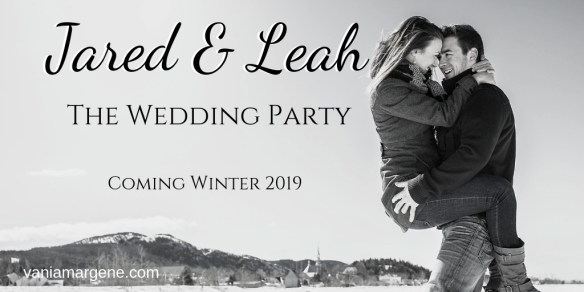
Jared and Leah came in at about 67,000 words. I was a bit disappointed as I like my books to fall around 70-72,000 words. I always lose some during editing as well, so while I edit and try to plump up scenes that feel sparse, I’ll be keeping an eye on what I delete and make sure I add where appropriate.

I was able to open the file last night and I started reading from the beginning. I wrote half of it before my surgery and half of it after. My surgery was back in January and I stubbornly finished it while in recovery. So I know there’s room for improvement, especially to the second half when I was hurting, but I was too impatient to wait before writing more.

I don’t like writing in chunks, so I feel like this book isn’t “together” though that probably isn’t the case.

Anyway, as I go through this book, I’ll be looking for a few things:

  1. Consistency. I always look for this anyway, but it’s more important with this book as there is so much time between me writing the first half and the second half.
  2. Places I can pump up word count. I wrote this book in a hurry. While I don’t advocate filling your book full of fluff just to make a word count, I already know of three scenes I can add to that will make the book better. If that doesn’t bring me to my desired word count, so be it, but it will sound better, too, and that’s all that matters.
  3. Where the second books fits in. Call it poor planning or brilliance (I prefer brilliance) book one and book two are going to overlap. There’s nothing I can do about it. How am I going to pull that off? Luckily, I knew that was going to happen before I started writing book one.

The characters are in Rocky Point, Minnesota for a wedding. The bride and groom aren’t main characters because they are already together, but they do pop up now and then as strong secondary characters. Anyway, everyone is in town for two weeks. If I wanted all four books to take place within those two weeks, my couples would be falling in love and having their stories told in a couple of days. And while a countdown plot like that works for a thriller, it doesn’t make good sense for a romance because it’s hard to carry out a complete character arc. People need time to fall in love. I love the “love at first sight” trope, but to make the story realistic, characters need time and space.

Falling in love . . .

Book three will cover the week of the wedding and book four will cover time after.

James Fox Wedding Party

James Fox. Not 100% how I pictured him, but have you ever looked at stock photos of men in tuxes? Some of them are downright creepy!

I lucked out there because the two people who are featured in book four live in Rocky Point, and it won’t matter if the wedding is over to complete their story. And the way the books were plotted out, not everyone leaves Rocky Point after the wedding. That might have been luck or good planning, but either way, I feel good about how the rest of the series will go.

But for now, while I edit book one, I’ll just need to keep track of where everyone is so book two is accurate.

This isn’t unlike writing The Corner of 1700 Hamilton. Ben and Lila’s stories were split down the middle, and they only intersected a handful of times.

Marnie Zimmerman wedding photo

This is how I pictured Marnie Zimmerman, the bride. 

The bride’s time isn’t all accounted for, as the primary focus of book one is Leah and Jared, so Callie will get some bride-time in book two. I didn’t want it to feel weird to the reader that Leah was able to have bride time, but no one else does. But James, the groom won’t be spending time with Callie’s love interest because he isn’t in the wedding party.

I’m really excited to start book two, but I’ll finish plumping up book one first and getting that one almost ready to go, as I’m not thrilled to be working on two projects at once again.

So that’s a short update. I’ve been trying to keep everyone posted on how the series is going because I plan to rapid-release them, and I’m hoping to get them all written by the end of October or so so I can have time create covers and do the formatting. There won’t be a book released after The Years Between Us for a while, so it’s important to me that you all know I’m still writing!

Hopefully I can release Jared and Leah in the winter of this year, and release the rest of the books going into 2020.

We’ll see. You know what they say about good intentions.

Check back with me to see what else is going on in Rocky Point, Minnesota, release news with The Years Between Us, and my slow slow slow progress going wide!

Until next time!


jared and leah for end of blog posts


When Friends Turn into Business Partners . . . Sometimes it doesn’t work out

friends to business parnters blog post

I’ve never met a community so full of people willing to help. I’ve met authors who will share anything and everything. How they use ads, how they write blurbs and the resources that taught them how. They share their favorite blogs, podcasts, promo sites, non-fiction books. There are even authors who will share how much they make in sales.

So many authors are helpful and generous. (And if you run into one who won’t share anything, well, keep an eye out. I’ve found those people are users, and you won’t get anything in return for the information you share with them.)

I’ve made a few friends on Twitter. Some are better friends than anyone I’ve met in real life. Some have come and gone. Some needed so much hand-holding it was physically draining to be friends with them. Some acted like their work was the only thing worth discussing, and I’ve faded away because I believe friendship should work both ways.

I’ve had some small successes as an author, and I like to share, too. It’s a horrible feeling to be snubbed when sharing something you’re proud of.

friends or enemies

But there are those who stick around–you feel a kinship, support goes both ways, and you settle into an online routine of touching base, reading each other’s blogs, retweeting news and book cover reveals, and helping with book launches.

Inevitably this will lead to your friendship moving more into a business relationship.

You’ll be asked to edit for someone or do a cover. Maybe she needs a critique partner or he needs a beta reader. It could even be as simple as doing an author interview for a blog.

Friendships can easily blur into business and while the transition feels easy and breezy, if you don’t treat that relationship with the respect it deserves, not only are you risking your business relationship with that person, your friendship will be broken as well.

The culprit of all this is the nonchalance and the cavalier attitude of writers. They aren’t treating their business with the respect it deserves, so they see no harm in treating you the same way.

I treat my books as a business. I always have and I always will. When I do something for you, I do it in a decent amount of time, and to the best of my ability. And that’s always what I’ve done.

business peers

But I haven’t always been treated with the same courtesy.

I paid someone to edit for me, and one day she told me she was editing my book while she was having her hair done at the salon. I guess it was too much to ask that she edit my book in a quiet place where she could focus. I paid another, and she waited months before even starting to edit my book. I have patience–I have two children, three cats, and an ex-husband. I have patience. But when you pay someone for a service, even if she’s a friend, you expect them to treat you with professionalism.

Those people were my friends. Circumstances being what they were at the time . . . they aren’t anymore.

What’s funny is recently one of them asked me for a favor. I guess it wasn’t so funny when I didn’t respond.

Most of the time I can separate friendship from business. (I treat my Twitter account as part of my business, and I rarely unfollow anyone for crappy behavior. Most times the only thing that will earn you an unfollow is if you do it to me first.) And I can stay in touch with someone friendship-wise even if we don’t/didn’t work together so well in the business aspect of things.

I edited for someone, and that didn’t work out like I had expected. We’re still friends because I expressed how I felt, and she apologized. I don’t hold grudges, but just like anyone else, I remember how people treat me.

When you treat someone like crap, you’re burning bridges, plain and simple. The author so quick to help you? They may not be so quick to pull through for you next time.

So what can you do to keep your friendships intact if it moves into business territory?

  1. Set boundaries and expectations.
    Before work exchanges hands, hammer out what expectations are. Does she expect to get paid? Is she doing it for free? Are you sure? Is there an expectation you’re going to help her down the road? Is there a deadline? Can your friend meet it? If she can’t, can you change it? If you’re too rigid with what you need, it’s better for your friend to pass. Which brings me to:
  2. Don’t be angry if your friend can’t meet your needs.
    A lot of indie business is trade and favors. Money doesn’t always exchange hands. That’s common when indies operate in the red–especially when just starting out. You may feel desperate because if this particular friend can’t help you, who will? People who know what they are doing, and willing to do it for free or on the cheap are few. If you need her, it’s YOUR job to bend, not hers. If you can’t, understand where she’s coming from, take a deep breath, and move on. While writing is a business, it will always come in secondary to children, jobs that pay the bills, and maybe even an evening of self-care if she’s had a bad day. If your needs are more important than that, hire out and pay for the priority. Your friend helping you isn’t a right–it’s a privilege.
  3. Keep communication open.
    Maybe you think she’s not working fast enough. Or you haven’t heard from her in a couple of days. Or worse yet, you haven’t heard from her, yet she’s posting on social media. It’s easy to go from simmering to boiling if you expect her to be working on your project but she’s posting a new blog post every day. It’s easy to get annoyed–trust me, I know. Maybe she already had them scheduled, and she IS working on your stuff. You won’t know unless you ask. If you need constant reassurance like daily updates, request it before you give her the project. That way you can remind her you asked.
  4. Keep social media in mind.
    When I edited for my friend, she never stopped posting her publication date. She was building buzz–I get that. But her manuscript needed work, and the more she posted and the more I edited, the angrier I became until eventually I felt like I was doing it for nothing. So remember–you are friends and she can see what you tweet, post on your Facebook author page, blog, and anything snarky by way of a bitchy meme on Instagram. But the same goes for her. If she’s tweeting she’s editing a pile of garbage, or the person she’s editing for is dumber than a box of rocks . . . you may need to rethink if you want her working on your project. A good friend doesn’t necessarily translate into a good business partner. (I would rethink my friendship with anyone who would put something like that out into the world, anyway.)
  5. Know when to quit.
    Ideally, you want to work things out before this step. If you can’t, the next best thing is to back out before your business relationship destroys your friendship. Be clear why you don’t want to work with him anymore. Try not to let hurt feelings muddy the water. He may have hurt your feelings, but that is only as a bi-product of unprofessional behavior that may not have been intentional. And don’t flip out if he has to back out on you. Maybe it has nothing to do with professionalism. His private issues are none of your business unless he wants to divulge them. That depends on how good of friends you are. But if it is due to not being able to work together, learn from the experience and move on. Having a truthful “We make better friends than business partners” talk can salvage a friendship. Don’t be defensive.

Not all friendships cum business relationships are going to fail. I’ve heard of several people who have worked together for years. There relationships are based on respect and a mutual admiration of each other’s work.

It’s up to you how much you can take–and it’s up to your friend what her limits are if you’re the one behaving badly. Publishing is scary and stressful, but alienating people who want to help you makes it more so. And it won’t do your career any good if someone labels you as difficult to work with. You may be passed up for opportunities and you won’t even realize it.

stressed out

If you’re the one slighted, do your best to move on. If that means you’re no longer talking to that person, so be it. Publishing IS stressful, writing, emotionally draining. You need to protect your mental health, too.

Friendships can come and go, but it’s difficult to repair a business connection.

Don’t burn your bridges. You never know when you’ll have to circle back.


To be clear, I didn’t mention any of my experiences to throw my friends and acquaintances under the bus. I mentioned them to demonstrate I know how it feels to be treated in a manner that is hurtful and unprofessional. I have other examples of people using my generous nature against me–to the point of a friend of mine saying I should stop helping people.

I couldn’t do that, though. For every one person who ignores what I offer, five people appreciate any information I can give them. Be it my favorite stock photo sites, or a reminder that KDP Print offers templates to format the interiors of paperback books.

For every one person who ignores my edits, another person’s writing is brought to the next level.

I’ll probably never stop helping people. I enjoy it too much. But neither am I a doormat, and if you treat me poorly, that’s on you, not me.

If you treat anyone without respect and kindness, you need to look inside yourself and figure out why. But the secret is no one has to be friends with you, no one has to do business with you, and one day you may very well find yourself alone.

being helpful

If you enjoy helping and being part of the writing community, don’t let one bad apple ruin the whole barrel. There are lots of people out there who need help–and one day you’ll find yourself in a group of friends you can trust to help you in return.

That’s what the writing community is all about.

photos taken from pixabay or canva. graphics made in canva.com

jared and leah for end of blog posts

Book launches, book anniversaries and other musings about three years of hard work.

This morning I was reading a blog post my by friend, Sarah. It’s her book baby’s birthday today, and she’s celebrating her book turning one! And while I admit I’ve never celebrated a book’s birthday–hell, I rarely announce a launch–her blog post encouraged me to take a look back at my publishing milestones.

I don’t have my publishing dates memorized or anything like that, so I’ll need to go on to Amazon and take a look:
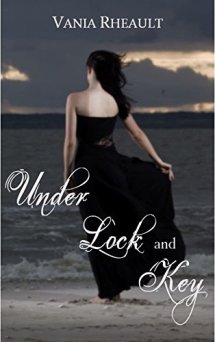

Under lock and key

I thought The Corner of 1700 Hamilton was my first book I published, but according to the dates, I actually published Under Lock and Key a week before on July 7th, 2016. It’s a novelette that I wrote from a writing prompt a dear friend of mind, Liz, tweeted one day. I haven’t read it for a long time, and no doubt it needs another edit. When I go wide, I’ll put it everywhere for free. It’s gotten some so-so reviews, but I can’t expect anything too great as it was the first thing I published.


the_corner_of_1700_h_cover_for_kindle

A week later, I published The Corner of 1700 Hamilton. This is a trainwreck of a book, as first books are wont to be. The original cover was horrible, and even with a beta reader and an editor, it still wasn’t up to par. Recently I went through one of my old paperbacks and edited both novellas, but I’m not sure if or when I’ll ever put them in. Even the “new” cover needs work,  but my mantra has always been “always look forward.” Having a sub-par book for sale doesn’t make me want to celebrate, however. So I may try to find time one day to fix it up.


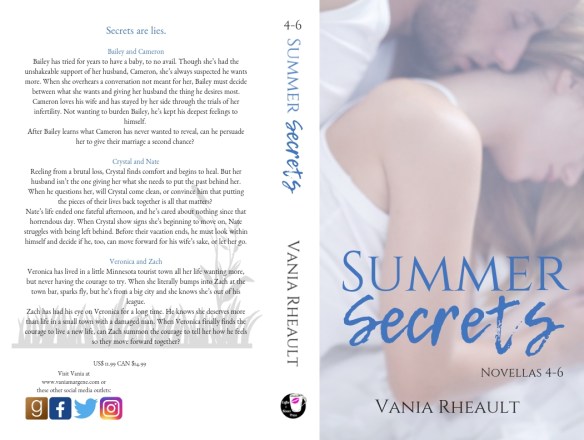
I was still in novella mode when I decided to try my hand at erotica, and I wrote six novellas back to back for a total of (approximately) 155,000 words. I wrote all of them at once, hired an editor and published them together. Summer Secrets is about a group of friends who have sex, party, fight, and make up at a small lakeside resort during their summer vacation. For what they are, I’m actually quite proud of these; I had found my voice, and the interconnecting plots stand even without the sex.

Summer Secrets was a lot of work, but they made me a better writer. While I won’t be writing any more erotica, I don’t have any regrets taking the time to write these. They were published in August, 2017. I guess I didn’t realize I took a whole year to write them, edit them, format them, and do the covers, but at 155,000 words, I guess that’s not so bad, either. I redid the covers not long ago, and reformatted the insides using Vellum. I was even able to add the embellishments I tried for the first time around. They are pretty, and it’s too bad they aren’t in a genre I want to write anymore. I don’t consider them part of my backlist, but I won’t bury them the way I kind of blur over 1700 when asked about my backlist.

The covers look better, and the paperback covers look a lot nicer. I’ve learned a lot in the past three years, and I think it shows.
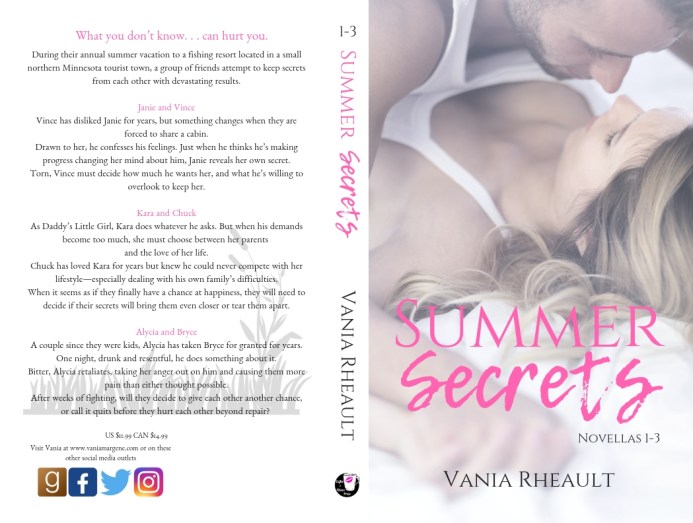
Summer Secrets Novellas 1-3 New Cover

summer secrets new cover 4-6


summer secrets chapter starts


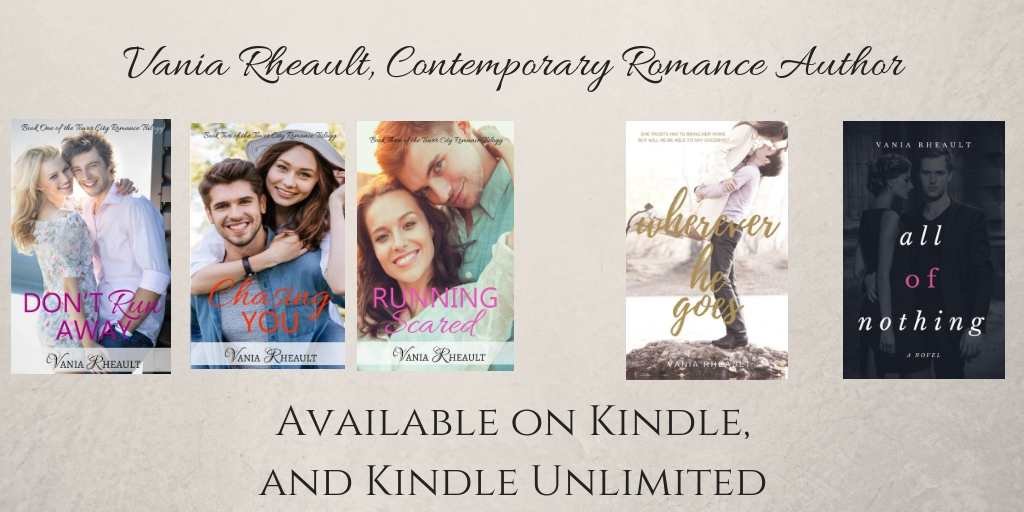
I had Don’t Run Away done while I was doing these, and I can’t even say when exactly I fixed it up and decided to make it a trilogy.  I published the first on November 17th, 2017. I do remember while Summer Secrets was being edited, I wrote the second book of the trilogy. Later that became Chasing You which was published on December 14th, 2017. Running Scared was published in January of 2018. All I can say is when I look at those dates is holy crap. It helped I had Don’t Run Away done, and that was one tough book. It went through a lot of edits. I added POVs, took them out. Rewrote large sections. This was before I started listening to my novels as part of my editing routine, and I have no idea after the first one was beta read/edited, what I did with the others. I think by then I was confident in my own editing skills, but I doubt I was at the point I am today.

At any rate, they do okay, and during a Freebooksy ad, I gave away over 4,000 copies of Don’t Run Away. That promo led to the first wave of readers whom I hadn’t met via social media (AKA strangers), and I’m happy to have done it. I also proved that even though it feels like a quilt, all patched together, the book was strong enough to get decent read-through to the others. If you want to read about my Freebooksy promo results, look here. If you want to read some of my reviews on Goodreads, look here.

The best lesson I learned from writing the trilogy is to MAKE THE FIRST BOOK STRONG TO ENSURE READ-THROUGH. It won’t matter how many books you have in a series if your first book won’t carry them.

I’ve redone the covers, though they aren’t a drastic change, and I reformatted the insides using Vellum.

This slideshow requires JavaScript.


I can tell you I was done with those characters by the time I finished Running Scared, and I didn’t think I’d ever do another series. I don’t want to say I was bored, because what would that say about my writing? But I will admit it’s nice to move on.

Wherever He Goes was published on June 1, 2018. It was the first stand alone novel I’d ever written–up to that point, even my novellas had been connected stories. I haven’t done much promo for that, though I did do a paid Bargainbooksy that didn’t do anything. Looking back at stats, I don’t even think the sales paid for the promo. If you want to look at my blog post about my results, look here.

There were a few firsts with this one: I had more beta readers, and I did the entire paperback cover in Canva. It looks amazing, and is still one of my favorite covers to date. I’ve had good feedback about the novel, and I enjoyed writing it. I need to do more promo for it, as I think it’s an enjoyable contemporary romance that should have more readers than it does.
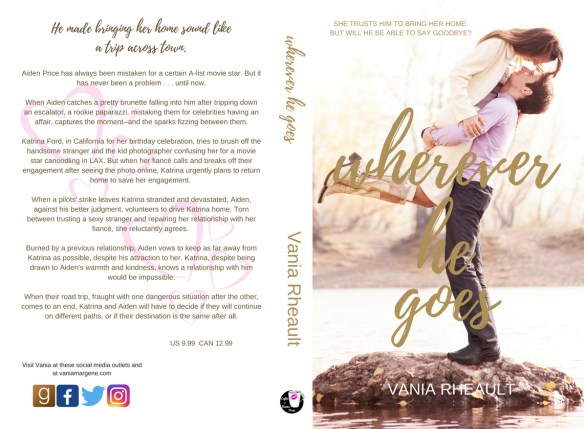
Wherever He Goes (1)


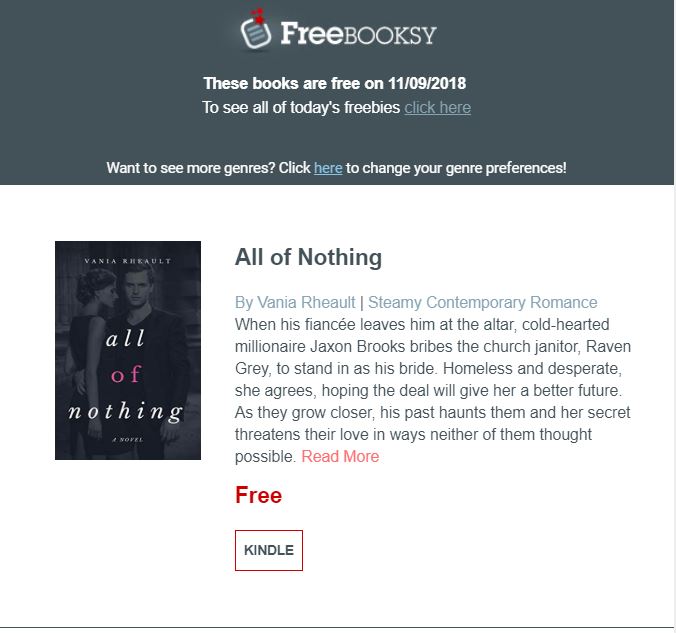
All of Nothing, I feel, is my strongest book to date, and I believe in it so strongly, I entered it into the RWA RITA awards contest. It can more than hold its own against some of the traditionally published books out there, and when I did a Freebooksy promo for it, I gave away over 6,000 books. (If you want to read about those results, click here.) I love the way my ad for it looked in their newsletter, and bless them for making it the first book!
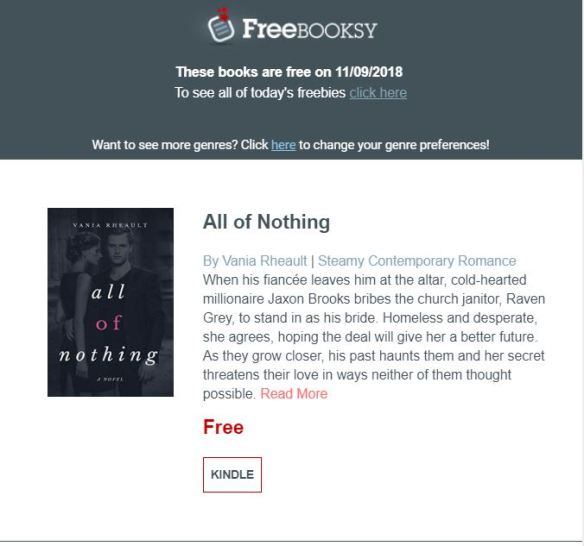
freebooksyadallofnothing

It didn’t place as high as Don’t Run Away on the free lists, simply because they are in separate categories. (Don’t Run Away is a sports romance.) But the book has more reviews than any other of my books. Published on October 16, 2018, it took me four and a half months to write it, edit it, format it, and release it. I had it beta read and proofed, and I’m very proud of how it turned out–from cover to cover.
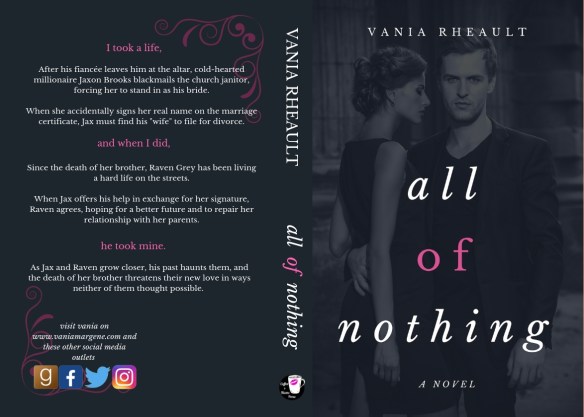
All of Nothing Paperback Cover


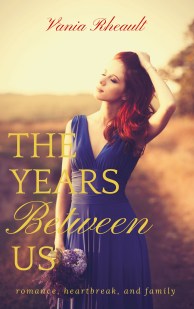
The Years Between UsI don’t have any more published work out right now, though The Years Between Us is finished. I could have had it published already, but I’m working on a series that I won’t release until they are all done. I’ve been taking my time editing The Years Between Us, but at 74,000 words, it is a complete and finished novel. I don’t have the full cover completed, nor has it been fully edited, but I do plan to have it out into the world maybe by the end of March, or early April. There is no rush, as I don’t see my series being released until Christmas of this year. The first draft of the first book is finished, however, though I admit getting out of my recovery rut has been harder than I expected.


Anyway, so looking at those dates, seeing how hard I’ve worked . . . what have I learned through these two and a half years of publishing?

  1. Not many people care. Sure I may have a lot of followers on Twitter, may be a part of a lot of writing groups on Facebook, but unless your books are actually doing well, and you can prove it through sales, no one cares what you’re doing. Only a handful of my friends have patted my back, and that’s fine. My progress is for myself. I know I’m working hard, and I hope I can be an inspiration to others, whether my books are selling or not.
  2. You have to keep moving forward, or you’ll feel like you’re on a going down escalator trying run upstairs. With indie publishing, everyone is faster, quicker, doing more than you. Some are doing this in a legit way, and some are not. But for you, yourself, if you want to make any headway in the industry, always be moving forward. Don’t get caught in a rut because days turn into weeks, weeks into months, and months into years. Just like my friend Sarah says in the blog post I linked to at the beginning, all of a sudden a year had gone by and she has nothing to show for it. 500 words a day over the course of 365 days in a year can net you 182,500 words in a year.
  3. Even when you’re doing the work, it will feel like you’re in quicksand. The harder you struggle, the faster you sink. I’ve done a lot of work these past couple of years, and if I kept track of my hours worked versus the time and expense, I would be negative in return on investment. You can’t let this get you down, or you’ll stop. Write for the joy of it first, so you always keep working at your dreams. And let success be a secondary motivator. My success will come–I’ll make sure it does. But I can’t guarantee when it will. All I know is if I stop working for it, I definitely won’t have it.
  4. It might be your baby, but after you publish it, it’s not your baby anymore. MAKE IT WORK FOR YOU. This reasoning is probably why I don’t celebrate my book birthdays. I don’t think of my books as babies. I think of them as products to be sold to help me make money. I do enjoy writing, or I wouldn’t do it. But I also want to make a profit so I can keep doing this, for the long-term. While I’ve stated I like my job, and yeah, my free time at work as helped me with my publishing speed, I would love to earn a living on my writing only. I can’t be precious with my work. I’m always learning about craft, always keeping up with the latest thing about publishing. Even if you’re persistent and want to keep comparing your books to babies, eventually you expect your children to go out into the world on their own and make their own money. Even real-life children grow up.

Thanks for sticking with me–this is probably one of the longest blog posts to date. I doubt I’ll do a recap again; as my backlist grows, it will just get too time consuming. But the look back was fun, and thank you again for joining me!

If you  want to read any of my books, you can check out my Amazon author page, here.

Wherever He Goes and All of Nothing have recently been added to Kobo, and you can find them here and here.

Thanks for reading!

Where do you find readers? Part 3

finding readers for your books blog posts part 3

BookBub

Not everything is about Amazon and Facebook. I’ve heard about them the most, and maybe you have too, but another ad platform you can try is BookBub. I’m not talking about the Featured Deal that is notoriously difficult to be approved for. BookBub ads are ads for your book that run in a BookBub newsletter. You pay a Cost per Click, or Cost per Impression.

If you’re not familiar with BookBub, I suggest you go on there and at least claim your author profile if you’ve published and put up a photo at the very minimum of involvement. You can find authors to follow, and also encourage readers to follow you. BookBub will email your followers when you release a book or they feature you. Similar to Amazon. To read more about what following authors and what readers following you can do for you, click here.

Anyway, if you’re interested in going for a BookBub featured deal, click here for guidelines and prices. Books that are published wide, have pleasing covers, and have lots of reviews generally have a better chance of getting approved. In other words, books that are already doing fine. But, you can always try.

If you want to know more about buying ad space and the process, you can read about it here.

And if you do decide to go for it and place a couple ads, research what makes a good ad, by reading this blog article. I’m all about researching before you spend any money, and you’ll go into it with a better understanding and a better chance of being more successful. The BookBub blog can help you market any book on any platform, so be sure to bookmark it, or sign up for emails.

Giveaways

free books

There are lots of opinions about giveaways. We shouldn’t train readers to want free books as it drives down the prices of books. People don’t value things for free. Free books don’t work anymore because there is so much free content out there. You don’t have to give away all your books all the time. That’s just not good business sense. But I did a Freebooksy for All of Nothing, and 6,000 people downloaded it. Would I have liked those be sales, especially since I paid to give away those books? Yes! But when I did a BargainBooksy for Wherever He Goes, it didn’t do nearly as well, and I dropped the price of that book to .99 especially for the promo.

When you think about giveaways, you need to decide what your business plans are. If you only want sales and you only have one book out, then giving it away won’t be an option for you. If you give away a Book One in a 7 book series, hoping to cash in on the other 6 books, that’s something else.

I agree that giving a book away may be better if you have a backlist so if a reader falls in love with your freebie, you have other books they can buy.

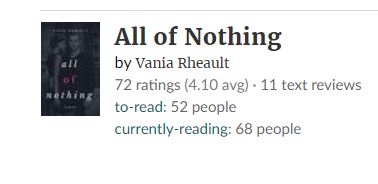
But even if you have one book, and it’s a solid book, and you may be releasing anothergoodreads stats one soon, giving a book away once could work for you. I don’t mind giving books away every once in a while–I usually do some kind of promo for each book I release then move on. After I did my giveaway for All of Nothing, I got a few reviews (the book has 11-12 depending on which platform you look at, and that’s the most any of my books have ever gotten) and there are some readers who have added it to their shelves on Goodreads.
So again, think about what your plans are if you’re going to give your book away.

There is only one place that I would think about doing a giveaway (besides my Freebooksy promos), and that’s Goodreads. Since they changed the way they do their giveaways, (there was a big to-do about it, and you can read it here) there is a cost involved. But because Goodreads is a site for readers, there’s a good chance anyone who wins your book will actually read it and review it. There are some people who just want to win stuff, but you’re going to encounter those kinds of people no matter what you’re giving away.

The standard giveaway is $119.00 now. If you have to save up a few months for that, work that into your marketing strategy, or begin saving when you know you’re going to have your next release. I know that $119.00 will feed my family for a week. But I also know I can skip a trip to Barnes and Noble and save that money, or skip my Starbucks run for a month and save that money, too.

If your interested in the pricing, guidelines, and perks of doing a giveaway with Goodreads, you can read here for the FAQs on the Goodreads page, and here, for a blogger’s perspective. Personally, I think since the giveaways are paid now, it reduces how many books are available, and gives you a better chance at discoverability. I always approved of the change, and I wouldn’t mind trying it out on my next release The Years Between Us, or I may wait and use it for the first book in my series.

You can do giveaways from your book’s sell page on Amazon. I have tried that a couple times with no apparent benefit. I blogged about it, and you read about it here. It didn’t do anything for me, and while it’s little work and it didn’t cost me anything, if there’s no value, I don’t see the point in doing it.

That’s all that I have for today! I hope you found a bit of value in this post, and join me for the last part of Where do you find readers in my next post. We’ll talk just a little bit about going wide. I hope to see you there!

Where do you find readers? Part 2

finding readers for your books blog posts part 2


In part one, I wasted your time went over a few things you can do to draw in readers. Starting with a quality product. That’s mandatory, but not everyone does. You’ve seen the poor covers, bad blurbs, and horribly written look insides. But no one is immune, and if you’re not selling books, or not selling as many books as you think you should be, try to find an unbiased opinion and see if you can find where the problem is.

Now, with that being said, readers are out there. But how do you find them?

Start Small

There are promo sites that don’t cost an arm and a leg. How well they work, I have no idea. But if you listen to lots of podcasts of author interviews like I do, you’ll slowly build a list of promo sites that are used by other authors. Some of these require a certain number of reviews. Almost all of them vet books so if your cover doesn’t look nice, or the person who runs the promo site thinks your writing is terrible, they won’t promote your book, no matter how much you pay them.

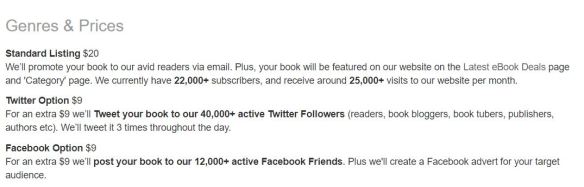
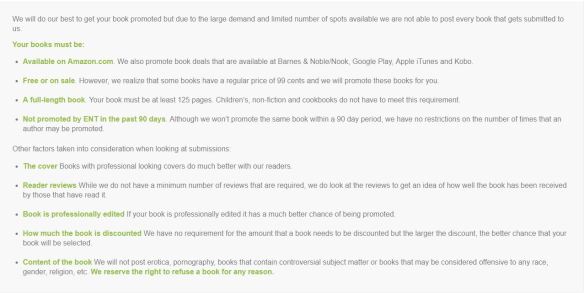
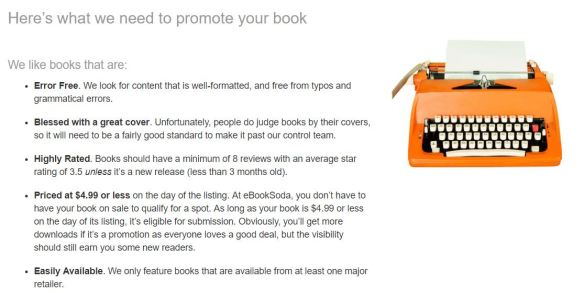
eBookSoda. Their prices have gone up since I’ve checked into them last. They review your book before they promote, and they do have a few guidelines you have to meet for them to accept your book.

ebook soda promo site

ebook soda promo site2

At twenty dollars to give it a try, that doesn’t seem like a huge investment. I’ve spent more and have gotten nothing in return.

eReader News Today.

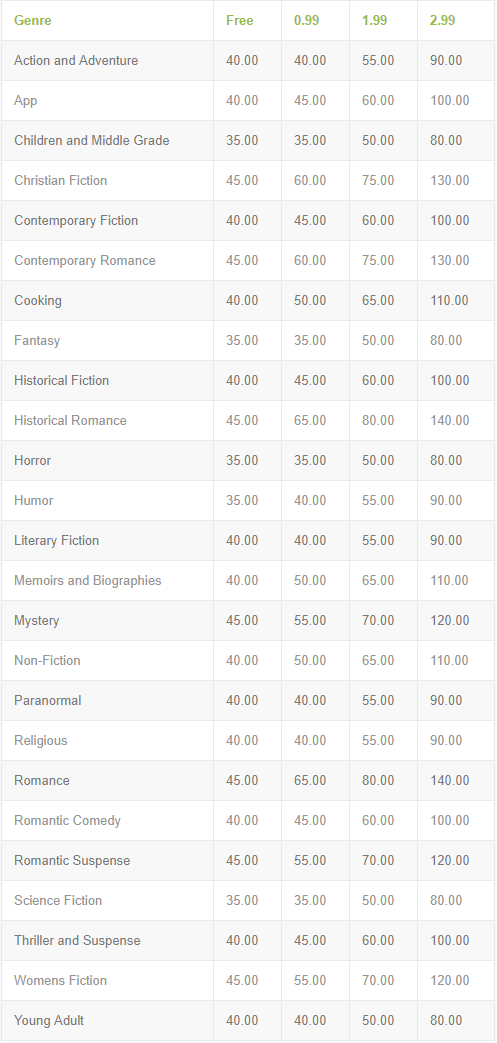
They are a little spendier, but I’ve heard good things about them. They also vet, so be prepared for an actual person to look at your book.

ereader-pricing-table-heading

ereader news today requirements

I’m not going to go through every single promo site out there. I’ve only used Freebooksy and BargainBooksy for my promos, but when I release my next book, I may spread my wings a bit. There are promo sites out there that cost less than what they charge, and they may expose me to new readers.

Dave Chesson has a very large list of promo sites if you want to browse. But the main idea is that putting money into the marking of your book doesn’t have to break the bank.

Paying to Play

Indie readers don’t want to accept that to find readers (especially if they are on Twitter and tweet about their book for free all the time) that at some point you are going to have to invest in your books. There is no other way for anyone to know your books are out there. There’s billions of people in the world. How are you going to reach them if you can’t break out of Writer Twitter? It’s next to impossible.

Richard Blake had this to say about the current state of advertising:

2018 ushered in a time when visibility we used to take for granted on Amazon basically disappeared. The long tail on new releases has been compressed to only weeks, and with the elimination of free books from the also boughts and from the search functions, it’s almost impossible to get any free visibility now on the largest seller of books in the world.

So what’s left?

Paying to play, also known as advertising. The rest of this blog will be devoted to my experience with Zon advertising, and the conclusions I’ve drawn after reluctantly beginning a concentrated effort about mid-year.

If you’re interested in what else he has to say, you can check out and subscribe to his blog here.

I’ve written about my success, or lack thereof, about Amazon before, and you can check out my blog post here. So I’m not going to bother rehashing old ground. If you want to learn how to do them, there are a lot of authors who provide courses and books. My favorite is Brian Meeks. He has a book about Amazon Ads, and I used to recommend it a lot. I’ve heard that Amazon has changed the way they do ads, so his step-by-step instructions are no longer applicable. Concepts of patience, testing, and slowly building your ad, however, are still great advice. Despite not being able to point you in the direction of his book, he’s done several interviews for podcasts as well, and he spoke at the 20 Books to 50K Conference in Vegas this past November. Check out his talk!


If you want more details, check out Chris McMullen’s blog post about the recent changes and how to work with them.

I’ve had a little success–meaning my bids are getting clicks, I’m seeing some buys, and I’m not spending a huge amount of money (not in enough to put me in the black with ROI, but you have to start somewhere). Figuring out ads is like learning to swim. You’re going to get a lot of water up your nose before you can float without drowning. This is a bad metaphor for me, as I still only know how to doggy paddle, but such is life.

I haven’t tried Facebook ads, mainly because I’ve heard they will take your money and run, unlike Amazon. Plus, I don’t have that many books out yet. I’ve read Michael Cooper’s book, Help! My Facebook Ads Suck! and that was extremely helpful. He, too, was at the 20 Books to 50K conference and you can watch his talk. 🙂

I’ll do a Part 3 later. I’ve given you lots to consider right now. Please go through those promo sites. If you can save five dollars a week and buy a $20 dollar promo for a reader newsletter once a month, that’s a great start when you thought you couldn’t afford to run ads at all.

Thanks for reading, and let me know if you have any thoughts, ideas, or things you’re going to try going in to 2019 and selling your books!


Good luck!

Where do you find readers for your books? Part 1

finding readers for your books blog posts part 1

This question sucks because 1) no one knows the answer, and 2) even if they do, their answer might not work for you.

What are the variables that make one person’s amazing results different from someone else’s?
* Genre. Thrillers. Contemporary Romance. Urban Fantasy. Epic Fantasy. Someone might have just had a great launch of their Suspense novel and you want to duplicate that for your Bigfoot Romance. Their methods probably won’t work for you.
* Quality. Your friend may have paid out $400 for a quality cover, had two editors edit it, and used a professional formatter to make their insides look as professional as they can look. You don’t have a budget like that. If you don’t, you’re already a million miles behind your friend–even if you write in the same genre.
* Your friend has a backlist and you don’t.

If you take into consideration these three things, answers to the question, where do you find readers, are going to be incredibly different.

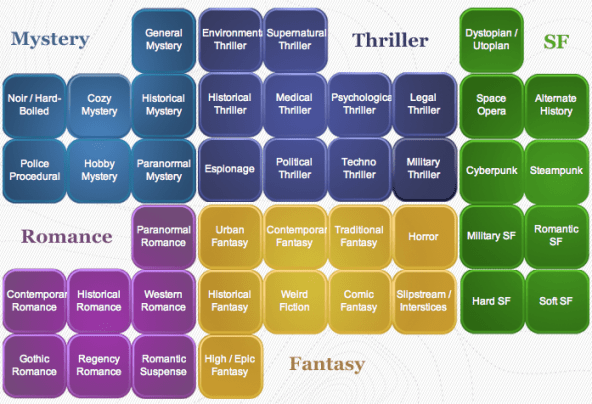
A quick note about GENRE before we move on: you’re writing what you want, but you do have to keep in mind that the more niche you write the more you shrink your audience. On the other hand, you have a better chance at standing out in a smaller niche. At any rate, here’s a nice chart. If your goal is finding readers in a bookstore (you’re probably querying then), you need to know where the little high school girl who stocks books after classes is going to put yours. Knowing your genre also makes marketing a bit easier because, hey, no one reads all the books, and you only want people who read your genre to read your book.

Literary_Genres

click the picture to read about the 17 literary genres

Quality

You know how in the grocery store you have to choose between a dented can and a can that’s not dented? Which do you choose? The undented one, right? Because we’re trained to look for things that are perfect. We don’t buy apples with bruises, we buy the milk behind the first one. When you are asking your potential reader to choose between your poor-quality cover, bad blurb, and insides with typos against a book with a nice cover, an intriguing blurb, and insides without typos, who do you think they are going to choose?

This seems like a no-brainer, but authors are too close to their own books to see if something is working, or, more specifically, not working. I’ll show you what I mean:

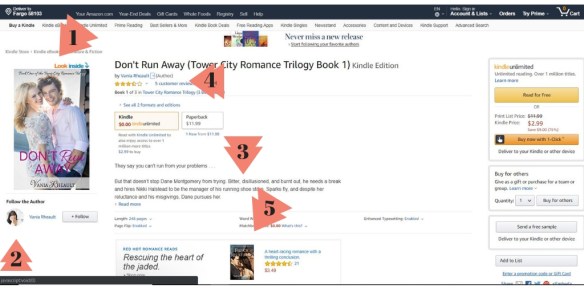
amazon sell page of a book

This is the sell page of my book, Don’t Run Away. It’s the first in a trilogy. People look at these things when they bring up your book be from an ad, from a friend’s recommendation, whatever.

  1. A good cover. You need one. YOU NEED ONE. I’m not saying mine is the best, but hoo-boy, it’s better than some out there.
  2. A nice author photo. No one talks about these, but with social media, readers want to interact with their favorite authors. They want to see you are a real person. If they tweet to you that they enjoyed your book, or if they say Hello on your FB author page, they think it’s really cool when you say thank you, or Hi! back.
  3. Well-written blurb. You need a good blurb to draw them in.
  4. The reviews help. The more the better, obviously, because. . .
  5. Amazon is more than happy to show your potential reader something else they can buy instead of your book. If your cover and blurb miss the mark, they offer another choice in the same genre your potential reader can click on.

If you take a look at the screenshot above, you can see the book they are advertising at the bottom has a nice cover and more reviews than mine. At that point, I’m hoping my blurb brings them in, or the first couple sentences of the look inside if they make it that far.

If you’ve written a strong blurb and you make your potential reader click READ MORE look what happens:

screen for blog 2

The ad disappears. We don’t have very long attention spans. A good blurb could mean the difference been a sale and a pass.

I watched Bryan Cohen and Chris Fox tear part a couple of covers and blurbs on a recording from a 20 books to 50K conference this year in Vegas. Take a look and see if you can make your selling page better:

Backlist

No one thinks about backlist when we look for readers. But the fact is, self-publishing is a vicious and competitive environment. These days to find any traction, you need to have about 15-20 books written already. When I first started publishing, that number was six. Self-publishing has exploded to the point where 50,000 books are self-published every month. (That stat was pulled, I think, from Michael Anderle during this same conference.)

The most important thing that self-published authors have is a backlist of 15-20 books. This is because most self-published authors make the bulk of their money on their backlist.  — The Complete Creative

The idea is that if you manage to pull one person into your readership, you can offer them more than just one or two books. You want them to read them all.

You can liken finding readers to any cliche you want. Rome wasn’t built in a day. Publishing is a marathon, not a sprint. Start at the base of the mountain and work your way up. It all amounts to the same thing–finding readers takes a lot of time.

book-publishing-quotes-by-jo-linsdell-315693

No one disagrees it starts with the best book you can produce. And then write another.

the best advertising you can do

Stay tuned for part two of where to find readers!

Until next time!

My Promotion for All of Nothing with Freebooksy

It’s rather counterproductive to pay to give your book away. But Freebooksy isn’t the only place you can do it. There are numerous places to promote a free book, but I like Freebooksy because they seem to have the most reach. 

What can you hope for when you do a promo for a free book?

  1. It will drive traffic to your other books. This makes a backlist key.
  2. That someone will actually read it and post a review.
  3. It will boost your KU reads if you’re in Kindle Unlimited.

I guess that’s it. Mainly, you’re hoping for reviews and that people will like you enough to pay for your other books. Sometimes you get a bump in KU reads, but you definitely don’t have to spend what Freebooksy charges you for that. 

I ran a different Freebooksy ad a few months ago for Don’t Run Away, and you can read about here. Anyway, this ad did better in downloads, but we’ll see how it does over all, since Don’t Run Away is the first in a trilogy, and I got some decent read-through for that book with the ad. It came later, as some people take a bit to read a book or two or three, but after a few months, I was pleased with the results.

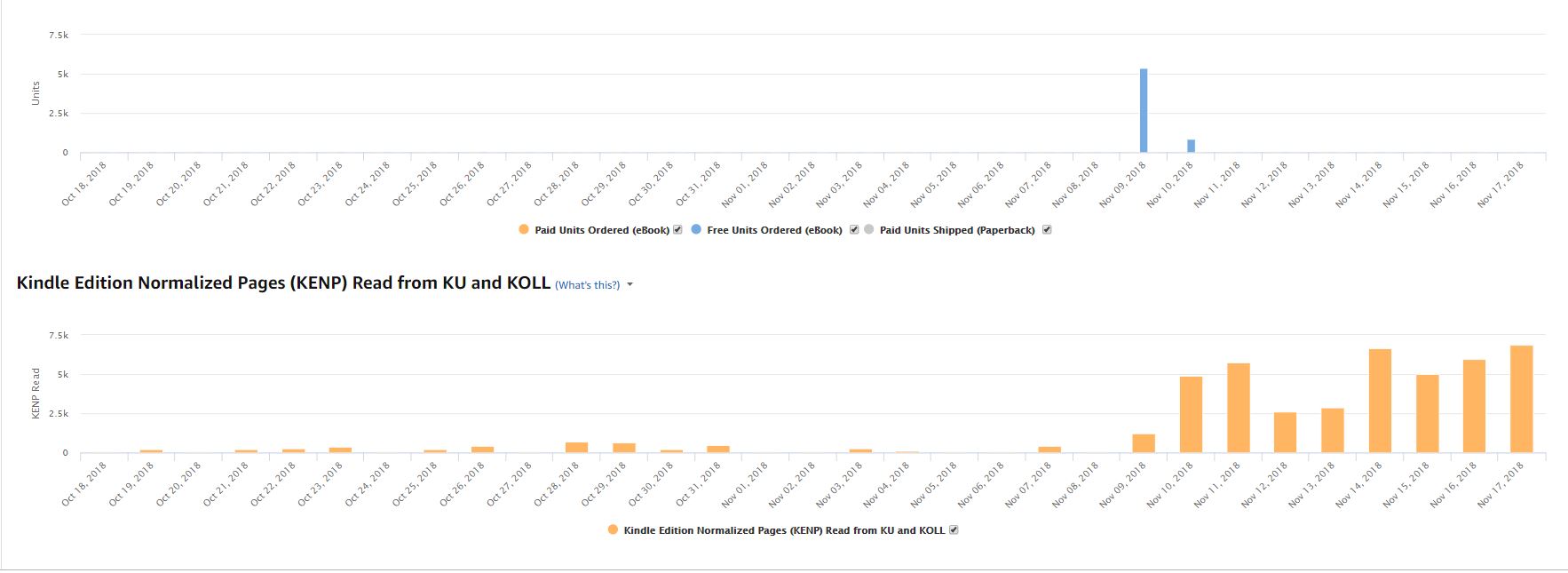
Anyway, so I also put my book free for the next day, in case there was anyone who maybe opened their email late and went to see if maybe the book was still free. I gave away 5,351 books on the real free day, the day the promo ran, and 867 books the next day, for a total of 6,218. (Too bad those weren’t sales.) I’m hoping that some of those will turn into reviews, but I may not know that for several months. Here is the graph of the downloads and what I got in KU reads from the date of the promo, until today, 11/17:

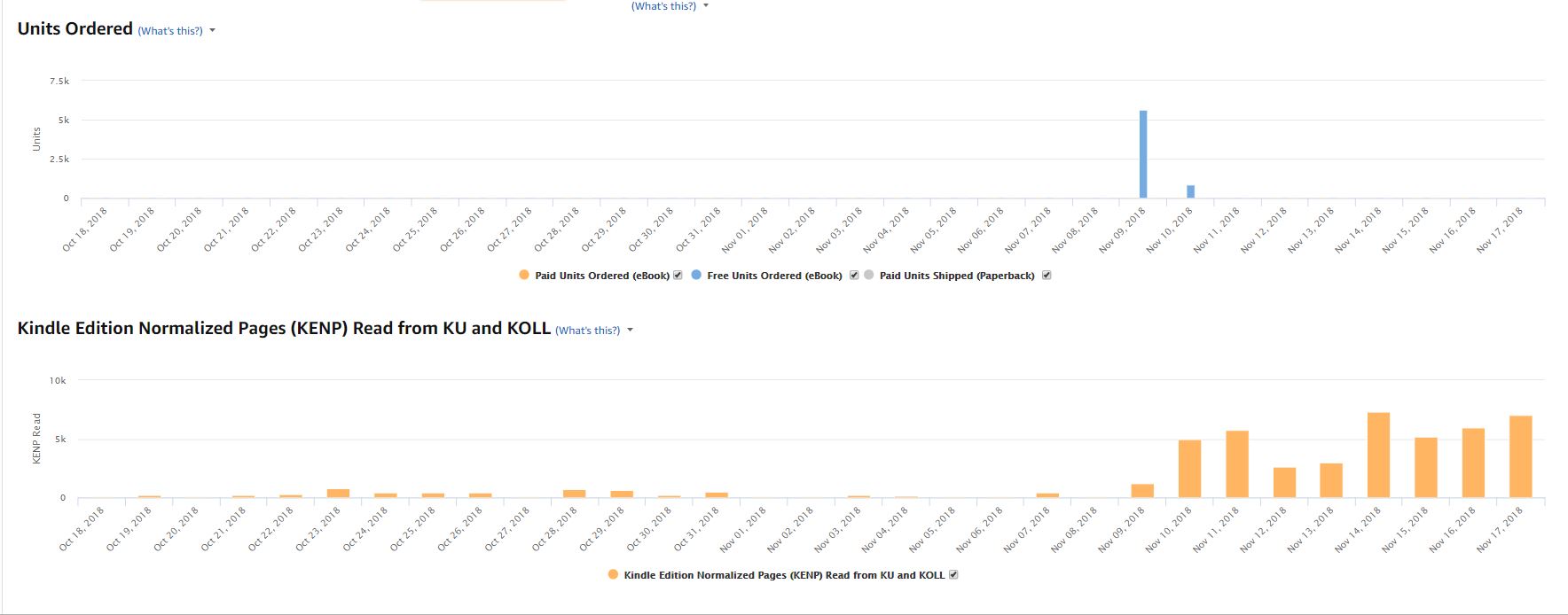
As you can see, there was a pretty big bump in KU reads for All of Nothing, but the promo did nothing to help with sales after the promo was over. That’s just for the one title though. Do we see a bump in sales for all my titles? Did the promo increase my visibility at all?  Let’s look:

Nope. But that’s okay. You have to start small, and for an indie, I don’t have many books out, anyway.

Everyone wants to know how much cash that equals out to, and let’s just say, I spent $100 on that promo, and I’ve only made a little over half back. I might, in the long run, but for right now, 8 days after my promo, that’s a no. 

Here’s what my promo looked like in the newsletter.  I was pleased I was at the top:

I love my cover; I loved the blurb I had to abbreviate from the longer one I have on Amazon. I’m really proud of this book, and I think it showcases how far my writing has come since I released 1700. 

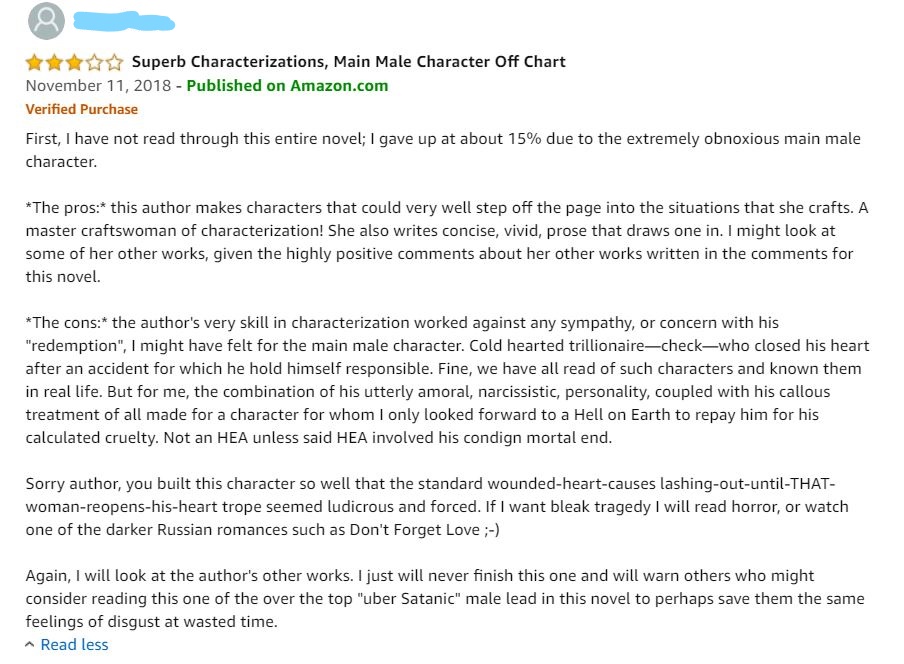
If you downloaded All of Nothing, thank you! If you downloaded it but haven’t read it yet, I would love to know your thoughts when you do! And if you’ve read it, I would really appreciate the review, like this lovely one I got on Amazon:

We’re not supposed to respond to reviews, so reader, if you happen across this blog post, thanks for taking the time to review! I appreciate it. 

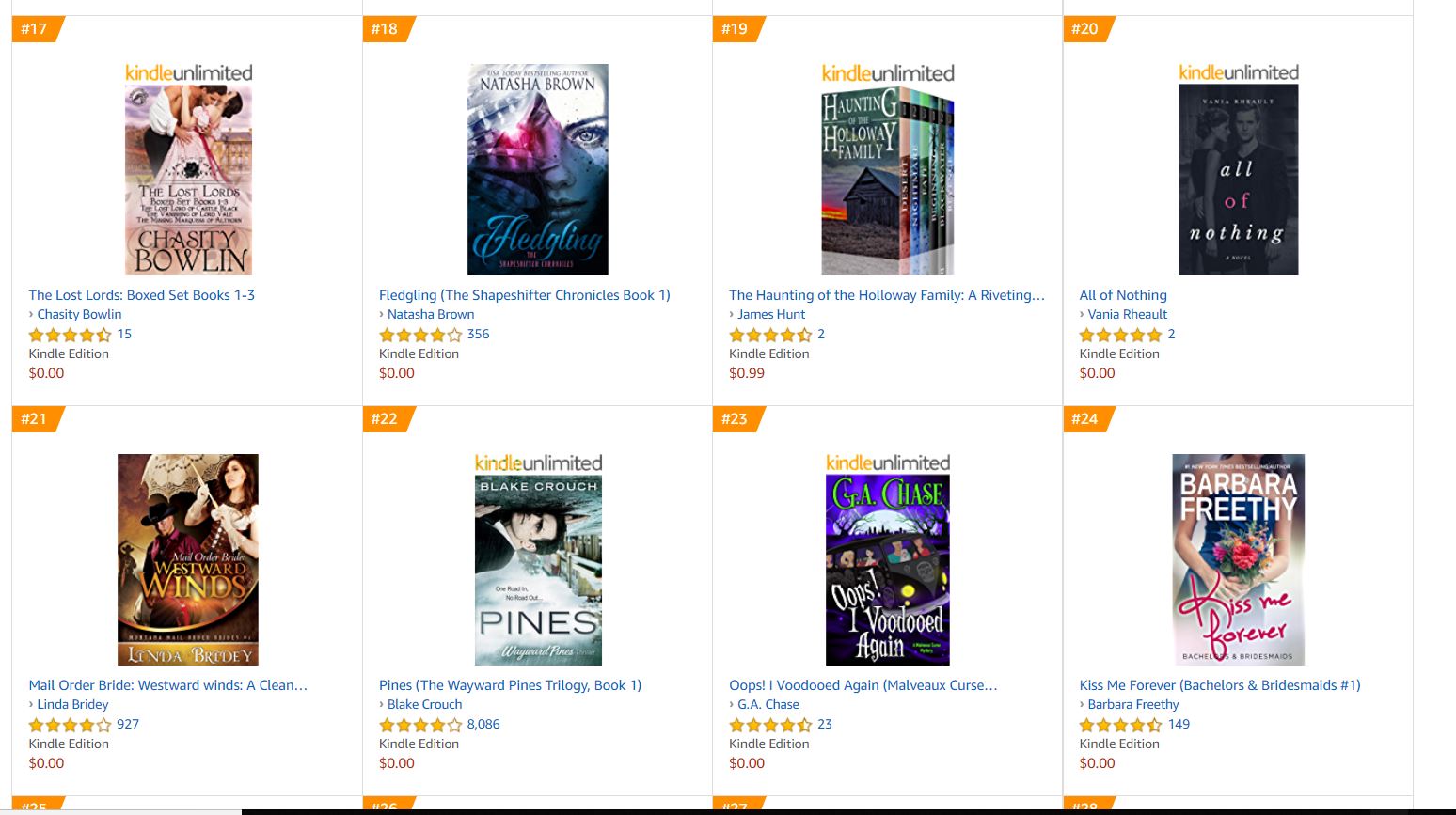
Would I consider the promo a success? That depends on what your version of success is. Giving away 6,000 books made good for my ranking:

But as we all know, free doesn’t mean too much. But all in all, I’m happy with the promo. I do want to try a Goodreads giveaway at some point, and they cost as much (or as little) as the Freebooksy ad. Maybe I’ll try it with my next book. But I have to pace myself since I won’t be publishing anything for a while as I write my Bridesmaid Quartet. I’m going to rapid release those, and I won’t be publishing them until all four books are done.

I would recommend doing a Freebooksy ad. So far I’ve liked the results of mine.

Until next time!

Author Interview with Daniel Mattia, Author of Debut Novella In Crows’ Claws

author interview daniel mattia


Dan and I chit-chat on Twitter a little bit, and I asked if I could interview him, and he was amazing and said yes! Dan published his debut novella, In Crows’ Claws on July 7th of 2018. Writing and publishing is hard work, and everyone has a different experience when it comes to publishing. Listen in to see how he fared in the big bad world of indie-publishing!


crowHow long have you been writing? How long did it take you to write
In Crows’ Claws?

I’ve written almost all of my life. I’m 28 now, and remember writing short stories and tales all throughout my childhood. I continued writing throughout my early teens, then stopped for a few years until about 2010.

During that time, I was at the tail-end of a severe bout of depression and found solace in my writing. It was during this time that I started crafting the fantasy setting of Fyrndell, the world in which In Crows’ Claws is based. I wrote quite a few short stories during this time, all of which have helped me to further flesh out and build upon this setting, but In Crows’ Claws is the first I’ve published.

I wrote the first version of In Crows’ Claws in 2010 or 2011 as a weekly web serial. It was a way to ensure I wrote on a consistent basis and the accountability of publishing a new chapter on a set schedule held me to that promise (for the most part).

The original serialized version took about three or four months to write and was fairly raw. That’s not to say it wasn’t written well-enough for publication, but it certainly didn’t meet my current standards.

crowWhat surprised you most about the writing process of this novella?

The emotions I had to invoke in order to represent the mindset of certain characters. I generally write without much personal emotion; I think there needs to be a sort of cold logic when you’re going through the actual craft of writing. I’m not writing how I feel, but how my characters feel, so it’s important for me, as the author, to be as emotionless as possible.

But as I wrote – particularly in the cases of Ahri and Nextiarc, two of the main characters in In Crows’ Claws – I discovered myself feeling how they felt in some of their specific chapters. Ahri, especially, starts off as an excited and optimistic young man who quickly finds out that the world of Fyrndell is a cold, dark place and the “truths” he felt he knew aren’t entirely accurate. The second-to-last chapter, especially, makes me tear up every time I read it – and, again, I’m not someone who has that happen often.

The chapters written from Nextiarc’s point-of-view surprised me even more. They were actually the most difficult to write because, in order to write from the POV of a literal monster who not only enjoys killing but venerates the very act, I had to adopt a rather dark and violent mindset. I had to write his POV chapters in short bursts because writing in his mindset for long actually frightened me.

crowWhy did you decide to publish?

To prove to myself that I could. I have so many stories I want to tell, particularly in the world of Fyrndell, but I’m someone who often has a self-defeatist attitude and can easily give up before I even try. Forcing myself to publish a finished work (along with the encouragement of some close friends) was what I needed to do first before I could even think of repeating the process.

crowWhat was the biggest obstacle when publishing your novella? What did you do to overcome that obstacle?

Formatting. My workflow, and the software used, is atypical from the workflow used by many other Kindle authors. I had to adapt and figure something out for myself despite there not being much information available for how to do it. Luckily, I discovered the Kindle Create software, which helped me to format and publish the Kindle version without much pain – after, of course, I had converted the book to the proper file format.

crowWhat do you mean by workflow?

In this context, workflow basically means process. Like you were witness to on Twitter during my editing/formatting phase, I didn’t write the novella in Word so exporting from the software I used (yWriter, something akin to Scrivener) meant much of the formatting advice I found online needed some tweaking to apply to my situation. On top of that, I completed the last editing phase in Kindle Create instead of the actual doc, which was a stupid idea, since it meant the final editing copy was locked to a proprietary format and couldn’t be easily converted to a friendlier format, ie. a .doc or .pdf.

crowWith publishing your debut novella, what is one piece of advice you would pass on to a writer who is thinking about publishing for the first time?

Don’t underestimate the value of editing. No matter how much or how little editing your work needs, it will always be better after you’ve put some solid editing time into it. I’d recommend hiring an editor to do it for you, but there’s no excuse for not editing yourself if you can’t afford an editor. Do at least three editing passes in which you read every word and every line.

crowWhat is next for you writing- and publishing-wise?

In Crows’ Claws is sort of the spiritual precursor to what readers can expect from the next Tales of Fyrndell book. My next work will be a novel in the same setting that takes place in a distant kingdom under siege from an invading neighbor, eventually introducing readers to a cold war that’s heating up quickly.

crowWhat will you do differently the next time around?

I’ve already identified where in my workflow I need to make changes to make the formatting process easier and more simple. The next release will come out in both Kindle and paperback format and will (fingers crossed!) not be such a pain to format and release into the world!

Thanks for the interview, Dan! It sounds like we have some spectacular stuff to look forward to!


yWriter is a free writing program similar to Scrivener. If you have been thinking about Scrivner, but don’t want to pay, try yWriter. You can find it here.

Editing and formatting your books for publication can be kind of tricky. Dan isn’t the first author to . . . put it informally . . . mess up. Even after the books I’ve published, I still find shortcuts and different ways of doing things every time.

Formatting your Word file for conversion to download to KDP (Kindle) doesn’t take that long at all. I blogged the instructions here.

If you’re interested in reading In Crows’ Claws you can find it here.


In Crows’ Claws Description

“This desert is the domain of death.”in crows claws cover for blog

The world of Fyrndell is a place of ancient powers, myriad races, and untold secrets. It is a world where gods may or may not exist, where heroes are few and far between, and where technology progresses at a haphazard pace.

IN CROWS’ CLAWS tells the story of two opposing armies as they race across the continent to a recently-unearthed desert tomb believed to be the final resting place of the goddess Konia. Read the letters sent home from Ahri Vestesson, crowkeeper for the Order of the Orthodox Knights of Fyrndell’s Crusade Army, as he wrestles with matters of faith and purpose while longing to return home to his betrothed. The letters of Marshal Taves Khest, veteran general of the Imperial Expedition Force of the Mhedorian Empire, will demonstrate his duty and ability while he leads his army to and through the desert to claim the glory of capturing the Tomb of Konia in the name of his empress.

But the desert holds many secrets and even more dangers still, for both armies will encounter a brutish and violent warband sworn to the service of Tavradyss, God-Prince of Conflict, and led by the even more vicious Nextiarc.

IN CROWS’ CLAWS is a tale full of action, ambiguous divinity, and heartbreak as three armies converge on the Tomb of Konia, desperate to lay claim to its hidden secrets…


Check Dan on these awesome platforms and thanks for reading!

crowAmazon   crow  Goodreads  crow  Twitter  crow  Facebook crow

Where’d ya go, Chance Carter? (And other thoughts on author/reader loyalty.)

Actually, that question is pretty rhetorical. We all know what happened to Chance Carter. The self-proclaimed bad boy was very naughty, and not in a fun way, and Amazon punished him, and also again, not in a fun way.

But for those of you who don’t know what he did, I’ll just give you a quick recap:

Mainly Chance Carter got caught book stuffing. Meaning, he put more than one book into an e-book, made the reader “flip” to the end of the “book” to read the new content, and cashed in on page reads through Kindle Unlimited. Some books to the tune of over 2,000 pages. I hate math, so I won’t do it, but that’s a lot of page reads in KU when you think that a normal book might only be about 200+ pages depending on genre.

I wasn’t even aware of this term until whistleblowers David Gaughran and Nate Hoffelder blogged loud and long about people who violated Amazon’s terms of service. 

He did other things too, like offering raffles to readers who would review, and the biggest giveaway he did before his books were pulled was offer a chance to win Tiffany diamonds to anyone who would review.

This isn’t a blog post for trying to figure out if he was wrong or right, or dissecting his ethics when it comes to scamming.

What I want to talk about is our obligation to readers.

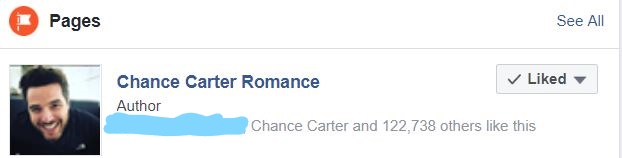
Chance had it going on. He had thousands of followers.  Thousands.

chance carter blog post 7_LI

Having that kind of following would be a dream for any author.

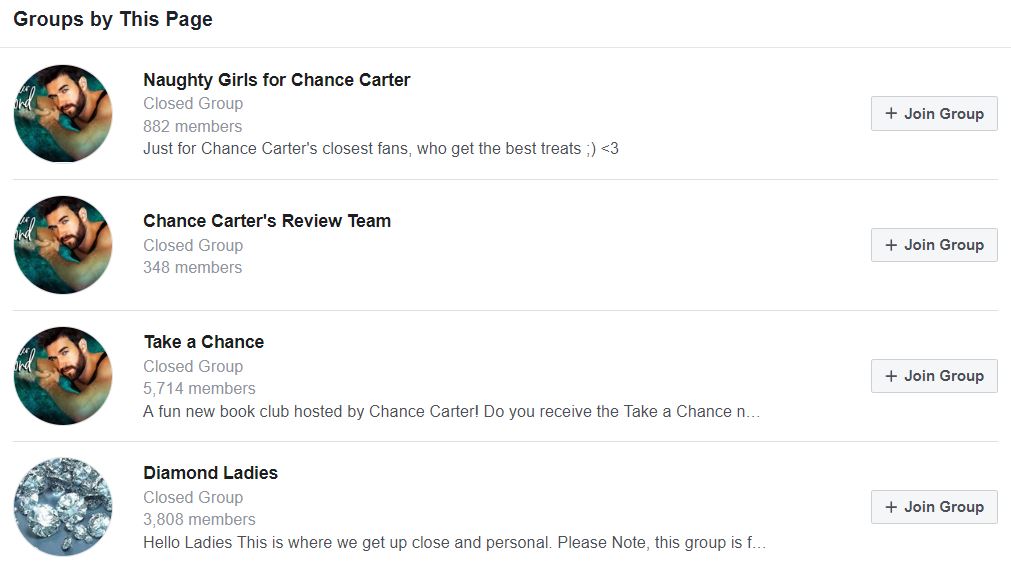
Even his fan groups were crazy with members.

chance carter blog post 8

When you have that kind of following, you owe it to your readers to be real. To be honest. I mean, that’s neither here nor there now, but once he was ousted,

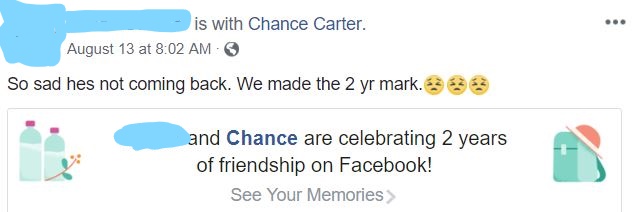
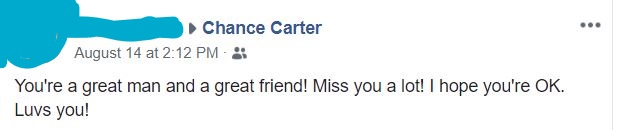
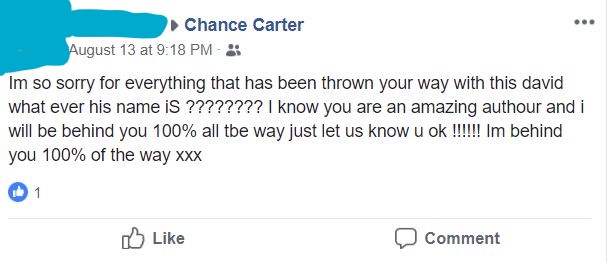
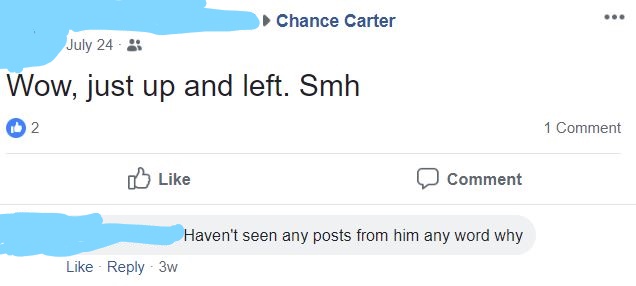
he didn’t even say goodbye.


No press release, no private message to one person who could spread the word. Nothing.

chance carter blog post 2_LI


chance carter blog post 3_LI

chance carter blog post 4_LI

chance carter blog post 6_LI

Not an apology. Not an, I’ll fix this and I’ll be back.

He completely disappeared.

I see a lot of indie authors maintain a cavalier attitude toward their readers. Mainly because they don’t think they have readers.

But do you have a responsibility? Even if you just have one or two readers? Do you care what they think? Do you care if a friend is waiting for your next book? Your neighbor? Your followers on Twitter? The forty-five people who like your Facebook Author Page?

Maybe you don’t think your readers matter until your followers and readers are up into the thousands like Chance’s.

When your readers write you open letters asking you where you are and if you’re coming back. 

First, I guess you have to ask yourself, why are you publishing? What is your goal? I can think of two off the top of my head: Readers and Money. Maybe you don’t care so much about money and you publish on Wattpad, or you write fanfic and publish it to fanfic.net. But if you’re publishing on Amazon, or Smashwords, and/or everything in between, you’re probably hoping to make a little money. With hoping for sales you would like to become well-known for your books.

But not only books. Authors like Chance know their brand. They build their reputations from the ground up, by showing up, being present. By engaging with the people who read their books.

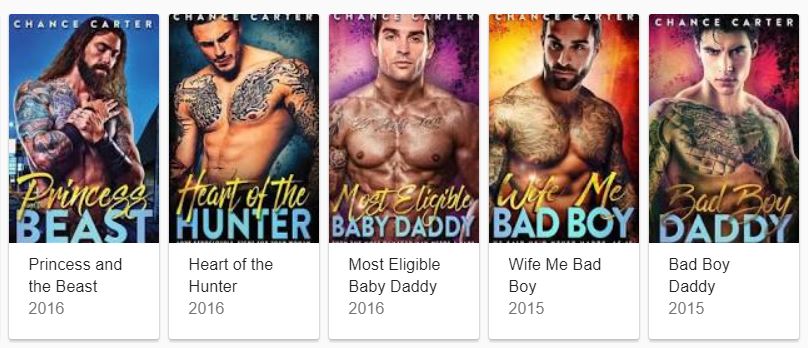
Readers who read books by consistent authors like Chance know what they are getting. Even his covers look similar.

chance carter blog post 9

That’s a series, but his other books, look similar too:


Pecs and abs. It’s not too hard to figure out why these were popular with the ladies.


But what does that mean about loyalty for you?

  • Publishing consistently. Self-publishing is a fast-moving wheel that waits for no one. There are a million books out there to read. If you want a following, you need to give your readers something to follow.
  • Do you genre hop? Do you write contemporary romance, then throw in a bit of horror? Do you write historical fiction then jump into sci-fi when the fancy strikes? It’s okay to write what you like, but not all readers will follow you to every new path you want to take when that shiny new idea takes over.
  • Are you accessible? Do you have an email address that you check and respond to? Do you engage on social media? Do you post to an author page? When someone shoots you a tweet, or mentions you in a blog post, do you respond? Do you use a real photo? I’m not saying all those are musts, but if you take a look at Chance’s social media history, you’ll see consistent posting, videos. He shared bits and pieces of his life.  Chance Carter probably wasn’t his real name, but he was real–to 122,000 people.
  • Do you have follow-through? If you say you’re going to do it, do it. Changing up plans in mid-stream because you don’t feel like you have enough of a positive response will teach your fans you can’t be trusted to do what you say you’re going to do.

It’s tough starting out. You feel like you’re writing for no one. But it takes time and patience to build your audience. Chance didn’t wake up one day and decide to have 122,000 followers on his FB page.

It’s too bad that he didn’t treat his followers with more respect. His readers liked his books and kept buying them. They didn’t need to be scammed into reading his books or leaving reviews. They would have done that on their own. Simply because they liked him and his work.

Now they feel betrayed, cheated, abandoned. Leaving messages on his FB Page:

chance carter blog post 5


Uncle Ben said, With great power comes great responsibility. Actually, I looked it up, and he stole it, but the idea is still the same.

If you’re looking for a large number of readers, treat the ones you have with respect and loyalty.

Begin as you wish to continue.

And all you Chance Carter fans out there–I’m building my Contemporary Romance audience. I may not be a bad boy like Chance, but I can write a sexy and kind hero too–and I can guarantee, he will always get his girl.


end of blog post graphic


Whine a Little . . . Over There

There’s been lots of whining on Twitter lately. More specifically, authors whining about not seeing books sales. Even more specifically, authors not seeing their books sell.

Maybe it’s because we’re in the dog days of summer, or people aren’t looking forward to school starting, or the crap we’re all going to have to deal with when THE HOLIDAYS start in full-swing October first.Dog Days of Summer

But whatever it is, it needs to stop. Because YOU, and nobody else but you, can make sales happen for your book.

Mostly, this is on Twitter. I can say it louder for the people in the back. TWITTER ISN’T FOR SELLING BOOKS. If you’re a member of Writer Twitter, you’re a member of WRITER Twitter. There’s a reason why it’s called that. Because we’re writers. Join READER Twitter. It’s gotta be there somewhere. Maybe #amreading is wedged between #IhateTrump and #turtlesareweird. If you’re convinced Twitter is the only way to sell books, or it’s the only way you want to try, break into the #amreading crowd. Or try. I’ll leave a light on for ya.

But if you want to take stab at moving books instead of whining about it, explore these ideas. First though, you need to take a look at your book.

  • Cover needs to be decent. Needs to depict the genre, needs to fit in, but stand out (in a good way.) Join an FB cover group and get some critiques. Taking a second look at your cover and if it’s not up to snuff, fix it. It’s killing your sales before they start.
    Books to consider:

    Cover Design and YOU!: Dos, Don’ts, and Choices
    Why Does My Book Not Sell? 20 Simple Fixes (Writer’s Craft)

  • Make your blurb awesome! This is easier said than done. Bryan Cohen is great at this. He teaches webinars and he runs a business doing this. And he makes very good money doing it. But he shares his knowledge, so don’t just moan you don’t know how to do it. Read about it. You’re a writer. Research. Here’s his book. He breaks it down so you can do it, too. With his guidance, I write my blurbs in half an hour. Here’s a Book Description Critique with Bryan Cohen hosted by Reedsy. Watch it.
  • Make sure you have a decent title. No one told me this before I published, and now my very first book has a stupid title I can’t change because I don’t want to waste the money I spent on my ISBN number. If you don’t have any reviews and didn’t purchase your ISBN number, you can change your title. Changing your title and ISBN number will lose you reviews so if you only have one from your best friend Angie, she’ll probably post it again if you republish with a better title.
    Grab some ideas from Dave Chesson; he’s got some good ones.
  • Make sure your “look insides” (first sample pages) are decent. This can make or break you if all the other parts about your book are spot on. If you don’t have a solid POV, if you have typos, if your formatting is messed up, the best cover in the world won’t save you. Try to get your hook within the first few pages of your book so it’s included in the look inside. Turn that browser into a buyer!

Now that we covered that and your book is up to par, you’ll need to ask yourself what you’re doing to help your book sell. Tweeting every day isn’t going to help. So what can you do to spike sales?

  • Are you spending any money?  You have to spend money to make money. I’m not kidding. Lots of people are like, “I don’t have any money to put toward selling my book.” Then you’re not going to sell your books. No business has ever opened that didn’t need seed money. Investors. Start-up money. You buy stock for your shelves, you fork over for rental space. You pay for wages for your employees before you’ve even sold one thing. Your book isn’t any different. Nobody ever went into business for themselves because they needed money yesterday. Starting a business is a lifelong endeavor. What can you put your money toward?

    *Pay for promos. I spent 80 dollars to give away 4,000 copies of Don’t Run Away in a free book promo for FreeBooksy. It got me some reviews, and lots of KU reads for the whole trilogy. I made my money back and then some.

    *Pay for giveaways. Goodreads did away with their free giveaways but because you have to pay, the market for giveaways isn’t so saturated. People have debated as to whether or not it’s a good thing, but I think it is. I haven’t tried them yet, but in the spirit of trying one new thing with each new release, I’ll be trying it when I publish All of Nothing this fall. Read about them here.

    *Pay for ads on Amazon. This isn’t as scary as it sounds. I’ve been blogging about my experience. It won’t break the bank to give it a try, but it’s important to do it correctly. Brian Meeks has a wonderful book about it. Amazon changed the platform a bit, so his instructions are already outdated even though his book is only a year old. But his advice is still as good as gold, and just as valuable.

    *Pay for ads on Facebook. These are trickier than Amazon ads. At least, I’ve read that they are. I haven’t tried Facebook ads, and if you don’t have the money to spare, I would suggest going with Amazon ads first. I’ve spent under five dollars experimenting with Amazon Ads. But if you want to try FB ads, again, do it correctly. Michael Cooper has a super great book about it. It’s important to try ads correctly, otherwise you’ll blow through money, claim they don’t work, and you may write off a great way to let people know about your books!

    *Pay for a blog tour. I used to hear a lot about these two years ago when I joined Twitter, but not so much anymore. You don’t have to pay someone to set up a blog tour, but if you pay a legit person they’ll know the best blogs to submit your book to. I’ve never tried one of these. They’re time-consuming. Either you have to fill out an interview sheet or compose a guest post for that blog. If you’re doing a full tour, that could consist of anywhere between 5 to 20 or even more blog sites. That’s a lot of guest blogging and interviews when maybe you should be writing your next book.

    *Reviews. If you do this in a legitimate fashion, this can be a coup for you. I have not tried it because the service I wanted to try distributes the books to readers through BookFunnel and that goes against KDP Select’s terms of service. I pulled Wherever He Goes out of Select to try this review service, and it comes out September 3rd. It wasn’t doing well in KU anyway, so I didn’t see the harm in trying. I’m going to try Happy Book Reviews. I’ve heard good things and so-so things about results. But if you have a good book with a good blurb and good cover, and the plot/genre isn’t too weird, you may get good results. Give it a shot.

  • Are you writing more books? The best marketing you can do is release new books. Lots of debate on quality versus quantity, but if you just can’t scrape up the cash to put toward your book’s promo, at least writing and releasing is free. *As free as you can get without spending money on cover, editing, etc. I’ve heard you drop off the Amazon algorithms after three months, so you want to release something every three months. Try releasing tie-in novellas. Or just dig in your heels and write the next book. I see lots of people trying to build careers on one book, and that only works if you write a non-fiction book and your career is already based on that book. Readers expect more from you. Keep them happy.
  • Offer to guest blog on other people’s websites in your genre. Ask “up.” Someone in your genre who has more followers than you. Someone whose website gets a bit more traction than yours. This is where your tweeting should come in handy–you’ve made connections, don’t be afraid to ask. Most people would love to host a guest blogger. It frees up their schedule for the week. But make sure your book is up to snuff or they’ll turn you down. And be prepared to giveaway a book. That seems counterproductive to sales, but lots of bloggers want to reward their readers for showing up.
  • Think local. Ask your town’s newspaper’s lifestyle section to do an article on you. If you have local small magazines, ask them to do a profile. Ask your indie bookstore if you can do a signing, or if they’ll sell your book. Heck, maybe get together with a couple of indies in your area and ask Barnes and Noble if they’re willing to do an Indie Night. Asking is hard. We’re introverts at heart, but even if the answer is no, at least you can say you tried.
  • Take a hard look at your book. Besides the cover, the editing, the blurb, the title, ask yourself, is this something someone would want to read? Especially if this is your first book. Indies like to experiment when they’re starting out. We’re finding our niche; we’re finding our passion. Experimenting with your hamster detective series is cool, but can you get sales? Maybe not. So take a hard look at your book before you throw money at it. It may not do any good. And that’s the sad truth. If you can be honest with yourself and say yes, my book has readers, all I have to do is fine them, then good luck!

Whining about lack of sales isn’t going to help you sell books. After a while it becomes annoying, and you end up tarnishing your reputation. If your first book isn’t working, then move on. Write something else. Write something better. We get better at our craft with every book we write.

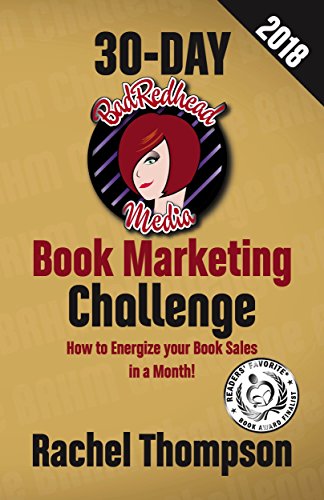
book marketing challengeRachel Thompson says we don’t get traction with our careers until we have at least 6-10 books under our belts. As the self-publishing industry gets more competitive, that number may get higher. If you’d like to read her awesome book about marketing, you can look for it here.

Book sales are subjective. What works for you may not work for someone else.

The best advice I can give you is write well, and publish often. Stay consistent. Build your brand on a genre you love to write.

Sales take time.

Have patience, and good luck!


buy image for blog